Geomechanics, Simplified.
© 2026 Geomechanics.io. All rights reserved.
Deep seabed mining remains legally blocked after legal scholars Aline Jaeckel and Erik van Doorn argued that the International Seabed Authority cannot approve exploitation in areas like the Clarion-Clipperton Zone until separate benefit-sharing regulations, controlled by the ISA Assembly, are adopted. The ISA’s Finance Committee only produced a first draft benefit-sharing framework in 2024, centred on a Common Heritage Fund, while about 40 countries now support a moratorium and African states oppose using shared funds for remediation. Companies including The Metals Company, Impossible Metals and Lockheed Martin are advancing CCZ plans despite this regulatory deadlock.
An anti-dumping and anti-subsidy investigation has been opened by the UK Trade Remedies Authority into Chinese-made boom lifts, following a complaint from UK manufacturer Niftylift. The probe covers telescopic and articulated boom lifts, including sub-assemblies, with working heights of 6 m and above, such as models like the Dingli BT44HRT now entering the UK market. Scissor lifts, forklifts, vertical mast lifts, mobile self-propelled cranes and motor vehicles with integrated boom or scissor assemblies are explicitly excluded, so procurement teams must check machine classifications carefully.
Engineers Against Poverty chair Richard Threlfall calls for the engineering, infrastructure and construction profession to lead on cutting whole‑life emissions and controlling capital cost overruns in major civils programmes. He argues that effective infrastructure governance must move beyond compliance to active stewardship of carbon, cost and social outcomes, with engineers shaping procurement models and performance metrics rather than leaving them to financiers and policymakers. For practitioners, this signals greater responsibility for transparent cost baselines, carbon accounting and value-for-money evidence on large public works.
A Productivity Commission proposal to replace company tax with a hybrid cash flow tax has drawn a lukewarm response from the Minerals Council of Australia and the Association of Mining and Exploration Companies, which warn it could deter long-life, capital-intensive projects. Industry groups argue that immediate expensing of capital and tighter limits on interest deductibility may not suit multi-decade mines with heavy upfront spend on shafts, processing plants and rail links. They are calling for detailed modelling of impacts on marginal projects, junior explorers and existing royalty and PRRT settings before any shift proceeds.
More than 60% of global demand for critical minerals is now met via international trade, with the IEF warning that copper and nickel could face material shortfalls by the mid-2030s as total demand for copper, nickel, cobalt, lithium and rare earths climbs from 28 Mt in 2021 to nearly 41 Mt by 2040. EV copper use alone is forecast to jump from 200,000 t in 2020 to 3.4 Mt by 2035, while Indonesia supplies over half of nickel, the DRC about 70% of cobalt, and China over 90% of rare earth refining. More than 600 policies now target critical mineral supply chains, with the US, Canada and Australia incentivising exploration, refining and recycling, and Indonesia, Chile and Peru pushing in-country value addition and export controls.
US federal critical minerals policy in 2026 is set to move beyond rare earths to high‑risk inputs such as antimony and tungsten, where the US currently relies heavily on China, Tajikistan and Russia for supply into defence alloys, munitions and flame‑retardant applications. Washington is expected to prioritise domestic processing capacity over new mines, backing alternatives to traditional smelting and refining that cut emissions and withstand high US power prices. Intensifying competition for electricity from AI data centres will put aluminium, copper, magnesium and titanium processors under pressure, favouring technologies that materially lower energy use and total production costs.
Landmark Planning and Infrastructure Act 2025 has received royal assent, giving ministers new powers to accelerate major roads, rail schemes, reservoirs, windfarms and grid connections, and underpinning Labour’s target of 1.5 million new homes. Key measures include a Nature Restoration Fund for centralised biodiversity offsetting, streamlined judicial review with only one court challenge allowed on meritless major project cases, and reformed local authority planning committees pushing smaller schemes to officers. The Act also simplifies EV charger approvals, eases compulsory purchase, and offers up to £250/year electricity bill discounts for 10 years to households near new pylons.
Ontario and Canada have signed a “one project, one review” agreement to coordinate federal and provincial environmental and impact assessments, targeting long-delayed mining and infrastructure schemes in the Ring of Fire and other critical mineral districts. The deal dovetails with Ontario’s One Project, One Process (1P1P) framework, which aims to cut mine approval timelines from up to 15 years to a maximum of two years, with Frontier Lithium’s PAK project the first pilot. For geotechnical and mining teams, the move signals materially shorter permitting horizons for cobalt, lithium, nickel and copper projects backed by a C$500 million processing fund.
The Planning and Infrastructure Act has received Royal Assent, bringing into force a wide package of reforms aimed at accelerating housing delivery and major infrastructure consenting across the UK. Measures include streamlining Development Consent Order processes for nationally significant projects and tightening statutory timescales for planning decisions, with the intention of reducing multi‑year delays on large transport, energy and water schemes. For engineers, the changes signal pressure to front‑load design, environmental assessment and geotechnical risk work to meet shorter pre‑construction and examination windows.
Brazil has indefinitely postponed a planned March 2026 auction of mineral exploration areas rich in critical minerals after the National Mining Agency (ANM) said it lacks funds to cover embedded auction costs. The tender was to be the first mining round run jointly with B3, the São Paulo stock exchange operator, using a bidding model already applied in power and oil and gas, and would have addressed a backlog of roughly 100,000 areas awaiting auction. The delay jars with Brazil’s push to market its 94% share of global niobium reserves and significant graphite, nickel, lithium and rare earth potential.
Quarry operators warn that proposed revisions to the National Planning Policy Framework published on 16 December strip out references to maintaining a “steady and adequate supply” of aggregates and no longer describe mineral supply as “essential”. The Mineral Products Association says this weakens long‑standing minerals policy just as permitted aggregate reserves are already in long‑term decline despite historically low sales. Executive director Mark Russell argues the NPPF should include a clear national statement of need for construction aggregates, industrial sands and building stone, with consultation running until March 2026.
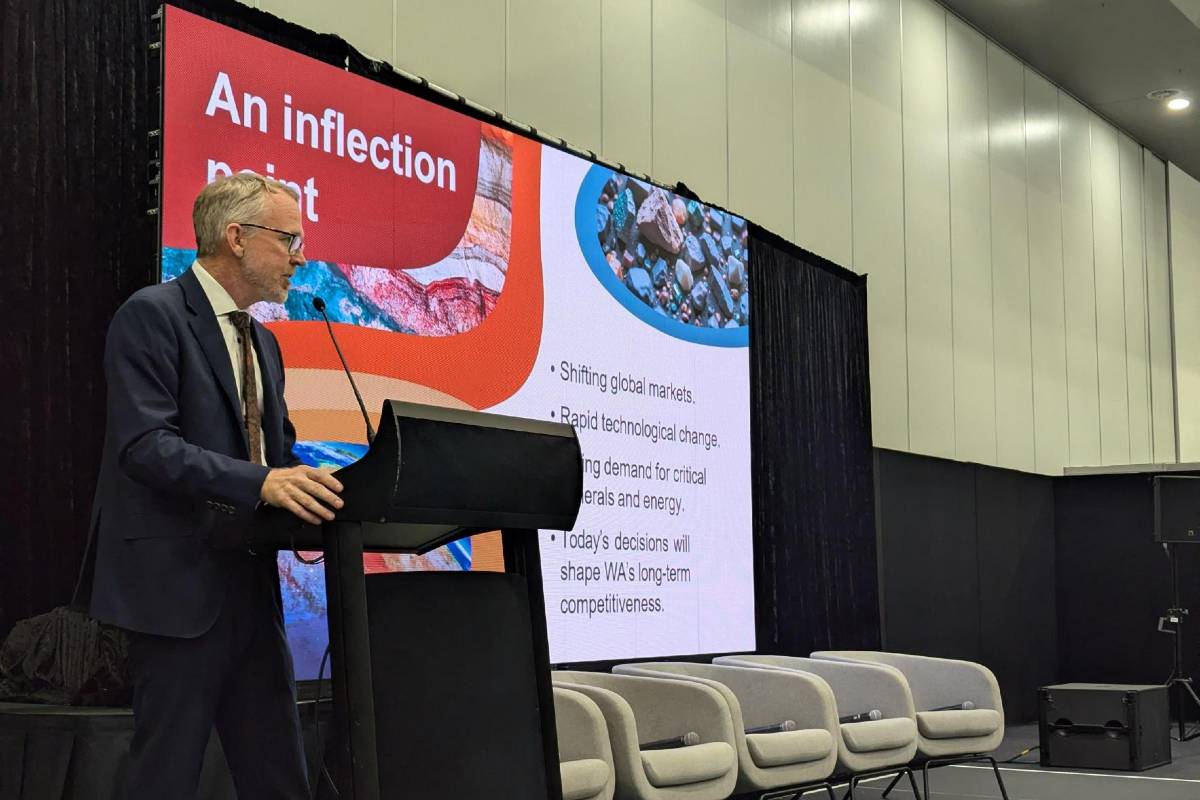
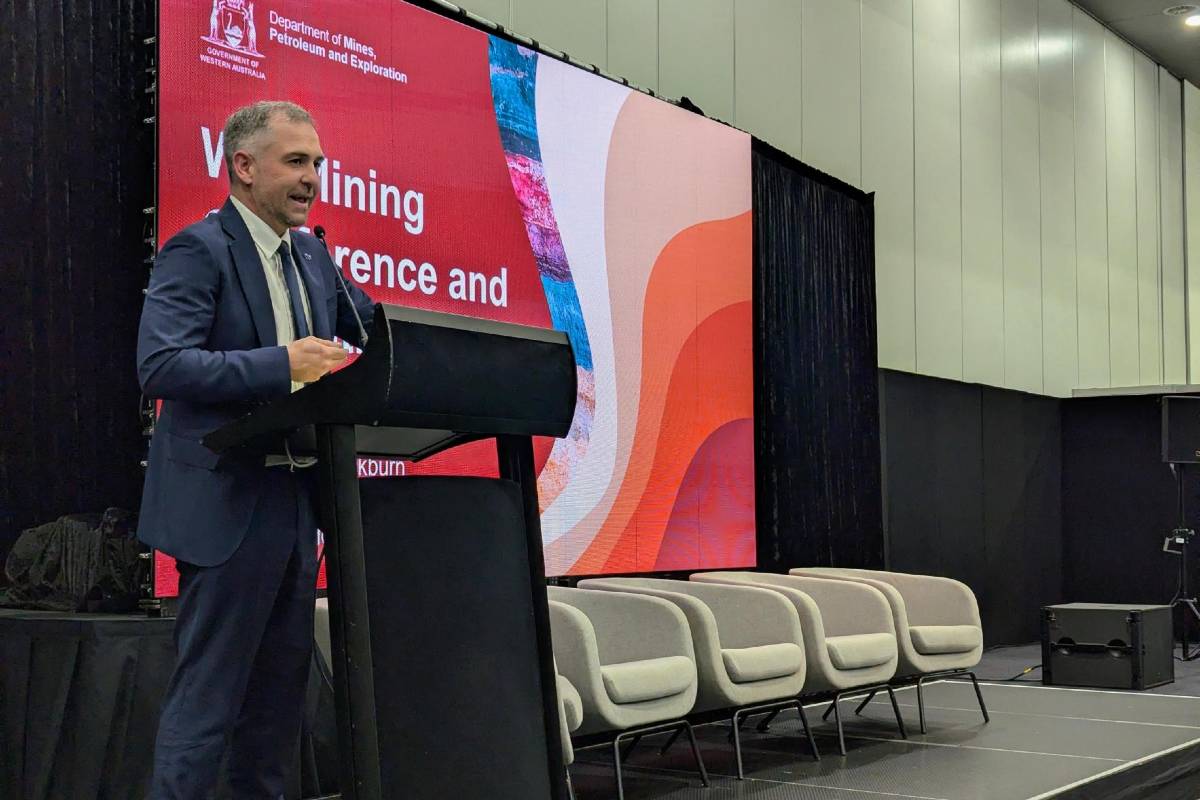
Collaboration between Western Australian mining industry bodies and local government is being strengthened ahead of 2026 to manage shifting regulatory, workforce and infrastructure demands. Stakeholders are aligning on issues such as approvals timeframes for new pits and tailings facilities, skills pipelines for autonomous haulage and remote operations centres, and long-term planning for regional roads and power networks servicing major iron ore and lithium hubs. For engineers, closer coordination could mean clearer permitting pathways, more predictable infrastructure funding, and earlier input into standards affecting pit design, waste storage and closure obligations.
Government changes to the National Planning Policy Framework (NPPF) are being broadly welcomed by infrastructure stakeholders, though with cautious caveats over delivery and resourcing. Developers and consultants see potential for faster consent on nationally significant projects and large housing schemes if local plan-making and appeals are genuinely streamlined. Civil engineers are watching how revised tests on design quality, environmental assessment and transport impacts will be interpreted by planning authorities, as this will directly affect scheme viability and programme risk.
Government plans to create a Single Construction Regulator to take central control of built environment professions, arguing that current self-regulation by bodies such as building control and architects’ institutions is too fragmented and inconsistent. A call for evidence is scheduled for spring 2026, with a full strategy and detailed regulatory framework for competence, oversight and enforcement due in spring 2027. The model will draw on safety regimes in aviation, energy and healthcare, and explicitly link regulation of people, products and buildings, signalling tighter accountability for designers, inspectors and contractors.
Government plans to convert the Building Safety Regulator into a Single Construction Regulator with powers spanning high‑rise building control, oversight of the building products regime and regulation of construction professions, but without directly carrying out product testing or certification. The consultation prospectus, issued by building safety minister Samantha Dixon, runs to 20 March 2026, with detailed regulatory reform proposals due summer 2026. For designers, contractors and product manufacturers, this signals tighter, centralised scrutiny of competence, product compliance and safety case evidence on complex residential projects.
Julie Wood has been confirmed by the ICE Council to succeed David Porter as President of the Institution of Civil Engineers in November 2026, setting the leadership line-up two years in advance. The early confirmation gives continuity for ongoing work on infrastructure resilience, decarbonisation and digital delivery across ICE’s 95,000-strong global membership. Civil engineering firms can expect policy and guidance stability through at least 2027 as Porter’s term transitions to Wood’s, aiding long-term planning for major UK and international projects.
The UK Competition and Markets Authority warns that the civil engineering market for public roads and railways is stuck in a “negative cycle” of low margins, limited competition and underinvestment, constraining delivery of schemes such as National Highways’ RIS3 upgrades and Network Rail renewals. The report points to fragmented procurement, short-term frameworks and risk-heavy contracts that deter smaller contractors and weaken supply chain resilience for major earthworks, structures and track renewals. Engineers can expect continued pressure on bid pricing, programme certainty and capacity for innovation unless procurement and contract models are reworked.
One in three Scottish plumbing firms plans to stop taking apprentices over the next three years, with a SNIPEF survey citing limited funding support (67%), high wage costs (65%) and supervision costs (47%) as key barriers. SNIPEF’s Apprenticeships Under Pressure report warns this could leave Scotland short of plumbing and heating skills needed for public safety and building decarbonisation work. The move contrasts with England’s new £725m package for 50,000 extra apprenticeships and removal of the 5% co-investment for SMEs training under‑25s.
Government proposals to revise the National Planning Policy Framework include a presumption in favour of housing near railway stations, support for high-rise residential blocks in urban areas, and widening the Building Safety Levy exemption from schemes of 10 homes to 50 homes (or from 30 to 120 student bed spaces). Smaller sites would be exempt from biodiversity net gain rules, and “swift bricks” for nesting swifts are set to be embedded in policy. The 123‑page consultation, posing 225 questions and running to 10 March 2026, keeps national policy non-statutory, prompting mixed views on planning certainty.
The High Court has refused permission for a legal challenge seeking to force the government to amend or revoke the Sizewell C development consent order to reflect potential future flood defence works. Campaigners had argued that “secret” coastal protection and flood schemes around the Suffolk site should be reassessed in light of long-term sea level rise and storm surge risk. The ruling leaves EDF’s current DCO intact, so any redesign of sea walls, platform levels or coastal reinforcement will have to be driven through subsequent design and permitting stages rather than reopening consent.
US mining enters 2026 under a suite of Trump executive orders (EO 14213, 14220, 14241, 14261 and 14272) directing agencies to cut permitting delays, open federal land and expand domestic processing, with impacts expected on exploration timelines and investor confidence in critical minerals. SME consultant Debra W. Struhsacker warns that more than 30 years of restrictive legislation and land-use limits mean recovery will be gradual, with litigation over NEPA reviews and the fate of the SPEED Act (HR 4776) key to real permitting gains. She flags severe rare earths dependence on China and a looming skills gap, noting only 14 US mining schools and urging passage of the Mining Schools Act of 2025 and renewed federal mineral research funding.
The Association for Mineral Exploration is urging British Columbia Premier David Eby to appeal the Gitxaala Nation v. British Columbia decision, after the province’s Court of Appeal ruled on 5 December that the Declaration on the Rights of Indigenous Peoples Act incorporates UNDRIP and creates legally enforceable obligations. AME argues the ruling creates uncertainty for the province’s automatic online mineral claim system and the Mineral Tenure Act, despite the March 2025 Mineral Claims Consultation Framework (MCCF) changes. The group wants the legislature recalled to make “substantive” amendments to DRIPA and section 8.1 of the Interpretation Act before a 16 February 2026 appeal deadline.
Korean researchers led by Seungho Lee at Jeonbuk National University map five distinct lithium governance models in Chile, Argentina, Brazil, Bolivia and Mexico, linking them to commodity price cycles, geopolitical competition and the maturity of each country’s lithium industry. Chile’s hybrid regime with strong state oversight contrasts with Argentina and Brazil’s decentralised, market-led systems, Bolivia’s tightly controlled state-led model and Mexico’s largely rhetorical nationalisation stance. The two-stage decision-making framework signals that miners, battery manufacturers and state-backed investors must tailor project, offtake and JV strategies to country-specific political settlements rather than apply a single Latin America playbook.
Antofagasta CEO Iván Arriagada has been re-appointed chair of the International Council on Mining and Metals (ICMM) for a two-year term, succeeding Newmont chief Tom Palmer, who is retiring as CEO at year-end. Arriagada, who previously chaired ICMM from 2022–2024, helped establish the Global Industry Standard on Tailings Management and backed the Consolidated Mining Standard Initiative (CMSI) on common ESG benchmarks. His return signals continuity in ICMM’s 26-member CEO council as it executes its 2025+ strategy on tailings governance and responsible project development.
Engineers have again ranked as the UK’s second most trusted profession in the 2025 Ipsos Veracity Index, with a large majority of respondents saying they believe engineers tell the truth. The result places engineers just behind nurses and ahead of doctors, teachers and scientists in perceived honesty. For infrastructure and construction teams, this public confidence strengthens the mandate for engineers to lead on risk communication, safety decisions and major project trade-offs in areas such as flood defences, transport schemes and energy infrastructure.
A cross-party House of Lords Built Environment Committee warns that delays in the Building Safety Regulator’s gateway approval processes are stalling cladding remediation on high‑rise residential blocks. Peers say leaseholders are facing rising interim costs for waking watches, higher insurance premiums and extended scaffolding hire while schemes wait for sign‑off. The committee presses the government and BSR to streamline case handling and resource the regulator adequately so life‑critical façade works can proceed at pace.
Welsh MPs have warned that the Great British Railways (GBR) Bill, which centralises rail planning and operations under a new GBR body, fails to address Wales’s specific infrastructure and funding needs. They argue that the legislation does not correct historic underinvestment in Welsh rail, where enhancements such as electrification and capacity upgrades on key corridors like the South Wales Main Line lag behind those in England. For civil engineers, the dispute signals continued uncertainty over long-term funding envelopes and governance for major Welsh rail renewals and enhancements.
US Representative John Moolenaar is pressing the State Department over what he calls “well-documented” links between Ivanhoe Atlantic and Chinese state-owned enterprises, citing CITIC and Zijin Mining’s combined 39.5% stake in related company Ivanhoe Mines as of 2020 and a $1.8 billion Ivanhoe Mines–Liberia rail rehabilitation deal for Guinean iron ore. Ivanhoe Atlantic insists it is a separate entity from Ivanhoe Mines and says its Guinea iron ore project will supply only US and allied markets, avoiding China’s Trans-Guinean Railway. The dispute signals closer US scrutiny of indirect Chinese stakes in African iron ore and copper logistics.
The “independent” Nuclear Regulatory Taskforce commissioned by UK prime minister Keir Starmer has issued its final report calling for a “radical reset of [an] overly complex nuclear regulatory system”, signalling de facto deregulation of new build and life-extension projects. Proposals include streamlining multi‑stage Office for Nuclear Regulation licensing, compressing generic design assessment timelines, and reducing overlap with Environment Agency permitting. For civil and geotechnical designers on projects such as Sizewell C and future SMR sites, this could shorten consent and design-freeze periods but increase pressure to lock in safety‑critical assumptions earlier with less iterative regulatory scrutiny.
CITB is cutting several training grants from 8 January 2026 after a 36% rise in demand for services over four years outstripped static levy income, including removal of the short course training grant, ending funding for level 7 qualifications and long-course attendance, and standardising all non-apprentice achievement grants at £600. Employer networks will shift to 50% match funding with a narrower scope, and from 1 April 2026 large employers will move to a single funding offer and lose access to employer networks. Civil engineering and specialist contractors such as MB Roche, Balfour Beatty and Gypsum Limited warn the changes will hit SMEs’ ability to navigate grants and maintain skills pipelines in an already tight labour market.
The Federation of Master Builders has overhauled its builder contract templates to reflect the Building Safety Act 2022, explicitly allocating duty holder roles and clarifying who carries design, construction management and compliance responsibilities where architects and engineers decline principal designer duties due to insurance limits. Authored by contract specialist Sarah Fox, the new forms run to just 14–15 pages versus typical 80+ page industry contracts and are free for FMB members. For contractors on small to mid‑scale projects, this offers a practical route to documenting liability, reducing disputes and aligning site practice with the new safety regime.
British Columbia’s Court of Appeal has ruled in Gitxaala v. British Columbia that the province’s Declaration on the Rights of Indigenous Peoples Act (DRIPA) incorporates UNDRIP and creates legally enforceable obligations, overturning a 2023 Supreme Court finding that DRIPA was not justiciable. The court held that B.C.’s automatic online mineral claim-staking system under the Mineral Tenure Act, used to grant claims on Banks Island between 2018 and 2020, is inconsistent with UNDRIP because it provides no opportunity for prior consultation. All B.C. mining-related statutes and regulations must now be interpreted as consistent with UNDRIP, signalling tighter consultation requirements at the mineral claims stage.
Ed Miliband has confirmed the government will deliver a full implementation plan within three months for the Nuclear Regulatory Taskforce’s recent review recommendations, signalling a rapid timetable for regulatory change across the UK nuclear programme. The taskforce’s work is expected to affect licensing and consenting pathways for new large-scale reactors and small modular reactors, with direct implications for design approvals, site investigations and construction sequencing. Civil and geotechnical teams on nuclear projects should anticipate tighter programme constraints and potential revisions to safety case documentation and regulatory interfaces in early 2026.
UK net zero building targets for 2030 and 2050 are at risk, with a House of Commons energy security and net zero committee report warning of a shortfall of at least 250,000 construction workers for new housing alone, plus large numbers for retrofit. MPs call for a nationally recognised, industry-backed construction and retrofit skills programme, expanded “try-before-you-buy” training, and targeted public funding to support SMEs in taking on inexperienced trainees. The report also flags likely short‑term reliance on importing specialist skills unless domestic completion and retention rates in construction FE improve sharply.
Australia’s national AI plan abandons last year’s proposal for mandatory AI-specific guardrails, instead relying on existing workplace, privacy and safety laws while creating a $30 million AI Safety Institute from 2026 to monitor risks. The approach has split stakeholders, with Greens Senator David Shoebridge warning of “glib assurances”, while the Business Council’s Bran Black calls for a gap analysis before any new regulation. The Federal Government is expected to lean on mining’s AI experience in predictive maintenance, exploration analytics and automation to drive adoption in defence, education and infrastructure.
The Australian Mining and Automotive Skills Alliance (AUSMASA) has appointed 16 training and mining subject matter experts to a new strategic panel to steer national qualifications and competency standards. The group will advise on technical content for trades such as mobile plant mechanics, drill and blast operators and underground production roles, directly influencing units of competency and assessment requirements. For mine operators and contractors, the panel’s work will shape future training packages, apprenticeship structures and skills recognition across both surface and underground operations.
The Minerals Council of Australia has backed the Federal Government’s National AI Plan, urging a “dynamic” regulatory approach that supports rapid deployment of AI across mine planning, autonomous haulage and remote operations centres. MCA argues that prescriptive rules could slow adoption of tools such as machine-learning orebody models and predictive maintenance systems on large haul truck fleets and fixed plant. For geotechnical and processing teams, the stance signals continued policy support for data‑driven decision‑making rather than tight up‑front constraints on specific AI technologies.
Norway has imposed a moratorium on deep sea mining in its territorial waters until 2029, reversing its 18‑month‑old plan to license exploration across 386 offshore blocks covering about 38% of a 280,000 sq. km area in the Arctic. At least two companies that had applied for Norwegian licences targeting copper, nickel, manganese and rare earths will now face a minimum five‑year delay, with mining not expected before 2030. In contrast, US policy is accelerating, with The Metals Company seeking a commercial recovery permit over 25,160 sq. km and two exploration areas totalling 199,895 sq. km in the Clarion‑Clipperton Zone, containing 1.63 billion wet tonnes of nodules.
Southeast Alaska Indigenous Transboundary Commission has filed a judicial review in the Supreme Court of British Columbia, arguing the province unlawfully denied its 14 member Tribes “Participating Indigenous Nation” status and limited them to notification-only engagement on major mines in the Taku, Stikine and Unuk headwaters. Projects cited include Skeena Gold and Silver’s proposed Eskay Creek open-pit gold mine near the Alaska–Canada border and Newmont’s Red Chris copper-gold mine, one of the first five schemes in Canada’s new Major Projects Office fast-track. The challenge leans on the 2021 R v. Desautel ruling, raising fresh legal risk for transboundary mine approvals and environmental assessments.
ACE and Autodesk are urging the UK government to develop a national “AI in Engineering” strategy to coordinate deployment of tools such as generative design, automated clash detection and model-based quantity take-off across infrastructure delivery. They argue that a government-led framework is needed to address data standards for BIM models, liability around AI-assisted design decisions and procurement rules for digitally enabled consultancies. For civil and geotechnical engineers, a formal strategy could accelerate adoption of AI for design optimisation, risk analysis and asset management while clarifying regulatory expectations.
SACOME has appointed Catherine Mooney as its new chief executive officer, placing a lawyer with more than 20 years’ experience in resources, energy and major projects at the helm of South Australia’s peak mining and energy body. Mooney has previously advised on large-scale project approvals, native title and land access, and complex regulatory frameworks affecting exploration and production. Her appointment signals continued emphasis on policy advocacy and permitting certainty for copper, uranium and critical minerals developments in South Australia’s Gawler Craton and emerging basin projects.
Scrapping the Energy Company Obligation (ECO) from 31 March 2026 will remove £1.3bn a year of funding that currently delivers energy‑saving retrofits to about 5,000 UK homes a month, cutting average bills by £150 but leaving the replacement Warm Homes Plan still delayed and undefined. Retrofit firms including Domna, Net Zero Renewables and Eco Approach warn that without at least a 12‑month ECO extension, up to 10,000 installer, coordinator and surveyor jobs and thousands of low‑income households in fuel poverty face a cliff‑edge. For contractors and consultants, the main risk is a multi‑year hiatus in funded retrofit pipelines, eroding hard‑won delivery capacity.
Environmental Protection and Biodiversity Conservation (EPBC) Act reforms negotiated between the Australian Federal Government and the Greens have been broadly welcomed by the resources sector, which is now pushing to shape detailed approval pathways and timelines. Industry groups are seeking clearer statutory timeframes for project assessments, more predictable offsets rules, and streamlined approvals for brownfield expansions, while accepting stronger biodiversity safeguards. Miners warn that without tightly defined processes and resourcing for the new EPA-style regulator, major projects in iron ore, critical minerals and coal could still face multi‑year delays and higher compliance costs.
Rail freight and passenger operators warn that the proposed Great British Railways (GBR) structure could “mark its own homework”, with the infrastructure manager, system operator and contracting authority concentrated in a single body rather than separated between Network Rail, ORR and DfT. Stakeholders fear this blurring of roles will weaken independent economic regulation of track access charges and capacity allocation on key freight corridors such as Felixstowe–Nuneaton. Concerns also centre on deterring international investment in rolling stock and terminals, where long-term concessions and predictable regulatory frameworks are critical.
The Minerals Council of Australia signalled it is ready to work with the Federal Government on policies to make the country’s minerals sector more competitive, following recent federal reforms affecting approvals, industrial relations and critical minerals strategy. MCA is expected to push for streamlined project permitting under the Environment Protection and Biodiversity Conservation Act and more predictable royalty and tax settings to support long-life iron ore, coal and base metals operations. For engineers, any shift in approvals, closure regulation or infrastructure funding could materially affect project timelines, capital allocation and long-term mine planning.
Canada has ordered a national security review of the proposed US$53 billion merger between Teck Resources and Anglo American under the Investment Canada Act, Industry Minister Mélanie Joly confirmed. The review adds regulatory uncertainty and potential delay to combining Teck’s steelmaking coal and copper assets with Anglo’s global portfolio, which includes major operations in Chile, South Africa and Australia. Any conditions imposed could affect future capital allocation, mine divestments and approvals for large-scale brownfield and greenfield expansions in Canada.
Government has scrapped plans to abolish the reduced rate of landfill tax, dropping proposals that would have raised charges on non-contaminated construction spoil from £4 to £126 per tonne by 2030, a move house-builders said would add about £15,000 per home and £1.26bn to London projects plus £437m to HS2. Instead, the standard rate will track RPI and the lower rate will rise by the same cash amount, preserving the gap, while the tax exemption for quarry backfilling is retained. Industry bodies warn that, despite avoiding the steep hike, higher lower-rate uplifts (forecast to raise £420m by 2030/31) and new higher business rates for large quarries, cement and asphalt plants will still increase costs and could influence waste routing and materials strategies on major schemes.
Chancellor Rachel Reeves will cut capital gains tax relief on disposals to employee ownership trusts from 100% to 50%, targeting a scheme now projected to cost £2bn in foregone revenue since its 2013 launch and affecting recent EOT conversions at firms such as Gilbert-Ash, Conlon Group, Cheetham Hill Construction and Martin-Brooks Roofing. The change is expected to save £900m a year, alongside frozen income tax and employer NIC thresholds from 2028/29 projected to raise £8bn through fiscal drag. Salary-sacrifice pension contributions will become taxable, adding £4.7bn, with a 2-point rise on dividend, property and savings tax rates raising a further £2.1bn.
Government backing for major schemes in the Autumn Budget has drawn a broadly positive response from the UK construction and infrastructure sector, which sees it as confirmation that capital projects remain central to the growth strategy. Industry bodies are focusing on delivery of large, long-term programmes such as rail upgrades, strategic road improvements and energy transition infrastructure, where multi‑year funding certainty is critical for contractor pipelines. For engineers, the key issue will be how quickly budget commitments translate into procurements, site mobilisation and resolved planning risk.
Budget 2025 commits the UK to expanding nuclear generation capacity while legislating to end oil extraction in the North Sea, signalling a structural shift in long-term energy infrastructure investment. New nuclear build and life-extension of existing stations will drive demand for large-scale civil works, including deep excavations, high-spec reinforced concrete containment structures and upgraded grid connections. Decommissioning of offshore oil assets will accelerate requirements for subsea plugging and abandonment, platform removal and repurposing of existing jackets and pipelines for carbon capture and storage or offshore wind.