BC mineral claims permitting budget lift: timelines and risk notes for projects
Reviewed by Tom Sullivan
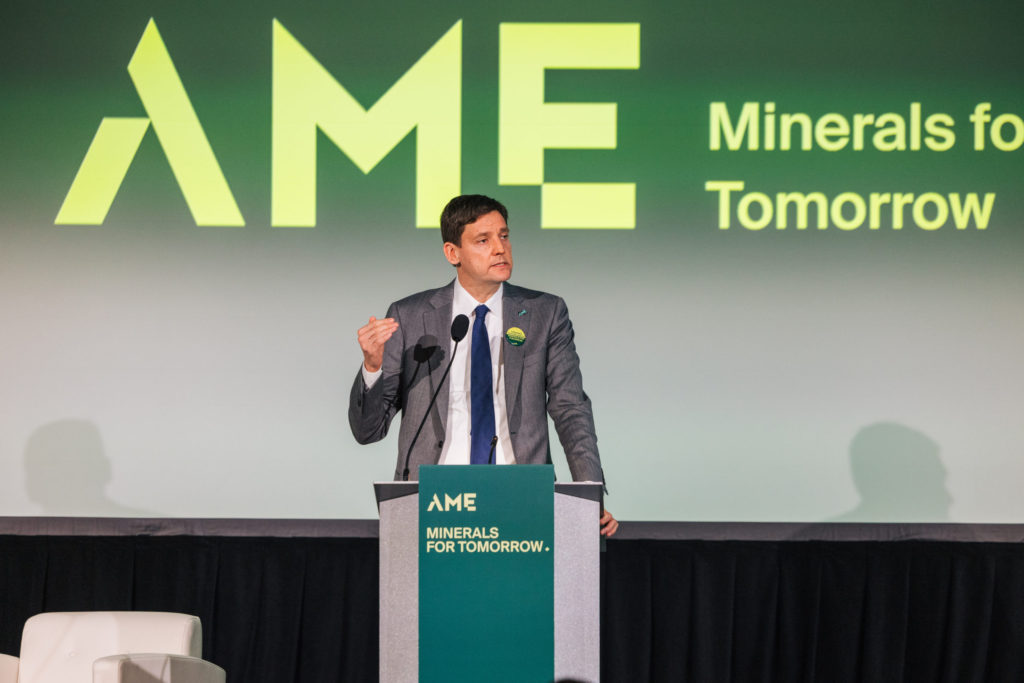
First reported on MINING.com
30 Second Briefing
British Columbia is adding C$3 million to shore up mineral claims permitting, with C$1 million for extra Ministry of Mining and Critical Minerals staff to enforce fixed timelines and C$2 million to bolster the Mineral Claims Consultation Framework (MCCF) launched in March 2025. The move comes as mineral exploration spending hits a record C$750.9 million, yet MCCF decisions are averaging 127 days against a 90–120 day target and mineral claims staking has fallen 29%, with a 60% drop in area staked versus the seven-year average. AME CEO Todd Stone said the funding is critical for prospectors and juniors seeking predictable approvals.
Technical Brief
- Funding announcement was timed with AME Roundup 2026’s opening ceremony in Vancouver, signalling sector focus.
- Record C$750.9 million exploration spend is only the fourth highest since 1990 after inflation adjustment.
- Ministry of Mining and Critical Minerals publicly released staking statistics, enabling quantitative tracking of regulatory impacts.
- AME explicitly links “properly resourcing” MCCF to restoring early-stage prospecting and grassroots exploration activity.
- Fixed permitting timelines are being framed as a government “promise”, creating political as well as operational risk if missed.
- AME’s Minerals for Tomorrow campaign connects exploration permitting capacity directly to supply chains for clean tech and defence.
Our Take
British Columbia’s move to shore up mineral claims processing for copper and other critical minerals sits alongside federal-level financing tools such as the Canadian Infrastructure Bank’s recent critical minerals mandate shift, signalling that explorers in BC could increasingly stack streamlined permitting with concessional capital for early-stage projects.
In our database of Policy pieces, Canada-linked critical minerals stories are clustering around both regulatory frameworks and funding mechanisms, suggesting that jurisdictions like British Columbia are trying to compete not just on geology but on administrative certainty and time-to-permit for copper and gold exploration.
The recorded 29% drop in mineral claims staking and 60% fall in area staked in British Columbia implies that, unless the new C$1 million staff support and MCCF funding quickly close the gap between the current 127‑day average and the 90–120‑day target, BC risks losing ground to other Canadian regions that are already courting critical minerals explorers with faster approvals.
Prepared by collating external sources, AI-assisted tools, and Geomechanics.io’s proprietary mining database, then reviewed for technical accuracy & edited by our geotechnical team.
Related Articles



Related Industries & Products
Mining
Geotechnical software solutions for mining operations including CMRR analysis, hydrogeological testing, and data management.
Construction
Quality control software for construction companies with material testing, batch tracking, and compliance management.
CMRR-io
Streamline coal mine roof stability assessments with our cloud-based CMRR software featuring automated calculations, multi-scenario analysis, and collaborative workflows.
HYDROGEO-io
Comprehensive hydrogeological testing platform for managing, analysing, and reporting on packer tests, lugeon values, and hydraulic conductivity assessments.
GEODB-io
Centralised geotechnical data management solution for storing, accessing, and analysing all your site investigation and material testing data.