Geomechanics.io

  • Free Tools
Sign UpLog In
Built byBoxcut Studio

Geomechanics.io

Geomechanics, Streamlined.

© 2026 Geomechanics.io. All rights reserved.

Geomechanics.io

CMRR-ioGEODB-ioHYDROGEO-ioQCDB-ioFree Tools & CalculatorsBlogLatest Industry News

Industries

MiningConstructionTunnelling

Company

Terms of UsePrivacy PolicyLinkedIn
    Failure
    Safety
    Standard/Guideline

    MPs urge SFO probe into ECO insulation scandal: quality and risk lessons for engineers

    January 24, 2026|

    Reviewed by Joe Ashwell

    MPs urge SFO probe into ECO insulation scandal: quality and risk lessons for engineers

    First reported on The Construction Index

    30 Second Briefing

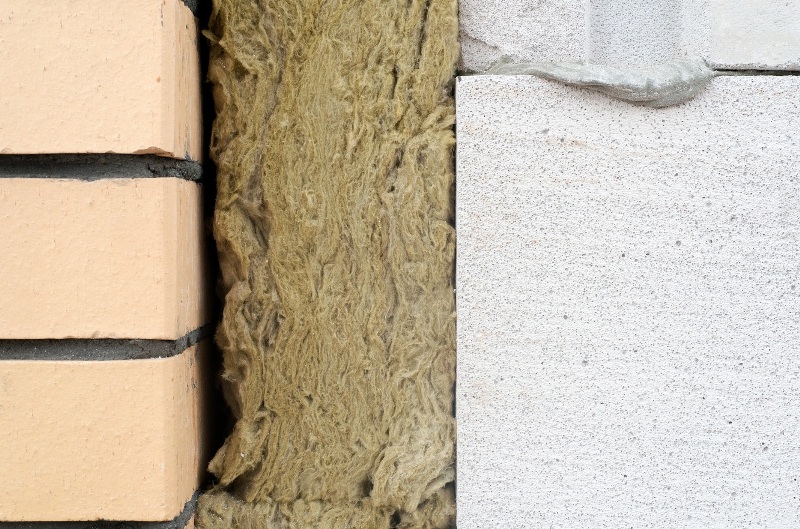
    MPs on the House of Commons public accounts committee have urged ministers to refer the Energy Company Obligation (ECO) insulation scandal to the Serious Fraud Office after the National Audit Office found 98% of external and 29% of internal wall insulation installed by mid‑January 2025 was defective. Ofgem has so far identified fraudulent installations worth 1.75% of scheme value, but PAC members believe actual fraud is far higher, citing systemic failure across DESNZ, TrustMark and UKAS, and a fragmented quality-assurance regime. The committee warns that the new Warm Homes Plan, expected to scale up measures such as solar PV and further retrofit, must be backed by far tighter technical oversight and accountability to avoid repeating these failures.

    Technical Brief

    • PAC describes the ECO redesign as “doomed to failure” due to fragmented, siloed oversight structures.
    • DESNZ took two years to recognise systemic quality problems, allowing large volumes of defective work to accumulate.
    • TrustMark and UKAS admitted missing early risk signals, despite holding accreditation and technical assurance roles.
    • Recommended remediation demands coordinated surveys, risk prioritisation and funding clarity to avoid homeowners bearing repair costs.
    • Monitoring going forward will need centralised defect data, clear responsibility for fraud detection and rapid stop‑work triggers.

    Our Take

    Within our 96 Policy stories, the United Kingdom features frequently in pieces tagged 'Safety' and 'Standard/Guideline', signalling that UK regulators such as Ofgem and TrustMark are under sustained scrutiny for how effectively they translate policy into enforceable technical standards.

    A 98% defective external wall insulation rate under the ECO scheme is extreme even by the standards of our 346 tag-matched 'Failure' items, suggesting that future UK retrofit or Warm Homes Plan contracts are likely to embed much tighter installation verification and independent accreditation requirements.

    For contractors and certifiers operating in the UK, the combination of high defect rates and Ofgem’s quantified 1.75% fraud finding increases the likelihood that DESNZ and the Serious Fraud Office will push for more forensic data trails on installations, making record-keeping and traceable workmanship a core commercial risk issue rather than an administrative afterthought.

    Geotechnical Software for Modern Teams

    Centralise site data, logs, and lab results with GEODB-io, CMRR-io, and HYDROGEO-io.

    No credit card required.

    • Save and export unlimited calculations
    • Advanced data visualisation
    • Generate professional PDF reports
    • Cloud storage for all your projects

    Prepared by collating external sources, AI-assisted tools, and Geomechanics.io’s proprietary mining database, then reviewed for technical accuracy & edited by our geotechnical team.

    Related Articles

    Conservatives to scrap Environment Agency and Natural England: risk lens for engineers
    Policy
    1 day ago

    Conservatives to scrap Environment Agency and Natural England: risk lens for engineers

    Conservative Party leaders are preparing an election pledge to abolish the Environment Agency and Natural England, removing the current statutory regulators for flood risk management, main river consents, environmental permits and protected habitats. Scrapping these bodies would affect technical approvals for flood defences, reservoir safety oversight, abstraction licences and environmental impact assessments on major road, rail and energy schemes. Engineers could face a restructured or entirely new permitting regime, with uncertainty over design standards, programme risk and long-term asset maintenance responsibilities.

    ORR cuts third party rail charges: project delivery implications for engineers
    Policy
    4 days ago

    ORR cuts third party rail charges: project delivery implications for engineers

    The Office of Rail and Road has reduced the charges that third parties pay to fund upgrades and maintenance on the UK rail network, aiming to cut project costs for developers and investors. Lower access and investment charges are expected to make it more viable for ports, freight terminals and property-led schemes to finance track, signalling and station enhancements tied to their own developments. For civil and rail engineers, the change could unlock more privately backed schemes and require closer early-stage coordination on asset standards, possession planning and long-term maintenance responsibilities.

    Space miners’ Earth-sized tax problem: policy design notes for project teams
    Policy
    5 days ago

    Space miners’ Earth-sized tax problem: policy design notes for project teams

    Space mining ventures could face a UN-style global tax regime, with Petr Zimčík of NEWTON University proposing a Space Resources Tax Authority linked to COPUOS and a three-stage levy: a small extraction fee, a larger tax at sale or consumption, and final settlement if material enters Earth markets. The core tax would target economic rent only after recovery of capital and operating costs, with thresholds set in a basket-based international accounting unit to neutralise inflation and currency swings. A fixed share of revenue would fund a Global Space Resource Dividend and a separate Global Development Fund, using population, development gaps and space-sector contributions to allocate proceeds without conferring property rights over celestial bodies.

    Related Industries & Products

    Mining

    Geotechnical software solutions for mining operations including CMRR analysis, hydrogeological testing, and data management.

    CMRR-io

    Streamline coal mine roof stability assessments with our cloud-based CMRR software featuring automated calculations, multi-scenario analysis, and collaborative workflows.

    HYDROGEO-io

    Comprehensive hydrogeological testing platform for managing, analysing, and reporting on packer tests, lugeon values, and hydraulic conductivity assessments.

    GEODB-io

    Centralised geotechnical data management solution for storing, accessing, and analysing all your site investigation and material testing data.

    AllGeotechnicalInfrastructureHazardsEnvironmental