Geomechanics, Streamlined.
© 2026 Geomechanics.io. All rights reserved.
50 articles tagged with Safety
Develon has launched the 32‑tonne DX300LC‑9 excavator to its Series 9 range, powered by a DX08 engine delivering 207 kW at 1,800 rpm and 1,230 kgf·m torque, with a maximum digging depth of 7.3 m and reach of 10.5 m. A super long reach variant, the DX300SLR‑9, extends reach by a further metre over the previous DX300SLR‑7 for applications such as riverworks and slope stabilisation. The machine adds electro‑hydraulic control, 360° Smart Around View Monitor, AI‑based person detection with E‑Stop, virtual walls, Advanced Lift Assist and ultra‑low 67 dBA cab noise.
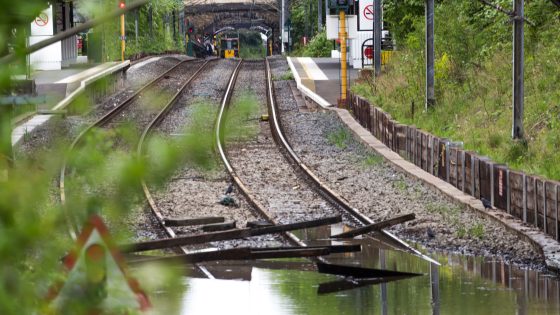
Plans to make Wellington station in Shropshire fully step-free have been approved, with construction of a new footbridge and two passenger lifts due to start later this year. The scheme will replace the existing stair-only bridge to provide lift access between platforms, improving vertical circulation for wheelchair users, passengers with luggage and those with limited mobility. Contractors will need to manage works within a live rail environment, coordinating possessions and maintaining safe passenger flows during bridge removal and lift shaft construction.
Copper held at $14,446/t on the LME on Tuesday, near this month’s $14,875 record, as workers in two unions at Antofagasta’s Centinela mine in Chile rejected a final contract offer and triggered a mediation period ahead of a possible strike. Wage talks at BHP’s Escondida, the world’s largest copper mine, have also been delayed after a fatal accident, compounding supply concerns. ICSG data show mine output running at an annualised 23 Mt in July versus refined demand of 29 Mt and supply of 28.4 Mt, with Deutsche Bank projecting prices could reach $22,000/t by Q2 2027.
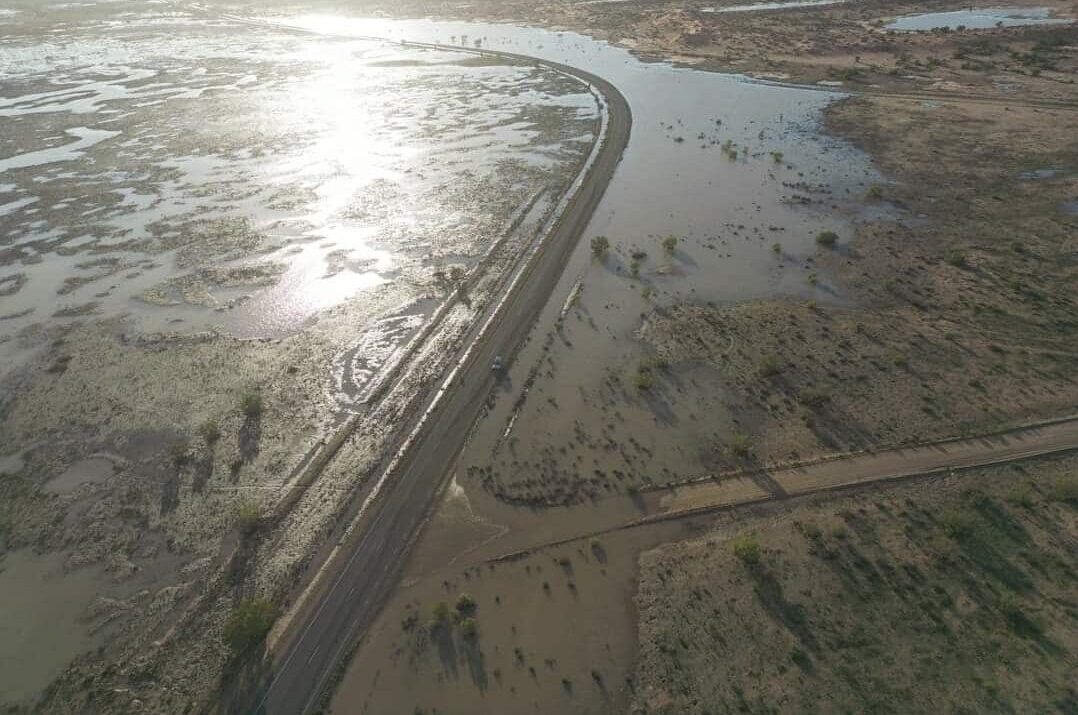
Ongoing works to fully seal the 472‑kilometre Strzelecki Track between Lyndhurst and Innamincka in outback South Australia are accelerating after completion of a major milestone on the $215 million upgrade. The formerly unsealed freight route, which suffered severe flooding and closures in 2024, is being progressively converted to an all‑weather sealed standard to support heavy vehicle access to remote communities and energy projects. For designers and contractors, key issues include pavement design for expansive clays, flood‑resilient drainage, and construction logistics over long, isolated sections.
Government Actuary’s Department actuaries have delivered probabilistic analysis to the Office of Rail and Road on how climate-related hazards such as extreme rainfall, heat and flooding are evolving across UK rail and strategic road assets. Using long‑term climate projections and hazard frequency–severity modelling, the work maps where risks to embankments, cuttings, track buckling and drainage exceedances are likely to increase. The outputs will feed into ORR’s scrutiny of Network Rail and National Highways’ asset management, resilience upgrades and future capital planning.
Above-ground risks have imposed or frozen more than $54 billion in Latin American mining since 2018, including a $31.7‑billion settlement for the 2015 Mariana tailings dam failure in Brazil and roughly $7 billion in stalled Peruvian copper projects plus $4 billion tied up in Mexico’s El Arco, San Nicolás and Cordero developments. AMI also cites Panama’s $6.8‑billion Cobre Panamá copper mine closure and over 700 days of transport-corridor blockades at Peru’s Las Bambas as emblematic of execution and social risk. Consultants report investors now heavily discount projects with uncertain permitting timelines, weak institutional legitimacy or high exposure to illegal mining.
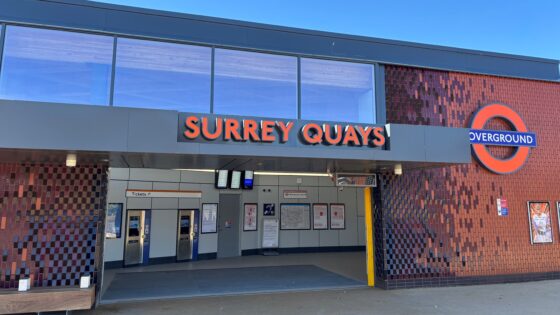
Step-free upgrades at Surrey Quays and Northolt stations have been completed under a £15.3M Transport for London programme to provide level access for wheelchair users, buggies and luggage. Works included new lifts integrated into existing station structures, regraded or rebuilt platforms to remove stepping gaps, and structural alterations within constrained Victorian and mid‑20th‑century fabric. For civil engineers, the schemes illustrate typical retrofit challenges: limited possession windows, maintaining live services, and threading new lift shafts and circulation routes through heavily used, spatially constrained assets.
The Environment Agency has submitted a planning application for the Portreath Flood Alleviation Scheme in Cornwall, centred on safeguarding a 95-year-old coastal tunnel that currently conveys storm flows through the village. The scheme is described as a major capital investment to protect homes, businesses and community facilities from coastal and fluvial flooding, following repeated storm damage to Portreath’s seafront infrastructure in recent winters. For geotechnical and civil teams, key issues will include assessing the existing tunnel’s structural condition, lining options and hydraulic capacity under future climate-driven peak flows.
A trackside fire reported and extinguished on Sunday 27 September near Clapham Junction has severely damaged signalling equipment, forcing an “extremely reduced train service” to and from London Victoria until at least 14:00 today. Network Rail signalling and permanent way teams worked overnight to reinstate key interlocking and lineside control circuits to keep a limited number of routes open through one of Europe’s busiest junctions. The incident exposes the vulnerability of legacy lineside signalling assets to localised fire and heat damage, with knock-on impacts on timetable resilience and maintenance planning.
Closed-door government briefings will be given to chief executives of UK critical national infrastructure operators on what security agencies describe as an elevated Russian threat, including potential cyber and hybrid attacks on energy, water, transport and communications networks. CNI leaders are expected to review physical protection of key assets such as substations, control rooms and data centres, alongside resilience of industrial control systems and SCADA networks. For civil and infrastructure engineers, this signals likely tightening of design, access control and redundancy requirements on new and existing strategic assets.
Neso issued an electricity margin notice (EMN) for the GB grid on 28 September, signalling that forecast supply was close to demand and inviting additional generation onto the system, before cancelling the notice later in the day as conditions eased. EMNs are a formal tool within the Balancing Mechanism, used when operating margins fall below Neso’s predefined security thresholds but before any controlled disconnections are considered. Grid planners, interconnector operators and flexible generators will note the tightness in capacity margins as an operational stress test ahead of peak winter demand.
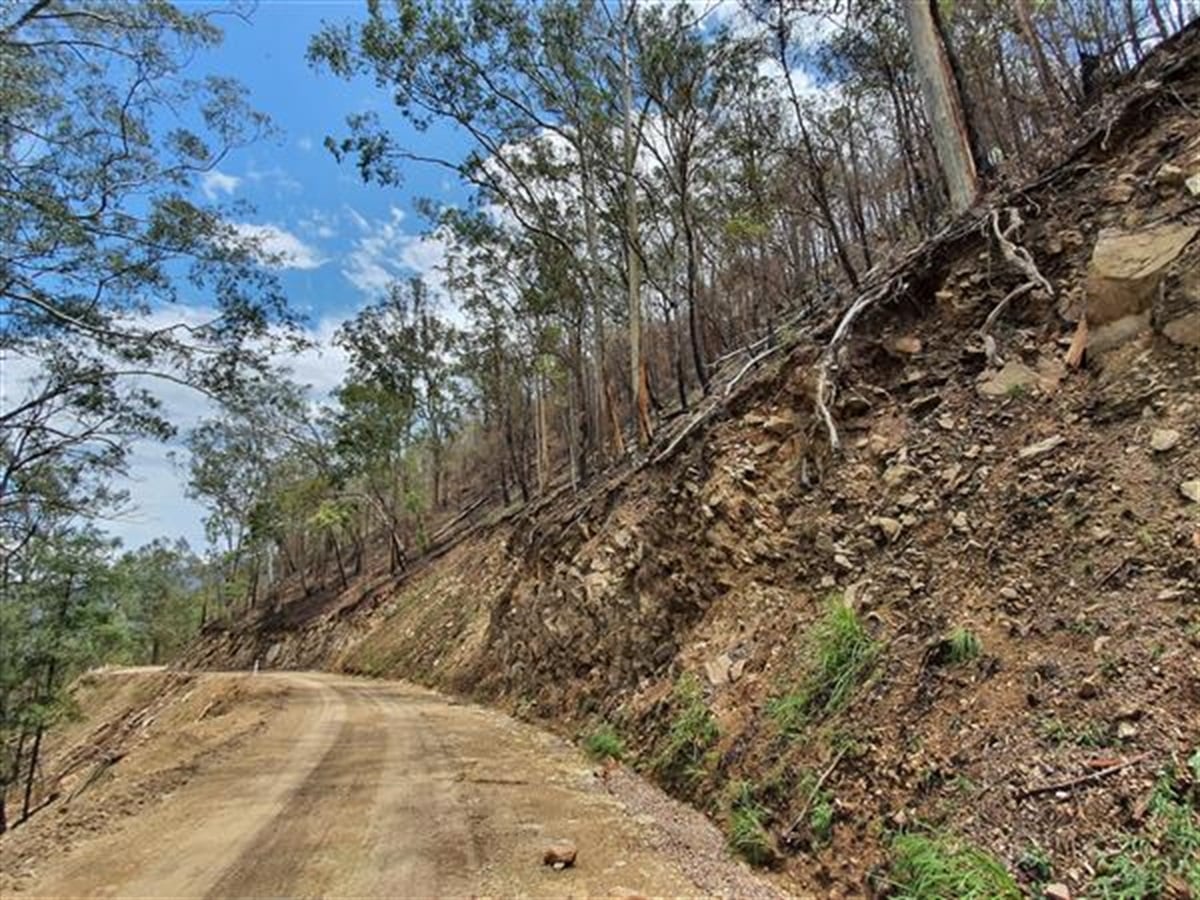
A $319 million contract has been awarded by Armidale Regional Council for the reconstruction of Kempsey–Armidale Road, the largest Essential Public Asset Restoration project yet undertaken in New South Wales. Works will focus on the Big Hill to Blackbird Flat section, where multiple landslips and slope failures have severely damaged the mountain road corridor. Geotechnical design and construction will centre on stabilising slip-prone cuttings and embankments, rebuilding pavement and drainage, and restoring reliable heavy-vehicle access between the coast and Northern Tablelands.
St James Limited, developer of the Corniche residential towers beside Vauxhall Bridge, and window designer Lindner Prater have been fined after a penthouse window fell from height and killed a passer-by. The incident involved a large glazed unit detaching from the upper storeys of the high-rise façade, raising concerns over fixings, installation quality and inspection regimes on complex curtain wall and window systems. The case signals closer scrutiny of façade design responsibility, CDM compliance and maintenance procedures on tall residential schemes in dense urban locations.
A new draft supplemental environmental impact statement from the US Army Corps of Engineers and BLM models a 27% tailings storage facility failure at NOVAGOLD’s proposed Donlin Gold mine in Alaska, warning a toxic wave could reach Crooked Creek village in 90 minutes, bury it in tailings and leave metal contamination in the Kuskokwim River basin for more than a century. The scenario, far larger than the previously assessed 0.5% spill, projects long-term erosion, groundwater mounding, altered stream channels and persistent reductions in fish abundance, with NGOs demanding analysis of a full dam failure. The 40-million-ounce, 2.22 g/t deposit is permitted for 1.1 million ounces per year over 27 years, but the SEIS outcome could modify, reaffirm or rescind the existing federal permit.
A2Dominion has appointed Kelly Harris as operations director for repairs, tasking her with leading the group’s end‑to‑end repairs and maintenance service across its social housing portfolio. With 20 years’ experience in social housing construction, refurbishment, repairs and maintenance, Harris has a record of running large operational teams and delivering safe, high‑quality programmes. Chief repairs officer Drew Warner said her focus on partnership working and continuous improvement will support ongoing efforts to strengthen repair delivery and customer experience.
Rapidly expanding connectivity in UK critical national infrastructure, coupled with AI‑enabled attackers, is driving what cybersecurity leaders describe as a “rising battlefield” for asset defence. New legislation is pushing operators of energy networks, water treatment works and transport control centres to adopt continuous monitoring, segmented operational technology (OT) networks and incident‑response drills tailored to SCADA and PLC environments. For civil and infrastructure engineers, this means early integration of cyber‑secure architectures into control rooms, sensor networks and remote access systems is becoming as fundamental as structural and geotechnical design.
BHP’s Escondida mine in Chile, the world’s largest copper operation at about 1.3 million tonnes per year and 58.5% owned by BHP with Rio Tinto holding 30%, is gradually restarting after a fatal accident halted production during record COMEX prices of $6.83 per pound. The restart comes as Shanghai Futures Exchange inventories sit near cyclical lows at roughly 47,000 tonnes and International Copper Study Group data show refined demand at an annualised 29 million tonnes versus 28.4 million tonnes of supply. BHP plans a new concentrator at Escondida within a growth pipeline targeting roughly 40% higher group copper output by fiscal 2035, reinforcing the mine’s leverage over market balance.
North America’s rare earth build‑out is racing ahead of its talent pipeline, with more than $10 billion committed to US rare earths and magnets but only about $180 million earmarked for mining education and just 14 accredited mining schools producing roughly 170–285 mining and mineral engineering graduates a year. The DOE’s PROSPECT programme, worth up to $100 million plus a $16 million Planning Prize, aims to double mining and supply‑chain credentials within two years, while proposed Department of War awards would send $32.7 million to Colorado School of Mines and $25 million to South Dakota Mines. Against DOE’s estimate of 6,000 new mining engineers needed over the next decade and a looming “grey tsunami” of 221,000 retirements by 2029, juniors already report junior geologists billing $500–$600 per day and 71% of mining leaders say talent shortages are constraining production.
Lithium-cesium-tantalum pegmatite projects are being advanced on simplified grade models that ignore strong mineralogical zoning, with cases such as Mount Marion showing fine-grained spodumene and high mica contents can destabilise DMS media, depress concentrate grades and force costly plant retrofits. At Canada’s Tanco pegmatite, assuming a uniform 60:40 spodumene–quartz intergrowth and overlooking iron and phosphate phases contributed to inefficient plant design and shutdowns. Patriot Battery Metals’ Shaakichiuwaanaan feasibility study similarly relies on a 1D Li₂O recovery formula, without 3D modelling of mica, arsenic and antimony domains that could flag low-density clay-rich zones and DMS underperformance.
UK infrastructure specialists are targeting large-scale storage, climate-resilient design and grid standardisation to shore up energy resilience as ageing 275kV and 400kV transmission assets meet rapidly growing offshore wind and solar connections. Engineers are modelling multi-day storage using grid-scale batteries and hydrogen-ready peaking plant, while revising substation and cable corridor designs for higher-intensity rainfall, coastal erosion and overheating risk. Standardised connection interfaces and digital twins for transmission–distribution boundaries are being pushed to cut reinforcement delays and manage increasingly intermittent generation profiles.
The UK government has committed £331M to climate resilience projects aimed at protecting critical infrastructure and improving access to clean water for vulnerable communities. Funding will support flood and coastal defence upgrades, nature-based solutions such as wetland and river restoration, and reinforcement of assets like water treatment works and strategic transport links exposed to extreme weather. Civil and geotechnical engineers should expect increased demand for resilient drainage design, asset hardening, and long-term performance assessment under more frequent high-intensity rainfall and coastal surge conditions.
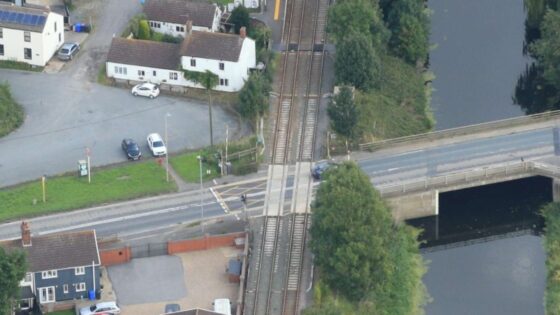
Network Rail will invest £1.4M to renew over 730m of track between Hubbert’s Bridge and Swineshead on the Boston–Sleaford line in Lincolnshire, targeting a known maintenance pinch point. Works will involve lifting and replacing rail, sleepers and ballast on this rural two-track section, where drainage and formation condition have previously constrained line speed and imposed temporary speed restrictions. Contractors will need to manage possessions on a mixed-traffic route carrying passenger services and agricultural freight, with careful staging to minimise disruption during the renewal.
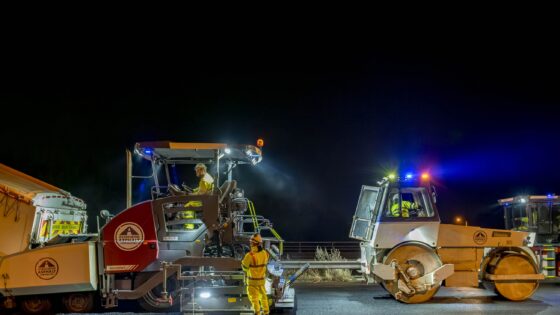
Associated Asphalt has completed a major maintenance programme on the M40, resurfacing and repairing approximately 75km of carriageway on one of the UK’s key north–south motorway links. Works are understood to have focused on high-stress sections, including lane 1 heavy goods vehicle tracks and junction merge/diverge areas, using modern asphalt surfacing systems to improve skid resistance and durability. For geotechnical and pavement engineers, the scale of intervention on a live motorway highlights ongoing asset management demands on ageing flexible pavements under rising traffic and axle loads.
Southern Water is rolling out a distributed fibre‑optic leak‑detection system from UK firm Lightsonic on trunk mains across the south of England to cut losses as drought risk and network age increase. The technology uses continuous fibre along the pipeline to sense acoustic and temperature changes in real time, allowing operators to pinpoint leaks to within metres and respond before major bursts develop. For civil and water engineers, this signals growing deployment of long‑range, permanently installed monitoring rather than spot surveys on critical transmission assets.
WindowMaster and Fieger have agreed a façade partnership that combines EN 12101-2 tested smoke extraction and natural/hybrid ventilation into a single, integrated louvre-window system planned from the first design meeting. The deal gives WindowMaster exclusive sales rights for Fieger louvre solutions in the UK, Ireland, Nordics, Baltic states and North America, with non-exclusive rights in Germany, Switzerland and France, targeting major façade markets. For high-rises, multi-storey stairwells, atriums and public buildings, one façade opening now provides both everyday comfort ventilation and automatic smoke and heat exhaust linked to detectors and fire panels.
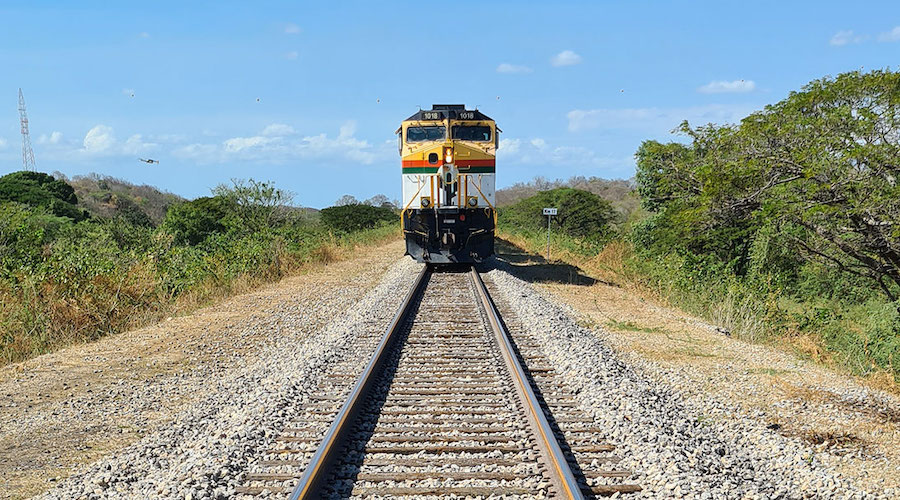
Glencore has halted rail operations at its Cerrejón coal mine in Colombia after explosives hit its 150 km railway near Uribia, La Guajira, damaging a train in the sixth attack on the corridor this year. The mine itself, one of the world’s largest open pits with 2025 output of 16.8 million tonnes, continues operating while the National Army secures the line and engineers await access for damage assessment. Prolonged repairs could again choke inbound supplies and coal exports via Puerto Bolívar, exposing the operation’s heavy reliance on a single transport corridor.
BHP has suspended all operational activities at the Escondida copper mine in Chile’s Antofagasta region after a worker was killed during maintenance involving a front-end loader, with Chile’s Sernageomin deploying a regional investigation team to site. The fatality comes as BHP, which holds a 57.5% stake in Escondida alongside Rio Tinto’s 30%, is in contract negotiations with mine workers, with a vote due by the end of September. Any prolonged shutdown or subsequent strike could materially disrupt output at the world’s largest copper mine.
Jevons Robotics has launched the ARTEV1000 Pre-Split System, a battery-electric robotic platform that automates loading of packaged pre-split explosives on highwalls. The system shifts all explosive loading and deployment equipment handling to remote operation, removing personnel from the highwall face and eliminating manual lifting of explosive packages. For drill-and-blast engineers, this points to tighter control of pre-split geometry and reduced exposure during highwall conditioning, especially on benches where ground conditions or scale make conventional manual loading high risk.
Removal of the Webster Street level crossing in Dandenong marks Victoria’s 96th level crossing removal under the State Government’s 10‑year programme to improve rail–road interfaces across greater Melbourne. The project delivers a 450‑metre road underpass extending Cheltenham Road beneath the rail corridor, eliminating at‑grade conflict and allowing Webster Street to be closed at the former crossing. For designers and contractors, the scheme adds another cut‑and‑cover underpass to Melbourne’s portfolio, with ongoing implications for groundwater control, retaining structures and long‑term settlement performance along the corridor.
The upgraded Granite Creek Rest Area between Gin Gin and Benaraby on Queensland’s Bruce Highway has reopened, adding dedicated heavy vehicle parking and improved amenities for long-distance freight and light vehicle traffic. Works include reconfigured parking bays to separate trucks from cars, upgraded lighting and sightlines, and safer entry/exit tapers designed for highway speeds. For road designers and asset managers, the project signals continued incremental safety upgrades along this high‑volume freight corridor rather than major capacity expansion.
Sandvik Australia, New Zealand and Papua New Guinea sales area vice president Craig Johnston says Australia’s highly competitive mining market is driving demand for proven underground loaders and drills backed by strong aftermarket support and expanding digital and automation platforms. Johnston points to mine-wide automation architectures, data-driven fleet optimisation and remote monitoring as priorities, with Sandvik integrating these across existing equipment fleets rather than only new capital projects. For geotechnical and operations teams, the message is tighter linkage between equipment health data, production KPIs and long-term asset planning.
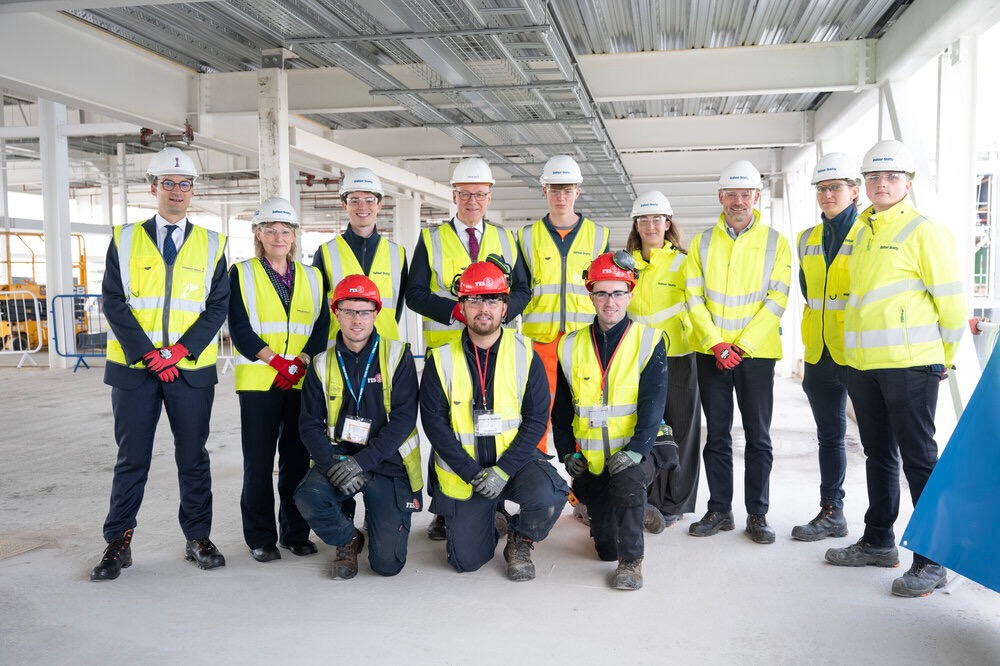
Balfour Beatty is delivering a £65m two-storey terminal expansion at Edinburgh Airport, adding eight new departure gates as the first phase of a £500m, five-year capital programme to increase passenger capacity. Recent works include installing eight link bridges in a live, fully operational airside environment, building on earlier upgrades such as the £8m Security Futures Project with new CT security screening, a baggage hall expansion and modernised fire station facilities. The scheme demands tight phasing, airside safety controls and minimal disruption to Scotland’s busiest airport.
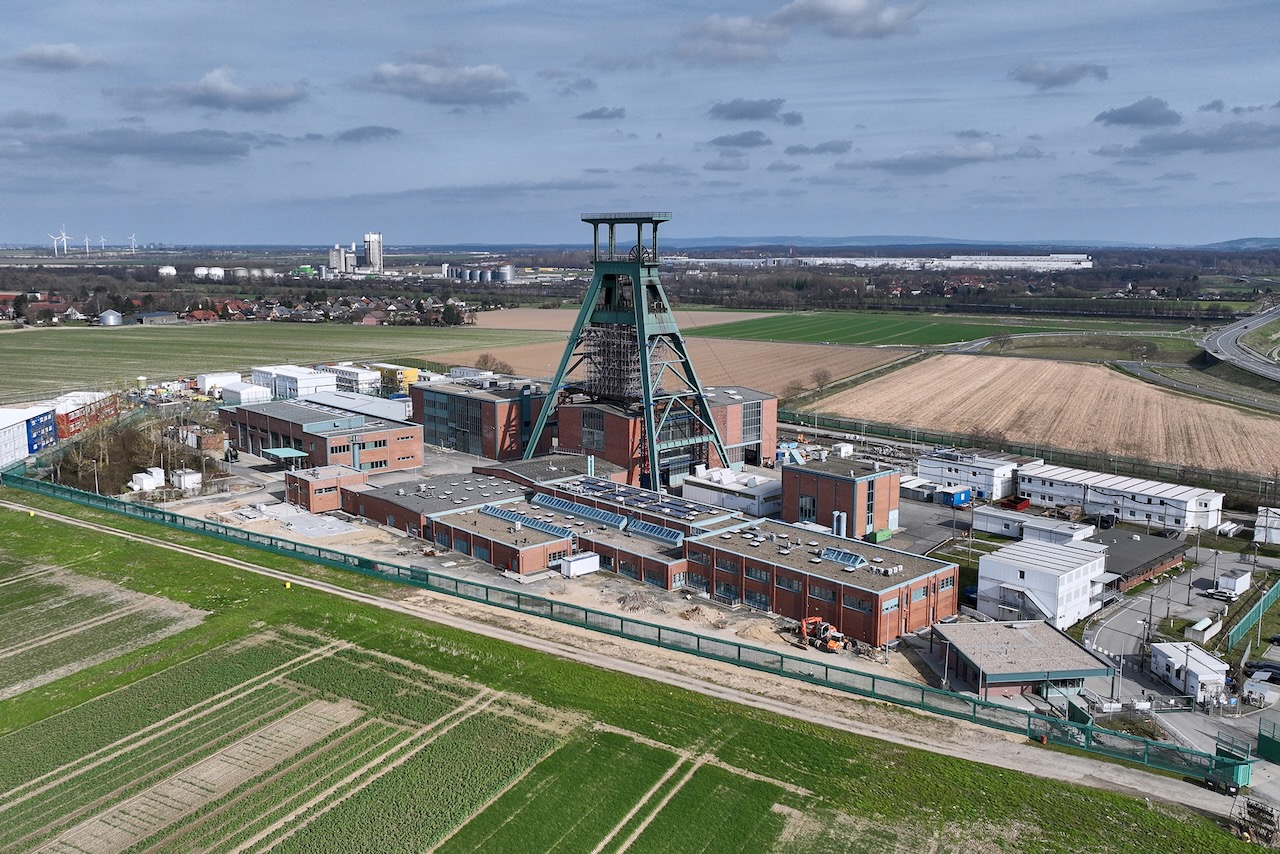
Jacobs has been appointed by Germany’s Bundesgesellschaft für Endlagerung (BGE) to provide project support for the Konrad Repository in Salzgitter, a low- and intermediate-level radioactive waste facility being developed within existing underground mining structures. The contract covers assessment of construction progress, validation of planning assumptions, schedule and cost plan reviews, and implementation of efficiency improvements under combined mining, nuclear and seismic regulatory constraints. Jacobs will align construction activities, timelines and cost structures with on-site conditions, drawing on experience from Sellafield and Belgian radioactive waste treatment and storage projects.
Further details on the Atomic Weapons Establishment’s Future Materials Campus confirm it as a core facility within a multi-year, multi‑billion‑pound infrastructure upgrade to support UK nuclear warhead research and lifecycle management. The FMC will concentrate advanced materials characterisation, high‑integrity manufacturing development and long‑term performance testing on a single secure site, reducing reliance on ageing dispersed laboratories. For civil and structural engineers, the scheme signals demand for heavily serviced, high‑specification laboratories and containment structures with stringent security, vibration control and resilience requirements.
A major gas leak in the Ladygrove area of Didcot, Oxfordshire forced suspension of GWR rail services between Reading and Swindon and long-distance trains routed through the corridor, as SGN engineers worked overnight to locate and make safe the affected main. Rail operations were halted while gas levels were monitored and exclusion zones maintained around the railway and nearby properties, with emergency access coordinated along the Didcot–Swindon line. The incident underlines the operational vulnerability of busy electrified main lines to third-party utility failures and the need for tightly managed rail–utility interfaces.
Ok Tedi Mining has commissioned two ArcSAR Neo slope stability monitoring radar systems from IDS GeoRadar at its Papua New Guinea copper-gold operation, becoming the first mine globally to deploy the new platform. The ArcSAR Neo units provide continuous, high-resolution displacement monitoring of pit walls, using arc-scanning radar and advanced processing to detect millimetre-scale movements in real time. For geotechnical teams, the dual-system deployment increases spatial coverage and redundancy for critical slope risk management in a high-rainfall, structurally complex open pit.
BME, an Omnia Holdings company, has developed a Portable Training Unit to give underground blasting and explosives operators realistic, hands-on training rather than relying solely on classroom instruction. The mobile platform is designed to simulate field procedures and equipment handling so mines can build operator competency, reduce misfires and handling errors, and better protect production assets. For geotechnical and production engineers, this points to closer integration of explosives training with ground control plans and asset integrity management.
Network Rail is delivering £41M of earthworks across key North West rail corridors to improve cuttings and embankments against winter rainfall, freeze–thaw and slope instability. Works are expected to include regrading and strengthening of existing earthwork assets, improved drainage systems and renewed trackside access to reduce washouts, slips and emergency speed restrictions. Geotechnical teams will need to manage construction around live traffic, legacy Victorian earth structures and variable ground conditions typical of the region’s glacial tills and weathered rock.
Strike action by uranium enrichment workers at Urenco’s Capenhurst nuclear site in Cheshire has been called off after management tabled an improved pay offer. The Capenhurst facility, which handles enrichment and deconversion operations for nuclear fuel supply, had faced potential disruption that could have affected maintenance schedules on critical process plant and associated civil infrastructure. Resolution of the dispute stabilises workforce availability for ongoing asset integrity work, including inspection, containment upgrades and long-term decommissioning planning.
Mental health in construction is being reframed as a shared duty across project teams, with particular concern for site-based staff working long shifts, irregular nights and high-pressure possession windows. Industry bodies such as the Institution of Civil Engineers and major contractors are expanding mental health first aider schemes, toolbox talks and confidential helplines alongside traditional safety briefings. For engineers, this means factoring psychological risk into CDM planning, site supervision and contract programming, not just physical hazards and productivity targets.
Trustee’s view on “Growing together” stresses that civil engineers and technicians must adapt their skills and professional standards to deliver resilient infrastructure under climate stress, ageing assets and tighter carbon targets. The piece focuses on supporting sustainable communities through better whole-life asset management, more collaborative project delivery and stronger links between design offices, site teams and local authorities. For practitioners, it signals continued emphasis on competence, ethics and ongoing training as core to managing risk and performance on complex infrastructure networks.
Industry geotechnical specialists at the John Mitchell lecture warned that UK foundation design on chalk is still misjudging key behaviours such as solution features, variable weathering profiles and the risk of brittle collapse under cyclic loading. Speakers pointed to recent pile and shallow foundation projects where inadequate chalk characterisation, limited core recovery and over-reliance on generic SPT correlations led to unexpected settlements and construction delays. Attendees were urged to adopt more rigorous chalk-specific investigation, including targeted boreholes, high-quality sampling and site-specific load testing, before finalising foundation schemes.
Hundreds of new apprentices have been recruited into UK infrastructure by firms including Thames Water, Amey and Spencer Group, signalling a push to rebuild site-based and technical capability. Intakes are focused on civil engineering, utilities and rail maintenance roles, feeding skills into long-term asset programmes such as water network upgrades and major highways frameworks. Contractors are likely to use the expanded apprentice cohorts to address ageing workforces and shortages in groundworks, structures and asset inspection competencies.
Network Rail will invest £13M over Christmas to replace 1960s overhead line equipment at Birmingham New Street station, targeting ageing gantries, contact wires and insulators that have become a major cause of unplanned power failures. Works will be concentrated in a tight blockade to minimise disruption on the West Coast Main Line, with staged isolations and temporary speed restrictions required as spans are rewired and new structures installed. For designers and contractors, the scheme signals continued priority for OLE resilience upgrades on intensively used, multi-track urban throats.
Mining companies in Burkina Faso and Mali have built “mini armies” and effectively turned mine sites into “mini states” as central governments and local militaries lose control of territory, says George McLeod of Critical Risk Team. Operations are being maintained by focusing narrowly on secure logistics corridors for inbound supplies and outbound concentrate, allowing projects to function in what he calls a “complete and total power vacuum”. McLeod also expects China’s dominance in rare earths refining to erode within about three years as Australia, the US and Brazil commission new processing capacity and substitution technologies reduce demand.
Michael Caltabiano, Chief Executive Officer of the National Transport Research Organisation, outlines future priorities for Australian transport research, focusing on road safety, emerging vehicle and sensor technologies, and community expectations around network performance. He discusses how NTRO’s work on pavement materials, asset management and data-driven planning is feeding into long-term infrastructure strategies across state and local road networks. For engineers, the conversation signals growing emphasis on evidence-based design, whole-of-life asset performance and integrating new vehicle technologies into existing corridors.
A construction tender has opened to upgrade the Stuart Highway–Schwarz Crescent intersection in Alice Springs, targeting safer pedestrian movements between the eastern suburbs and the town centre and improving access to nearby schools and businesses. Works will realign Schwarz Crescent and reconfigure the intersection geometry to reduce conflict points between vehicles and crossing pedestrians. Civil contractors can expect typical urban arterial treatments, likely including new kerb alignments, signal and crossing upgrades, and drainage adjustments within a constrained existing corridor.
Proof-of-concept tests have been completed on the UKRI-supported Manufacturer’s Information Hub (MIH), a not-for-profit platform to share structured construction product data across Europe via a standard API. Phase one defined how to connect manufacturer databases, created requirements for a standard data dictionary to validate and present attributes, and set rules to cut complexity and compliance risk around safety and environmental performance. Subject to funding, a small-scale working prototype linking a handful of manufacturers and users is targeted for spring 2027, with full-scale testing through 2027 and initial platform functionality from 2028.
Government has been accused of having no contingency plan for large-scale data centres if an AI investment bubble bursts and facilities become stranded assets, a gap campaigners call “alarming”. With new hyperscale campuses typically demanding tens of megawatts of grid capacity, deep foundations, extensive cooling infrastructure and multi-decade planning consents, critics warn that unplanned obsolescence could leave local authorities managing redundant, highly serviced shells. Engineers are urged to consider future-proofing, adaptive reuse of high-spec M&E systems, and decommissioning strategies at the planning and design stage.
Deployment of on-board overhead line (OHL) and track defect monitoring systems across GBR Anglia routes is being used to capture live condition data directly from in-service trains, rather than relying solely on periodic inspection trains. Instrumented rolling stock is recording contact wire geometry, stagger and uplift, as well as railhead condition and track geometry, allowing faults to be geo‑referenced to specific masts, spans and sleepers. The joined‑up approach is intended to tighten maintenance intervals, prioritise high‑risk locations and reduce disruptive manual access to the four‑foot and cess.