Geomechanics.io

  • Free Tools
Sign UpLog In

Geomechanics.io

Geomechanics, Streamlined.

© 2026 Geomechanics.io. All rights reserved.

Geomechanics.io

CMRR-ioGEODB-ioHYDROGEO-ioQCDB-ioFree Tools & CalculatorsBlogLatest Industry News

Industries

MiningConstructionTunnelling

Company

Terms of UsePrivacy PolicyLinkedIn
    AllGeotechnicalMiningInfrastructureMaterialsHazardsEnvironmentalSoftwarePolicy
    Projects
    Contract Award
    Sustainability
    Safety

    Mackley Thames foreshore works: flood defence and habitat design notes for engineers

    February 6, 2026|

    Reviewed by Joe Ashwell

    Mackley Thames foreshore works: flood defence and habitat design notes for engineers

    First reported on The Construction Index

    30 Second Briefing

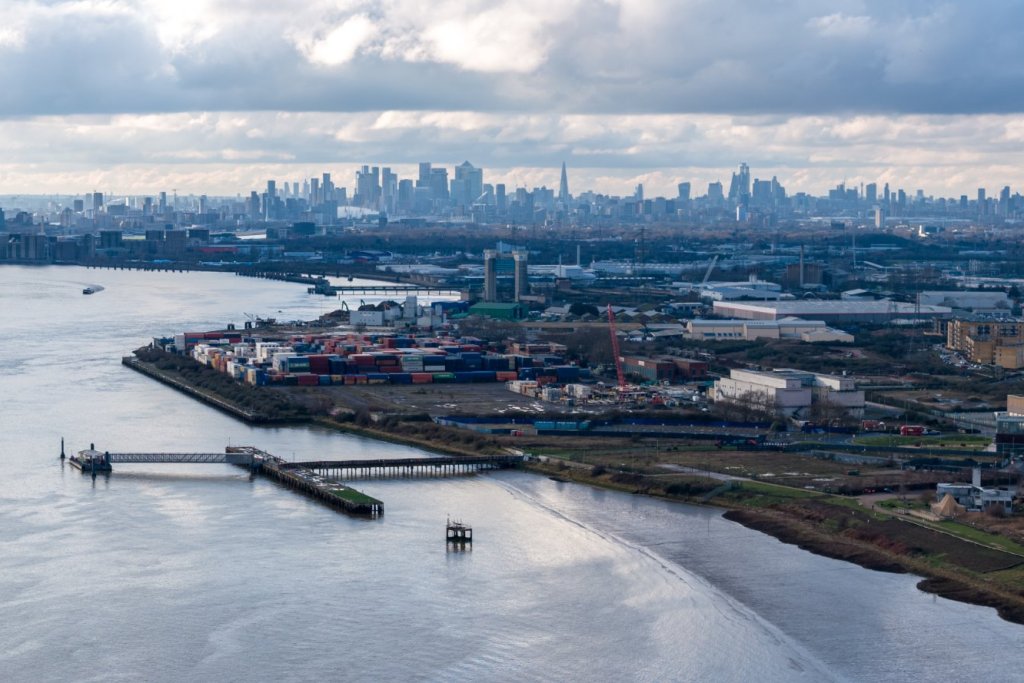
    Mackley has secured a £12m contract from Barking Riverside Limited to remodel 500 metres of Thames foreshore in east London, raising the flood defence crest from +7.1mOD to +8.2mOD in line with the Thames Estuary 2100 strategy. Works, starting February 2026 and lasting about 14 months, will use regrading, reinforced concrete walls and localised sheet piling, with surface water managed via swales, attenuation basins and storage tanks. The scheme adds a new riverside terrace east of Barking Riverside Pier, upgraded pedestrian routes and 1,250 m² of new intertidal habitat, integrating utilities corridors, fire access and ecological mitigation.

    Technical Brief

    • Fire and maintenance access routes are being hard‑wired into the foreshore geometry and structural layout.
    • Utilities corridors are integrated into the defence and public realm, constraining wall alignments and excavation sequencing.
    • Ecological mitigation is targeted at protecting and recreating priority foreshore habitats while reshaping public realm.
    • For similar estuary schemes, early integration of habitat creation with flood defence geometry is becoming standard practice.

    Our Take

    Lifting the Barking Riverside Thames defence crest from 7.1 mOD to 8.2 mOD aligns with the higher end of London river-wall upgrade levels in our database, signalling that BRL and the Mayor of London are designing for more conservative sea-level rise and storm surge allowances than many legacy assets along the estuary.

    A £12 million package over 500 m of frontage implies a relatively high unit cost compared with other recent UK foreshore and floodwall refurbishments, which likely reflects constrained urban access, integration with the new Barking Riverside Pier, and tighter environmental and safety controls on the Thames foreshore.

    With construction not starting until February 2026 and a 14‑month programme, Barking Riverside’s schedule will overlap with several other London river infrastructure schemes in our coverage, which may tighten the local market for specialist marine contractors and temporary works designers familiar with Thames Estuary conditions.

    Geotechnical Software for Modern Teams

    Centralise site data, logs, and lab results with GEODB-io, CMRR-io, and HYDROGEO-io.

    No credit card required.

    • Save and export unlimited calculations
    • Advanced data visualisation
    • Generate professional PDF reports
    • Cloud storage for all your projects

    Prepared by collating external sources, AI-assisted tools, and Geomechanics.io’s proprietary mining database, then reviewed for technical accuracy & edited by our geotechnical team.

    Related Articles

    Panama Canal Mixshield undercrossing: design and tunnelling lessons for engineers
    Infrastructure
    in 10 months

    Panama Canal Mixshield undercrossing: design and tunnelling lessons for engineers

    A 13.46m diameter Herrenknecht Mixshield TBM has broken through into the future Balboa station on Panama Metro Line 3 after completing the first-ever TBM undercrossing of the Panama Canal at depths exceeding 60m below sea level. The 5,600kW, 26,616kNm machine, fitted with an accessible cutterhead and more than 4,500 sensors linked via the Herrenknecht.Connected platform, has achieved peak advance of 150 segment rings (about 300m) per month through mixed sandstone, tuff, breccias and basalt. Around 1.5km of the 4.5km twin-track tunnel remains to final breakthrough.

    Hudson Tunnel funding deadline: schedule and risk takeaways for project teams
    Infrastructure
    in 9 months

    Hudson Tunnel funding deadline: schedule and risk takeaways for project teams

    Federal funding for New York’s US$16bn Hudson Tunnel Project has been frozen, forcing the Gateway Development Commission to suspend works from 6 February after spending over US$1bn and employing about 1,000 site workers. A Manhattan federal judge has issued a temporary restraining order, giving the administration until 5 p.m. on 12 February to restore reimbursements or appeal, while contractors warn that demobilisation, resequencing and remobilisation will add cost and delay. Sites are now in “safe-pause” mode, with dewatering, ground support and environmental monitoring maintained, and assembly of two Herrenknecht TBMs in New Jersey likely to slip beyond the planned spring 2026 launch without funding certainty.

    Implenia/Marti JV MehrSpur Zurich–Winterthur: design and risk notes for engineers
    Infrastructure
    in 5 months

    Implenia/Marti JV MehrSpur Zurich–Winterthur: design and risk notes for engineers

    Swiss Federal Railways has awarded an Implenia/Marti 50:50 joint venture five of six MehrSpur Zurich–Winterthur lots worth just under CHF 1.7 billion, including the 8.3 km Brüttener tunnel (Lot 240) with twin 10 m diameter single-track tubes and a 1 km spur to Zurich Airport. TBM excavation will start in August 2029, with a roughly ten-year construction phase using BIM for planning and execution and extensive special foundations, earthworks and embankments. Additional works cover full redevelopment of Dietlikon station, about 6 km of new track across Dietlikon and Wallisellen sections, multiple underpasses, bridges and the Neumühle railway bridge and Storchen underpass near Winterthur.

    Related Industries & Products

    Construction

    Quality control software for construction companies with material testing, batch tracking, and compliance management.

    Mining

    Geotechnical software solutions for mining operations including CMRR analysis, hydrogeological testing, and data management.

    QCDB-io

    Comprehensive quality control database for manufacturing, tunnelling, and civil construction with UCS testing, PSD analysis, and grout mix design management.