Geomechanics.io

  • Free Tools
Sign UpLog In

Geomechanics.io

Geomechanics, Streamlined.

© 2026 Geomechanics.io. All rights reserved.

Geomechanics.io

CMRR-ioGEODB-ioHYDROGEO-ioQCDB-ioFree Tools & CalculatorsBlogLatest Industry News

Industries

MiningConstructionTunnelling

Company

Terms of UsePrivacy PolicyLinkedIn
    AllGeotechnicalMiningInfrastructureMaterialsHazardsEnvironmentalSoftwarePolicy
    Projects
    Safety

    Sixty North Mon mine restart: design, safety and economics lens for engineers

    February 10, 2026|

    Reviewed by Tom Sullivan

    Sixty North Mon mine restart: design, safety and economics lens for engineers

    First reported on MINING.com

    30 Second Briefing

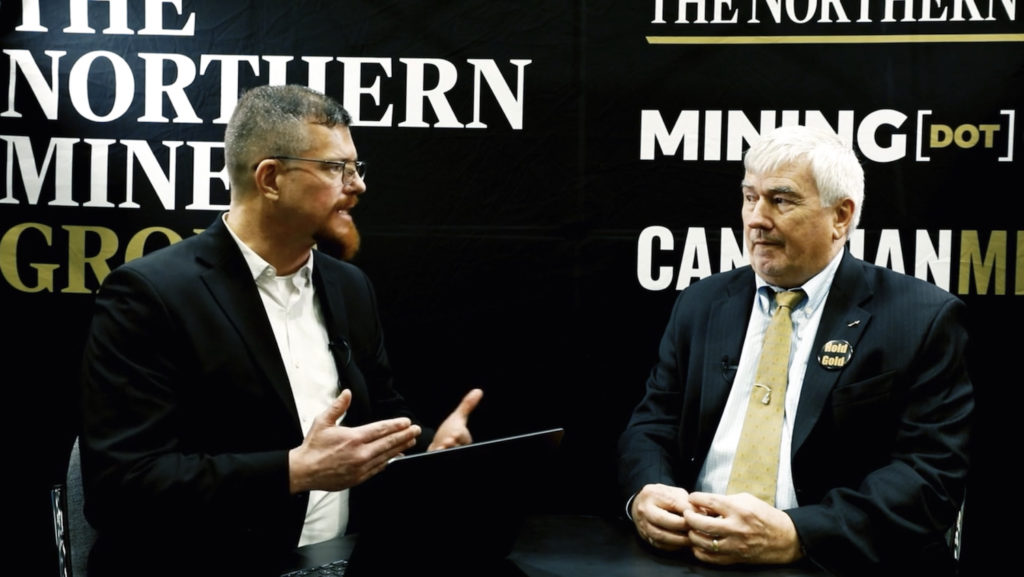
    Sixty North Gold Mining plans to restart the past-producing Mon gold mine in the Northwest Territories by midyear, installing a 100-tonne-per-day mill on site about 40 km from Yellowknife. CEO David Webb targets production of roughly 100 oz. gold per day from new development 17 metres beneath historical stopes in a belt that previously yielded about 15 million oz. at 16 g/t. The restart is proceeding without a formal economic study or compliant resources/reserves, with Webb opting to validate the orebody directly through mining.

    Technical Brief

    • Restart plan omits NI 43-101-compliant resources/reserves and formal economic study, increasing reliance on operational controls.
    • Webb explicitly rejects spending on technical reports, preferring to validate ore continuity via direct production.
    • New ramp will be driven beneath historical stopes, introducing interaction risks with old voids and legacy ground conditions.
    • Mining below old workings demands rigorous void detection, backfill verification and ground support re-assessment against historic designs.
    • Onsite 100 t/d mill delivery targeted for March fixes a tight commissioning window before midyear restart.
    • Project lies ~40 km from Yellowknife, so emergency response, medevac and supply chains must accommodate remote-access constraints.
    • Historical belt production of ~15 Moz at 16 g/t implies narrow, high-grade structures requiring precise drilling and blasting control.
    • Proceeding to production without conventional de-risking studies will test how regulators and insurers view safety assurance based mainly on operating practice.

    Our Take

    With a planned 100 tonnes-per-day mill and a target of 100 oz. of gold per day, Mon sits at the small, high-grade end of the gold operations spectrum in our database, which usually signals a focus on selective mining and tight cost control rather than bulk tonnage.

    Historical grades around 16 g/t gold place the Mon gold mine among the higher-grade assets in our recent gold coverage, implying that even modest throughput can generate meaningful cash flow if dilution and ground-control risks are well managed.

    Northwest Territories projects in our coverage often flag logistics and winter access as key constraints, so a restart only 40 km from Yellowknife gives Sixty North Gold Mining a relative advantage on supply, workforce access, and emergency response compared with more remote northern camps.

    Geotechnical Software for Modern Teams

    Centralise site data, logs, and lab results with GEODB-io, CMRR-io, and HYDROGEO-io.

    No credit card required.

    • Save and export unlimited calculations
    • Advanced data visualisation
    • Generate professional PDF reports
    • Cloud storage for all your projects

    Prepared by collating external sources, AI-assisted tools, and Geomechanics.io’s proprietary mining database, then reviewed for technical accuracy & edited by our geotechnical team.

    Related Articles

    Global battery demand and Australian lithium: processing shift for mine engineers
    Mining
    about 2 hours ago

    Global battery demand and Australian lithium: processing shift for mine engineers

    Surging global demand for lithium-ion batteries for electric vehicles and grid storage is pushing Australia to move beyond spodumene concentrate exports into domestic refining and cathode‑grade chemical production. Industry proposals centre on converting hard‑rock feed into battery‑grade lithium hydroxide and carbonate in Western Australia, leveraging existing Tier‑1 deposits and port infrastructure but facing high energy costs, skills shortages and permitting timelines. For miners and process engineers, the shift implies greater focus on impurity control, reagent optimisation and integration of hydrometallurgical circuits with upstream mine planning.

    Bengalla growth for New Hope: strip mine sequencing and design notes for planners
    Mining
    about 3 hours ago

    Bengalla growth for New Hope: strip mine sequencing and design notes for planners

    New Hope Group has lifted coal output across its Australian assets and is advancing growth plans at the Bengalla thermal coal mine in the Hunter Valley, where it holds an 80 per cent interest alongside Mitsui, Taipower and J-Power. The open-cut operation, which typically produces export-quality thermal coal for Asian power utilities via the Port of Newcastle, is the company’s key near-term expansion focus. For mine planners and geotechs, any Bengalla growth path will centre on additional strip mining, dragline and truck–shovel sequencing, and associated waste dump and haul road reconfiguration.

    Mining smarter with AI and data: edge network design notes for engineers
    Mining
    about 3 hours ago

    Mining smarter with AI and data: edge network design notes for engineers

    Australian miners are hitting a data wall as high‑bandwidth sensors, autonomous fleets and video streams overwhelm traditional cloud links, pushing operations towards private LTE networks and on‑site edge computing. Vendors such as Vocus are pairing Starlink Business Rural satellite backhaul with 4G/5G private LTE to keep haul trucks, crushers and fixed plant connected in real time, even on remote pits and waste dumps. For engineers, this shift means designing networks and control systems around low‑latency, on‑site processing for fleet dispatch, collision avoidance and condition monitoring rather than centralised data centres.

    Related Industries & Products

    Mining

    Geotechnical software solutions for mining operations including CMRR analysis, hydrogeological testing, and data management.

    CMRR-io

    Streamline coal mine roof stability assessments with our cloud-based CMRR software featuring automated calculations, multi-scenario analysis, and collaborative workflows.

    HYDROGEO-io

    Comprehensive hydrogeological testing platform for managing, analysing, and reporting on packer tests, lugeon values, and hydraulic conductivity assessments.

    GEODB-io

    Centralised geotechnical data management solution for storing, accessing, and analysing all your site investigation and material testing data.