Geomechanics, Streamlined.
© 2026 Geomechanics.io. All rights reserved.
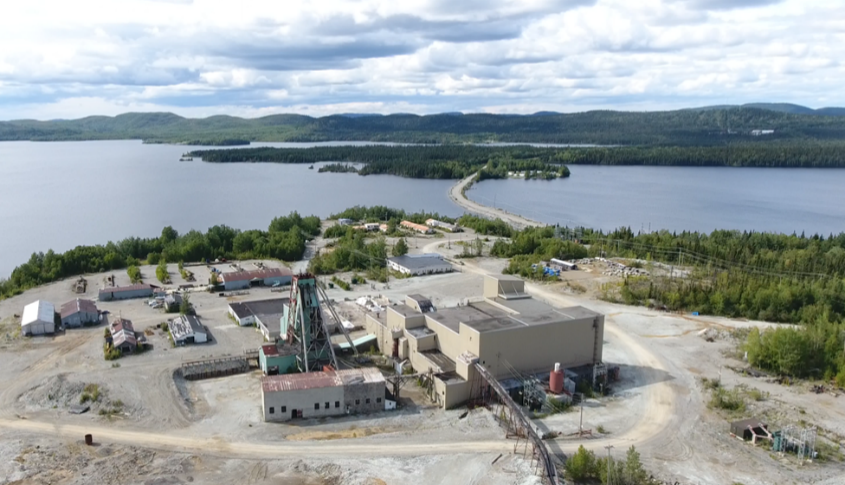
Central Asia Metals is acquiring Cygnus Metals for about A$232 million ($166 million) via an all-share offer at 0.06 CAML shares per Cygnus share, a 60% premium to Cygnus’ last close, adding the Chibougamau copper-gold project in Québec and lithium ground in the James Bay district plus rare earth and base metal projects in Western Australia. Chibougamau carries measured and indicated resources of roughly 149,000 tonnes copper and 167,000 oz gold (plus 182,000 tonnes copper and 454,000 oz gold inferred) and a historical 900,000 t/y plant, with CAML planning an updated PEA and feasibility work. CAML, which currently produces 12,000–13,000 t/y copper cathode and 18,000–20,000 t/y zinc-in-concentrate plus 26,000–28,000 t/y lead-in-concentrate from Sasa (North Macedonia) and Kounrad (Kazakhstan), will seek a TSX or TSXV listing to support North American funding and visibility.
New drilling at Aya Gold & Silver’s Zgounder mine in Morocco returned bonanza underground intercept T28-26-1248 with 8 m at 2,176 g/t Ag from 8 m, including 4 m at 4,298 g/t, plus open-pit hole ZG-RC-26-946 with 6 m at 1,867 g/t from 96 m. Additional RC holes in the pit area cut up to 10 m at 739 g/t Ag from 129 m and 6 m at 1,160 g/t from 6 m, from a 116‑hole campaign that is one‑third of a 30,000 m 2026 programme. Zgounder, a 1.4 Mt/y silver‑only operation with 15.7 Mt at 145 g/t Ag reserves (73.4 Moz) and life to 2036, is extending mineralisation at depth and along the Western Fault ahead of further drilling from the 1,825 m exploration drift in H2 2026.
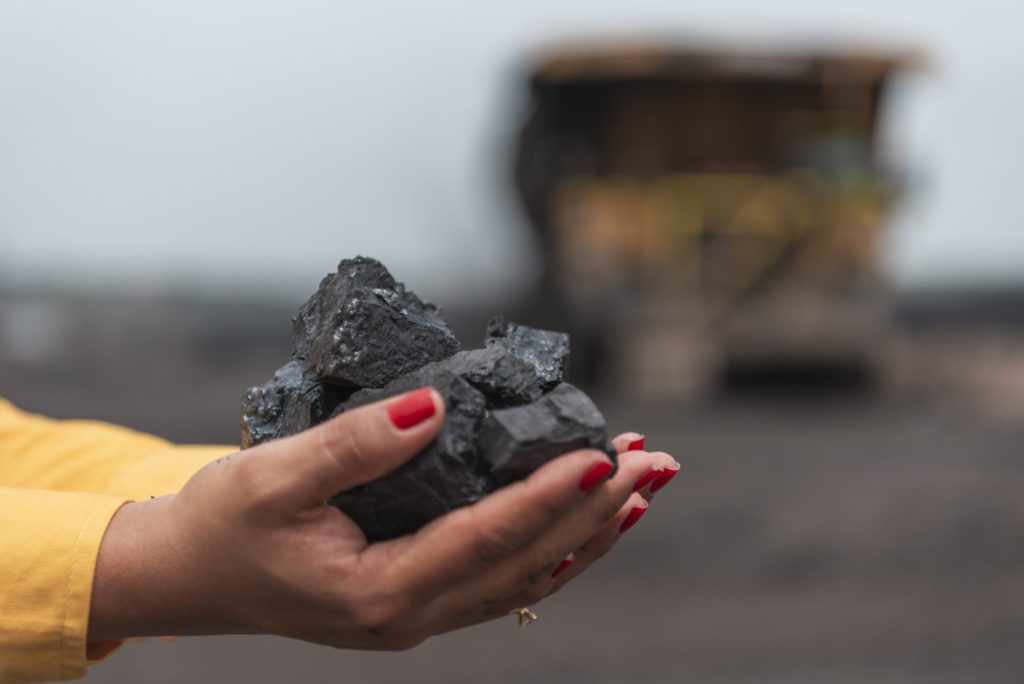
Glencore’s Cerrejón mine in La Guajira, one of the world’s largest open-pit coal operations, has halted mining, rail and port activities and declared force majeure after a community blockade cut fuel and coal movements on the railway to Puerto Bolívar from 23 May. Cerrejón, which produced 16.8 Mt in 2025 and has faced nearly 80 blockades this year (333 in 2024, plus nine terrorist attacks), has suspended most employment contracts while maintaining staff for maintenance and environmental controls. The dispute centres on constitutional rulings, water access, renewable energy projects and royalty distribution, signalling persistent social and regulatory risk for Colombian coal, whose national output fell to 53.9 Mt in 2025.
USA Rare Earth will invest $1.2 billion in a rare earth metals and NdFeB magnet plant at Bailey Industrial Park, Blacksburg, South Carolina, targeting 6,400 tpa of sintered NdFeB magnets and 5,000 tpa of strip-cast metal and alloy, with commissioning from 2028. Together with an expanded Stillwater, Oklahoma facility, US domestic capacity is expected to reach 10,000 tpa of NdFeB magnets and 10,000 tpa of heavy rare earth strip-cast metal and alloy, fed by the Round Top project in Texas and the proposed Serra Verde acquisition in Brazil. The vertically integrated mine-to-magnet chain faces regulatory scrutiny in Brazil, a contested $1.58 billion CHIPS-backed funding package, and a technology theft lawsuit from MP Materials.
Copper prices just below $14,000/ton in London, around $500 off January’s record, are drawing sharply higher forecasts from Goldman Sachs at $13,735/ton by year-end and Citigroup at $14,500/ton this month and $15,000 within a year. Goldman has cut its global mine supply outlook by 350,000 tons after major incidents at Grasberg (Indonesia) and Kamoa-Kakula (DRC), with both mines unlikely to reach full capacity before 2028. The bank now sees the ex-US copper deficit jumping to 640,000 tons, driven by stronger US imports, tight inventories and electrification demand, with Citi adding tariff risk on refined copper to the bullish case.
ARLYX Technologies has launched a fully electric, autonomous underground material-handling system combining a 5,000 kg-capacity utility vehicle with an AutoLatch module that can load, transport, and unload consumables during blasting periods while crews are evacuated. By shifting rock bolts, pipes, and concrete deliveries off production shifts and clearing ramp traffic, ARLYX claims mines can gain roughly one extra ore truckload per day, worth up to C$27 million annually, with a single teleoperator supervising up to ten vehicles. The LTE/5G/WiFi/radio-agnostic platform, developed and trialled in Quebec and now adding fire suppression, dust control, and ore-transport modules, also targets ventilation and maintenance cost reductions through zero diesel emissions and simplified mechanics.
ME PolyFIT® composite feed head liners are extending wear life on a 34 ft (10.4 m) SAG mill at an open-pit copper-molybdenum mine in Britain, directly supporting higher mill uptime and reduced liner change frequency. The engineered liner system replaces conventional steel designs in the feed end, targeting high-impact zones where premature failure typically drives unplanned shutdowns. For mine maintenance and process teams, the case points to composite liner retrofits as a route to longer inspection intervals and more stable grinding performance without major mill modifications.
Tega Industries has completed its acquisition of Molycop, combining Tega’s mill liners and wear solutions with Molycop’s grinding media and rail consumables into a broader “critical to operate” portfolio for comminution circuits. The deal, executed with funds managed by affiliates of Apollo, creates a single supplier spanning SAG and ball mill liners, forged and cast grinding balls, and associated process consumables across copper, gold and iron ore operations. For plant engineers, the move signals tighter integration of liner–media selection, wear-life optimisation and throughput tuning under one global vendor.
De Beers’ Upstream Technology, created in 2024 by amalgamating several internal technical units, is positioning sensor technology as the core layer for its mine automation, digitalisation and new mine design workflows. The group is focusing on dense networks of field sensors feeding real-time data into control systems for drilling, blasting and materials handling, enabling tighter process control and earlier detection of equipment or ground instabilities. For geotechnical and mining engineers, the message is that sensor architecture and data quality now need to be treated as primary design parameters, not bolt‑on instrumentation.
PLS’ Pilgangoora P1000 expansion in Western Australia has pushed TOMRA sensor-based ore sorting from trial phase to fully integrated unit operation in day-to-day hard rock lithium processing, after several years of continuous running. The industrial-scale installation is now delivering consistent spodumene feed quality and demonstrating stable performance under variable ore conditions, giving Pilgangoora greater long-term resource flexibility. For other lithium pegmatite projects, the case validates sensor-based sorting as a viable front-end circuit option to debottleneck plants and upgrade marginal ore.
Metso is proceeding with phase two of its Lokomotion technology centre in Lahdesjärvi, Tampere, committing about €60 million to build a new crusher factory integrated into the existing R&D and manufacturing hub. The phased investment will expand capacity for Metso’s Lokotrack and stationary crushing solutions, consolidating prototype testing, series production and lifecycle services on a single site. For mining and aggregates clients, the enlarged facility should shorten lead times for large crushers and enable faster industrialisation of new crushing technologies.
Volvo Days 2026 in Eskilstuna is showcasing Volvo CE’s strategy for mining, with senior management outlining investment priorities in electric and autonomous haulage fleets and digital fleet management platforms. Demonstrations are expected to centre on battery-electric articulated haulers, trolley-assist concepts and connected machine monitoring, building on existing deployments in Scandinavian quarrying and underground operations. For mine operators, the focus is on lowering diesel consumption and emissions while integrating OEM telematics with site dispatch and maintenance systems to improve equipment availability and haul cycle control.
Mining systems integrator Armstrong Industrial argues that meeting 2030 interim carbon and water targets will depend on “smarter” end‑to‑end mining systems rather than isolated equipment upgrades. Divyanshu Shrivastava points to gaps between corporate net zero commitments and site‑level execution, citing fragmented data, poorly integrated process control, and limited real‑time visibility across drilling, hauling and processing circuits. The piece signals growing demand for interoperable automation, energy‑aware dispatch, and water‑optimised plant control strategies that can be retrofitted into existing brownfield operations.
Electric haulage is now the preferred option in most new mine trade-off studies, with Mining Plus modelling showing battery-electric trucks and Railveyor’s cable-powered rail haulage often outperforming diesel on both unit cost and emissions over life-of-mine. Tim Wiitanen, Railveyor Vice-President of Product Engineering, notes that orebody geometry, ramp length and gradient, power price, and ventilation constraints remain the decisive variables in choosing between BEVs and fixed-guideway systems. For engineers, the work signals that early-stage layouts and power strategies must be optimised explicitly for electric haulage.
Forrestania Resources has issued a maiden JORC mineral resource estimate for the MacPhersons gold deposit in Western Australia, comprising 1.84 million tonnes at 1.25 grams per tonne and lifting its global gold inventory to 1,007,800 ounces. Chairman David Geraghty said the MacPhersons addition pushes the company past the one‑million‑ounce milestone across its portfolio. For mine planners and geotechnical teams, the new tonnage and grade provide a basis for pit optimisation, geotechnical drilling design and sequencing studies at MacPhersons.
An airborne electromagnetic survey by the Geological Survey of Victoria and Geoscience Australia will be flown from June to November across central Victoria, targeting areas north and west of Melbourne to refine critical mineral prospectivity, including antimony. A specially equipped fixed‑wing aircraft will collect AEM conductivity data to map subsurface structures and groundwater to depths typically of several hundred metres, improving geological models beneath cover. The work is expected to upgrade targeting for deposits similar to the Goschen rare earths project footprint and guide future drilling programmes.
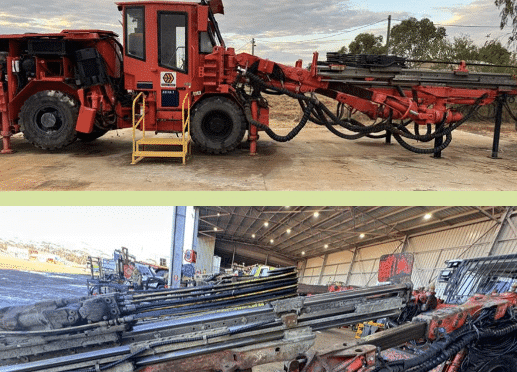
A 48 per cent reduction in feed rope consumption on a fleet of Sandvik DD421 hard-rock development jumbos was achieved after MASPRO re-engineered the feed system rather than simply extending rope life. The contractor had been facing frequent feed rail rope changes and unplanned stoppages, prompting a focus on rope path, tensioning behaviour and compatibility with DD421 feed rails. The optimisation reduced rope wear and replacement frequency, cutting maintenance interactions and offering a template for reliability-centred design of high-cycle underground drill components.
Aurelia Metals is expanding its Cobar Basin footprint via an earn‑in with Legacy Minerals over exploration licences EL9511 and EL9858 in central western New South Wales, with a pathway to secure up to a 90 per cent interest. The move consolidates ground in a proven polymetallic district hosting high‑grade copper, lead, zinc and gold deposits, where existing underground operations commonly exceed 1 km depth. For geotechs and mine planners, the enlarged tenure signals continued demand for deep, structurally controlled base‑metal targets in highly altered Ordovician volcanics.
Rio Tinto has partnered with Sandvik to integrate Sandvik i-series drill rigs with Rio’s in-house Autonomous Drilling System, with site-based trials planned at Western Australian iron ore operations. The project links Sandvik’s AutoMine automation platform with Rio’s existing autonomous and remote operations infrastructure, targeting fully integrated control of drill navigation, positioning and drilling cycles from central control rooms. For drill and blast engineers, the move signals further standardisation around OEM-agnostic autonomous drilling interfaces and tighter coupling between rig automation and mine planning systems.
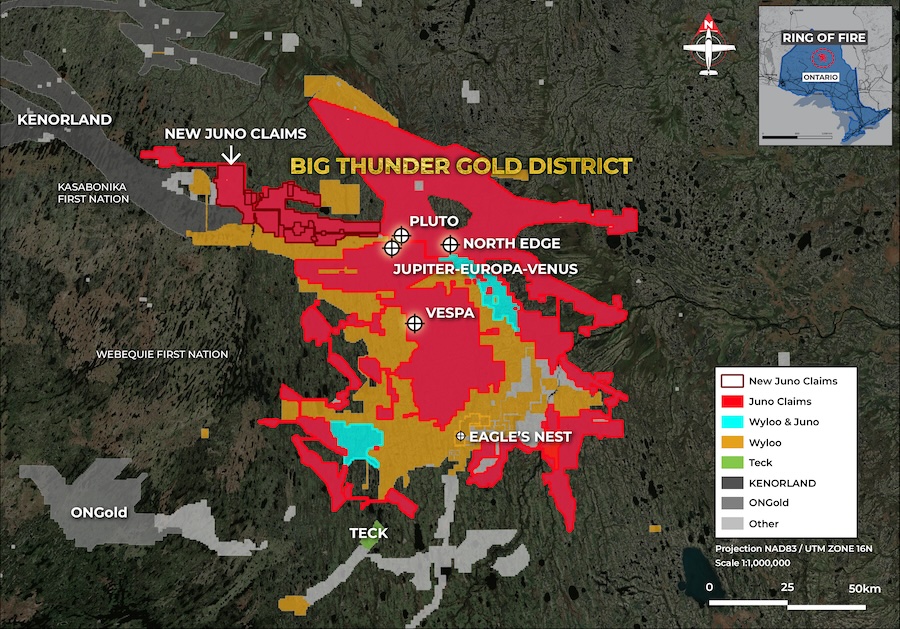
Juno Corp, led by founder and CEO Robert Cudney, is launching the largest exploration programme in more than a decade in Ontario’s Ring of Fire, controlling 29,956 claims over roughly 5,796 km²—just over half the camp—and anchored by the high‑grade Jupiter copper‑zinc‑silver VMS deposit. Cudney is renaming Northfield Capital as Juno International and has secured logistics by acquiring Sudbury-based True North Airways, while the company’s Big Thunder grassroots gold find has already earned the 2026 Bernie Schnieders Discovery of the Year Award. Veteran geologist John Harvey compares the camp’s long‑term potential to, and possibly exceeding, the Sudbury Basin and South Africa’s Bushveld Complex.
Iamgold has lifted contained gold at the Côté mine in northeastern Ontario by 12% to 20.34 million oz., integrating the Gosselin zone into a combined resource of 838 million tonnes at 0.75 g/t and inferred resources of 177.1 million tonnes at 0.61 g/t for 3.48 million oz. The update uses a higher gold price assumption of US$2,500/oz and a lower cut-off grade of 0.25 g/t, and underpins a planned 40% plant expansion to more than 50,000 tonnes per day. A new technical report due by year-end will address reserve conversion, strip ratio, tailings and processing rates, while 30,000 metres of additional diamond drilling is scheduled for 2026 to refine the Côté-Gosselin model and test district targets such as Jerome, Northshore and Monella Point.
Cameco has agreed to pay C$115.75 million to acquire TEPCO Resources’ 2.871% stake in the Cigar Lake uranium joint venture, lifting its ownership in the northern Saskatchewan mine to 57.418% while Orano’s share rises to 42.582%. Cigar Lake, about 660 km north of Saskatoon, has produced 174.5 million lb of U3O8 since 2014 and still holds 172.4 million lb in reserves plus 46.3 million lb in combined resources. Cameco forecasts 2026 output at 17.5–18 million lb U3O8 (100% basis) and is targeting mine life extension to 2036.
Gold prices fell nearly 2% on Monday, with spot gold hitting a weekly low of about $4,450/oz and three‑month New York futures holding just above $4,500/oz, as renewed US strikes on Iranian military sites pushed oil and the dollar higher. Traders now assign roughly a 39% probability to a 25‑basis‑point Federal Reserve rate hike in December, according to CME FedWatch, dampening appetite for non‑yielding bullion. Despite the pullback from January’s record near $5,600/oz, JPMorgan and Goldman Sachs still project average 2026 prices of $5,000/oz and $5,400/oz respectively.
Barrick is considering carving out its African mines into a London‑listed vehicle via a potential $30 billion combination with Endeavour Mining, while retaining a Toronto holding company for its New York‑listed shares. The move would mirror Barrick’s earlier Acacia spin‑off and comes as it plans a separate New York listing for its Nevada and Dominican Republic assets by end‑2026, shifting capital towards lower‑risk jurisdictions. A tie‑up would pool Barrick’s Kibali, North Mara, Bulyanhulu, Lumwana and Tongon operations with Endeavour’s West African portfolio, currently targeting about 1.2 million oz of gold output this year.