Geomechanics, Streamlined.
© 2026 Geomechanics.io. All rights reserved.
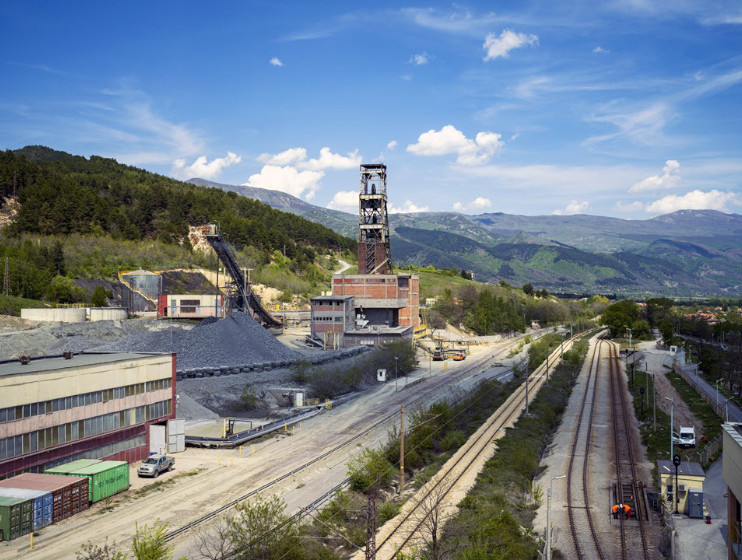
DPM Metals has reported a major gold-copper intercept at the Brevene South Porphyry target in Bulgaria, about 1 km from its Chelopech underground mine, with hole EX_BRESPO_03 cutting 713 m at 1.31 g/t gold and 1.16% copper from 1,172 m downhole, including 398 m at 1.48 g/t gold and 1.45% copper from 1,487 m. The porphyry lies within a >1,000 x 1,500 m hydrothermal system that remains open, and DPM has mobilised five high-capacity rigs for up to 15,000 m of additional drilling this year to test continuity and geometry for a resource. Proximity to existing Chelopech infrastructure, which currently hosts 15.3 Mt measured and indicated at 2.18 g/t gold and 0.64% copper and is permitted to 2036, could materially lower development capital and timelines if BSP proves economic.
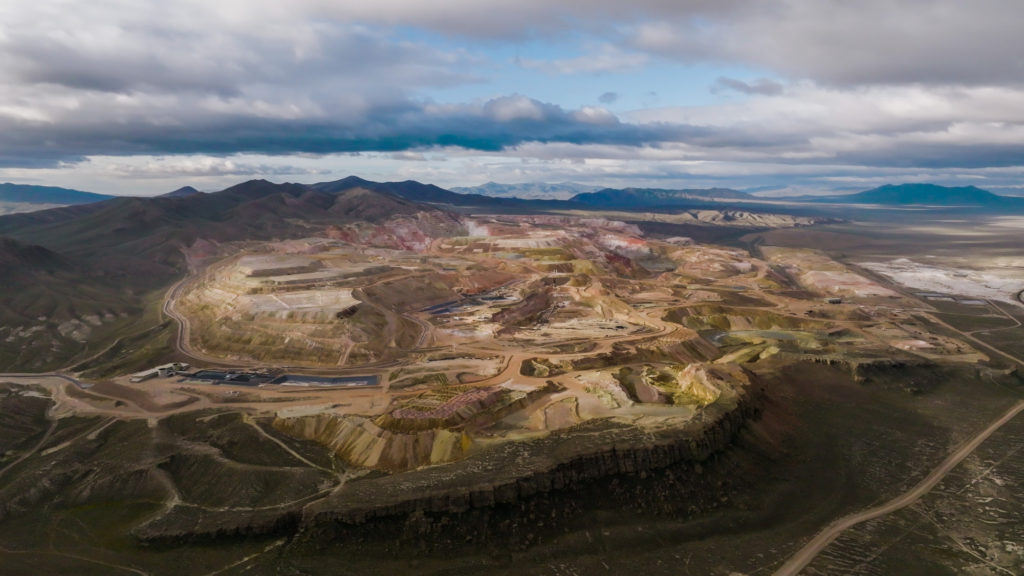
Hycroft Mining’s proposed Nevada gold-silver operation is now scoped as a 51-year, large-scale POX and heap leach mine with a post-tax NPV of $10 billion at a 5% discount rate, based on spot prices of $4,569/oz gold and $77.94/oz silver and an initial capital cost of $2.4 billion plus $3.1 billion sustaining. The plant is designed to treat 57,100 t/d, producing on average 204,000 oz/y gold and 6.8 Moz/y silver (295,000 oz/y AuEq) at an all-in sustaining cost of $2,147/oz AuEq. The mine plan draws on 16.4 Moz gold and 562.6 Moz silver M&I resources, with upside from 5 Moz gold and 132.8 Moz silver inferred, underground options at Brimstone and Vortex, and new oxide heap leach targets across a land package exceeding 64,000 acres.
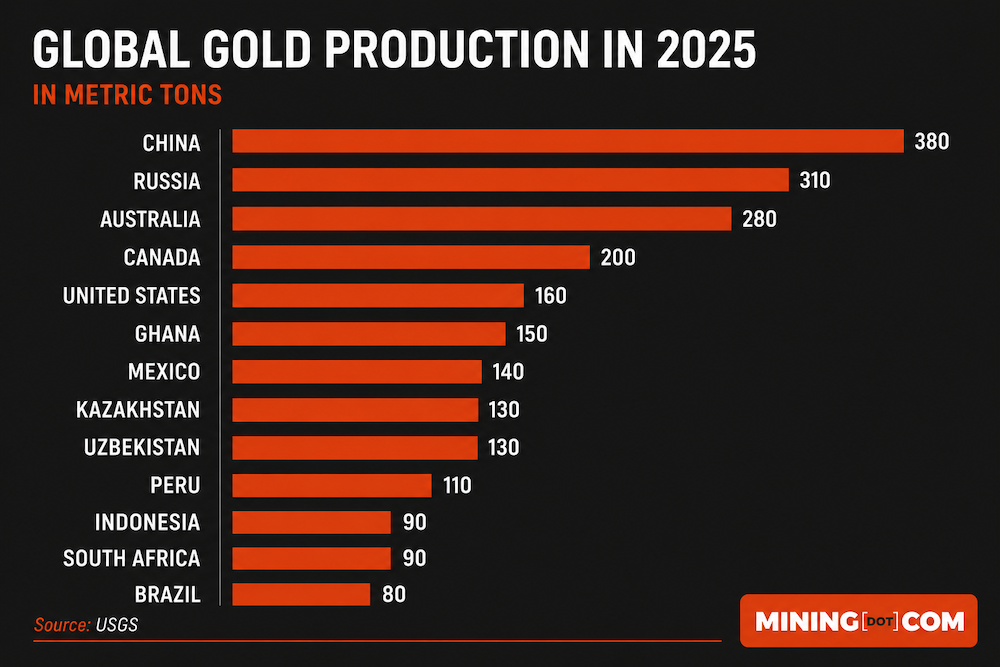
Russia claims it will mine 480–500 tonnes of gold in 2025 and that 2024 output was about 480 tonnes, which would exceed China’s 380-tonne 2024 production and contradict World Gold Council and Metals Focus estimates of 330–345 tonnes for Russia. The figures, issued by Natural Resources Minister Alexander Kozlov via Tass, are around 50% above widely used industry assessments despite no major new Russian gold mines coming online. Bloomberg also reports the Bank of Russia has sold about 28 tonnes of gold this year, raising over $4 billion to help plug budget deficits.
USA Rare Earth has finalised definitive agreements with the US Department of Commerce for nearly $1.6 billion under the CHIPS Act, comprising $277 million in federal funding and up to $1.3 billion in senior secured loans, supporting a total $3.5 billion capital programme. The company plans a fully integrated mine-to-magnet chain anchored by its Texas deposit (targeting production in 2028), a Stillwater, Oklahoma NdFeB magnet plant ramping to 600 tonnes this year and 10,000 tonnes/year of magnets plus 10,000 tonnes/year of heavy rare earth strip-cast, metal and alloy at full US build-out. Additional facilities are planned in Wheat Ridge, Colorado, Blacksburg, South Carolina ($1.2 billion), France (€175 million) and Brazil (a $2.8 billion mine acquisition), with yttrium already produced commercially in the UK via Less Common Metals.
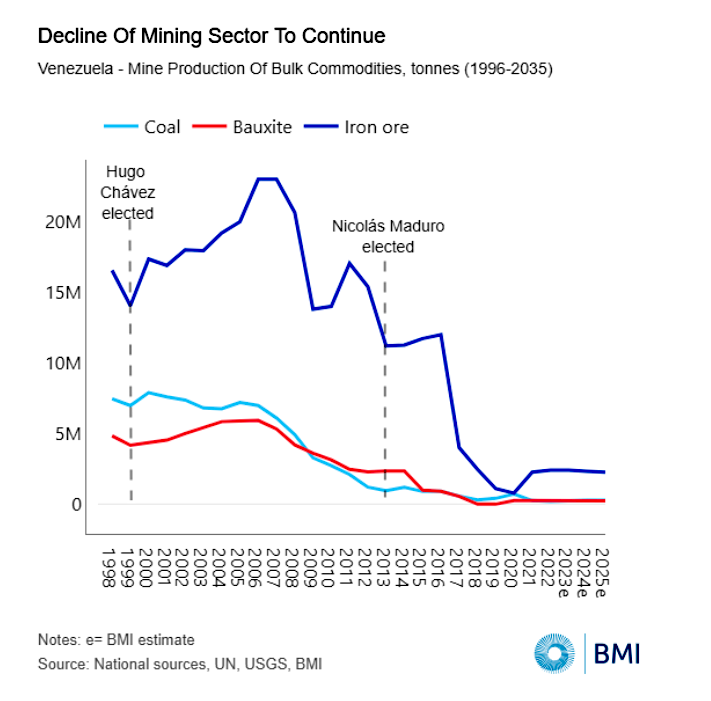
Venezuela’s post-Maduro mining reset is centred on a new April mining law offering longer concessions and a “legal route” for foreign and domestic operators, but must overcome a 90%-plus collapse in metals output, entrenched illegal extraction and weak territorial control. GEM Mining Consulting estimates resources of 82 million oz. gold, 2.3 billion tonnes of iron ore and 2.5 billion tonnes of bauxite, with potential annual output of 2.1 million oz. gold, 148 million tonnes of iron ore products and 52 million tonnes of bauxite. The 112,000 km² Orinoco Mining Arc and wider Guayana Shield remain geologically attractive, yet Venezuela’s role is likely as a diversified supplementary supplier rather than a dominant producer of any single critical mineral.
The US Department of Energy has awarded $67 million to ElementUSA and Colorado School of Mines to design, build and operate a rare earth processing plant in St. John the Baptist Parish, Louisiana, using an integrated hydrometallurgical–pyrometallurgical flowsheet that co-produces pig iron and recovers scandium, gallium, germanium, yttrium and multiple REEs from bauxite residue. ElementUSA plans a phased build-out to a 1 Mtpa feed facility with an estimated $1.1 billion capex, underpinned by ~34 Mt of proven residue reserves secured under exclusive access. At full scale, the project could supply 45–385% of current US annual demand for several listed critical elements, turning a legacy alumina waste stream into a strategic feedstock.
Cornish Tin & Lithium’s Phase 3 drilling at the Tregonning project in West Cornwall has extended the lithium-bearing Newall Formation to a strike length of about 3.27 km from Tregonning North to Tregonning South, with multiple lithium-enriched aplite‑pegmatite sheets at varying depths. Earlier intersections at Tregonning North included 0.3 m grading 1.33% Li₂O, with a peak of 1.42% Li₂O, and the new work suggests a materially larger lithium inventory. Drilling at Tregonning South also defined a new tin system with at least ten lodes, returning up to 2.69% Sn in Norcross No.1, 1.26% Sn in Rib North and 1.68% Sn in Rib South.
Deep Sea Minerals has secured a “substantial compliance” determination from NOAA under the US Deep Seabed Hard Mineral Resources Act, advancing its application to explore polymetallic nodules in international waters. The proposed concession covers about 150,000 km² of the Pacific Ocean, targeting nodules containing nickel, cobalt, copper and manganese for electrification, energy and defence supply chains. The company says this makes it one of only three publicly traded or public-market pathway firms to reach this stage in NOAA’s DSHMRA regulatory process, as the agency moves to accelerate licence reviews.
Stardust Power Inc. has been selected as the end-use industrial partner in a US Department of Energy-funded programme led by Ohio University’s Institute for Sustainable Energy and the Environment and CONSOL Innovations to develop electrochemical technology for direct lithium extraction from domestic waste streams, including oil and gas wastewater and legacy coal mine drainage. Under FOA DE-FOA-0003105, the team will test coal- and waste coal-based electrodes, with Stardust Power evaluating lithium product against battery-grade specifications and assessing refinery integration. The move supports diversified US lithium feedstocks and strengthens domestic critical minerals processing capacity.
Sandvik has introduced the Tundo RH700 cluster hammer unit for its DU300-series and DU400-series in-the-hole (ITH) longhole drill rigs, allowing rapid changeovers between standard production drilling and fully mechanised slot raising on the same carrier. The RH700 cluster configuration is aimed at boosting rig utilisation across existing ITH fleets by eliminating the need for dedicated raiseboring units and associated rehandling. For mine planners and drill‑and‑blast engineers, this supports more flexible slot design and potentially tighter drilling schedules without additional capital equipment.
BHP is working with Microsoft to deploy AI agents to accelerate discovery of advanced copper leaching chemistries, replacing slow, manual trial‑and‑error testing of millions of potential molecules. The system uses large‑scale computational screening to predict leach reagent performance on different ore types, aiming to improve copper recovery from low‑grade and complex ores where conventional sulphide flotation or heap leach kinetics are marginal. For mine planners and metallurgists, this could shift testwork programmes towards AI‑guided candidate selection, reducing lab cycles and de‑risking leach circuit design.
RCT – Powered by Epiroc has opened a new branch in Orange, New South Wales, co-located with fellow Epiroc acquisition JTMEC at Leewood Drive to consolidate automation, control and electrical support for local underground mines. The site will act as a regional base for commissioning and servicing RCT’s ControlMaster automation and remote-control systems on LHDs, trucks and drill rigs, alongside JTMEC’s mine electrical and power distribution services. For operators in the central west NSW gold and base metals belt, the move should shorten response times and simplify integration of OEM-agnostic automation with site power infrastructure.
Colorado School of Mines and ElementUSA have secured US$67 million from the US Department of Energy to build a rare earth element extraction and processing plant treating alumina refinery tailings at Gramercy, Louisiana. The DOE Office of Critical Minerals and Materials is backing the project as one of only two funded initiatives, targeting recovery of REEs from existing bauxite residue streams rather than new mining. For process engineers and tailings specialists, the scheme signals growing support for hydrometallurgical upgrading and reprocessing of legacy red mud deposits.
EQ Resources has approved a $39 million expansion of the Mt Carbine tungsten mine in far north Queensland, doubling crushing capacity from about 1Mtpa to 2Mtpa to clear a key processing bottleneck. The project centres on upgrading the existing crushing circuit and associated materials handling to sustain higher throughput of low‑grade stockpiles and in-situ ore. For mine planners and plant engineers, the move signals a shift towards larger-scale tungsten production at Mt Carbine, with comminution capacity now aligned more closely to available ore resources.
Victory Metals has signed a Native Title Mining Agreement with the Wajarri Yamaji Aboriginal Corporation for the North Stanmore heavy rare earth project, clearing a key requirement for granting a Western Australian mining lease. The clay-hosted deposit, about 6km north of Cue, targets dysprosium and terbium within a broader rare earth assemblage considered strategically important for permanent magnets and defence supply chains. The agreement gives Traditional Owners defined cultural heritage protections and benefits while giving the proponent tenure certainty to progress mine design, approvals and funding.
BHP is using artificial intelligence with Microsoft and Prescience Insilico to screen more than 500,000 candidate molecules that could accelerate and improve copper leaching from existing ore. The project applies advanced computing to predict which reagents may enhance recovery rates in heap and dump leach circuits, rather than relying solely on conventional lab trial-and-error. For geometallurgists and process engineers, this signals a push to optimise reagent chemistry on legacy ore bodies before committing capital to new copper projects.
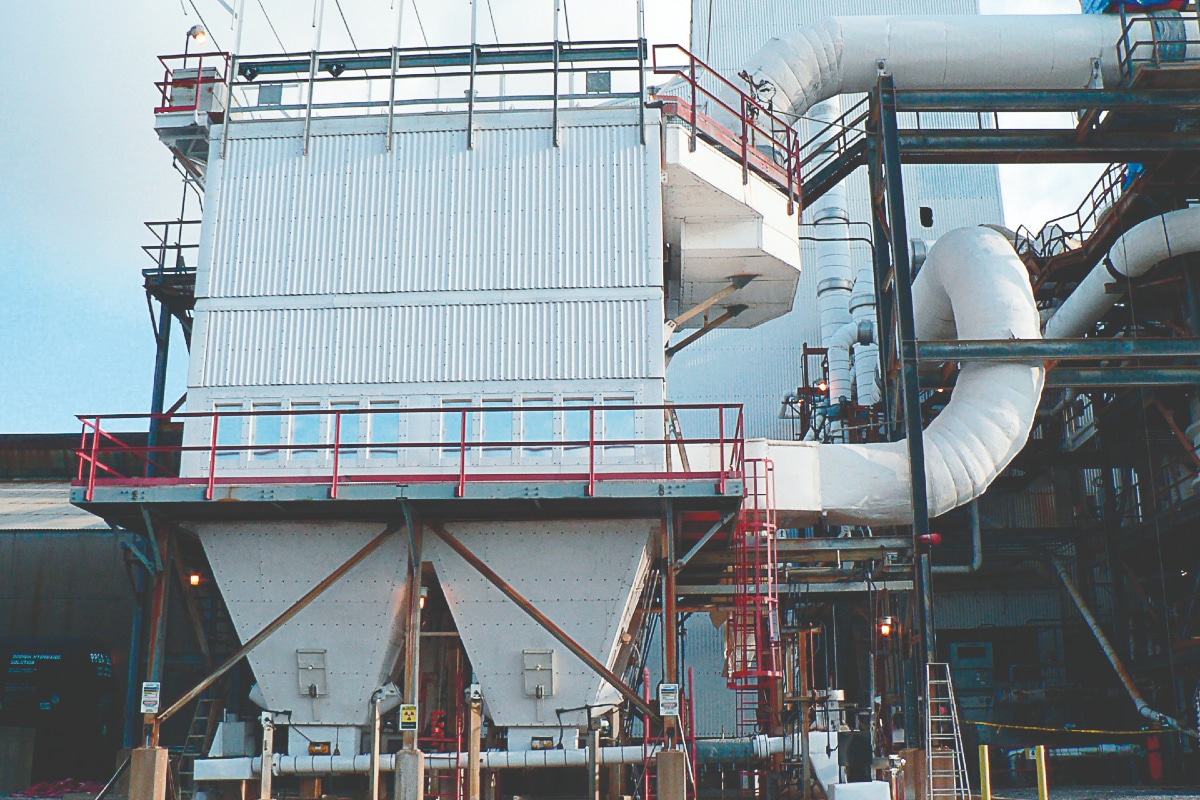
Nederman MikroPul is promoting modular baghouse dust collectors and centralised extraction systems for crushing, screening, conveying and loading circuits in mining and mineral processing plants. The systems target fine and abrasive dusts, aiming to cut fugitive emissions, recover saleable product from process streams, and stabilise negative pressure around transfer points to reduce spillage and build-up. By improving capture efficiency at sources such as crushers and screen decks, operators can reduce unplanned shutdowns, lower filter and ductwork maintenance, and support compliance with tightening particulate emission limits.
Gold Fields and the Cree First Nation of Waswanipi have signed the Uukiimau Impact Benefit Agreement for the Windfall gold-silver project in Québec’s Abitibi greenstone belt, covering financial, operational, environmental and social commitments for the life of the mine. Windfall hosts measured and indicated resources of 9.5 million tonnes at 10.5 g/t gold and 5.2 g/t silver (3.2 million oz gold, 1.6 million oz silver), plus 13 million tonnes inferred at 8.6 g/t gold and 4.7 g/t silver. Gold Fields targets first production by late 2026 or early 2027, ramping to about 300,000 oz/year.
LiuGong has unveiled an ultraclass hybrid wheel loader and an autonomous 127 t wide body mining truck at its 6th Global Customer Day in Liuzhou, China, signalling a push into large-scale, high-payload surface mining fleets. The autonomous truck targets 127 t payload haulage with wide body geometry optimised for short- to medium-haul pits, while the hybrid loader combines diesel and electric drive to cut fuel burn and cycle times. For mine planners, the pairing points to integrated OEM haul–load systems with embedded autonomy rather than bolt‑on retrofits.
Integra Resources has appointed Ausenco Engineering USA South as lead engineer for detailed engineering at the DeLamar gold-silver project in southwestern Idaho, with SLR Consulting retained for heap leach design, metallurgy and mine planning. The mandate covers advancing the project from feasibility-level concepts to construction-ready designs, including detailed layouts for heap leach pads, process plant and associated mine infrastructure. For engineers, the move signals imminent definition of pad geometry, liner and drainage systems, and materials handling circuits critical to permitting, capex control and construction sequencing.
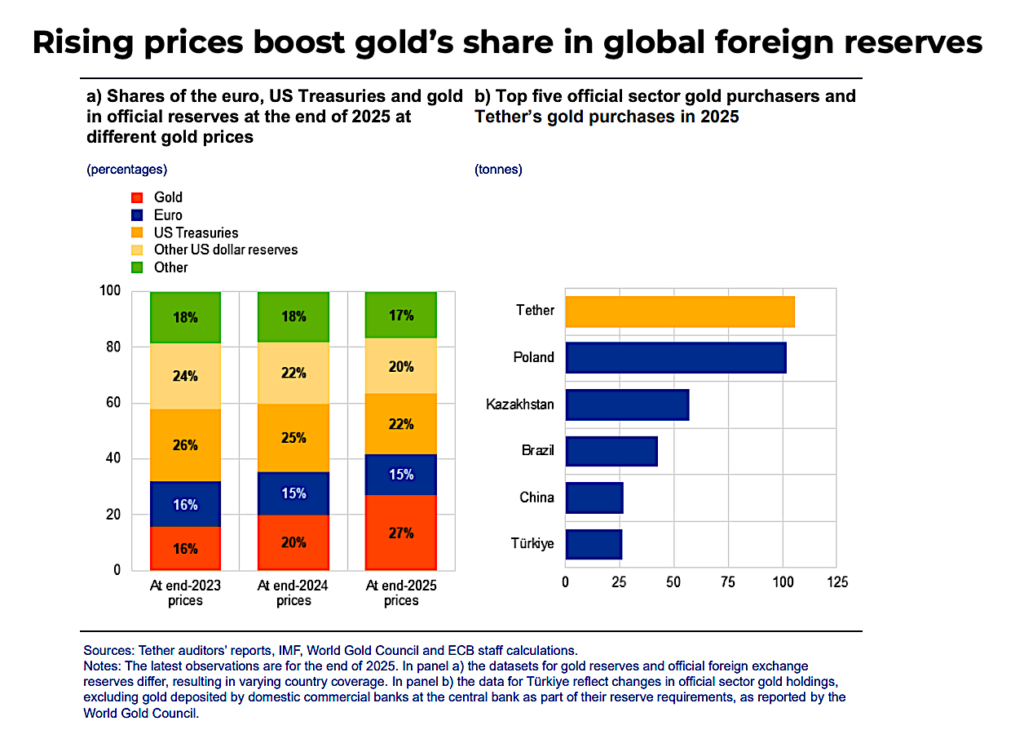
Gold has overtaken US Treasuries as the second-largest global reserve asset, with bullion rising to 27% of central bank reserves by value at end-2025 versus 22% for Treasuries, while dollar assets still dominate at 42%, the ECB reports. Central banks now hold over 36,000 tonnes of gold, near Bretton Woods-era levels, with 2025 net purchases of 850 tonnes driven by buyers including China, Poland, Turkey, India and notably Tether, which alone acquired more than 100 tonnes. The ECB also notes euro-denominated international debt issuance jumped 30% in 2025 to nearly €1 trillion.
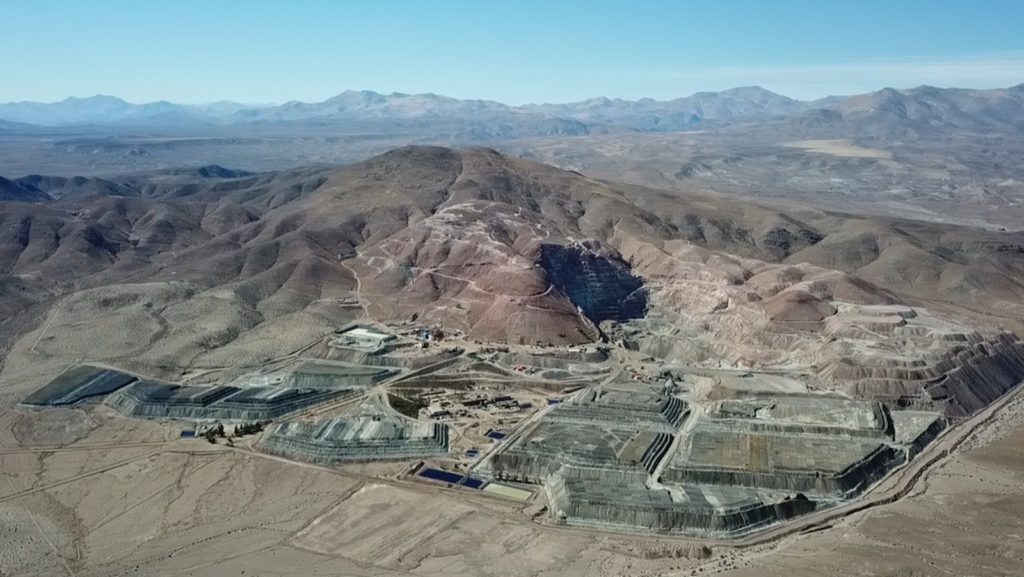
Tintina Mines has secured C$91 million in private placement funding, led by Sumitomo Corp. and the Gignac family via a new investment vehicle taking C$48 million of first‑tranche receipts and potentially 38% ownership after warrant exercise, with Franco‑Nevada contributing C$14 million. About C$55 million will advance the Domeyko Sulfuros copper‑gold porphyry in Chile’s Atacama Region to a final investment decision and C$36 million will buy out the remaining 26.25% project stake, implying a C$138 million pre‑money valuation. Domeyko’s PEA outlines a 25‑year open pit producing 37,000 t/y copper and 57,000 oz/y gold in concentrate from 100.8 Mt M&I at 0.35% Cu and 0.28 g/t Au, with initial capex of $1.28 billion and after‑tax NPV8 of $328 million.
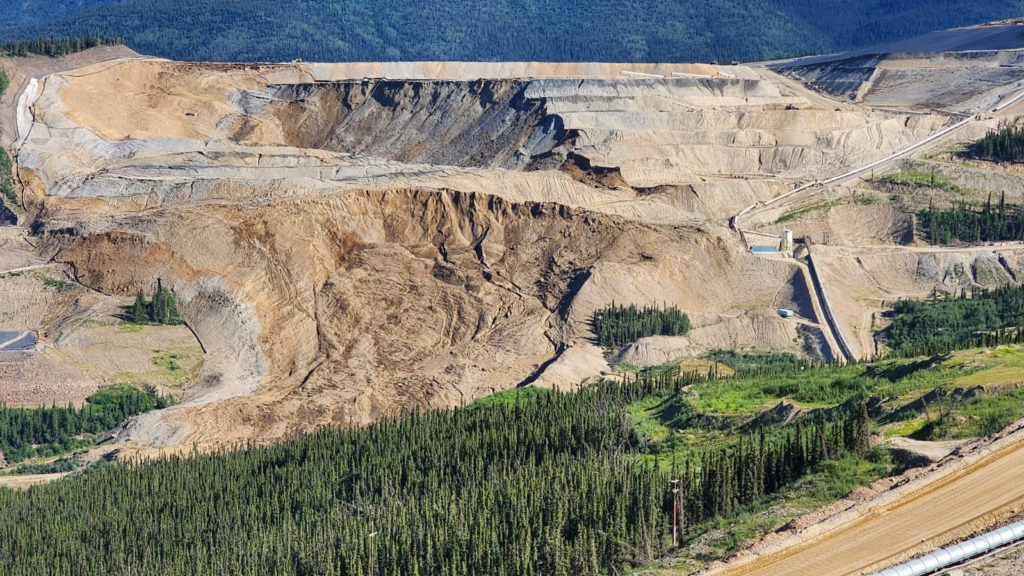
Boroo has entered a 90‑day exclusivity agreement with PwC to conduct due diligence on acquiring the landslide‑damaged Eagle gold mine in Yukon, where a June 2024 heap leach pad failure released millions of tonnes of ore and at least 280,000 m³ of cyanide-bearing solution. PwC previously valued Eagle’s assets at nearly C$825 million against about C$458 million in accident-related liabilities, while a 2023 mine plan outlined 124 million tonnes at 0.65 g/t Au (2.58 Moz contained) over a 12‑year life. Boroo brings heap leach experience from Lagunas Norte and Mongolian operations, backed by US$300 million in senior secured notes, but must still secure Yukon government and Na‑Cho Nyäk Dun approvals.
Faith-based investors led by the Sisters of St. Joseph of Peace are urging General Motors shareholders to approve a June 2 resolution demanding a detailed report on how GM identifies and manages Indigenous rights risks in its transition mineral supply chains, singling out the $625 million Thacker Pass (Peehee Mu’huh) lithium joint venture with Lithium Americas and its 20‑year exclusive EV battery supply deal. The proposal cites Human Rights Watch, ACLU and Amnesty findings that US federal consultation with Tribes at Thacker Pass lasted under a year, fell short of typical multi‑year mine permitting timelines and proceeded without free, prior and informed consent, with fencing allegedly restricting access to ancestral lands. For miners and project developers, the vote signals intensifying investor scrutiny of social licence, with Indigenous consent, consultation timelines and land access controls now framed as material legal, operational and financing risks.