Reliability underground on Sandvik DD421 jumbos: design lessons for engineers
Reviewed by Joe Ashwell
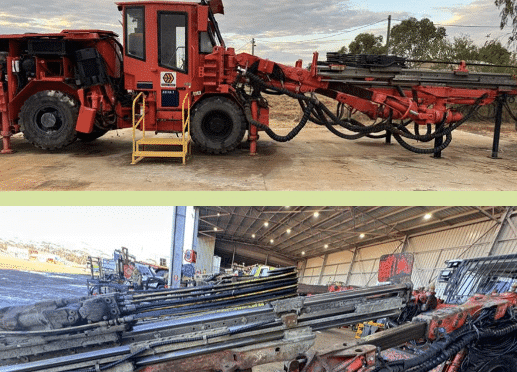
First reported on Australian Mining
30 Second Briefing
A 48 per cent reduction in feed rope consumption on a fleet of Sandvik DD421 hard-rock development jumbos was achieved after MASPRO re-engineered the feed system rather than simply extending rope life. The contractor had been facing frequent feed rail rope changes and unplanned stoppages, prompting a focus on rope path, tensioning behaviour and compatibility with DD421 feed rails. The optimisation reduced rope wear and replacement frequency, cutting maintenance interactions and offering a template for reliability-centred design of high-cycle underground drill components.
Technical Brief
- Engineering focus shifted to minimising human–machine touchpoints on the feed, not component life in isolation.
- Rope path changes targeted removal of tight-radius bends and misaligned pulleys that induced localised strand fatigue.
- Tensioning behaviour was reworked to keep rope loads within a narrower operating band across the feed stroke.
- Reduced rope-change tasks directly cut personnel exposure to pinch points and suspended loads around the feed boom.
- Reliability-centred design of high-cycle drill components was treated as a primary control in the site’s safety strategy.
- Similar reliability-first redesigns of consumable-loaded systems (feeds, hoses, chains) could materially reduce underground maintenance risk exposure.
Our Take
Sandvik’s work with Rio Tinto on autonomous drilling systems and its AutoMine Aura platform suggests that reliability improvements such as a 48 per cent reduction in feed rope consumption on underground jumbos are being pursued in parallel with higher automation, so fleets can run longer between human interventions.
Within our mining coverage, Sandvik appears frequently in safety- and product-tagged pieces, signalling that Australian operators are likely to see component reliability (like feed ropes) increasingly treated as a systems-engineering issue tied to OEM digital platforms rather than just a maintenance cost line.
For Australian sites using Sandvik equipment, the scale of feed rope savings implied here can materially affect total cost of ownership calculations in tendering and life-of-mine planning, especially where jumbo availability is a bottleneck for development metres.
Prepared by collating external sources, AI-assisted tools, and Geomechanics.io’s proprietary mining database, then reviewed for technical accuracy & edited by our geotechnical team.
Related Articles


Related Industries & Products
Mining
Geotechnical software solutions for mining operations including CMRR analysis, hydrogeological testing, and data management.
Tunnelling
Specialised solutions for tunnelling projects including grout mix design, hydrogeological analysis, and quality control.
CMRR-io
Streamline coal mine roof stability assessments with our cloud-based CMRR software featuring automated calculations, multi-scenario analysis, and collaborative workflows.
HYDROGEO-io
Comprehensive hydrogeological testing platform for managing, analysing, and reporting on packer tests, lugeon values, and hydraulic conductivity assessments.
GEODB-io
Centralised geotechnical data management solution for storing, accessing, and analysing all your site investigation and material testing data.