Geomechanics, Streamlined.
© 2026 Geomechanics.io. All rights reserved.
World Bank Group guarantees totalling about $1.4 billion via MIGA are backing two 15-year commercial loans to Codelco from Santander, HSBC and Crédit Agricole CIB, covering payments under five long-term renewable-energy PPAs rather than mine expansion. The guarantees use MIGA’s Non-Honouring of Financial Obligations by a State-Owned Enterprise cover to de-risk lenders while Codelco, Chile’s largest power consumer, targets a 100% renewable electricity matrix by 2030 and reduced exposure to coal and gas price volatility. The structure signals a template for financing grid-supplied clean power and associated infrastructure around existing copper production without taking direct geological or construction risk.
KGHM and South32 have approved a $725 million expansion at the Sierra Gorda copper mine in Chile’s Antofagasta region, adding a fourth grinding line that will raise ore-processing capacity by 26% and target about 195,000 tonnes of payable copper per year by 2030. Updated ore reserves stand at 1.1 billion tonnes grading 0.39% Cu (0.46% CuEq), with resources of 1.87 billion tonnes at 0.37% Cu, supporting operations out to at least 2045 and a planned $100 million exploration campaign to 2049. The fully permitted project, managed by Sierra Gorda SCM, will create roughly 900 construction jobs and continues a technical collaboration with BHP’s nearby Spence mine to optimise low-grade ore processing.
The US Department of Energy, through Assistant Secretary for Critical Minerals and Energy Innovation Audrey Robertson, is prioritising control of critical-mineral supply chains by investing across domestic mining, processing technology and workforce development after three decades of offshoring. Robertson cited a severe talent deficit, with only about 160 US mining engineers graduating last year versus roughly 3,000 in China, while DOE estimates about 6,000 new engineers will be needed over the next decade to build out the supply chain. The initiative targets both new projects and upgrades to existing feedstocks, alongside incentives to reshore heavy industry into what she called the world’s most stringent operating environment.
Petra Diamonds faces a UK High Court winding‑up petition on 14 October against treasury subsidiary PDUK Treasury over £5.65 million in unpaid corporation tax linked to interest on an intra‑group receivable from Ealing Management Services that has not actually been paid. The action hits as Petra runs a strategic review that may include selling its flagship Cullinan mine, while its Finsch mine is being closed after business rescue, and net debt has climbed to $322 million. Existing facilities include a $17,955 working‑capital line and about $6 million of deferred cash interest to January 2027, with refinancing talks already under way.
Freeport-McMoRan’s Grasberg copper-gold complex in Central Papua has restored milling to about 140,000 tonnes of ore per day, roughly 67% of normal rates, a year after an 800,000-tonne mudslide from the former open pit killed seven workers and forced a shutdown. The Grasberg Block Cave supplied about 70,000 tonnes per day of mill feed in Q3, with underground material-handling upgrades due by early 2027 and Production Block 1S targeted to restart by mid-2027, lifting output towards 80% of capacity. PT Freeport Indonesia’s East Java smelter is ramping up alongside the PT Smelting facility, together able to produce up to 800,000 tonnes of copper cathode annually, while Freeport guides to Q3 copper production of 830 million lb and expects realised prices above $6.50/lb.
Pension funds in the Netherlands, US, Britain and Australia are keeping 2%–5% of portfolios in gold, typically via physical bullion or futures, as bond–equity correlations rise and government bonds lose diversification power, according to the World Gold Council. Dutch fund PDN (€7.7 billion) reallocated 10% of its government bonds in 2020–21 to reach a 5% gold stake, while Fairfax County Retirement Systems (US$6.2 billion) holds about 3% in gold futures and Now: Pensions Master Trust (UK, £8+ billion) around 2%. NGS Super in Australia maintains roughly 3% in gold alongside sovereign bonds as a defensive, inflation- and currency-risk hedge, with all four funds retaining positions opened during the pandemic.
Global rare earth element supply remains constrained not by crustal scarcity but by discoverability, complex mineralogy and marginal economics, with lanthanides like cerium more abundant than copper yet commercially viable ores largely limited to bastnäsite, monazite and xenotime. Exploration relies on proxy signatures rather than direct REE detection, combining magnetics, gravity, radiometrics, IP, MT, seismic reflection, ERT/EM and hyperspectral imaging (from EnMAP/PRISMA satellites to core scanning) to target carbonatites, alkaline intrusions, unconformity systems and ion-adsorption clays. Metallurgical risk is high: refractory hosts (eudialyte, zircon), radioactivity from thorium/uranium, and the need to confirm genuinely ionic IACDs via costly lab tests leave many anomalies uneconomic, reinforcing China’s dominance, particularly in heavy REEs from southern China and Myanmar.
BEML Ltd has launched the BH60-EV, India’s first indigenously designed 60 t class battery-electric mining dump truck, from its Mysuru complex for deployment in large opencast mines and infrastructure projects. The truck replaces a conventional diesel powertrain with a high-capacity lithium-ion battery pack and electric drive system, targeting reduced diesel consumption, lower emissions and quieter operation in pit haulage. For mine operators, the 60 t class rating makes the unit compatible with existing shovel fleets and haul road geometries, easing integration into current mine plans.
Two Toyota HiLux battery-electric vehicles are now operating in production conditions at BHP Mitsubishi Alliance’s Goonyella Riverside open-cut coal mine in Queensland, extending BHP’s earlier HiLux BEV trial into a high-duty, hot-climate pit environment. The light vehicles are being used in regular mine operations rather than test tracks, exposing the BEV platform to rough haul roads, dust, and extended shift cycles typical of large truck-and-shovel coal operations. Data from this deployment will inform future mine-spec BEV light vehicle design, charging strategies, and maintenance regimes for heavy mining fleets.
Global Air Cylinder Wheels’ patented Air Suspension Wheel (ASW) has won the 2026 People’s Choice Safety Innovation Award at the Queensland Mining Industry Health and Safety Conference, recognising its performance in Australian mine trials. The ASW replaces conventional pneumatic tyres with a mechanical air-cylinder suspension system integrated into the wheel, designed to reduce tyre blowouts, heat build-up and vibration on haul trucks and other heavy equipment. For mine operators, the technology targets lower maintenance downtime, more predictable tyre behaviour on haul roads and improved operator comfort in high-duty cycles.
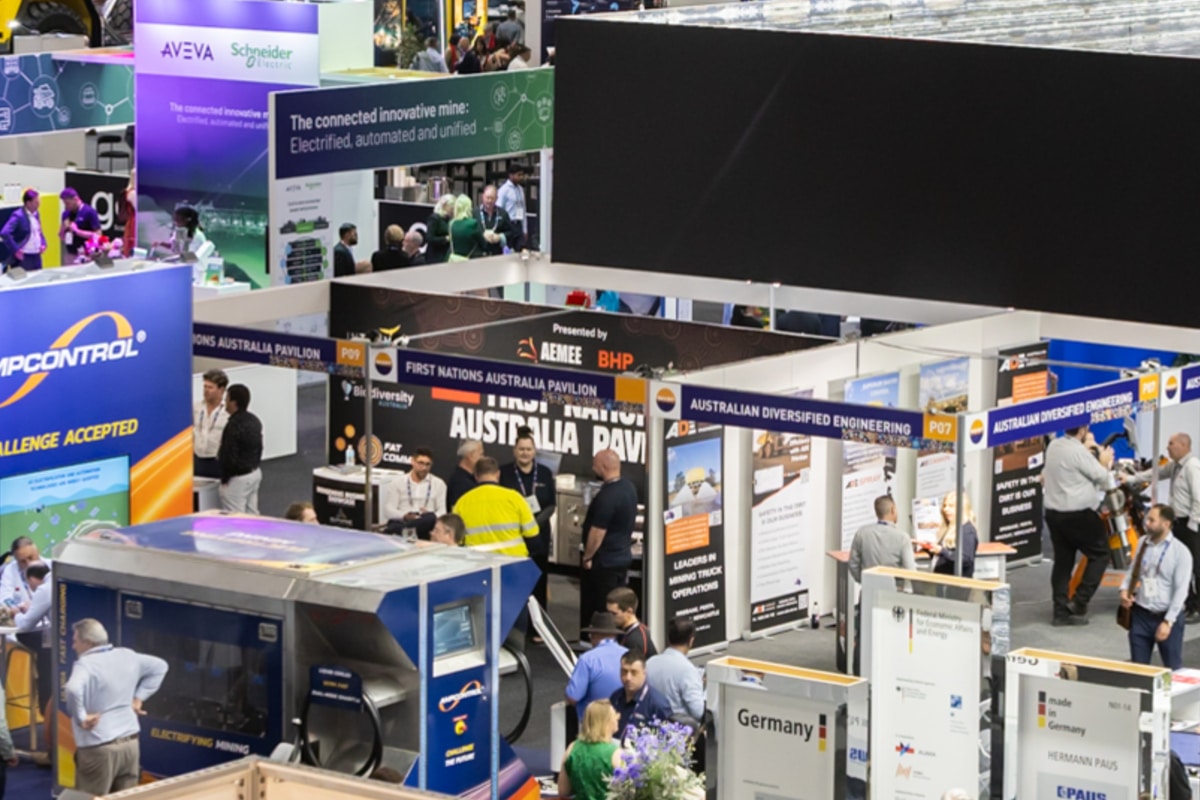
IMARC in Sydney later this month will bring thousands of mining leaders, investors and METS suppliers together with a deliberate focus on mine operators as on-the-ground decision makers. Organisers are rolling out structured matchmaking initiatives to connect local site-based teams with technology vendors, aiming to accelerate adoption of solutions such as fleet management systems, ore-sorting technologies and remote operations platforms. For METS firms, the format signals more direct access to operational budgets and shorter feedback loops on deployment constraints at Australian mines.
Infrastructure Australia’s 2025 Market Capacity Report warns of a severe skills shortfall across major transport and civil projects, prompting two unnamed but “key industry contributors” to launch a sector-built training and auditing framework tailored to infrastructure delivery. The partnership is developing bespoke competency pathways and audit tools aligned with current construction methods and regulatory requirements, rather than generic RTO packages. For contractors and asset owners, this signals a shift towards project-specific skills verification on road, bridge and rail works, with tighter evidence requirements during audits and prequalification.
Main road works on Queensland’s Beams Road Stage 1B Upgrade are now complete, easing a long‑standing bottleneck on a corridor carrying around 20,000 vehicles per day between Brisbane’s northern suburbs and Gympie Arterial Road. The project covers the section between Carselgrove Avenue and Lacey Road, a key feeder to the regional rider and active transport network, and prepares the corridor for further staged duplication. For civil and pavement engineers, the upgrade signals imminent demand for intersection reconfiguration, drainage adjustments and future capacity works along adjacent sections.
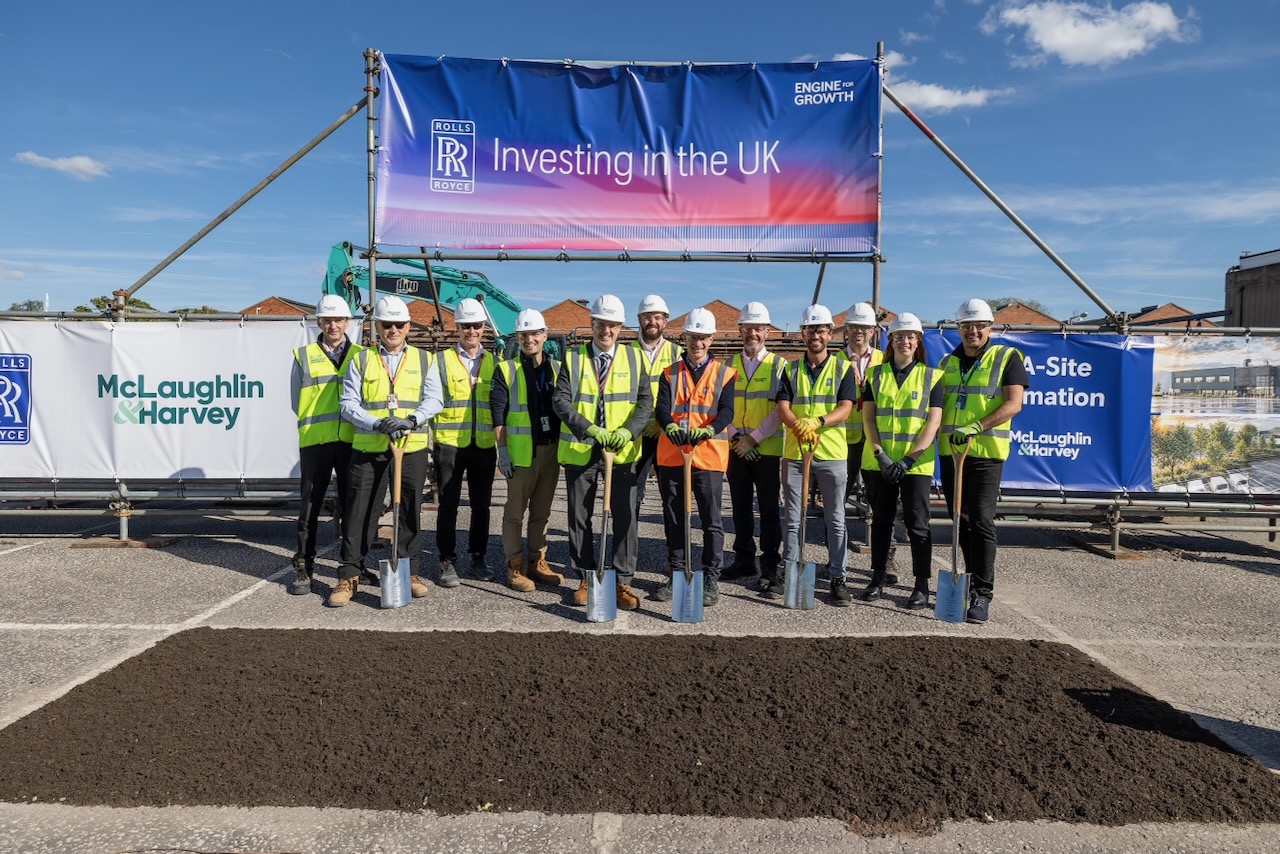
McLaughlin & Harvey has begun construction of a new civil aerospace manufacturing facility at Rolls-Royce’s Derby site, forming part of a £140m investment in UK advanced manufacturing. The project sits within a wider McLaughlin & Harvey programme delivering manufacturing services and engineering, technology & safety (ET&S) buildings for Rolls-Royce, alongside a separate £100m facility in Bristol. Rolls-Royce aims to use the new Derby infrastructure to support future growth in large aero engines, upgrade employee working environments and reinforce UK aerospace and defence capability.
Bentry Capital’s 365-home Abbey Row scheme in Liverpool’s Knowledge Quarter has secured Gateway 2 approval, enabling in-house contractor Mellior Group (Mellior Construction) to move straight into the principal construction phase. The first phase will deliver 241 city-centre apartments across three architecturally distinct blocks on a previously cleared site, with site offices installed and initial subcontractor packages already let. Block C is programmed for completion in 2028 and Block A in 2029, with works due to start on site in October under a delivery strategy embedding new building-safety requirements.
Completion of the 620m fish return tunnel at Hinkley Point C marks seabed breakthrough for the final section of 8km of marine tunnels under the Bristol Channel. The tunnel boring machine, launched from dry land and recovered offshore by floating crane after a five‑month drive, will be cleaned and redeployed on another site. The tunnel will work with an acoustic fish deterrent and four low‑speed seawater intakes designed so fish can escape even when within about 2m of the intake heads.
Pagabo has awarded places to 111 suppliers, including Balfour Beatty, Costain, Kier, Skanska and VolkerFitzpatrick, on its £4.29bn National Framework for Civil Engineering, Infrastructure and Enabling Works 2026, spanning 13 lots over a four‑year term. The framework, compliant with the Procurement Act 2023 and Procurement Regulations 2024, consolidates Pagabo’s previous civils, infrastructure, demolition and land preparation frameworks for use by central and local government, NHS, blue light, housing and education clients. YPO acts as centralised procurement authority, with Pagabo managing delivery through its Pagabo+ digital end‑to‑end platform for call‑offs, performance monitoring and compliance.
Willmott Dixon Developments and Milligan have been appointed via Pagabo’s Developer Led Framework to deliver a £6m council-funded regeneration of Brentwood’s Baytree Shopping Centre, centred on a new leisure quarter anchored by a boutique or premium-format cinema with restaurants, bars and upgraded public realm around the Chapel of St Thomas à Becket ruins. The rear of the site will be prepared separately to safeguard options for future residential development. Immediate technical steps include detailed design, a full planning application and early engagement with existing occupiers.
PTSG has acquired Tamworth-based Neptune Compliance, a specialist in Legionella testing, closed-system water treatment, water storage and cooling tower hygiene, to expand its UK-wide Water Treatment division. Neptune already services major retail and facilities clients including M&S, Morrisons, ASDA, Central England Co-op and Frasers Group, giving PTSG broader national coverage and a deeper compliance-led service offering. Managing director Craig Ward will stay on as sales director for PTSG Water Treatment, supporting cross-selling of Legionella risk management and consultancy across PTSG’s wider customer base.
Sandvik Rock Processing has completed a major upgrade of its jaw crusher range, unifying five models with nominal throughputs from 150 to 1160 tonnes per hour and introducing a common platform for spares and maintenance. The redesigned machines incorporate new safety features such as improved access for liner changes, enhanced nip-angle control and updated guarding around the feed opening and drive. For mine operators, the standardised range simplifies parts stocking, reduces shutdown durations for primary crushing circuits and supports higher, more consistent utilisation of installed capacity.
Australian mine operators will take centre stage at the International Mining and Resources Conference + Expo (IMARC) in Sydney, where thousands of global mining leaders, investors, suppliers and technology innovators are expected to attend. Organisers have launched targeted initiatives to bring more local, on-the-ground decision makers into the programme, aiming to connect Australian sites directly with international solution providers. For engineers, this signals strong opportunities to benchmark operational practices, trial new digital and automation tools, and secure partnerships for brownfield and greenfield project delivery.
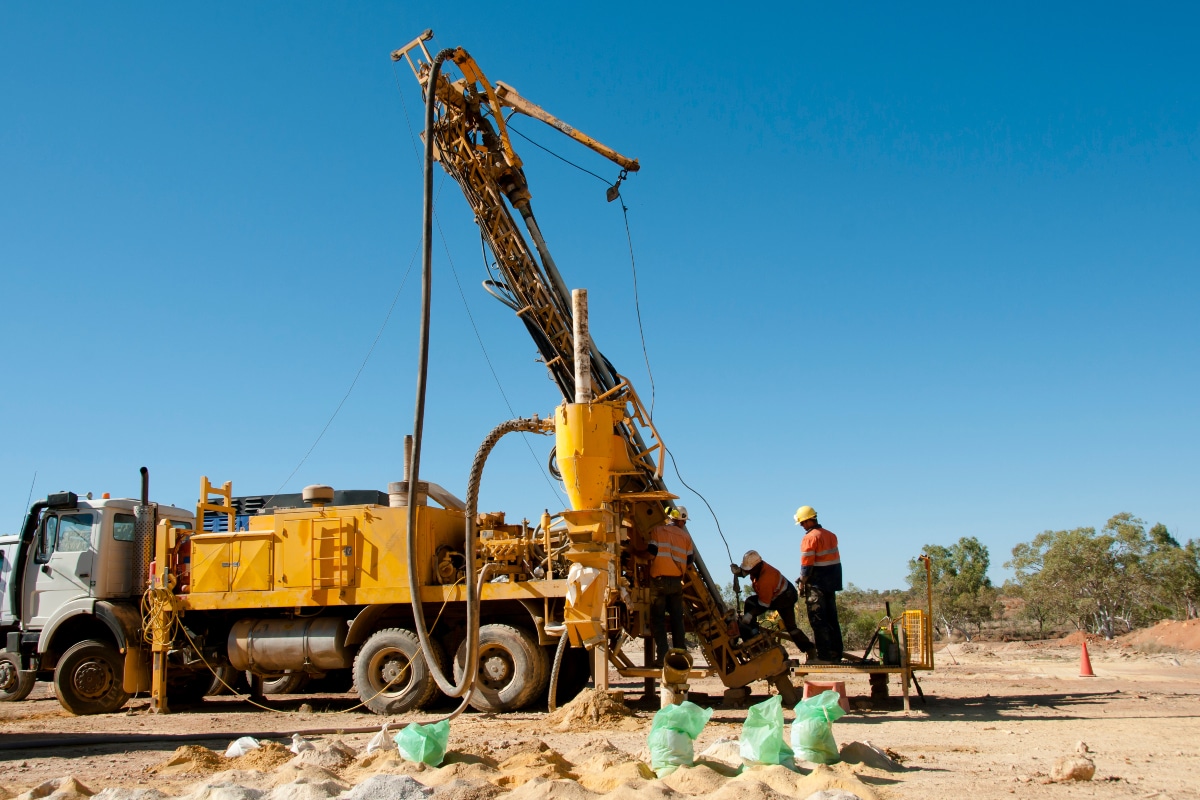
Killi Resources has deployed a second rig at its Lodestone iron ore project in Western Australia’s Mid-West, adding a reverse-circulation unit to the existing diamond core rig to fast-track a 20,000m drilling programme. The campaign is aimed at defining higher-grade, low-impurity iron ore suitable for green steel feedstock, with RC drilling focused on rapid coverage of near-surface mineralisation and core drilling targeting structural and metallurgical detail. Results will guide resource modelling, geometallurgical characterisation and potential project scale for future low-carbon steel supply chains.
CuFe is starting a 20,100m drilling campaign at its Tennant Creek copper–gold project in the Northern Territory, comprising 17,500m of reverse-circulation drilling and 2600m of diamond drilling, with rigs mobilising as earthworks and drill-pad construction progress. The programme follows a $600,000 exploration grant jointly approved by the Northern Territory and Federal Governments, signalling strong backing for further copper–gold definition in the historic Tennant Creek field. Results will guide follow-up targeting, resource expansion and potential development studies in a structurally complex, high-grade IOCG-style district.
Unplanned conveyor shutdowns in bulk material handling are linked to single belt failures or undetected drift conditions that can stop an entire processing plant or export chain, with losses rapidly escalating per hour of downtime. Pacific Automation’s Smart Series approach focuses on eliminating nuisance trips by improving belt drift detection, pull-wire reliability and misalignment sensing, using smarter field devices and better trip logic. For mining engineers, the message is to treat conveyor protection systems as critical process equipment, not simple safety interlocks, and to prioritise condition monitoring and diagnostics in design and upgrades.