Geomechanics.io

  • Free Tools
Sign UpLog In

Geomechanics.io

Geomechanics, Streamlined.

© 2026 Geomechanics.io. All rights reserved.

Geomechanics.io

CMRR-ioGEODB-ioHYDROGEO-ioQCDB-ioFree Tools & CalculatorsBlogLatest Industry News

Industries

MiningConstructionTunnelling

Company

Terms of UsePrivacy PolicyLinkedIn
    Projects
    Failure
    Safety

    Pothole callouts five times higher: pavement deterioration lens for UK road engineers

    June 26, 2026|

    Reviewed by Tom Sullivan

    Pothole callouts five times higher: pavement deterioration lens for UK road engineers

    First reported on New Civil Engineer

    30 Second Briefing

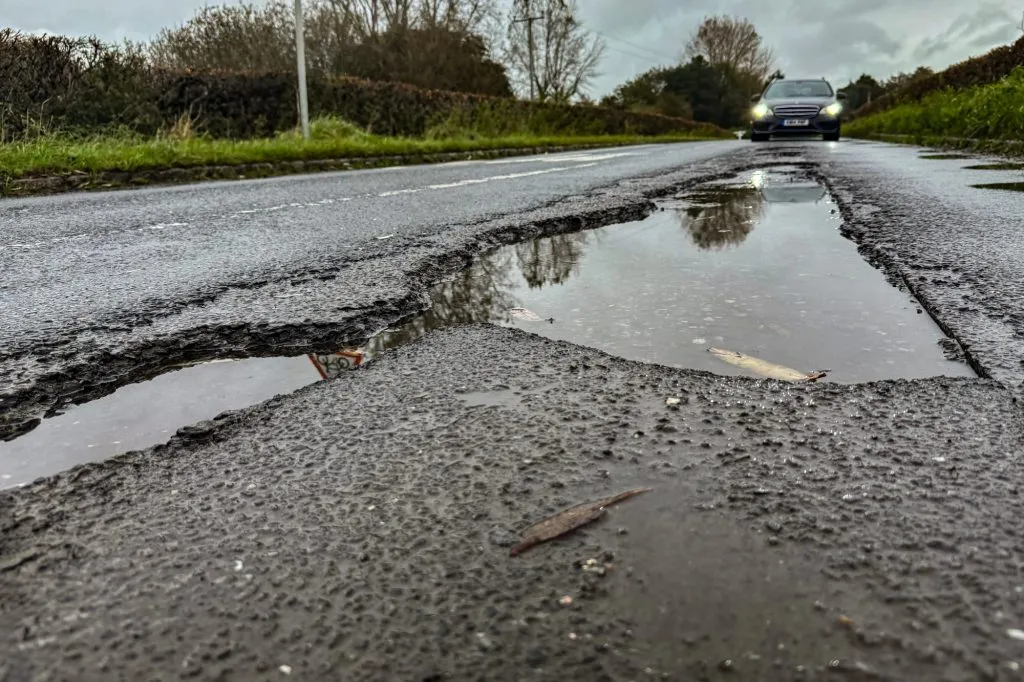
    Pothole-related breakdowns reported to the RAC in February averaged 225 per day, more than five times the 2025 daily average of 43, signalling rapid deterioration of UK carriageway surfaces. The spike points to accelerated fatigue and ravelling in asphalt layers under repeated freeze–thaw and heavy axle loads, with defects progressing from fretting to full-depth potholes before scheduled maintenance cycles. For highway engineers, the figures reinforce the need to reassess intervention thresholds, drainage performance and resurfacing frequencies within constrained local authority budgets.

    Technical Brief

    • Failure mechanism involves surface cracking propagating to basecourse, allowing water ingress and rapid subgrade softening.
    • Investigation typically combines visual condition rating, coring through asphalt layers and FWD deflection testing on suspect sections.
    • Monitoring regimes rely on high-frequency safety inspections of A- and B-roads, plus ad hoc public reports.
    • Remediation commonly uses cold-lay temporary patches followed by hot asphalt planing and inlay when budgets permit.
    • Asset managers are pushed towards risk-based maintenance, prioritising high-speed links and bus routes over low-volume streets.

    Our Take

    RAC’s spike to an average 225 pothole-related breakdowns per day in February 2025 sits within our wider Infrastructure ‘Failure’ coverage as one of the more acute short-term deteriorations in asset performance, suggesting UK local road networks are now generating failure rates more akin to stressed heavy infrastructure assets than to routine highways maintenance cases.

    With New Civil Engineer also fronting webinars on BIM, CDEs and asset management handover, there is a clear gap between the digital asset practices being discussed for major schemes and the largely analogue condition monitoring still typical on local roads, which likely hampers proactive intervention before potholes translate into RAC callouts.

    Across the 880 Infrastructure stories in our database, safety-tagged items rarely show a fivefold change in incident metrics within a single year, so the 5x increase in pothole breakdown reports is likely to be used by asset owners and insurers as a trigger point for revisiting pavement design lives, inspection intervals and risk allocation in highways contracts.

    Geotechnical Software for Modern Teams

    Centralise site data, logs, and lab results with GEODB-io, CMRR-io, and HYDROGEO-io.

    No credit card required.

    • Save and export unlimited calculations
    • Advanced data visualisation
    • Generate professional PDF reports
    • Cloud storage for all your projects

    Prepared by collating external sources, AI-assisted tools, and Geomechanics.io’s proprietary mining database, then reviewed for technical accuracy & edited by our geotechnical team.

    Related Articles

    Strabag’s Pfaffensteig Tunnel contract: design and delivery notes for rail engineers
    Infrastructure
    about 1 month ago

    Strabag’s Pfaffensteig Tunnel contract: design and delivery notes for rail engineers

    Strabag and Group company Züblin have secured the design-and-build structural works for the ABS Gäubahn Nord/Pfaffensteig Tunnel in south-west Germany, centred on an 11km twin-bore rail tunnel linking Stuttgart Airport station directly to the Gäubahn line towards Switzerland. About 9.8km will be driven by two TBMs, with conventional tunnelling for the A8 motorway undercrossing and airport connection, plus a 240m cut-and-cover section, retaining structures, railway underpasses and a grade-separated crossing. A 3km surface section will be upgraded and partially realigned for 200km/h operation, delivered under an integrated project delivery model with Ed. Züblin, Wayss & Freytag and Strabag AG sharing tunnelling, structural and earthworks packages.

    National Grid TBM under the Thames: tunnelling design and risk notes for engineers
    Infrastructure
    4 months ago

    National Grid TBM under the Thames: tunnelling design and risk notes for engineers

    A 271.5‑tonne Herrenknecht Mixshield TBM, Caroline, has started driving a 2.2km electricity cable tunnel with a 4m internal diameter beneath the River Thames in Essex for National Grid’s Grain to Tilbury project, delivered by the Ferrovial BEMO joint venture. The drive will pass through variable Thames estuary ground conditions between 35m‑deep launch and reception shafts of 15m and 12m diameter, with tunnelling continuing into 2026 and overall scheme completion targeted for 2029. The new tunnel will replace the 1969 Thames Cable Tunnel and carry new high‑voltage circuits between Grain and Tilbury substations.

    Panama Canal Mixshield undercrossing: design and tunnelling lessons for engineers
    Infrastructure
    4 months ago

    Panama Canal Mixshield undercrossing: design and tunnelling lessons for engineers

    A 13.46m diameter Herrenknecht Mixshield TBM has broken through into the future Balboa station on Panama Metro Line 3 after completing the first-ever TBM undercrossing of the Panama Canal at depths exceeding 60m below sea level. The 5,600kW, 26,616kNm machine, fitted with an accessible cutterhead and more than 4,500 sensors linked via the Herrenknecht.Connected platform, has achieved peak advance of 150 segment rings (about 300m) per month through mixed sandstone, tuff, breccias and basalt. Around 1.5km of the 4.5km twin-track tunnel remains to final breakthrough.

    Related Industries & Products

    Construction

    Quality control software for construction companies with material testing, batch tracking, and compliance management.

    Mining

    Geotechnical software solutions for mining operations including CMRR analysis, hydrogeological testing, and data management.

    CMRR-io

    Streamline coal mine roof stability assessments with our cloud-based CMRR software featuring automated calculations, multi-scenario analysis, and collaborative workflows.

    HYDROGEO-io

    Comprehensive hydrogeological testing platform for managing, analysing, and reporting on packer tests, lugeon values, and hydraulic conductivity assessments.

    GEODB-io

    Centralised geotechnical data management solution for storing, accessing, and analysing all your site investigation and material testing data.

    AllGeotechnicalMiningInfrastructureMaterialsHazardsEnvironmentalSoftwarePolicy