Fortune Minerals’ Nico road funding: logistics and capex notes for mine planners
Reviewed by Joe Ashwell
First reported on MINING.com
30 Second Briefing
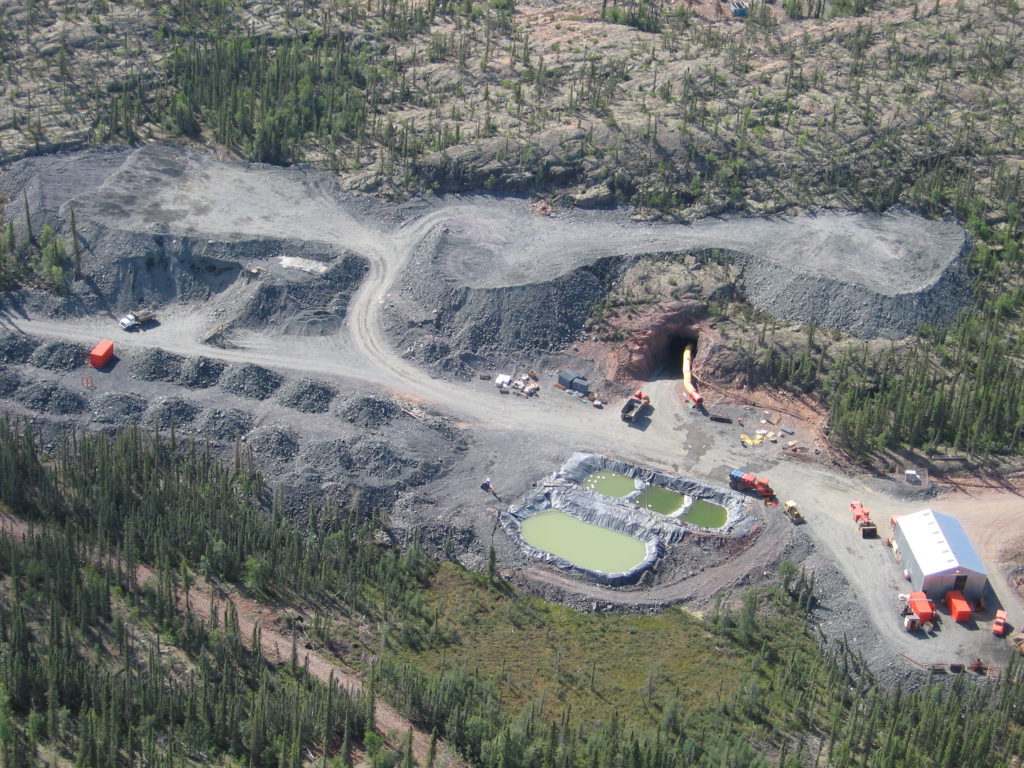
Fortune Minerals and the Tłı̨chǫ government have secured up to C$50 million from Natural Resources Canada’s First and Last Mile Fund to build an access road across Tłı̨chǫ private lands, linking the Nico cobalt-gold-bismuth-copper project to the territorial highway near Whatì, about 50 km south of the deposit. The road, now fully permitted by the Wek’èezhìı Land and Water Board, is critical to a logistics chain moving 180 tonnes/day of concentrate from 4,650 tonnes/day of ore to rail at Enterprise and then ~1,000 km to a hydrometallurgical plant in Lamont County, Alberta. Removing this infrastructure gap supports an updated feasibility study targeting a 20-year operation producing about 8,780 t/y cobalt sulphate, 47,000 oz/y gold and 1,700 t/y bismuth products.
Technical Brief
- Natural Resources Canada’s First and Last Mile Fund will reimburse 75% of eligible access-road costs across Tłı̨chǫ lands.
- Wek’èezhìı Land and Water Board has already issued the land use permit and water licence for road construction and operation.
- Tłı̨chǫ government receives an additional C$200,000 for community engagement and traditional knowledge studies tied to the road alignment.
- Fortune targets feasibility study update completion next month, followed by front-end engineering design by early next year.
- Remaining Northwest Territories land and water permits for the mine are expected to be renewed within months; Alberta refinery permitting is targeted early next year.
- Concentrator design is based on a ~4% mass pull: 4,650 t/d ore to 180 t/d concentrate via flotation.
- Logistics chain requires ~400 km trucking of concentrate to Enterprise, then ~1,000 km rail haul to Lamont County hydrometallurgical plant.
- 2014 capex of ~C$600 million is now estimated by Fortune at ~C$1 billion before updated engineering and infrastructure offsets.
- Fortune has already secured ~C$17.5 million in grants and loans, including US Defense Production Act Title III and Alberta Innovates support.
- Relocation of the refinery from Corman Park, Saskatchewan to Alberta reportedly added five years and C$5–10 million to project costs.
Our Take
In our database, the Nico cobalt-gold-bismuth-copper project is one of the few Canadian critical-minerals assets with both upstream reserves (33.1 Mt at multi-commodity grades) and a planned downstream refinery in Alberta, which tends to make it more attractive for US Defense Production Act support than single-stage projects.
The 50 km road link near Whatì and 400 km trucking route to Enterprise, NWT, mean haulage will be a material opex driver; compared with other remote cobalt projects in our coverage, this kind of public co-funding for access roads often proves decisive in keeping delivered concentrate costs competitive with Chinese-controlled supply.
Natural Resources Canada appears repeatedly across related items (supporting Fortune Minerals’ hydromet work, Rio Tinto’s gallium pilot, and First Phosphate’s LFP plans), signalling that Nico’s cobalt and bismuth output is being positioned within a broader federal strategy to secure non-Chinese critical-mineral inputs for lithium-ion batteries and allied technologies.
Prepared by collating external sources, AI-assisted tools, and Geomechanics.io’s proprietary mining database, then reviewed for technical accuracy & edited by our geotechnical team.
Related Articles


Related Industries & Products
Mining
Geotechnical software solutions for mining operations including CMRR analysis, hydrogeological testing, and data management.
Construction
Quality control software for construction companies with material testing, batch tracking, and compliance management.
CMRR-io
Streamline coal mine roof stability assessments with our cloud-based CMRR software featuring automated calculations, multi-scenario analysis, and collaborative workflows.
HYDROGEO-io
Comprehensive hydrogeological testing platform for managing, analysing, and reporting on packer tests, lugeon values, and hydraulic conductivity assessments.
GEODB-io
Centralised geotechnical data management solution for storing, accessing, and analysing all your site investigation and material testing data.