Geomechanics.io

  • Free Tools
Sign UpLog In

    Geomechanics.io

    Geomechanics, Streamlined.

    © 2026 Geomechanics.io. All rights reserved.

    Geomechanics.io

    CMRR-ioGEODB-ioHYDROGEO-ioQCDB-ioFree Tools & CalculatorsBlogLatest Industry News

    Industries

    MiningConstructionTunnelling

    Company

    Terms of UsePrivacy PolicyLinkedIn
    Product
    Projects

    VEGAPULS at Sto’s Australian plant: inventory control lessons for engineers

    June 26, 2026|

    Reviewed by Tom Sullivan

    VEGAPULS at Sto’s Australian plant: inventory control lessons for engineers

    First reported on Roads & Infrastructure (AU)

    30 Second Briefing

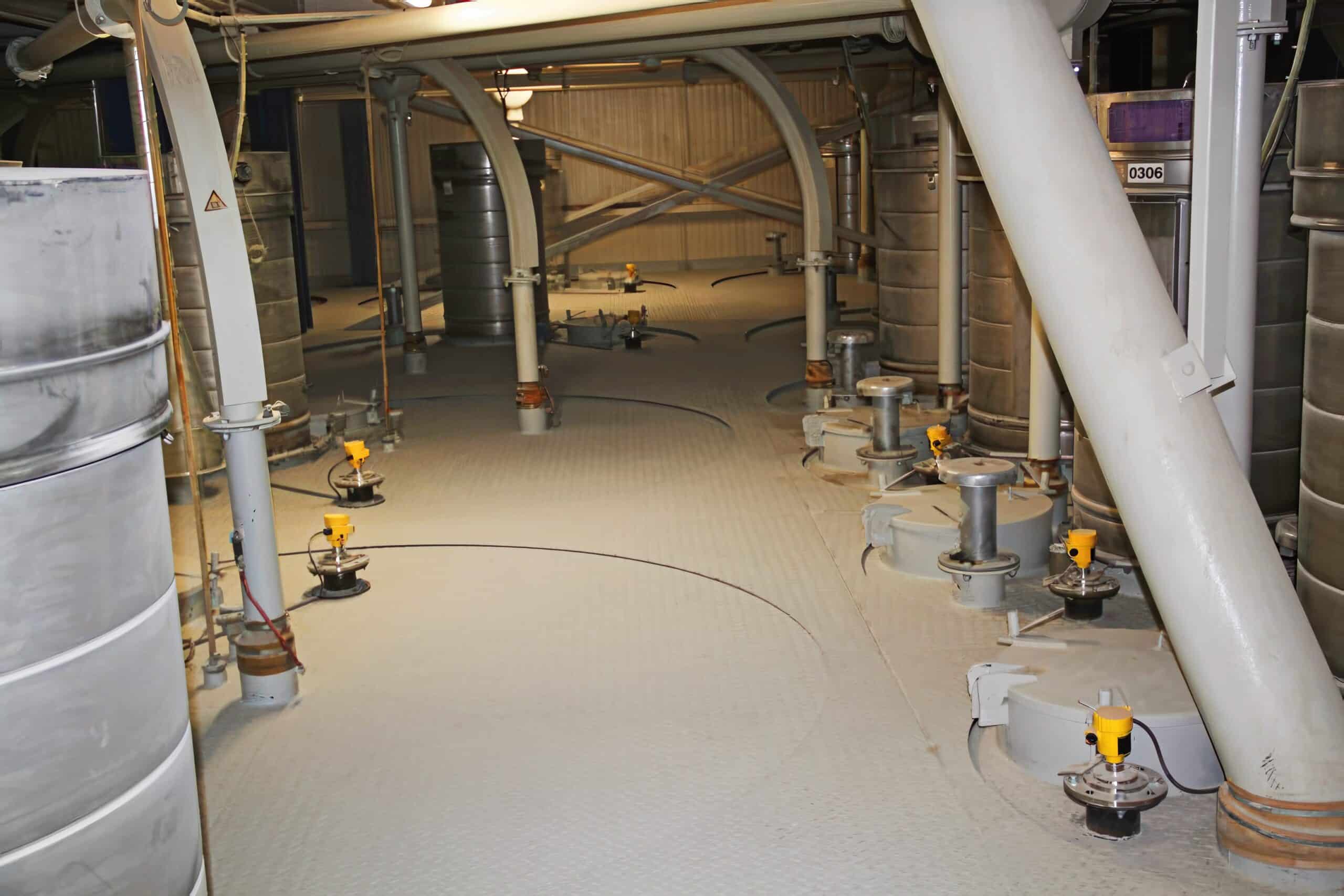
    VEGAPULS non-contact radar level sensors have replaced traditional silo weighing systems at Sto’s building materials plant to monitor raw material and finished product stocks in real time. Each silo is now fitted with a VEGAPULS unit mounted on the roof, providing continuous level measurement unaffected by dust, material build-up or varying bulk densities that previously distorted load-cell readings. The upgrade is aimed at tightening inventory control and supporting punctual deliveries of cementitious and other construction materials to infrastructure projects.

    Technical Brief

    • VEGAPULS units are mounted on silo roofs, measuring vertically downwards through the full storage height.
    • Radar measurement is unaffected by dust clouds generated during pneumatic filling of cementitious materials.
    • Non-contact sensing avoids mechanical wear, drift and calibration issues typical of load cells under cyclic loading.
    • Level readings remain stable despite changing bulk density between different binders, fillers and lightweight aggregates.
    • Sensor performance is not impaired by material build-up on silo walls or internal fittings.
    • Continuous level data enables tighter reordering thresholds, reducing emergency deliveries and underutilised storage capacity.
    • Similar radar retrofits on existing silos can often reuse roof nozzles, minimising structural modification work.

    Our Take

    VEGA’s presence in multiple Roads & Infrastructure Magazine pieces, including the Quartzline radar instrumentation case, suggests the publication is positioning the company as a go‑to reference for level and process control solutions rather than a one‑off product profile.

    Geotechnical Software for Modern Teams

    Centralise site data, logs, and lab results with GEODB-io, CMRR-io, and HYDROGEO-io.

    No credit card required.

    • Save and export unlimited calculations
    • Advanced data visualisation
    • Generate professional PDF reports
    • Cloud storage for all your projects

    Prepared by collating external sources, AI-assisted tools, and Geomechanics.io’s proprietary mining database, then reviewed for technical accuracy & edited by our geotechnical team.


    Related Articles

    Paebbl’s Rebond 300 cement alternative: performance and design notes for engineers
    Materials
    1 day ago

    Paebbl’s Rebond 300 cement alternative: performance and design notes for engineers

    Paebbl has launched Rebond 300, a near‑white, carbon negative cement alternative with a footprint of -149kg CO2 per tonne that can replace up to 30% of conventional cement in standard mixes. The SCM-based binder delivers up to 40% reduction in embodied carbon at typical replacement ratios, a 10x improvement over Paebbl’s first‑generation material, while remaining compatible with existing ready‑mix and precast workflows. The Rebond Series is formulated to work across a family of silicate minerals and uses lower clinker process temperatures, reducing heat demand and permanently storing CO2.

    Marlborough’s lower carbon streets in Barnet: material choices and lessons for engineers
    Materials
    1 day ago

    Marlborough’s lower carbon streets in Barnet: material choices and lessons for engineers

    Marlborough Highways has resurfaced three live streets for Barnet Council in six days using Holcim SuperLow asphalt and ACLA, a carbon-negative aggregate alternative from Low Carbon Materials, as part of the borough’s BarNET ZERO programme. ACLA was incorporated in the binder course to cut embodied carbon while maintaining carriageway performance, supported by electric rollers, electric disc cutters and electric vans on a 100% renewable tariff, with HVO-powered plant used where electrification was not viable. The scheme cut the estimated carbon footprint from 62.34t CO₂e to as low as 4.49t CO₂e, with most savings coming from material selection rather than plant changes.

    Decarbonising the cement sector: carbon accounting guidance for designers
    Materials
    4 days ago

    Decarbonising the cement sector: carbon accounting guidance for designers

    Decarbonising the cement sector hinges on cutting process emissions from limestone calcination and fuel combustion in high-temperature kilns, which together make cement one of construction’s largest embodied carbon sources. The piece centres on how robust carbon accounting frameworks, including project-level whole-life carbon assessments and product-level Environmental Product Declarations (EPDs), can expose the relative impacts of clinker content, alternative fuels and SCMs such as fly ash or GGBS. For designers and contractors, consistent accounting is critical to comparing low-clinker cements, specifying lower-carbon mixes and evidencing compliance with client net zero targets.

    Related Industries & Products

    Construction

    Quality control software for construction companies with material testing, batch tracking, and compliance management.

    QCDB-io

    Comprehensive quality control database for manufacturing, tunnelling, and civil construction with UCS testing, PSD analysis, and grout mix design management.

    AllGeotechnicalMiningInfrastructureMaterialsHazardsEnvironmentalSoftwarePolicy