Great Western Highway upgrade: design and staging notes for infrastructure engineers
Reviewed by Tom Sullivan
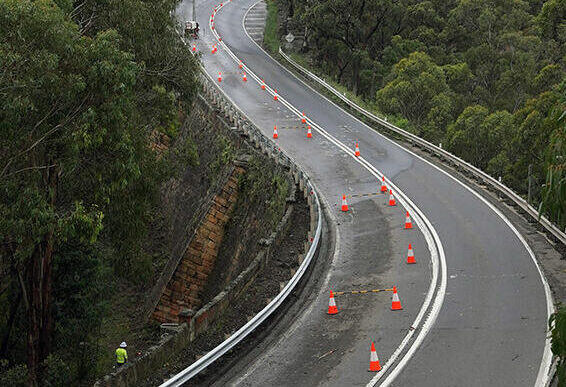
First reported on Roads & Infrastructure (AU)
30 Second Briefing
Seymour Whyte has been awarded the contract to build a new durable crossing at Mitchells Causeway on the Great Western Highway at Victoria Pass, restoring the key freight and commuter link between the Blue Mountains and Central West. The New South Wales Government has committed $50 million to upgrade detour routes that have carried traffic since sections of the highway were closed on 12 March, signalling ongoing reliance on temporary alignments until the new structure is in place. For designers and contractors, staging, flood resilience and heavy vehicle load performance on the new crossing will be critical.
Technical Brief
- Temporary alignments will require ongoing geotechnical inspection for slope stability, drainage performance and pavement distress.
- Construction sequencing must manage steep Blue Mountains topography, constrained corridor width and existing highway earthworks.
- Flood and debris loading at Mitchells Causeway will drive hydraulic design, scour protection and foundation detailing.
Our Take
The earlier piece on the $50 million detour‑route package in the Blue Mountains and Central West signals that this contract award is part of a staged resilience response to the Great Western Highway closure rather than a one‑off fix.
Seymour Whyte’s appearance here and in our coverage of Victoria’s Clyde Road Upgrade suggests New South Wales is leaning on contractors with recent experience managing complex roadworks in constrained, live‑traffic environments, which is directly relevant around Mitchells Causeway and Victoria Pass.
Prepared by collating external sources, AI-assisted tools, and Geomechanics.io’s proprietary mining database, then reviewed for technical accuracy & edited by our geotechnical team.


