Geomechanics, Streamlined.
© 2026 Geomechanics.io. All rights reserved.
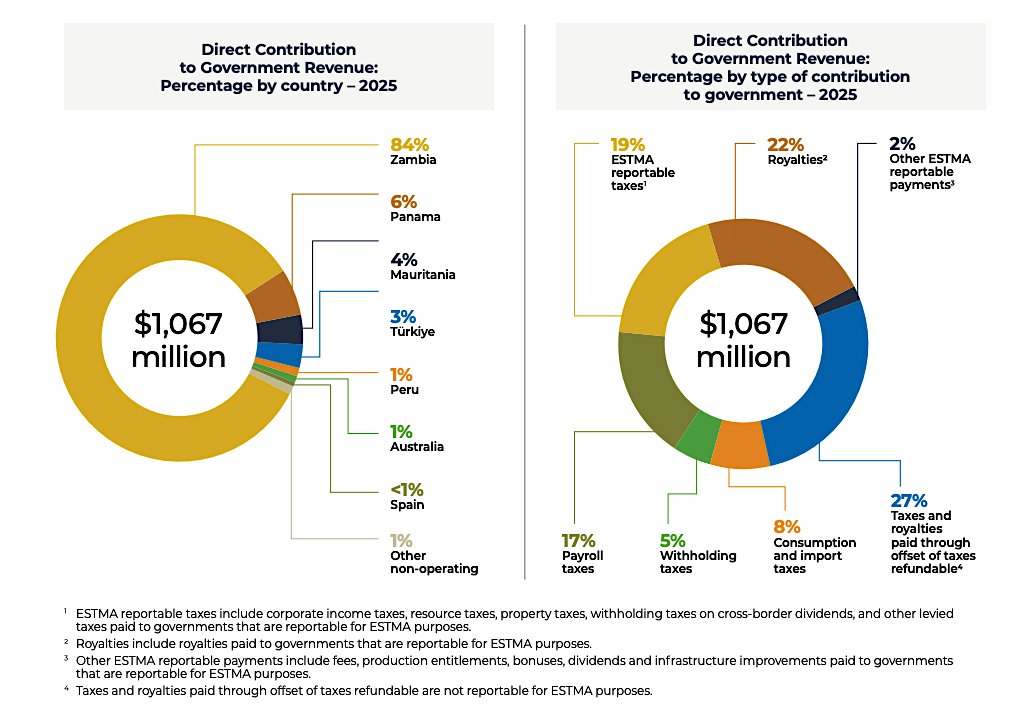
Suspension of First Quantum’s Cobre Panamá copper mine has cost Panama an estimated $3.5 billion in forgone economic contribution over 2024–25, including about $1.1 billion in lost taxes and royalties, underlining the fiscal impact of keeping one of the world’s largest copper operations in preservation mode. First Quantum’s 2025 tax transparency report shows the mine would have added at least $1.8 billion to Panama’s 2025 economy alone, with more than $600 million in government revenue, over $250 million in wages and nearly $930 million in local procurement. Despite the shutdown, preservation activities and export of 122,520 dmt of stockpiled concentrate in 2025 still supported more than 1,700 workers, $107 million in local procurement and roughly $30 million in royalty payments while the company seeks a “durable resolution” with the government.
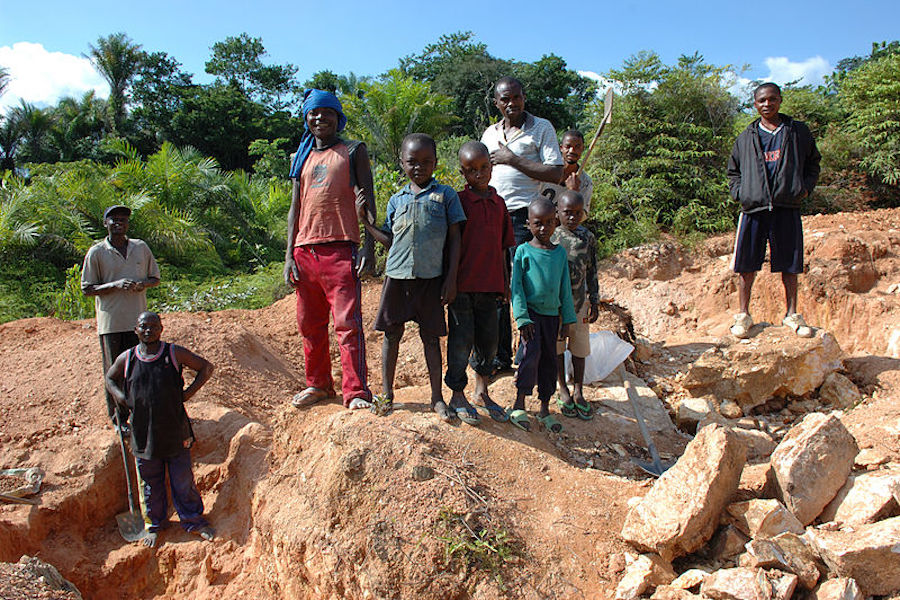
Nearly half of 72 recent mining projects missed delivery deadlines and about 62% of permitting delays were linked to environmental concerns or community opposition, with social conflict costing up to US$20 million per week in lost production. As Washington deploys more than US$30 billion in loans and strategic initiatives to rewire critical mineral supply chains, Andrew Bogrand of Oxfam argues that weak traceability, poor Indigenous engagement and attacks on human rights defenders are now core supply risks. He calls for binding use of IRMA and IFC Performance Standards, free, prior and informed consent, and full mine-to-market transparency.
Honda has indefinitely suspended its planned C$15 billion EV and battery complex at Alliston, Ontario, which was designed for 240,000 vehicles per year, an upgraded assembly plant, a standalone battery facility and two component plants, despite up to C$5 billion in pledged federal and provincial funding. The decision follows Honda’s first-ever full-year loss of ¥423.9 billion (US$2.7 billion) and ongoing US tariffs of up to 50% on core metals such as steel, aluminium and copper. Ontario is pivoting towards defence metals but is still fast-tracking upstream projects including Canada Nickel’s Crawford and Frontier Lithium’s PAK.
Gold fell as much as 3% towards $4,500/oz on Friday, erasing two weeks of gains as surging global bond yields and a stronger US dollar followed renewed inflation fears tied to the Iran war and closure of the Strait of Hormuz. Silver and copper also dropped sharply, by about 10% and 3% respectively, as higher crude prices and stalled China–US talks on ending the conflict reinforced expectations of further rate hikes, with markets now pricing over a 50% chance of a US move in January. ANZ has pushed back its $6,000/oz gold target to mid‑2027, even though bullion is still up 6% year‑to‑date after January’s near‑$5,600/oz peak.
Trump’s two-day summit in Beijing ended without a rare earths agreement, leaving China’s control of roughly 90% of global refining/processing and over 60% of mined supply unchanged. Export curbs imposed after Trump’s ‘Liberation Day’ tariffs still have teeth, with shipments of yttrium, dysprosium and terbium to the US down about 50% versus pre-control levels, contributing to previous auto plant shutdowns in the US and Europe. US Trade Representative Jamieson Greer reported only a gradual recovery in imports, while analysts warn allies cannot “out-mine or out-process China” quickly enough to build near-term resilience.
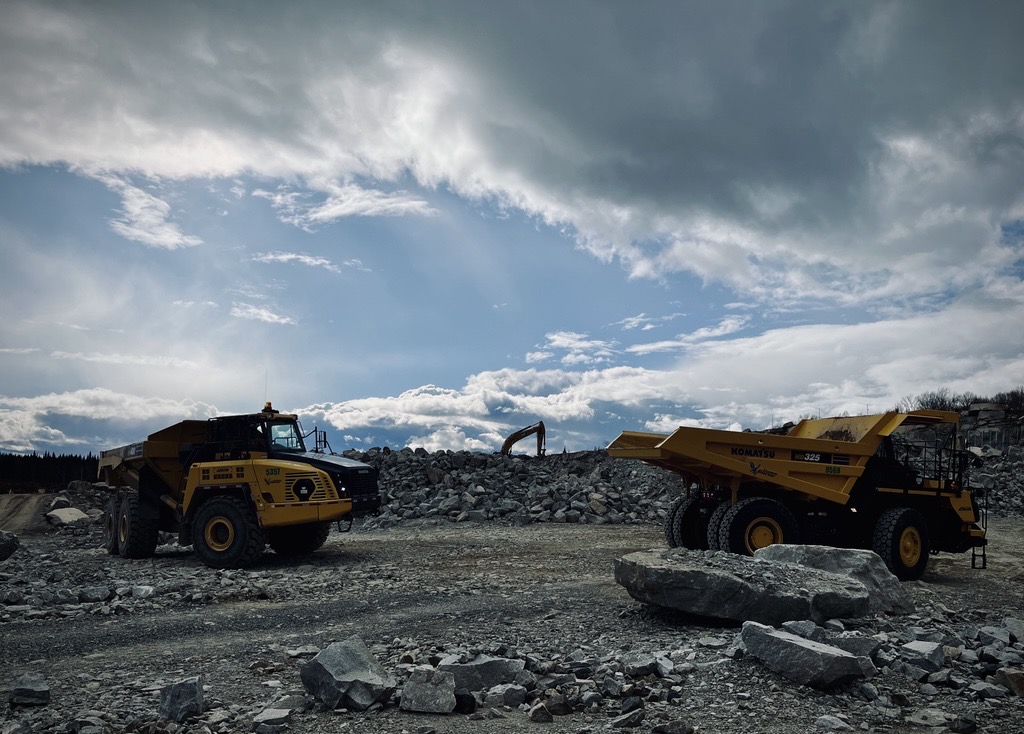
Nouveau Monde Graphite has approved construction of the Matawinie open-pit mine in Saint-Michel-des-Saints, Quebec, designed to produce about 106,000 tonnes per year of graphite concentrate over more than 25 years and powered by the provincial hydroelectric grid. The company has secured roughly $644.5 million in equity and debt, with total capex for Matawinie and the Bécancour battery material plant now estimated at about $634 million after downsizing the plant from the 2025 feasibility study. A 30‑month build is planned to reach full production by end‑2028, with 75% of output under offtake, including a seven‑year, 30,000‑t/y fixed‑price contract with the Government of Canada.
MAX Power Mining has signed an MOU with the City of Moose Jaw, Saskatchewan, to advance natural hydrogen commercialisation in the Regina–Moose Jaw Industrial Corridor, centred on the Lawson Natural Hydrogen system near Central Butte, about 80 km northwest of the city. Core desorption tests from nine samples in Cambrian Basal sands above the Basement Complex discovery returned helium values up to 8.7%, averaging 4.4%, indicating a potentially valuable hydrogen–helium system. The partners aim to leverage existing regional infrastructure and policy support to move the project towards commercial validation.
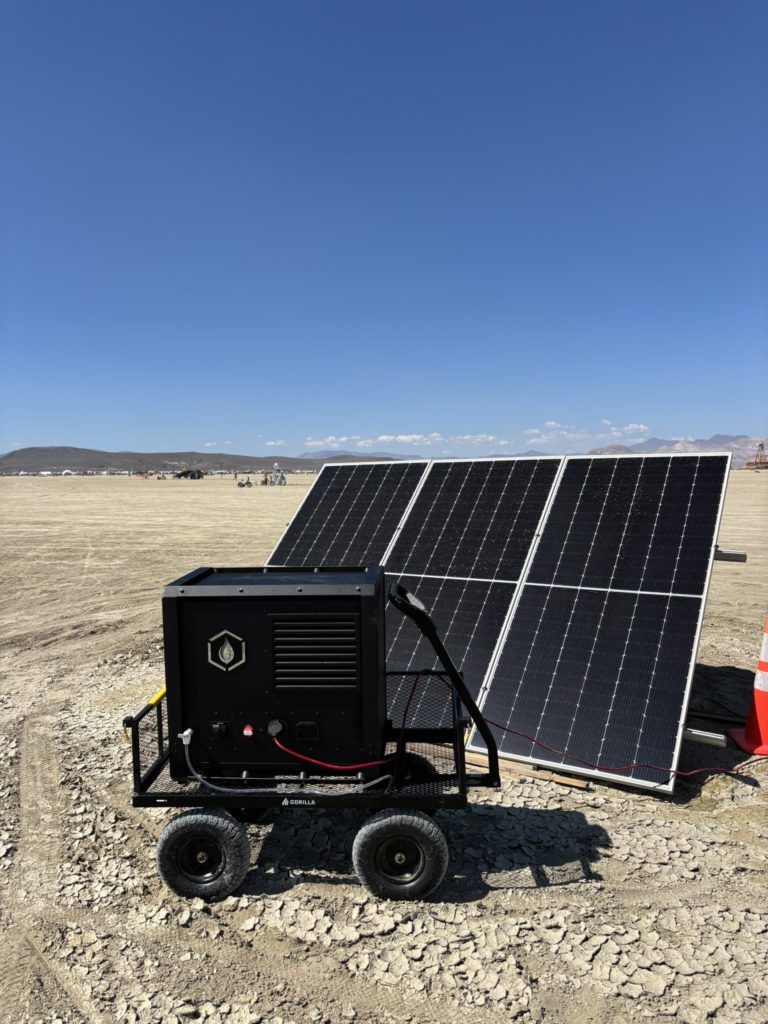
Water scarcity and multi‑year permitting delays—often two to four years for discharge and dewatering approvals in the western US—are increasingly stalling otherwise bankable mines, with water risk now affecting project schedules, financing and national credit profiles. Consultants such as Woodard & Curran report that “credible water stories” are becoming as critical as ore grades, pushing operators towards closed‑loop recycling and non‑traditional sources. US firms Genesis Systems and Atoco are deploying atmospheric water generation units, including Genesis’ containerised WaterCube systems producing over 1,000 gallons per day off‑grid, now trialled at mine sites.
Trafo Power Solutions is supplying 13 dry-type transformers for modular e-houses at a remote Pakistani copper-gold project being developed on one of the world’s largest undeveloped deposits. The South Africa-based firm is working through an EPC contractor to build out the mine’s medium-voltage power distribution, using dry-type units suited to high dust loads and fire-risk constraints typical of arid, remote sites. For engineers, the move signals growing reliance on pre-assembled e-houses and low-maintenance transformer technology to accelerate large greenfield mine electrification.
Datamine has taken a strategic equity stake in Brisbane-based Commit Works, whose Fewzion and Visual Ops platforms are used for operational planning and short interval control in underground and open-pit mines. The deal links Datamine’s long-range and tactical planning tools with Commit Works’ shift-level scheduling and frontline execution, aiming to close the gap between weekly plans and 4–12 hour operating windows. For engineers, this signals tighter integration of mine design, production data and work management on a single digital stack.
Upgrades are progressing on Queensland’s Brisbane–Woodford Road (Mount Mee Road) between Dayboro and D’Aguilar, a key two-lane hinterland corridor linking the Moreton Bay region to Brisbane. The current planning phase is assessing existing pavement condition, horizontal and vertical geometry and roadside hazards to define targeted works on this steep, winding alignment. Outcomes are expected to guide shoulder widening, curve realignments and slope and drainage improvements, which will be critical for heavy vehicles and commuter traffic using this constrained rural route.
Legendre UK has been appointed main contractor for Berkeley Estate Asset Management’s 135,000 sq ft redevelopment of 50 Stratton Street in Mayfair, designed by Stiff + Trevillion as an all-electric office building. The scheme targets BREEAM Outstanding and LEED Gold, with a stated zero embodied carbon approach using lightweight steel and four new cross-laminated timber floors. Works include new stone-clad façades with aluminium-framed windows and curtain walling, with construction due to start in June 2026 and complete by mid-2028.
The Association for Consultancy and Engineering has appointed Mott MacDonald group director for external engagement Denise Bower as chair of ACE Group and Tetra Tech managing director for environment, sustainability and planning Rukhsana Faiz as chair of the Environmental Industries Commission. Bower brings experience from the Major Projects Association, the Infrastructure Client Group and previous work with the Infrastructure and Projects Authority on major project preparation and delivery. Faiz adds 28 years’ international consultancy, government and industry experience as ACE targets skills investment, pipeline certainty and responses to geopolitical and regulatory risk.
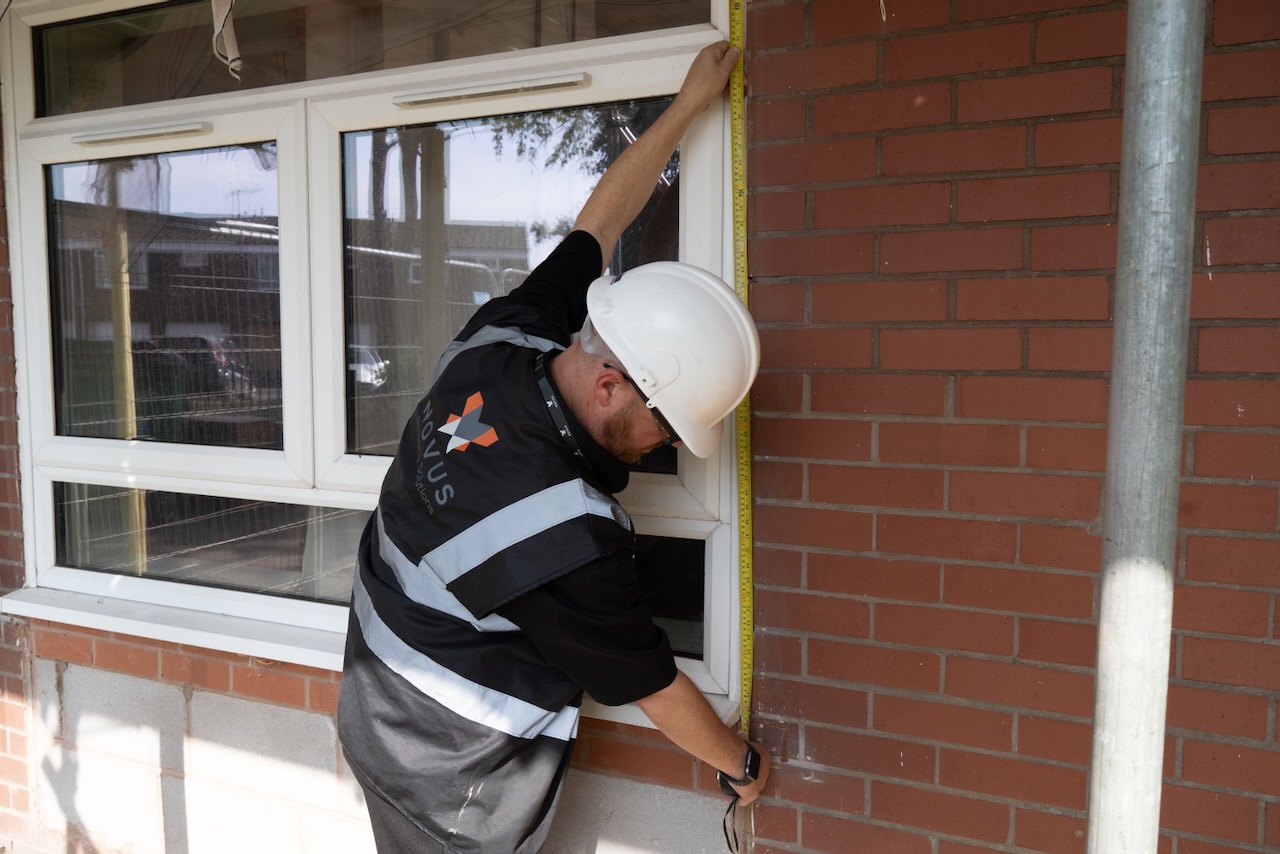
Aspire Housing has appointed Novus Property Solutions and Anglian Windows to replace ageing doors and windows across approximately 200 social homes in Staffordshire and Cheshire, many of which have units more than 10 years old. The programme targets improved thermal performance, airtightness and occupant comfort, which should cut space-heating demand and extend building fabric life. Novus says works will be sequenced to minimise disruption for residents, signalling a rolling retrofit model that asset managers can replicate across wider housing portfolios.
CSCS Smart Check has been upgraded with a new API that records GPS coordinates, site ID or name, and the reason for each card scan (pre‑induction, induction, re‑induction, routine check, site entry or other), feeding data from both the web portal and app into approved access and induction systems. The changes are designed to support Building Safety Act compliance and strengthen workforce planning. Combined with CSCS Alliance Workforce Insights, which aggregates anonymised data from over 2.3 million cardholders across 37 schemes, the platform now gives a more granular geographic view of skills and occupational density.
Sustainability specialist Phil Kelly has rejoined Ramboll as head of department for buildings advisory and consultancy in the UK & Ireland buildings unit, based in the Leeds office. The role covers strategic advice on low‑carbon building design, whole‑life carbon assessment and retrofit strategies across commercial, residential and public sector portfolios. His appointment signals continued demand for consultancy support on embodied carbon, energy performance and compliance with tightening UK regulations such as Part L and emerging net‑zero frameworks.
Rio Tinto has appointed Trudi Charles, currently senior vice president and head of legal for BP’s gas and low carbon energy business, as its new chief legal officer, governance and corporate affairs. Charles brings experience in large-scale energy project approvals, cross-border M&A and climate-related disclosure from BP’s global portfolio, signalling continued focus on regulatory risk and ESG scrutiny across Rio’s iron ore, aluminium and copper operations. Her remit will cover board governance, major project approvals and stakeholder engagement in jurisdictions with complex permitting and Indigenous land rights frameworks.
Alkane Resources has reported a record quarterly net profit of $93 million, its strongest result to date, driven by what management calls a “power of three” strategy across its gold operations and project pipeline. The result comes from higher-grade ore feed and improved recoveries at its existing gold assets, combined with disciplined cost control and advancing its Boda porphyry discovery in New South Wales. For mine planners and geotechs, the cash build strengthens Alkane’s capacity to fund further drilling, resource definition and potential underground development without immediate external capital.
Exploration activity across Australia is being driven by Amara Minerals’ rebrand from Adelong Gold as it advances the Adelong Gold Project in New South Wales alongside copper–gold targets in Queensland. Stelar Metals is progressing drilling on its South Australian critical minerals portfolio, including sediment-hosted copper and REE prospects near Broken Hill. Rincon Resources is simultaneously stepping up work on its West Arunta and Paterson Province tenements in Western Australia, focusing on IOCG-style and intrusion-related gold–copper systems.
Genesis Energy, New Zealand’s largest electricity retailer and a major generator, has gone live on Workday’s enterprise AI platform to consolidate management of its 1000-plus workforce and financial operations. The deployment brings HR, payroll and finance onto a single cloud system, replacing multiple legacy tools and manual workflows across its thermal, hydro and wind generation assets. For mining and heavy-industry peers, the move signals growing adoption of integrated, AI-enabled back-office platforms to support large asset fleets and complex shift-based labour models.
Australia’s 2026–27 Federal Budget is drawing support from the mining sector for measures to bolster fuel security, including backing for domestic refining and storage that reduces exposure to imported diesel and marine fuels. Industry groups are also welcoming commitments to streamline project approvals, with a focus on faster environmental permitting and clearer timelines for major resources projects. Exploration companies, however, are pressing for stronger direct incentives such as expanded flow-through shares or targeted tax credits to sustain greenfields drilling.
Joint Federal–Victorian funding is backing stage two upgrades of Donnybrook Road in Melbourne’s outer north, as part of a $1.2 billion Road Blitz targeting key suburban arterials. Works focus on cutting congestion and crash risk on this growth‑area corridor, which currently carries rapidly increasing commuter and freight traffic between the Hume Freeway, new housing estates and industrial land. For designers and contractors, the programme signals continued demand for intersection upgrades, pavement strengthening and capacity increases on peri‑urban links.
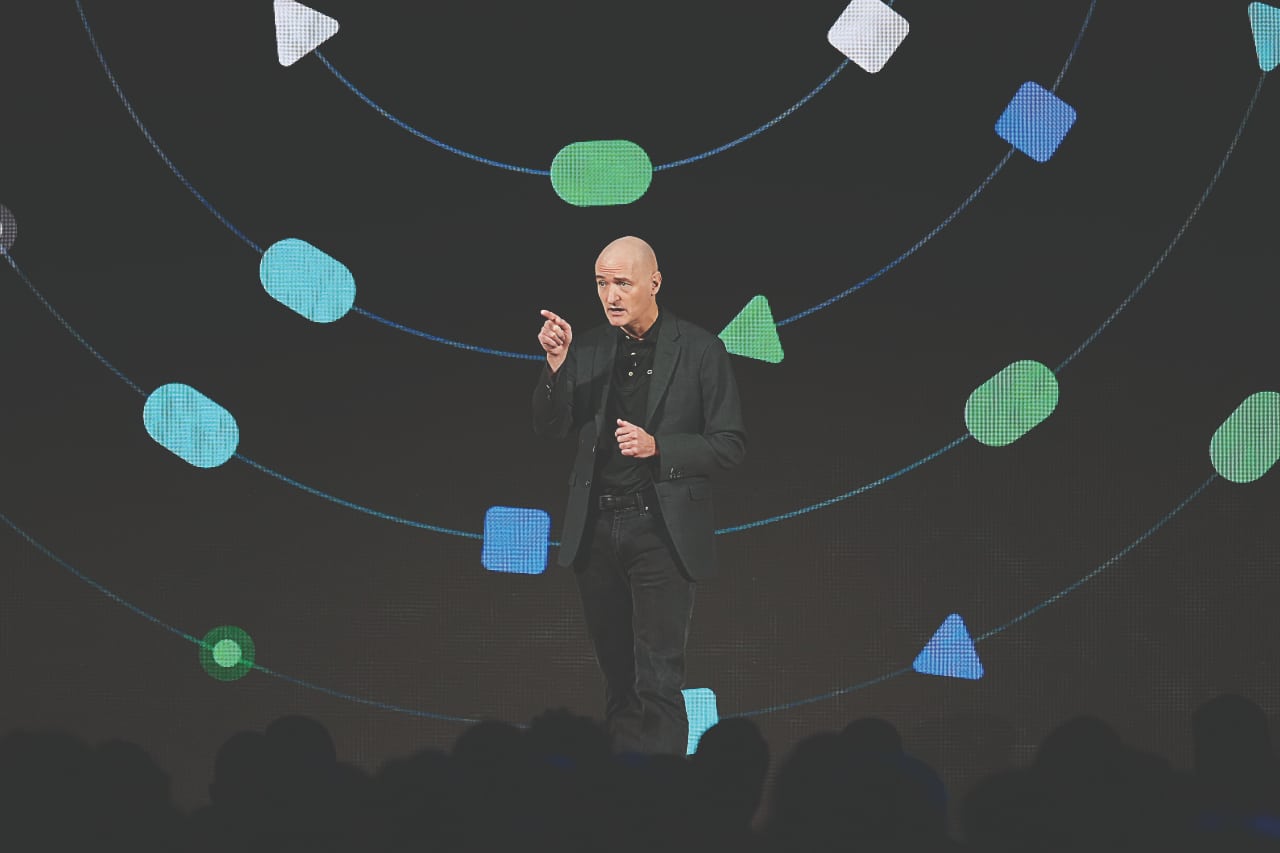
The transition from traditional telematics to an AI‑driven ecosystem is now operational reality for Australian fleets, as showcased at Geotab Connect, the annual conference of connected vehicle specialist Geotab. Founder and CEO Neil Cawse detailed how Geotab’s platform is moving beyond GPS tracking to real‑time data analytics across entire vehicle fleets, using AI models trained on large, connected‑vehicle datasets. For road and infrastructure operators, this signals rapid uptake of AI‑based tools for route optimisation, asset utilisation and predictive maintenance of heavy vehicles and plant.
A £19M “technically complex” footbridge, the Bridgewater Road Bridge, has opened in Queen Elizabeth Olympic Park, delivered by Kilnbridge for the London Legacy Development Corporation and developer Ballymore. Spanning a key waterway and rail corridor to connect new housing with the park, the structure had to be built under tight clearance constraints and live operational conditions. The scheme signals further densification of the Stratford waterfront area, with foundations and approach works likely to govern future utility diversions and adjacent plot layouts.