Geomechanics, Streamlined.
© 2026 Geomechanics.io. All rights reserved.
Kier has awarded Kimpton a £2.4m contract to deliver mechanical, electrical and plumbing systems for the new Wythenshawe Culture Hub within the town’s Civic building, part of a £500m regeneration led by Muse and Manchester City Council. Kimpton will design and install heating, ventilation, air conditioning, smoke extraction, a building management system, internal and external lighting, small power, fire alarm, access control and public address systems. Work is scheduled to start on site in autumn 2026 and complete by mid‑2027, serving a 40‑seat cinema, 200‑seat performance space and flexible studios.
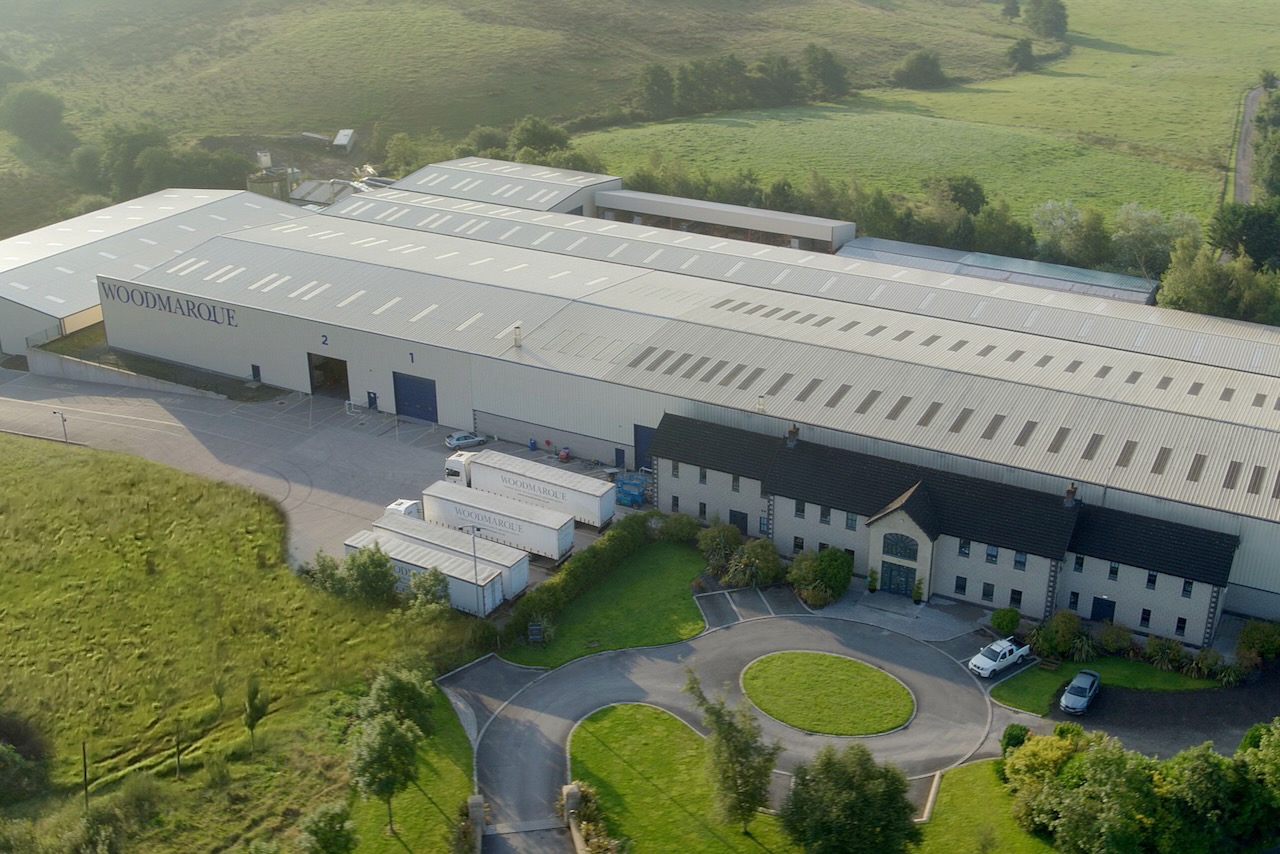
Errigal Group has acquired Dungannon-based specialist joinery manufacturer Woodmarque, which has expanded its factory from 50,000 sq ft in 2019 to 130,000 sq ft and increased turnover six-fold over the past decade. Woodmarque, which produces high-volume doorsets and bespoke joinery for commercial, residential and hospitality projects across the UK and Ireland, will continue to be led by its founders, the Quinn family. The deal follows Woodmarque’s March 2024 purchase of Bristol-based Doorlining, signalling further consolidation in UK and Irish doorset and fit-out supply chains.
National Housing Bank has begun operations as a Homes England subsidiary, mandated to deploy up to £16bn in debt, equity and guarantees to support more than 500,000 homes and large regeneration and mixed-use schemes across England over the next decade. The institution aims to unlock over £53bn of private investment, working with house builders, developers, registered providers and Mayors through Homes England’s new regional model. Launch details include a £100m partnership with Aviva to deliver up to 3,300 build-to-rent homes in underinvested urban areas, starting with 300 units in Liverpool and Manchester.
Sandvik Mining has secured a large order from Aris Mining to supply underground loaders, trucks and multiple development, production and longhole drill rigs for the Marmato gold mine expansion in Colombia. The fleet will support deeper underground mining below the existing operation, where ramp haulage and high-intensity stope production will demand high-availability loading and haulage units. For mine planners and engineers, the deal signals a shift towards more mechanised, drill-and-blast stoping at Marmato, with corresponding implications for ground support, ventilation and power distribution design.
Ausenco has secured the EPCM contract for Rex Minerals’ Hillside copper-gold project on South Australia’s Yorke Peninsula, about 150 km west of Adelaide, one of the country’s largest undeveloped copper assets. The mandate covers full engineering, procurement and construction management for the greenfield operation, positioning Ausenco to define plant layout, materials handling systems and tailings and water management infrastructure. Geotechnical and civil design decisions at Hillside will be closely watched, given its scale and coastal setting with associated foundation, groundwater and environmental constraints.
EPCA has signed an agreement to convert a Caterpillar 988 wheel loader to full battery-electric drive for EMJC, delivering a complete electric powertrain retrofit rather than a new OEM unit. The E-988 project will draw on EPCA’s prior experience electrifying large mining assets, targeting zero tailpipe emissions and reduced diesel-related maintenance on a high-duty-cycle load-and-haul machine. For mine operators, the conversion pathway signals growing options to decarbonise existing medium–large wheel loader fleets without immediate fleet replacement.
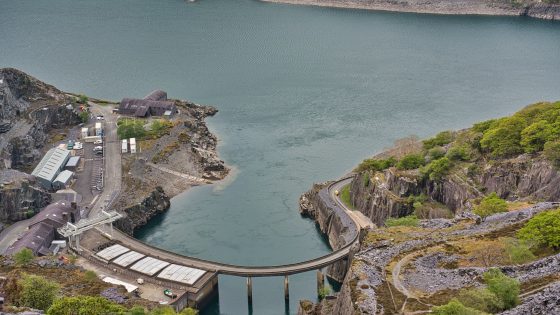
A £300M first phase of renewal at Engie and La Caisse’s Dinorwig pumped storage plant in North Wales has been approved, covering full replacement of two of the site’s six turbine‑generator sets. The works will involve removing and installing large underground units within the existing cavern powerhouse, requiring complex heavy‑lift logistics and precise interface with 1970s civil structures and water conduits. Engineers will need to manage outage sequencing to maintain grid support from the remaining four units while upgrading hydraulic, electrical and control systems to modern performance and reliability standards.
Conservative Party leaders have launched a campaign to expand North Sea oil and gas production by issuing more exploration and production licences and backing new offshore platforms and subsea tie-backs. Environmental groups and some devolved administrations are attacking the plan over lifecycle emissions and stranded-asset risk, warning that new fixed and floating installations could lock in fossil infrastructure beyond 2050 net-zero targets. For civil and marine engineers, the policy signals potential demand for new jacket foundations, subsea pipelines and onshore terminal upgrades, but with heightened regulatory and ESG scrutiny on design and decommissioning strategies.
Senior leadership changes across major UK contractors in March 2026 include new appointments in project delivery, digital engineering and major projects portfolios at firms active on HS2, Lower Thames Crossing and large water frameworks. Several tier one contractors have restructured regional operations to tighten control of NEC4 contract risk, supply chain inflation and design–build integration on schemes above £100M. For geotechnical and civils teams, the moves signal closer central oversight of ground risk allocation, value engineering and early contractor involvement on complex infrastructure.
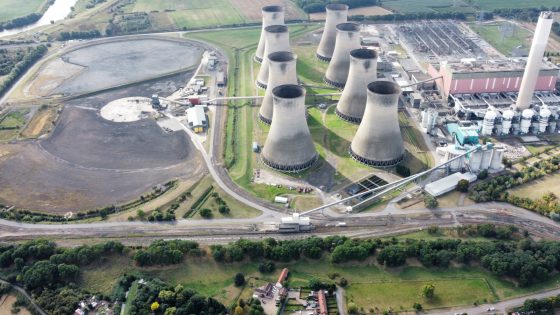
An Amentum-led joint venture has been appointed to provide engineering services for the UK’s first small modular reactors at Wylfa, targeting multi-unit deployment on the former nuclear site and early integration with existing grid and marine infrastructure. In parallel, Holtec’s 300MWe SMR-300 pressurised water reactor has cleared a key UK regulatory milestone for potential installation at the former Cottam coal-fired power station in Nottinghamshire. Together, the projects signal accelerated planning for SMR-ready brownfield sites with established cooling water access and high-voltage export capacity.
Ground Data for Growth Bill proposes mandatory sharing and standardisation of subsurface investigation data, turning borehole logs, CPT results and geophysical surveys from individual project assets into a national digital resource. By reducing duplicated ground investigations and improving access to historic GI records, the bill aims to cut early-stage geotechnical uncertainty, programme risk and contingency allowances on major schemes such as HS2-scale corridors and urban tunnelling. For practitioners, this signals stronger emphasis on interoperable formats, metadata quality and long-term stewardship of ground models.
Latrobe Magnesium has secured a non-dilutive prepayment from its US distribution partner Metal Exchange LLC to advance its Latrobe Valley magnesium production project, which uses fly ash from brown coal power generation as feedstock. The funding supports commissioning of LMG’s initial commercial plant designed to produce magnesium ingots and supplementary products such as cementitious material from waste residues. For mining and materials engineers, the deal signals growing commercial backing for ash-to-magnesium processing as an alternative to conventional dolomite- or magnesite-based routes.
Ardea Resources has secured more than $1 billion in backing from Sumitomo Metal Mining and Mitsubishi Corporation to advance its Goongarrie Hub nickel–cobalt project, part of the Kalgoorlie Nickel Project in Western Australia. The partners are targeting a high-pressure acid leach (HPAL) operation treating laterite ore to produce mixed hydroxide precipitate for battery supply chains, with front-end engineering design and approvals now the key gating steps. For geotechs and process engineers, the scale of HPAL infrastructure on deeply weathered profiles will drive complex foundation design, tailings storage, and water management requirements.
Tungsten prices hitting record highs have prompted Larvotto Resources to fast‑track work at its Hillgrove polymetallic project in New South Wales, targeting historically mined tungsten–antimony–gold lodes within an existing underground mine and processing footprint. The company is reviewing past production data and existing plant configuration to define a restart pathway that can exploit current prices without greenfield capital intensity. For mine planners and metallurgists, the key question is how far the legacy stopes, tailings and circuit can be re‑optimised for higher tungsten recoveries under today’s market conditions.
Perenti Limited has appointed Dr Vanessa Torres as managing director and chief executive officer, succeeding long‑serving CEO Mark Norwell at the ASX‑listed mining services group that operates Barminco and Ausdrill across underground and open‑pit contracts. Torres, a former chief technical officer at South32 and senior executive at BHP and Vale, brings deep experience in large‑scale iron ore, base metals and coal operations, including brownfield expansion and asset optimisation. The leadership change signals continuity for Perenti’s contract mining, drill‑and‑blast and underground development business while positioning it to pursue more technically complex projects and decarbonisation initiatives.
Rio Tinto has committed $1.8 million to Lifeline WA to fund crisis support volunteers answering calls across Western Australia, with a focus on remote mining communities in the Pilbara. The three-year funding package will support recruitment, training and retention of telephone crisis supporters, who handle calls from FIFO workers, contractors and families affected by isolation, shift work and mental health pressures. For mine operators, the move signals continued expectation for structured psychosocial risk management alongside traditional safety systems on large iron ore operations.
South Australia’s electricity demand is forecast by transmission operator ElectraNet to double over the next 15 years, driven largely by new and expanded mines and mineral processing, including copper, rare earths and hydrogen projects. The company points to a sharp rise in large industrial connections across the Upper Spencer Gulf and Eyre Peninsula, requiring major 275 kV and 132 kV network augmentations and new renewable generation hubs. For miners and project developers, grid access, connection timing and firm capacity are becoming critical design and investment constraints.
Sandvik has secured an order from Codelco for 13 Toro® LH515i load–haul–dump loaders for the Chuquicamata Underground copper operation in Chile, with deliveries starting in March 2026 and running through to November 2027. The 15 t capacity LH515i units, designed for 4.5 m x 4.5 m headings, will support production ramp-up and fleet expansion for a new mining panel as Chuquicamata continues its transition from open pit to large-scale block caving. For mine planners and maintenance teams, the staged delivery allows progressive integration of the new LHD fleet into existing development and production schedules.
NCC has secured a SEK 650 million (US$68.6 million) order from LKAB for initial concreting and groundworks on the new iron ore sorting plant at Vitåfors in Gällivare, northern Sweden. The package covers major foundation pours and site preparation for the primary sorting facilities under an existing partnering agreement between the two companies. Early geotechnical and civil decisions on bearing capacity, frost protection and heavy plant load paths will strongly influence future crusher, conveyor and stockpile layouts at this key LKAB operation.
Santana Minerals has locked in build slots with Komatsu New Zealand for the Bendigo-Ophir Gold Project mining fleet, securing delivery of key mobile units ahead of a Fast-Track Approval decision due on 29 October 2026. The procurement followed a comparative assessment of conventional, electric and hybrid equipment options, with Komatsu units selected to meet the project’s construction and early production schedule. Early fleet commitment reduces lead-time risk for primary loading and haulage assets, giving mine planners firmer dates for pre-strip, waste movement and initial ore production.
Johnson Matthey’s DPFi electrically regenerating diesel particulate filter has secured Canadian Standards Association (CSA) certification for underground mining and tunnelling, adding to existing approvals from Canmet Materials and a third independent body. The system uses active electrical regeneration rather than exhaust heat to burn off soot, enabling tighter control of backpressure and emissions on diesel equipment operating in confined headings. CSA certification gives mine operators a recognised safety benchmark for retrofitting diesel fleets to meet stringent underground particulate limits in Canada.
A new pedestrian overpass at Ballarat Station in Victoria has opened with stair and lift access to each platform, completing the multi-stage Ballarat Station Upgrade. The fully grade-separated crossing removes the need for passengers to traverse live tracks, improving DDA-compliant access for people with disability, prams and luggage. For designers and asset managers, the project signals continued prioritisation of vertical transport and segregated pedestrian rail crossings in regional station upgrades.
Donaldson Filtration Solutions has launched the SSG+ Donaclone air cleaner, a high‑capacity pre-cleaner and filter unit designed for heavy-duty mining engines operating in extreme dust loads. The system combines axial seal primary elements with Donaclone pre-cleaner tubes to eject a large proportion of coarse dust before it reaches the filter media, extending service intervals on haul trucks, loaders and drills. For mine maintenance teams, the unit targets reduced unplanned downtime, more stable engine performance and lower filter consumption in high‑particulate pit and haul road environments.
Australia’s Federal Parliament has passed legislation to create a national strategic reserve for critical minerals and fuels, formalising government powers to stockpile commodities such as lithium, rare earths and diesel. The laws enable the Commonwealth to acquire, store and release these materials to manage supply disruptions, with storage expected across multiple secure facilities rather than a single central depot. For miners and processors, the framework signals stronger federal backing for domestic offtake, long-term contracts and potential co‑investment in downstream refining capacity.