Giga Metals–Arca Turnagain nickel deal: CO₂ mineralisation lens for mine planners
Reviewed by Tom Sullivan
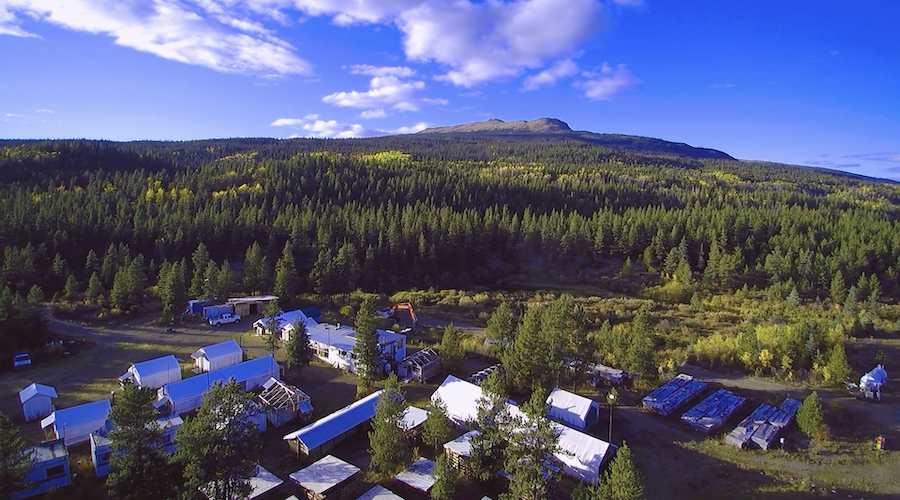
First reported on MINING.com
30 Second Briefing
Giga Metals and Arca Climate Technologies have signed a 10‑year agreement giving Arca exclusive access to tailings and approximately 1.3 billion tonnes of ultramafic waste rock at the Turnagain nickel project in British Columbia to test large‑scale carbon mineralisation. Using its proprietary Industrial Mineralization process on olivine-, serpentine- and brucite‑rich material, Arca estimates lifetime potential to remove up to 220 million tonnes of CO2 by converting mine waste to stable carbonate minerals. The work will include sampling, pilot‑scale trials and techno‑economic studies aimed at integrating permanent CO2 sequestration into Turnagain’s nickel concentrate production economics.
Technical Brief
- Agreement spans 10 years, covering both mine tailings and ultramafic waste rock access.
- Turnagain is being advanced by Giga Metals in partnership with Mitsubishi, indicating major-project scale.
- Initial mineral sequestration tests were run in 2021 at the University of British Columbia laboratories.
- Carbonation mechanism relies on atmospheric exposure of tailings, forming stable carbonate minerals over geological timescales.
- Key reactive minerals identified at Turnagain are olivine (Mg2SiO4), serpentine (Mg3Si2O5(OH)4) and brucite (Mg(OH)2).
- Arca’s work programme includes systematic sampling, laboratory analysis, pilot-scale trials and full techno‑economic assessments.
- Co‑benefits flagged include waste valorisation and improved mine-site sustainability performance beyond CO2 removal alone.
Our Take
Within our 598 Mining stories, very few nickel items in Canada combine mine development with quantified carbon dioxide removal potential, so Turnagain’s 220 Mt CO2 figure positions Giga Metals at the more aggressive end of ‘carbon-negative’ mine design concepts.
Giga Metals’ modest market capitalisation of about C$17.7 million suggests that, if Arca’s ultramafic-based CO2 removal at the Turnagain deposit proves technically bankable, the implied carbon-credit or offtake upside could be disproportionately material to the company’s valuation compared with larger nickel peers in our database.
The focus on ultramafic minerals such as olivine, serpentine and brucite at the Turnagain nickel project aligns with a small cluster of sustainability-tagged items in our coverage where mine waste is engineered as a carbon sink, signalling that tailings and waste-rock design is becoming a core part of critical minerals project economics rather than an afterthought.
Prepared by collating external sources, AI-assisted tools, and Geomechanics.io’s proprietary mining database, then reviewed for technical accuracy & edited by our geotechnical team.
Related Articles

Related Industries & Products
Mining
Geotechnical software solutions for mining operations including CMRR analysis, hydrogeological testing, and data management.
CMRR-io
Streamline coal mine roof stability assessments with our cloud-based CMRR software featuring automated calculations, multi-scenario analysis, and collaborative workflows.
HYDROGEO-io
Comprehensive hydrogeological testing platform for managing, analysing, and reporting on packer tests, lugeon values, and hydraulic conductivity assessments.
GEODB-io
Centralised geotechnical data management solution for storing, accessing, and analysing all your site investigation and material testing data.