Falco’s 15 Takeuchi e‑diggers: runtime, charging and carbon cuts for site engineers
Reviewed by Tom Sullivan
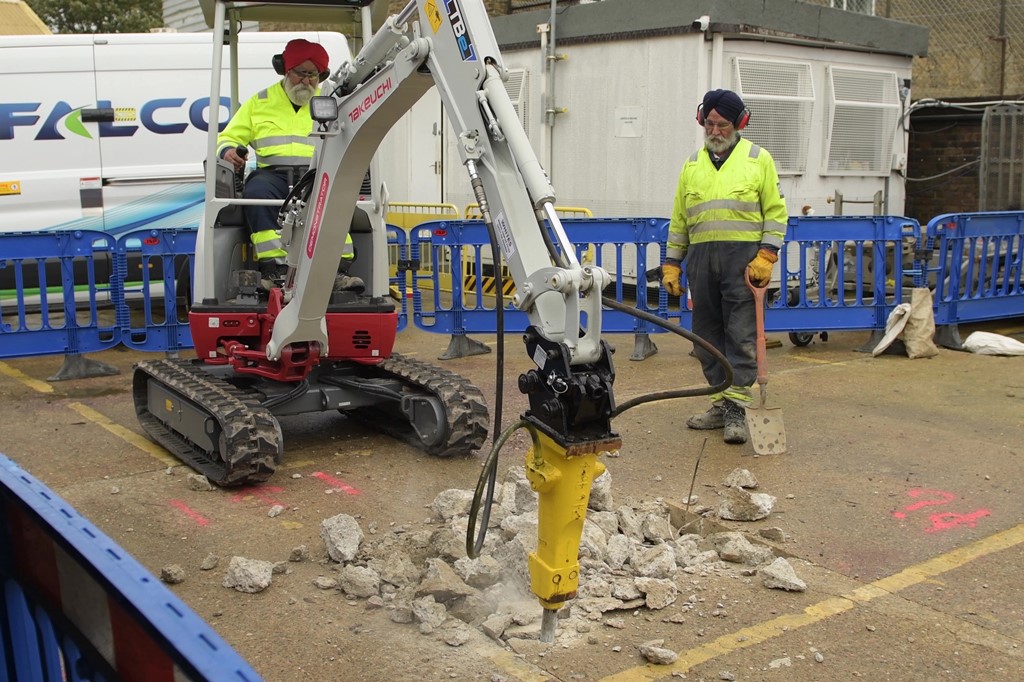
First reported on The Construction Index
30 Second Briefing
Falco Construction has ordered 15 all‑electric Takeuchi TB20e mini‑excavators after a 16‑month trial with UK Power Networks showed the 2‑tonne machines could operate for around five days between charges and then fully recharge within a few hours. The contractor, which runs more than 120 mini‑excavators on street works for clients including UK Power Networks and Thames Water, estimates that switching the full fleet from diesel to electric would cut its carbon emissions by over 200 tonnes per year. Falco is also trialling Stihl TSA 300 battery cut‑off saws with fast‑stop regenerative braking and Instagrid One mobile battery units as replacements for petrol saws and diesel generators on road‑cutting and utility sites.
Technical Brief
- Falco’s initial trial involved two TB20e machines working on live UK Power Networks projects for 16 months.
- Rapid recharge capability “within a few hours” enables overnight charging without disrupting daytime possession windows.
- Stihl TSA 300 battery cut-off saws under trial replace TS 410 petrol units for daily road-surface cutting.
- TSA 300 incorporates a fast-stop brake, bringing the cutting wheel to rest in under four seconds.
- Regenerative braking on the TSA 300 feeds kinetic energy back into the battery, extending effective cutting time.
- Instagrid One mobile battery systems are being tested as silent, emission-free substitutes for portable diesel generators on utility sites.
Our Take
Within our 428 Infrastructure stories, very few feature a contractor like Falco Construction moving such a large proportion of a 120‑unit mini-excavator fleet towards battery power, which signals that UK distribution and utilities work in the south of England may become an early proving ground for all-electric plant.
The estimated 200 tonnes per year of CO₂ savings from fully electrifying Falco’s mini-excavators is modest at project scale but material at framework level, giving clients such as UK Power Networks and Thames Water a quantifiable lever when bidding or reporting against Scope 3 and regulated carbon targets.
A five-day runtime between charges for the TB20e machines implies that, for typical utility and streetworks duty cycles in the south of England, charging logistics can be managed largely from depots or existing Instagrid One-type portable power rather than requiring dedicated fast-charging infrastructure on every site.
Prepared by collating external sources, AI-assisted tools, and Geomechanics.io’s proprietary mining database, then reviewed for technical accuracy & edited by our geotechnical team.
Related Articles


Related Industries & Products
Construction
Quality control software for construction companies with material testing, batch tracking, and compliance management.
Mining
Geotechnical software solutions for mining operations including CMRR analysis, hydrogeological testing, and data management.
QCDB-io
Comprehensive quality control database for manufacturing, tunnelling, and civil construction with UCS testing, PSD analysis, and grout mix design management.