Geomechanics, Streamlined.
© 2026 Geomechanics.io. All rights reserved.
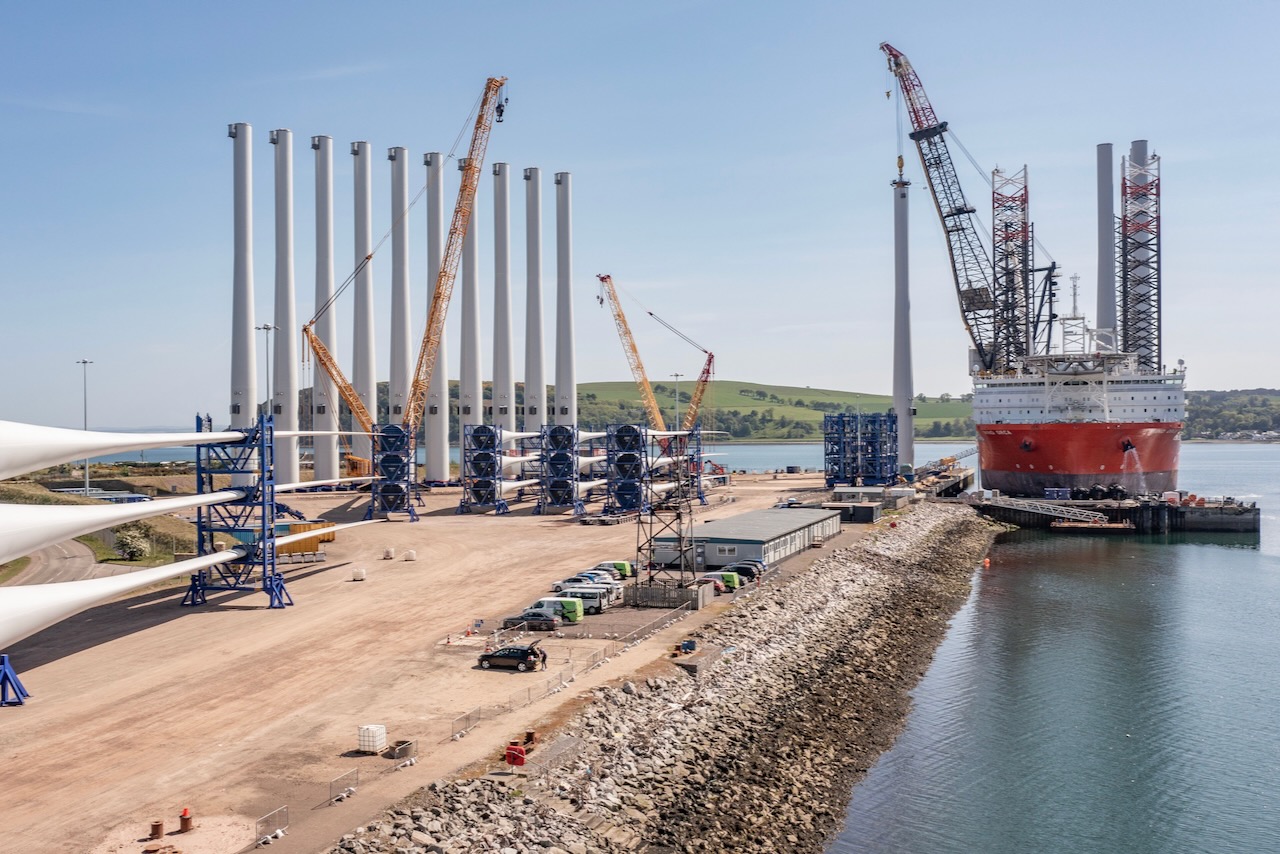
Maraen Port of Nigg has awarded McLaughlin & Harvey a £30m contract, supported by a £10m Highlands and Islands Enterprise grant, to build the Eastern Inner Dock Quay (EIDQ) to service Scottish offshore wind projects. The works will focus on heavy-duty quay construction and ground-bearing capacity upgrades to handle large turbine components and installation vessels. For civil and geotechnical teams, the project signals continued demand for high-capacity quayside foundations and pavements tailored to offshore wind logistics in constrained dock environments.
AtkinsRéalis has secured a five-year professional services framework with EDF and Sizewell C, extending its existing role on the Hinkley Point C nuclear new-build. The appointment covers continued engineering and technical support for Hinkley Point C’s twin EPR units and adds a new scope at Sizewell C, which is intended to replicate much of Hinkley’s design. For geotechnical, civil and structural teams, this signals sustained demand for nuclear-grade design, verification and constructability input across both major UK coastal sites.
Paragon has rebranded as Tilbury Douglas Fit Out, consolidating the group’s Cat A and Cat B fit-out, internal refurbishment, workplace transformation and technically led interior delivery services under a single Tilbury Douglas identity. Managing director Jack Dixon, appointed in December 2025, said the move is intended to align the specialist fit-out arm with the wider contractor’s reputation and give clients greater confidence in complex interior projects. CEO Craig Tatton reported an order book now exceeding £1.6bn, framing the rebrand as part of a five-year growth plan across the UK.
Keltbray chief executive Karl Goose is leaving the specialist engineering and construction group by mutual agreement after just over nine months in the role, having joined from Ferrovial in August 2025 following a 26‑year career there. Executive vice chairman Peter Burnside, formerly Keltbray’s chief financial officer and with eight years at the company, will take over as CEO, bringing two decades of prior collaboration with executive chair Brendan Kerr. The leadership change comes as Keltbray continues to pursue its existing group strategy and expansion into new UK and international markets.
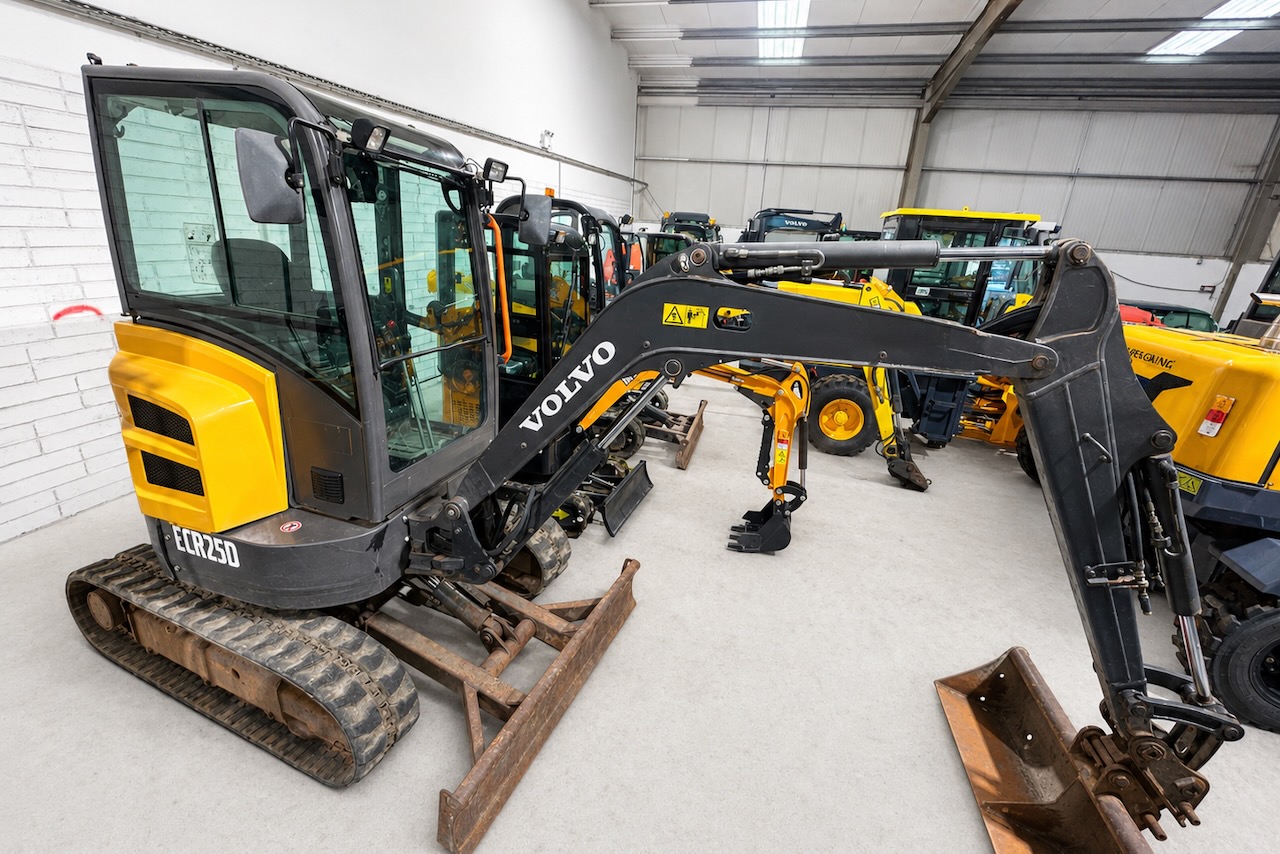
A 2.5‑tonne Volvo ECR25D excavator advertised on Irish auction site Donedeal was stolen from Redmond Machinery & Motors after fraudsters used cloned company details from a Northern Ireland firm, falsified bank transfer confirmations and anonymous online communication to “purchase” and move the machine across the border within two hours. The excavator is now recorded on The Equipment Register (TER), a European stolen plant database, whose head of recoveries Gareth Barkwill warns that organised criminals are using increasingly sophisticated impersonation and payment documentation. For plant owners and buyers, rigorous ID checks and TER searches on pre‑owned machinery are becoming critical due diligence.
Bridgestone has launched three underground mining tyre lines – VMNT, VMDL and VMMS – engineered for abrasive rock, high moisture and continuous-duty load–haul–dump and underground truck cycles. The designs target longer wear life and reduced heat build-up under low-ventilation conditions typical of deep mines, aiming to cut tyre change-outs and unplanned stoppages. For mine operators, the range signals more options for matching tyre compounds and carcass designs to specific underground duty profiles rather than adapting surface-mine products.
Birmingham Airport (BHX) head of planning, transport and strategy Nikki Baines set out how a coordinated surface access strategy is being used to sequence major civils investment and build long-term operational resilience. Her approach links highway and rail connectivity upgrades with terminal and apron capacity planning, so that junction layouts, public transport interchanges and car park configurations are sized and phased against forecast passenger growth. For engineers, the message is that early, data-led access modelling can de-risk later airside works, reduce retrofit of road layouts and protect resilience during construction.
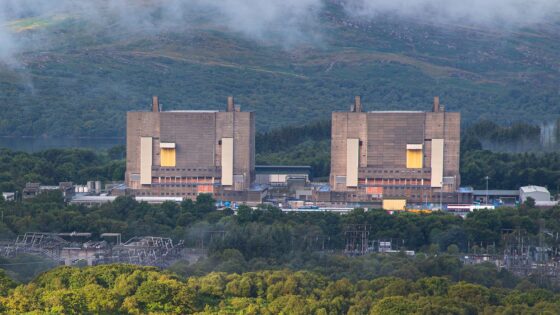
Completion of the highest activity radioactive waste management programme at the Trawsfynydd nuclear power station in north Wales marks a key decommissioning milestone after roughly 20 years of work. High‑risk materials from the Magnox-era site have now been retrieved, conditioned and placed into shielded intermediate-level waste stores designed for long-term containment and future transfer to a geological disposal facility. The shift away from active waste handling allows decommissioning teams to focus on structural dismantling, civil works on reactor buildings and progressive reduction of radiological hazards on site.
The UK highways sector is updating the 10-year-old Well-managed Highway Infrastructure code to capture changes in asset management, risk-based maintenance and funding pressures since its last issue. AtkinsRéalis technical director (highways) is helping steer revisions on lifecycle planning, whole-life cost modelling and resilience of pavements, structures and drainage to more frequent extreme weather. For asset owners and term-maintenance contractors, the refresh signals closer alignment of inspection regimes, condition data, and intervention levels with current DMRB standards and local authority budget constraints.
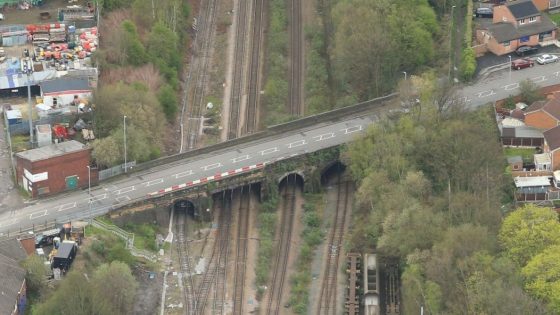
Work has begun on a £3.2M scheme to strengthen a 132‑year‑old railway bridge in Leeds, ensuring it remains safe and serviceable for both rail and highway traffic. The project focuses on replacing key bridge sections and upgrading structural elements to carry modern train loadings while maintaining road clearance beneath. For geotechnical and structural teams, the works imply careful staging around live rail operations and constrained urban access, with close control of temporary works and differential movement between new and existing fabric.
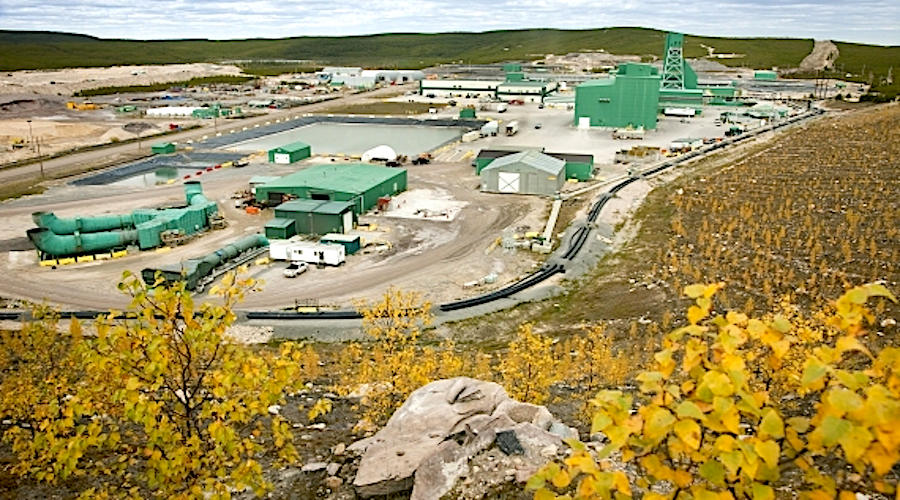
Cameco has restored full production at the McArthur River uranium mine and Key Lake mill in northern Saskatchewan after flooding earlier in May partially collapsed the Smoothstone River bridge, severing the main haul route between the two sites. Key Lake output was halted on 10 May and McArthur River activity reduced, with weight and traffic limits on an alternate road constraining deliveries of operating supplies. The company is working with the Saskatchewan Ministry of Highways on permanent access restoration and is maintaining its 2026 production guidance of 19.5–21.5 million lb U₃O₈.
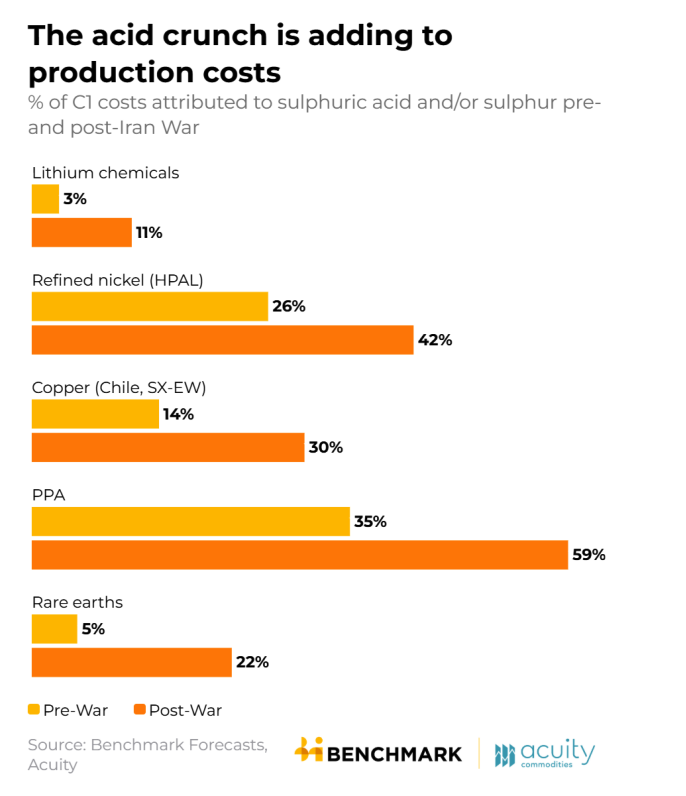
Conflict-driven disruption of sulphur flows through the Strait of Hormuz has pushed sulphur prices up more than 50% and more than doubled sulphuric acid prices in some regions, turning a low-profile reagent into a dominant cost driver for battery metals. Benchmark Mineral Intelligence reports sulphuric acid’s share of hard-rock lithium chemical C1 costs has jumped from 3% to 11%, while sulphur now accounts for 42% of HPAL nickel costs (up from 26%), with Indonesia sourcing 76% of its sulphur imports from the Middle East and needing over 10 tonnes of sulphur per tonne of HPAL nickel. Spot acid above $380/t in Indonesia and $440/t in Chile, China’s informal export curbs, and physical shortages now threaten curtailments or shutdowns at lithium, nickel, cobalt and manganese sulphate plants, even as copper smelters gain from higher acid byproduct revenues and falling treatment and refining charges.
A nearly $500 million solar‑plus‑storage plant in Chile’s Atacama Desert, ContourGlobal’s Victor Jara hybrid facility in Tarapacá, has begun operating with a 200 MW battery system capable of 6.5 hours discharge, backed by a 15‑year night‑time PPA with Copec EMOAC. Chile already has 3,072 MW of BESS operating or under test and expects a further 5,400 MW online by December, largely in the desert grid‑bottleneck zone where daytime solar is routinely curtailed. For mining and other energy‑intensive users, this rapidly expanding long‑duration storage fleet is key to securing firm, low‑carbon power contracts.
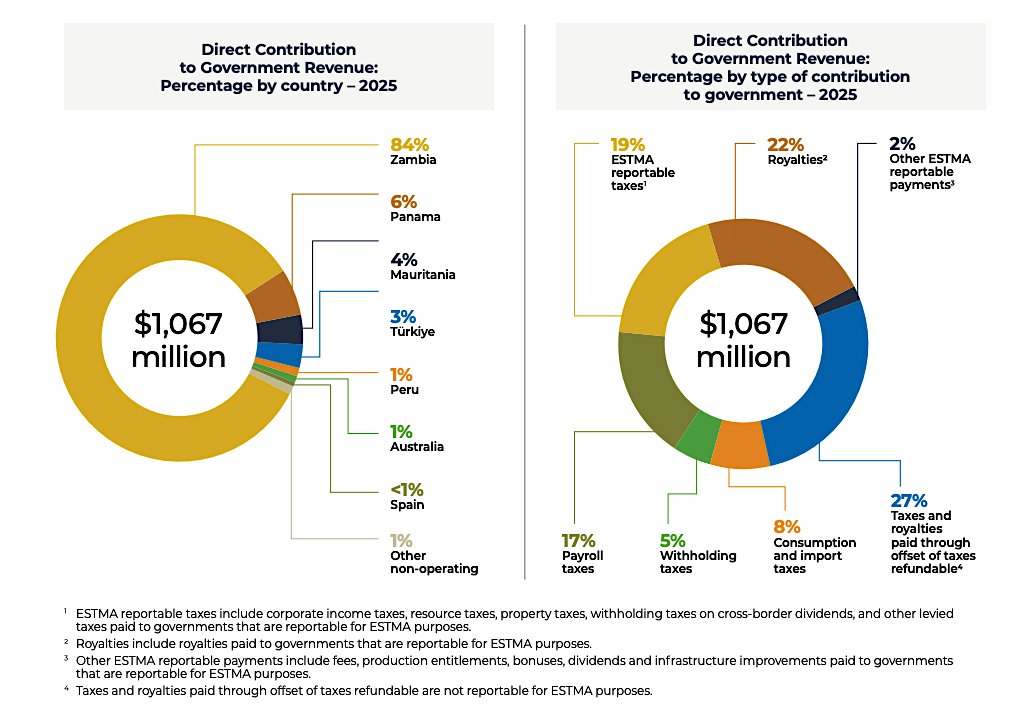
Panama will publish on Friday a third‑party environmental audit of First Quantum Minerals’ shuttered Cobre Panamá mine, a 350,000‑tonne‑per‑year copper operation that previously generated about 5% of national GDP, to guide President José Raúl Mulino’s decision on its future after the 2023 Supreme Court ruling voided the concession. Environment minister Juan Carlos Navarro and commerce minister Julio Moltó say the extensive report, following six preliminary technical reviews, will be released “with full transparency” and is the only basis for assessing environmental compliance. The move comes as new protests in Panama City, led by Sal de las Redes and Movimiento Independiente Voluntad, oppose any restart amid claims of irreversible environmental damage and debate over an estimated $3.5 billion economic loss since shutdown.
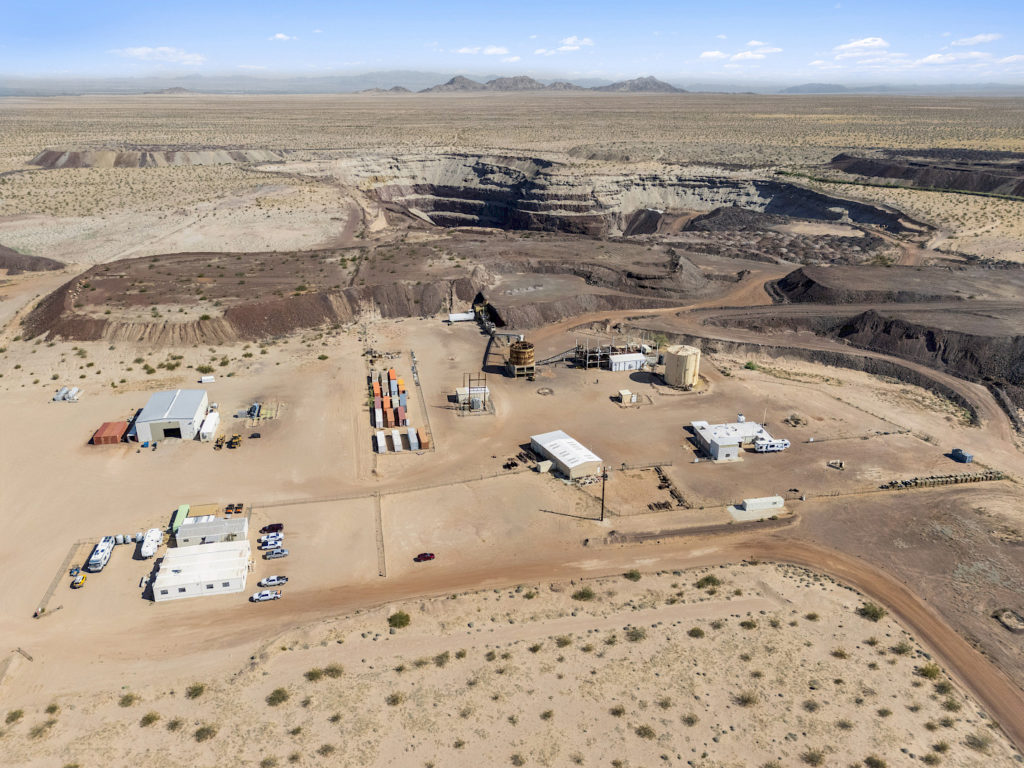
Minera Alamos has approved a US$58 million build-out of the past-producing Copperstone underground gold mine in Arizona, targeting about 46,000 oz. per year over a six-year life at an all-in sustaining cost of US$1,314/oz and payback in roughly 1.2 years. The new PFS, based on 4.1 million measured and indicated tonnes at 4.83 g/t (630,000 oz contained), gives an after-tax NPV of US$374 million and IRR of 108% at US$3,500/oz gold, rising to US$537 million NPV and 154% IRR at US$4,500/oz. Copperstone, on the Walker Lane structural trend and already permitted with existing underground development and processing infrastructure, will be funded from cash, a US$75 million revolver and Pan mine cash flow, with first production aimed for mid-2027 and further underground, down-plunge and potential open-pit heap-leach expansion drilling planned.
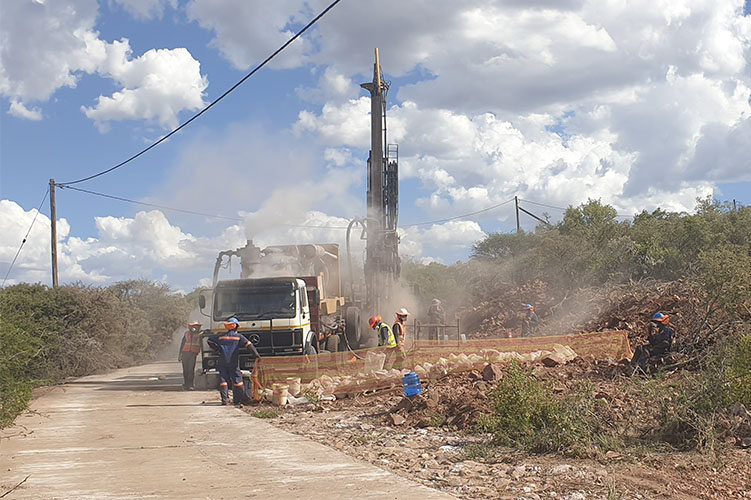
Giyani Metals’ feasibility study for the K.Hill open pit manganese project in Botswana cuts post-tax NPV to US$481.5 million at 8% and trims mine life to 25 years, while initial capex jumps 88% to US$535 million and planned output falls 57% to 1.5 million tonnes. The project now carries 5.3 million tonnes of proven and probable reserves at 12% MnO (about 642,000 tonnes contained), supporting a mine-to-market route for high-purity manganese oxide and sulphate from its Johannesburg demonstration plant. Construction could start in early 2027, with commissioning in late 2028 and ramp-up in 2029.
FBI agents have arrested former senior CIA official David Rush after a raid on his Virginia home uncovered 303 gold bars worth about $40 million at current prices, plus $2 million in cash and nearly three dozen luxury watches, many reportedly Rolexes. Court filings allege Rush obtained the bullion by submitting multiple requests for “work-related expenses” between November 2025 and March 2026 and also falsified academic and Navy Reserve credentials to claim tens of thousands of dollars in military leave pay. The case raises fresh scrutiny over traceability and custody controls for government-held precious metals.
Undersea critical minerals explorer The Metals Company has had its USA B seabed exploration licence application formally certified by NOAA, covering about 122,000 km² of eastern Clarion Clipperton Zone seafloor with an estimated 1.02 billion tonnes of polymetallic nodules containing cobalt, nickel, copper and manganese. TMC USA’s separate consolidated application for an exploration licence and commercial recovery permit in the USA A area was ruled fully compliant on 28 April, and NOAA is now expected to issue a Notice of Intent to prepare an Environmental Impact Statement and draft Terms, Conditions and Restrictions. Environmental NGOs continue to push for a blanket ban on deep-sea mining, warning of irreversible biodiversity loss from industrial-scale nodule recovery.
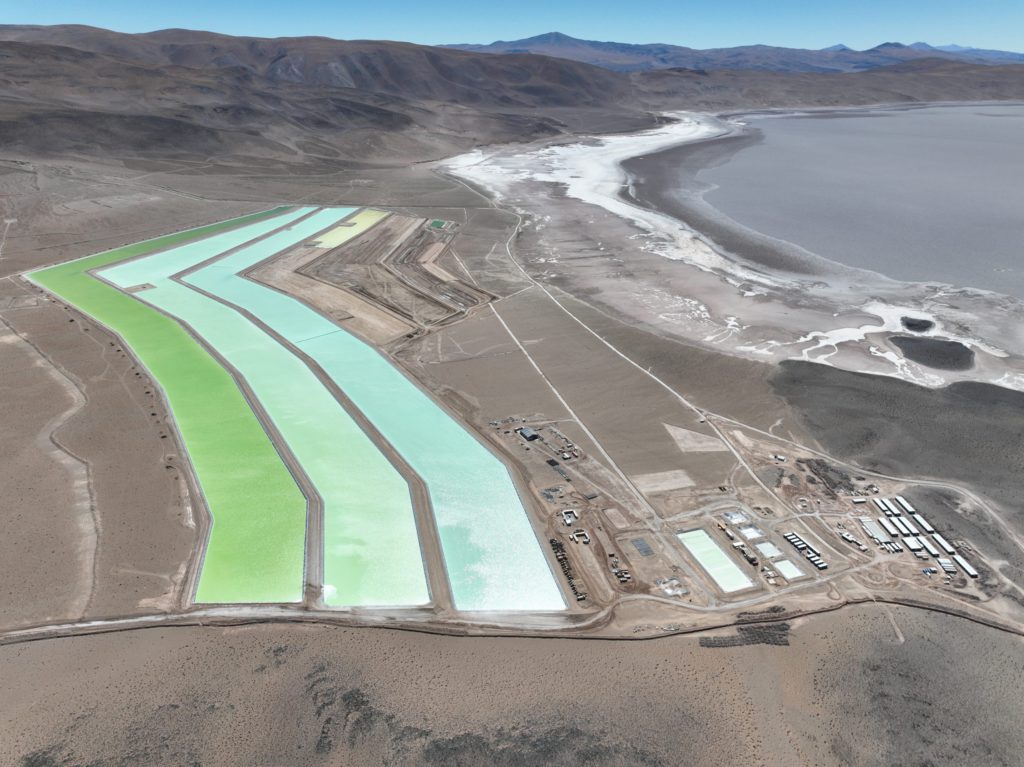
Galan Lithium has produced its first lithium chloride at the Hombre Muerto West brine project in Catamarca, Argentina, after wet commissioning a nanofiltration plant fed with 0.5% lithium brine and discharging product to final evaporation ponds. The three‑month evaporation stage is expected to yield 6% lithium chloride concentrate, underpinning Phase 1 nameplate output of 4,000 tpa LCE, backed by a 10,000‑tonne LCE brine inventory and a 45,000‑tonne offtake with US-based Authium. Pond construction to lift capacity to 5,200 tpa LCE by H1 2027 is planned, with permits in place for a staged expansion to 60,000 tpa.
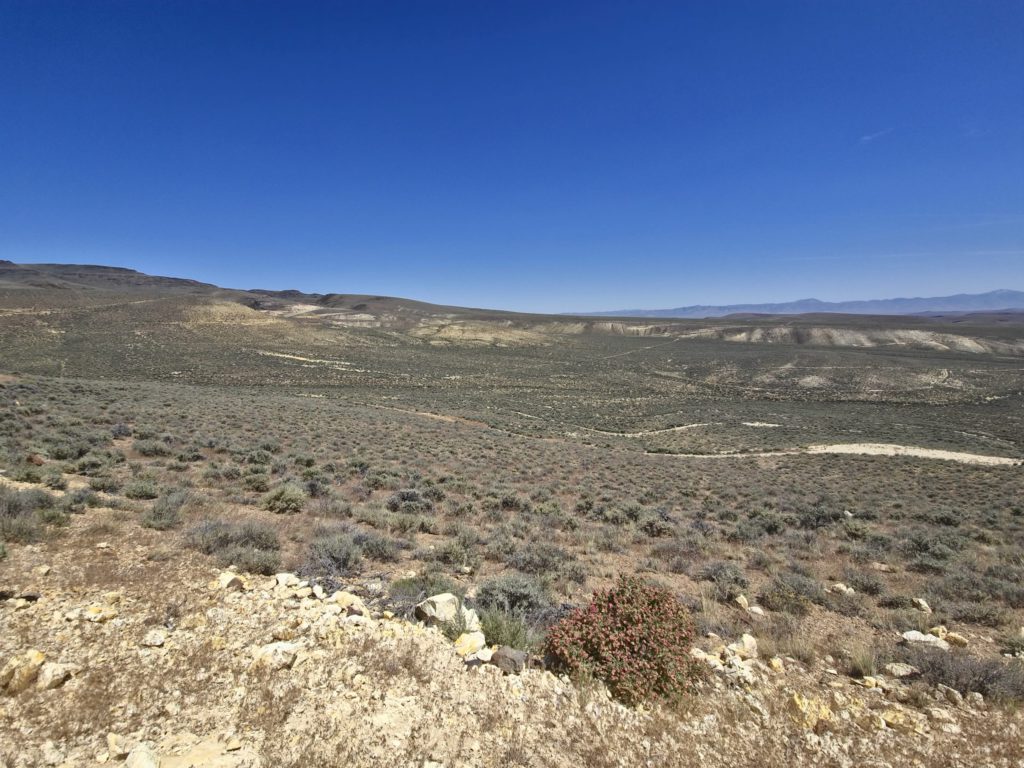
Eagle Nuclear Energy has completed key environmental and site-readiness work at its Aurora uranium project on the Oregon–Nevada border, including installation of a meteorological station, a wetland delineation study, and a full cultural and archaeological survey to support permitting. Aurora hosts an indicated resource of 32.75 million lb and nearly 5 million lb inferred, making it the largest conventional measured and indicated uranium deposit in the US and central to Eagle’s planned 27,000-foot pre-feasibility study. The project underpins a strategy to pair domestic uranium supply with advanced SMR technology, in a market where US reactors consume about 32 million lb of uranium annually but domestic production was only 677,000 lb in 2024.
Epiroc is expanding its Deep Automation portfolio to cover underground drilling and rock bolting, extending a platform previously focused mainly on autonomous loading and haulage. The updated concept spans the full automation curve, from tele-remote operation of drill rigs to higher autonomy levels with automated drilling cycles and bolt installation. For mine planners and engineers, this signals tighter integration between fleet management, drill-and-blast execution and ground support installation, with more predictable drilling patterns and support layouts in complex orebodies.
Komatsu and ABB are expanding their dynamic energy transfer concept beyond conventional trolley-assist haul trucks, with a new “side arm” current collection system in development for demonstration at Komatsu’s Arizona Proving Grounds in the US. Announced by Lucas van Latum and Nic Beutler at The Electric Mine 2026 in Lisbon, the side arm aims to maintain high-power DC transfer to mobile equipment without requiring trucks to remain strictly under overhead catenary. The work signals a push towards more flexible on-route charging layouts, with implications for haul road geometry, overhead line placement and mine power distribution design.
Metso has secured a repeat order in Asia Pacific to replace and modernise a railcar dumper, supplying a new fully assembled dumper cage with major mechanical and structural upgrades. The package targets higher train unloading throughput, reduced ore and coal spillage at the tipping station, and improved maintainability through simplified access and component replacement. For mine operators, the upgrade signals continued investment in brownfield load-out infrastructure to debottleneck rail logistics without expanding the existing dumper footprint.
Upgrades to Hardinge Street, a key section of the Cobb Highway through Deniliquin’s commercial precinct, are progressing as the New South Wales Government targets safer access and smoother traffic for roughly 6000 vehicles per day. Works focus on improving the urban highway cross-section and intersections along this main north–south freight and local access route, which currently carries mixed heavy and light vehicle traffic. For designers and contractors, staging and maintaining capacity on a constrained main street corridor will be central to construction planning and temporary traffic management.