Geomechanics, Streamlined.
© 2026 Geomechanics.io. All rights reserved.
Bridge works in New South Wales are being accelerated with a combined $114 million in joint Federal–State funding for stage two of a new bridge at Richmond, a historic flood‑prone town in Greater Sydney. The package advances detailed design and early works for the replacement crossing of the Hawkesbury River, intended to improve flood immunity and traffic capacity on a key regional freight and commuter route. For civil and geotechnical teams, the funding certainty brings forward foundation investigations, hydraulic modelling and construction staging around the existing bridge.
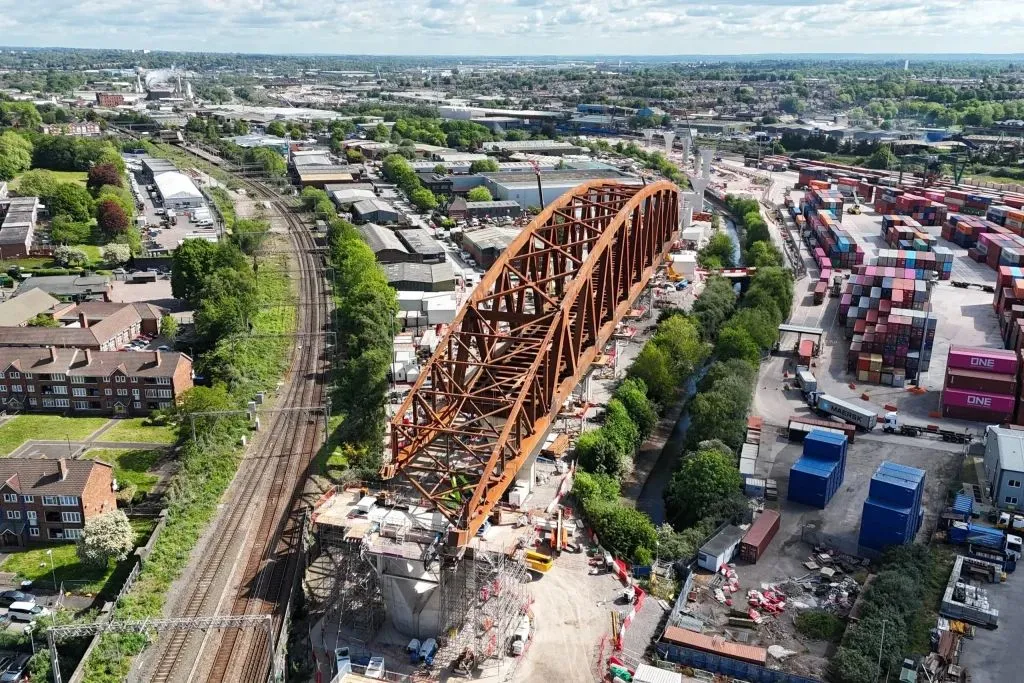
Bridge launches, where pre-assembled decks are slid or pushed into position over live railways, motorways or rivers, are being used more frequently in the UK to cut possession times and traffic closures. Engineers are dealing with complex temporary works, including incremental launching with nose sections, high-capacity strand jacks and PTFE bearing slide paths, often with tolerances of only a few millimetres over spans exceeding 50m. The approach shifts risk towards detailed staging analysis, real-time monitoring of deflection and friction, and strong contractor–client trust in temporary works design and contingency planning.
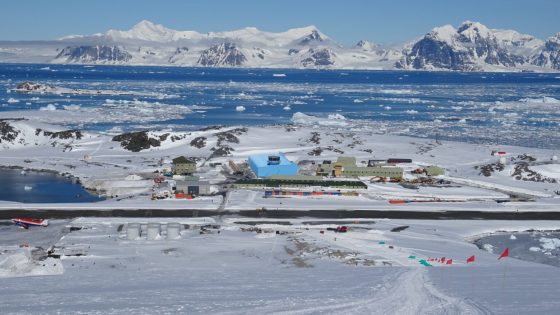
Engineering in Antarctica is explored in the latest Engineers Collective podcast, focusing on how civil and structural engineers design and build in −40°C conditions, on moving ice and permafrost. Guests discuss foundations on blue ice runways, snow-loaded steel frames for research stations, and logistics for transporting heavy plant and prefabricated modules by icebreaker and ski-equipped aircraft. The episode also examines corrosion of steel in saline, sub-zero environments and the use of insulated, elevated piles to limit heat transfer into ice and frozen ground.
The European Commission has opened a call for evidence to shape an EU-wide Action Plan on digitalisation in the water sector, responding to projections that water demand could exceed available supply by around 40%. The initiative is expected to prioritise smart metering, real-time network monitoring and digital twins for treatment plants and distribution systems to cut leakage and optimise asset operation. Civil and water engineers should anticipate future requirements for interoperable data standards, sensor-ready infrastructure and integration of hydraulic models with EU-level digital platforms.
Magnetite Mines is undertaking a strategic reset at its Razorback magnetite iron ore project in South Australia, appointing a new chief executive officer as managing director Tim Dobson steps down. The board is refocusing on capital efficiency and securing project funding, signalling a shift in development pacing and potential redesign of mine, processing and infrastructure capex. The company is also flagging early-stage gold potential at nearby Manna Hill, which could influence future exploration drilling priorities and resource allocation.
Resources Minister Madeleine King has backed the appointment of Lynas Rare Earths chief executive Amanda Lacaze as chair of the Minerals Council of Australia, signalling closer collaboration between government and major miners on critical minerals policy. King flagged a focus on accelerating resilient critical minerals supply chains, with Lynas already operating the Mt Weld rare earths mine in Western Australia and a major processing plant in Kalgoorlie. For mining executives, the move points to stronger industry input into approvals, downstream processing incentives and export market diversification.
Mining magnate Gina Rinehart has retained her position as Australia’s richest person on the 2026 AFR Rich List, with Hancock Prospecting wealth estimated at $39.01 billion, up $900 million on 2025. Four mining leaders feature in the top 10, confirming the sector’s continued dominance in Australian capital formation and private investment capacity. The $900 million year‑on‑year gain alone exceeds $853 million, signalling sustained cash generation from large iron ore and critical minerals portfolios that continue to fund new resources, infrastructure and downstream processing projects.
Australia, the US, Japan and India have launched a Quad Critical Minerals Initiative aiming to mobilise up to US$20 billion in combined public and private finance across mining, processing and recycling projects. Funding will target diversified supply chains for key inputs such as lithium, nickel, rare earths and graphite, backing both greenfield extraction and brownfield processing expansions. For project developers, the move signals stronger support for downstream refining, hydrometallurgical plants and recycling facilities that can demonstrate secure offtake and alignment with each partner’s strategic minerals lists.
Macmahon Holdings has secured a 12‑month extension for underground mining services at Black Cat Syndicate’s Majestic gold mine in Western Australia, awarded through its wholly owned subsidiary Macmahon Underground. The deal follows completion of the underground portal and first ore delivery from Majestic to Black Cat’s Lakewood mill near Kalgoorlie, confirming the mine’s transition from development to steady-state production. For contractors and mine planners, the extension signals continuity of decline development, stoping and backfill scheduling under a single operator across the Majestic–Lakewood circuit.
The Environment Agency is moving from isolated project trials to a capital programme-wide deployment model for low‑carbon technologies across its flood defence and water management schemes. Standardised assessment, procurement and design frameworks are being applied to repeatable assets such as pumping stations, embankments and culverts, enabling faster roll‑out of options like low‑carbon concrete mixes and electrified plant. For contractors and designers, this signals earlier whole‑life carbon targets at framework level and greater scope to industrialise low‑carbon details across multiple sites rather than negotiating them scheme by scheme.
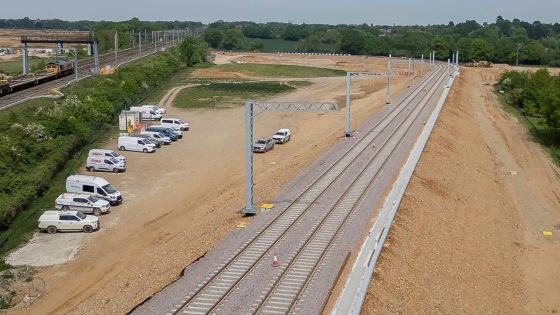
VolkerRail has installed the first set of switches and crossings on the Midland Main Line to connect the Radlett Strategic Rail Freight Interchange, a key step in creating a new rail-served logistics hub in Hertfordshire. The works involve integrating new turnouts and associated signalling and overhead line equipment into a live main line corridor carrying high-frequency passenger and freight services. Track and civils teams now move to subsequent S&C installations and plain line works, which will govern final line speeds, axle loads and freight path capacity into the SRFI.
Skanska has been named preferred bidder by the US Department of Transportation and Amtrak as Master Developer for the New York Penn Station Transformation Project, one of the busiest rail hubs in North America. The role is expected to cover integrated station redevelopment above active tracks, complex phasing to maintain high passenger throughput, and coordination with existing Amtrak, NJ Transit and MTA infrastructure. Geotechnical and civil teams should anticipate constrained urban excavation, structural upgrades around ageing foundations, and stringent operational and safety requirements during construction.
The UK’s National Cyber Security Centre has warned operators of Critical National Infrastructure to brace for severe cyber-attacks on essential services such as power grids, water networks and transport control systems. Threat actors are expected to target industrial control systems and SCADA platforms, potentially disrupting pumping stations, rail signalling and substation automation rather than just corporate IT. For civil and infrastructure engineers, this raises design and asset-management requirements around network segmentation, secure remote access for PLCs, resilience of backup control rooms and recovery plans for prolonged loss of telemetry.
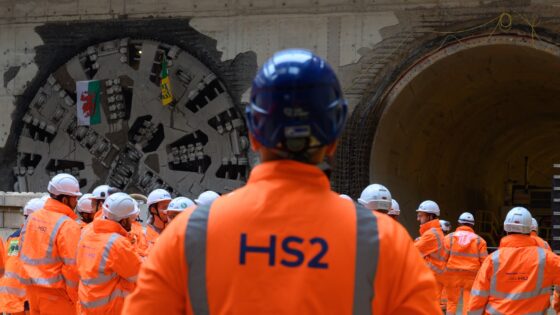
HS2 Ltd is launching a £1bn interim maintenance procurement programme to protect completed assets on Phase One and 2a, including earthworks, tunnels, viaducts and trackbed, during the current delivery “reset”. The framework will cover inspection, routine and reactive maintenance, vegetation control and defect remediation on structures already handed over by main works civils contractors such as Align, EKFB and BBV. Contractors will need capability for long-term geotechnical monitoring, structural health surveillance and access planning on partially commissioned high-speed rail infrastructure.
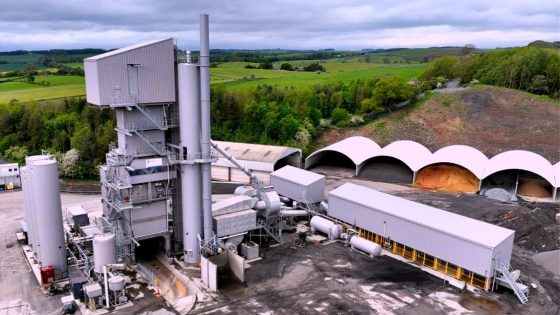
Tarmac has opened a new asphalt plant in Northumberland designed to cut embodied carbon for road and infrastructure schemes across the North East. The facility incorporates “innovative sustainable technologies”, likely including high recycled asphalt planings (RAP) content, lower-temperature asphalt production and upgraded burner and dryer systems to reduce fuel use and CO₂ per tonne. For contractors and highway authorities, the plant offers shorter haul distances, potential warm-mix specifications and scope to reduce whole-life pavement emissions without major changes to existing laying equipment.
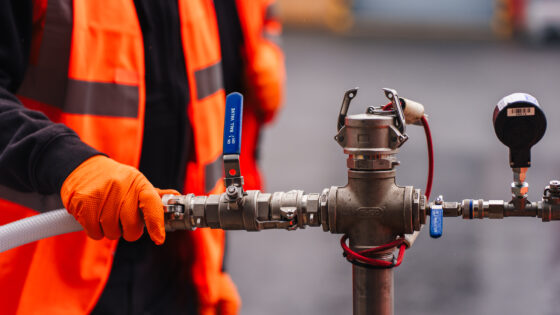
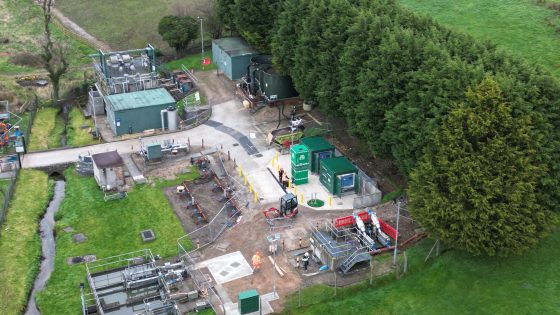
New infrastructure at Over Kellet and Nether Kellet Wastewater Treatment Works in Lancashire includes upgraded chemical dosing equipment to improve process control and effluent quality. The investment focuses on modern dosing systems for treatment chemicals, likely targeting tighter phosphorus and ammonia limits typical of current UK discharge consents. Contractors and designers can expect increased emphasis on accurate flow-proportional dosing, bunded chemical storage, and integration with existing SCADA for real-time monitoring and optimisation.
Element 25 has signed long-term integrated mining and ore haulage contracts with Regroup Australia (ReGroup) for the Butcherbird manganese mine in Western Australia, locking in a single provider for drill‑and‑blast, load‑and‑haul, and road transport. The agreements cover mining services and haulage for the Butcherbird Expansion Project (BBX), giving schedule and cost certainty as Element 25 scales output beyond the current Stage 1 operation. For contractors and OEMs, the deal signals sustained demand for bulk haulage capacity and mobile mining fleets on remote Pilbara-style logistics corridors.
Specifying TECO’s MAX Ex d motor for underground coal mines centres on matching Ex d flameproof certification, insulation class (e.g. Class F/H windings) and available voltages to methane- and dust-laden headings with continuous duty. The AEMBXZ-TECO flameproof motor is designed for coalface and roadway equipment where restricted access limits maintenance intervals and thermal margins become critical. Engineers must balance frame size, starting torque and permissible temperature rise against hazardous area zoning and site supply (typically 1000 V or similar) to avoid derating and premature insulation failure.
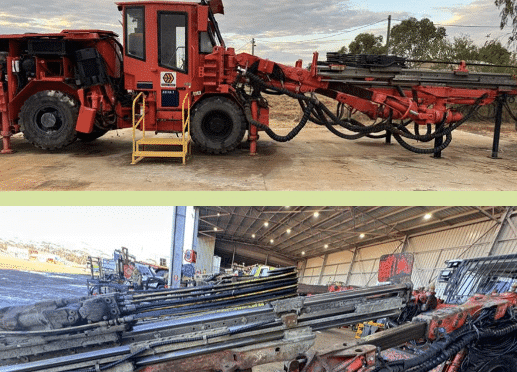
Underground hard-rock mines are seeing development jumbo productivity eroded by repetitive maintenance on feed rail ropes, which are being replaced at increasingly short intervals long before outright failure. Crews are adapting work patterns around these stoppages rather than addressing the root cause, normalising frequent shutdowns and masking the true reliability problem in shift reports and KPIs. The case signals that reliability engineering in mobile fleets must target chronic, sub-failure component issues – such as rope wear mechanisms and lubrication regimes – not just catastrophic breakdowns.
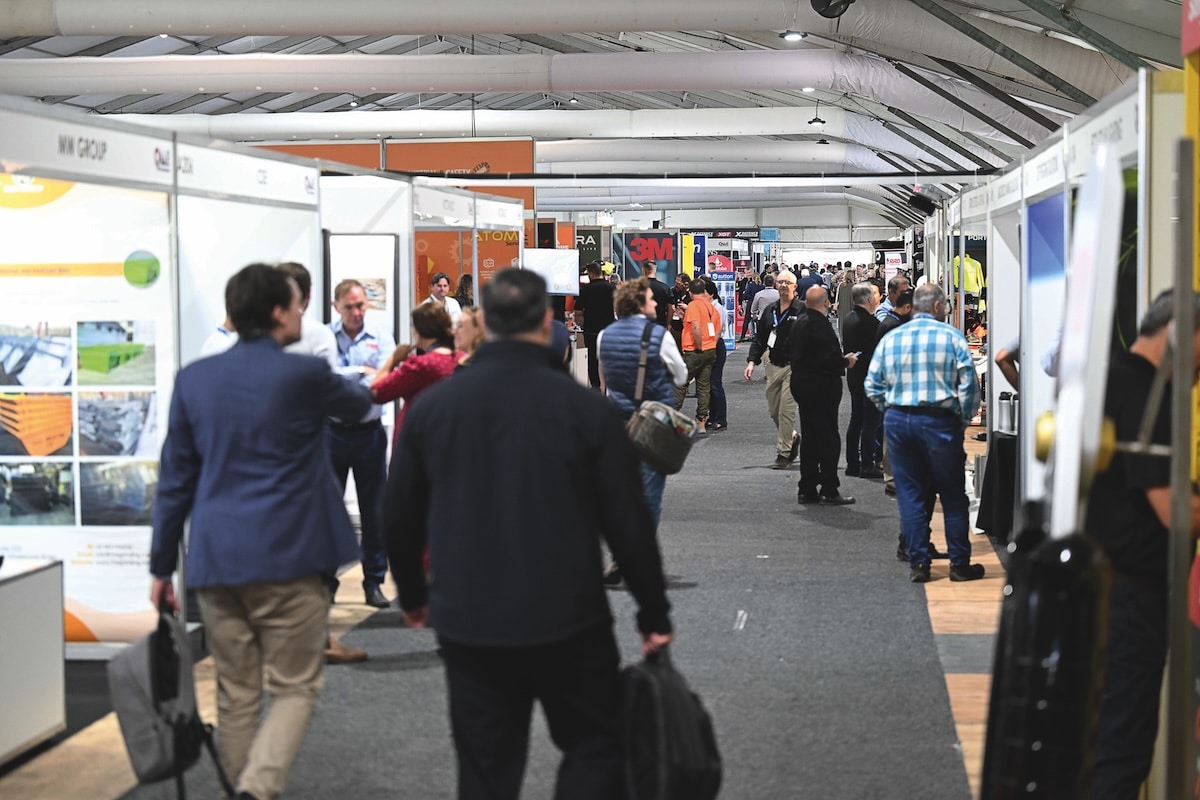
The Queensland Mining and Engineering Exhibition (QME) returns to Mackay in July 2026 with a sold-out show floor, signalling strong demand from OEMs, technology vendors and contractors to showcase new equipment and digital systems. Organisers are centring the conference program on decarbonisation, mine electrification and automation, including low‑emission haulage, battery‑electric underground fleets and data‑driven maintenance. For site engineers and managers, QME 2026 offers concentrated access to suppliers and case studies tailored to Queensland’s coal and critical minerals operations, from Bowen Basin open pits to emerging North West Minerals Province projects.
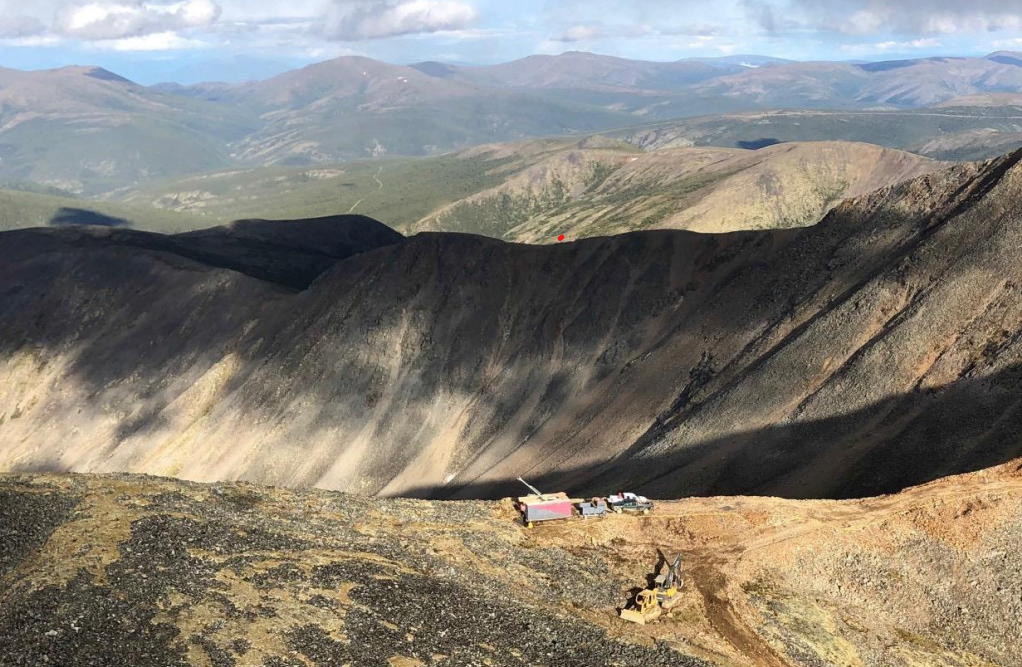
High-grade deep drilling at Sitka Gold’s RC Gold project in Yukon indicates underground mine potential beneath the Blackjack deposit, with hole DDRCCC-26-121 cutting 273.8 m at 1.10 g/t Au from about 642 m depth, including 94 m at 1.79 g/t and 19.3 m at 5.04 g/t. The 1,093 m hole extends mineralisation roughly 370 m below the current resource pit and is the first complete assay from a 60,000 m, four-rig diamond programme now about 20% complete. Blackjack currently hosts 39.96 Mt indicated at 1.01 g/t Au (1.29 Moz), within a 447 sq.-km land package in the Tombstone belt accessible year-round by gravel road.
MP Materials has sued rival USA Rare Earth in a Texas court, alleging a former MP employee passed proprietary “grain boundary diffusion” magnet formulations to USAR, which then shared them with a third-party technology firm. The dispute centres on MP’s integrated mine-to-magnet process at Mountain Pass, California, versus USAR’s Round Top, Texas project and its new Stillwater, Oklahoma magnet plant, both heavily backed by US federal funding ($400 million to MP; $1.6 billion agreement with USAR). Shares in both companies fell about 3%, adding pressure as USAR’s $2.8 billion Serra Verde acquisition and White House deal face scrutiny.
Gold fell as much as 2% on Wednesday to just above $4,400/oz, a two‑month low, while silver slid 4% to around $74/oz as the US‑Iran conflict near the Strait of Hormuz stoked energy‑driven inflation fears and rate‑hike expectations. Bullion is now down 15% since hostilities began in late February, with futures markets pricing in a 25 bp US Federal Reserve hike by year‑end, pressuring non‑yielding assets. Despite the pullback from January’s near‑$5,600/oz record, JPMorgan and Goldman Sachs still project gold above $5,000/oz longer term.
US Department of Energy researchers at Pacific Northwest National Laboratory have built CICERO, a semi-autonomous system that uses AI agents, a liquid-handling robot, a sample-handling device and two analytical instruments to design and run 96 mineral recovery experiments in a single day. Tested on spent permanent magnets and oil and gas wastewater, CICERO rapidly identified flowsheets to recover magnesium from brines and neodymium, praseodymium and samarium from magnet waste. The approach uses existing industrial chemistries and separation methods, offering a route to extract critical elements from waste streams in days rather than months or years.