First TBM for HS2 tunnelling to central London: geotechnical control notes for engineers
Reviewed by Joe Ashwell
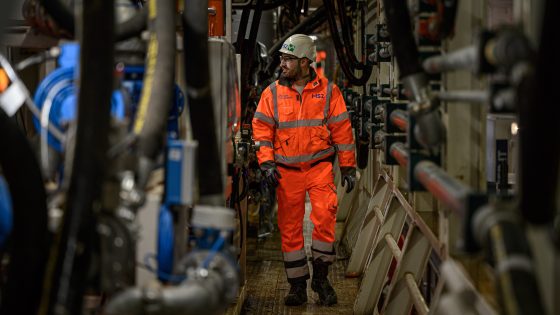
First reported on New Civil Engineer
30 Second Briefing
The first of two tunnel boring machines driving HS2 into central London has begun its 7.2km excavation from Old Oak Common on 27 January, marking the start of the twin-bore approach tunnels towards Euston. The TBM will construct the running tunnels beneath densely built West London, requiring tight control of settlement and ground movements in complex urban geology. For geotechnical and structural teams, key tasks now centre on continuous monitoring of surface assets, segmental lining performance and groundwater behaviour along the alignment.
Technical Brief
- Urban drive to central London requires 24/7 instrumentation and monitoring for third-party structures and utilities.
- Settlement control strategy will rely on real-time feedback from TBM face pressure, thrust and grout parameters.
- Segmental lining installation sequence must minimise exposure time at the face to reduce worker hazard windows.
- Emergency egress, refuge and ventilation arrangements along the 7.2km heading become critical as advance progresses.
- Experience from this first TBM’s safety performance will inform procedures for the second parallel drive.
Our Take
HS2’s move to launch a TBM drive towards central London comes just days after completion of the 16 km Chiltern tunnel, signalling a shift in our coverage from rural tunnelling milestones to more complex urban interfaces around Old Oak Common.
Given recent reporting on a “serious” crane disassembly incident on HS2, any TBM operations from Old Oak Common into central London are likely to face heightened scrutiny on lifting plans, segment handling, and access shaft logistics compared with earlier drives.
Across the 558 Infrastructure stories in our database, HS2 now appears repeatedly as one of the few UK megaprojects still advancing major underground works, which is notable against the Construction Products Association’s downgraded 2026 output forecast for the wider sector.
Prepared by collating external sources, AI-assisted tools, and Geomechanics.io’s proprietary mining database, then reviewed for technical accuracy & edited by our geotechnical team.
Related Articles


Related Industries & Products
Tunnelling
Specialised solutions for tunnelling projects including grout mix design, hydrogeological analysis, and quality control.
Construction
Quality control software for construction companies with material testing, batch tracking, and compliance management.
QCDB-io
Comprehensive quality control database for manufacturing, tunnelling, and civil construction with UCS testing, PSD analysis, and grout mix design management.