Geomechanics, Streamlined.
© 2026 Geomechanics.io. All rights reserved.
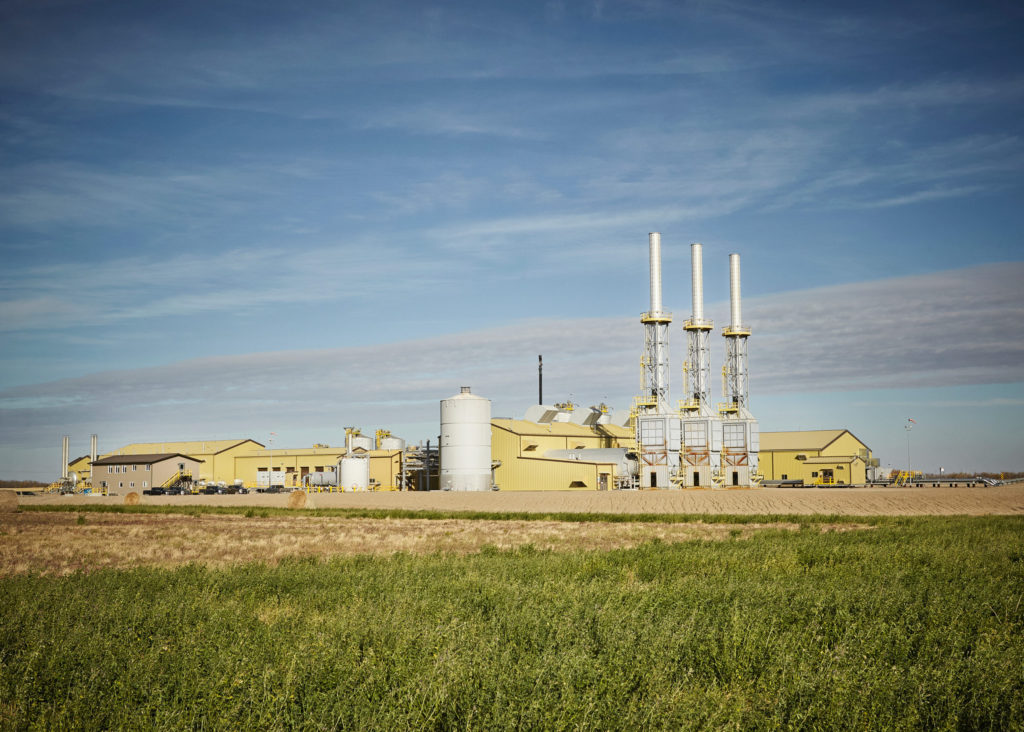
US Energy Secretary Chris Wright has issued an emergency order requiring Midcontinent Independent System Operator and Consumers Energy to keep the J.H. Campbell coal-fired plant in West Olive, Michigan available through 16 August 2026 to address critical summer grid reliability risks. The 3-unit plant, originally slated for closure on 31 May 2025, has been run during peak demand and low wind/solar periods and was key in stabilising the grid during recent winter storms. DOE’s Resource Adequacy Report and NERC’s 2025 Long-Term Reliability Assessment both flag MISO as high risk, with DOE warning outage frequency could rise 100-fold by 2030 if firm capacity is retired too quickly.
The National Audit Office has warned that the Department for Transport lacks a defined risk appetite as it plans £1.1bn of innovation spending between 2022/23 and 2029/30 on areas such as maritime decarbonisation and sustainable aviation fuel. While Network Rail, National Highways and HS2 Ltd have clearer portfolio management and prioritisation processes, DfT’s central team has limited strategic oversight of innovation across modes. NAO head Gareth Davies said clearer risk thresholds and better data are needed to judge value for money and move concepts into practical deployment.
Senior infrastructure and civil engineering leaders say they would work with a Reform UK government in Westminster to secure a pipeline of “investable” major projects, signalling industry willingness to engage regardless of political uncertainty. Commentators point to the need for clear long-term funding models for schemes such as multi-billion-pound rail upgrades and strategic road corridors, plus faster Development Consent Order decisions. For contractors and consultants, the key issues would be visibility of a 5–10 year capital programme and how Reform UK treats existing commitments like HS2 enabling works and major flood defences.
Australia’s 2026–27 Federal Budget is drawing support from the mining sector for measures to bolster fuel security, including backing for domestic refining and storage that reduces exposure to imported diesel and marine fuels. Industry groups are also welcoming commitments to streamline project approvals, with a focus on faster environmental permitting and clearer timelines for major resources projects. Exploration companies, however, are pressing for stronger direct incentives such as expanded flow-through shares or targeted tax credits to sustain greenfields drilling.
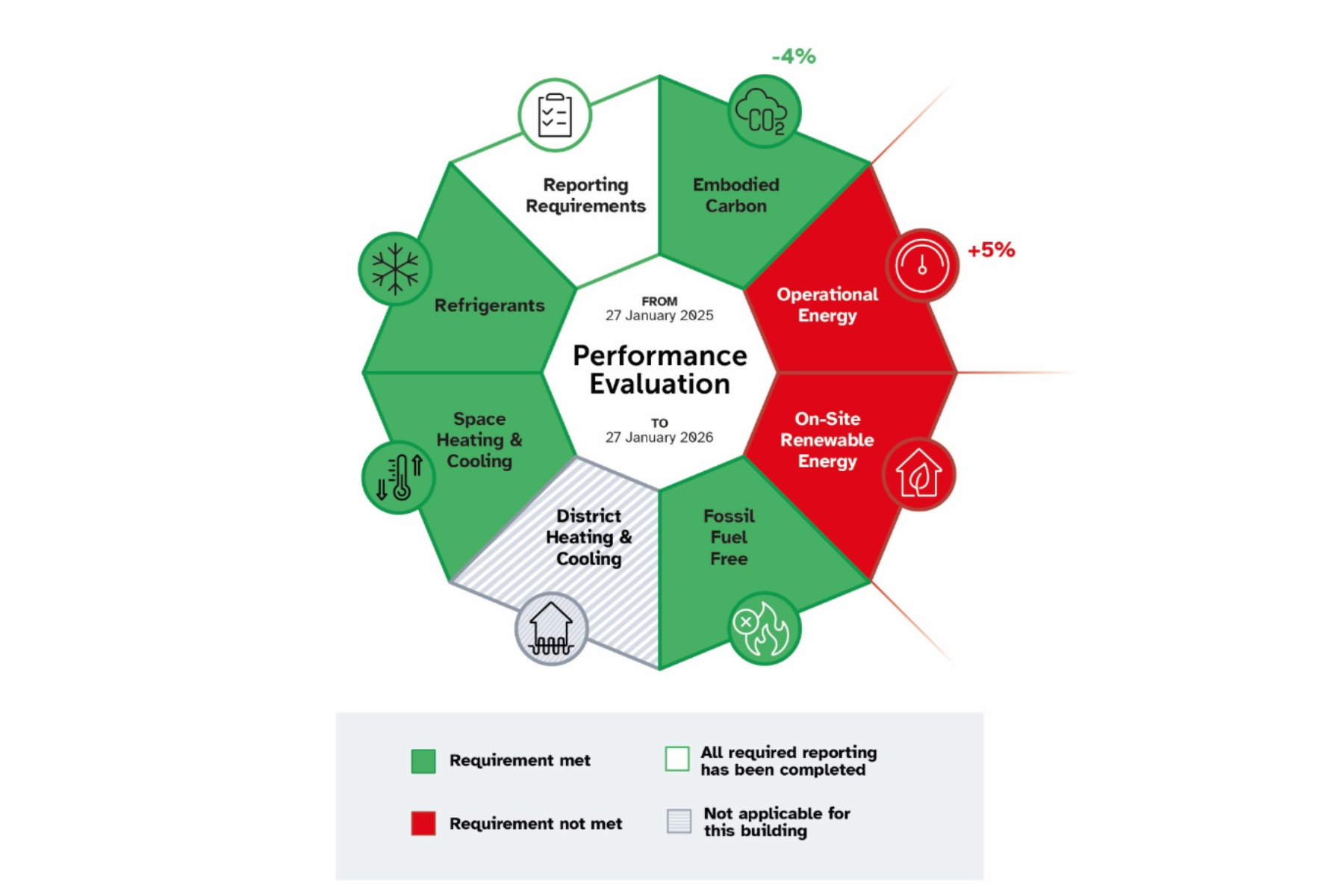
A new performance evaluation under the Net Zero Carbon Building Standard now lets buildings that are not yet fully compliant benchmark operational and embodied carbon using the same metrics as aligned assets. The framework standardises reporting of whole-life carbon, enabling consistent comparison of energy use, material emissions and retrofit performance across mixed portfolios. For engineers, this supports more granular targeting of fabric upgrades, services optimisation and low‑carbon materials, while still working within existing design, occupancy and budget constraints.
Defra and Natural England have launched a call for evidence, open until 22 May 2026, asking developers and construction contractors to share practical experience of great crested newt protection on housing and infrastructure schemes. Supported by consultants LUC and ICF, the review targets on-site measures such as exclusion fencing, pitfall trapping, seasonal timing of earthworks and licensing delays. Responses could influence future mitigation licensing, survey requirements and design-stage constraints on sites where newt habitats intersect with foundations, drainage and earthworks.
King Charles III’s first King’s Speech under the new Labour government offered almost no concrete legislative detail for construction or infrastructure, leaving professional bodies such as RIBA and CIOB largely underwhelmed. Representatives from the Residential Freehold Association and Churchill Living also struggled to identify clear implications for planning reform, building safety, or long-term capital investment. For engineers and contractors, the absence of specific commitments on housing delivery targets, infrastructure pipelines, or regulatory changes signals continued policy uncertainty heading into 2025.
King Charles’s 2026 speech sets out bills aimed at unlocking UK airport expansion and accelerating major transport infrastructure construction. Measures are expected to streamline planning and consenting for runway extensions, terminal upgrades and associated surface access works, and to simplify approvals for large rail and highway schemes. Civil and geotechnical engineers should anticipate tighter programme windows, earlier ground investigation and design commitments, and greater emphasis on integrating airfield works with surrounding road and rail capacity upgrades.
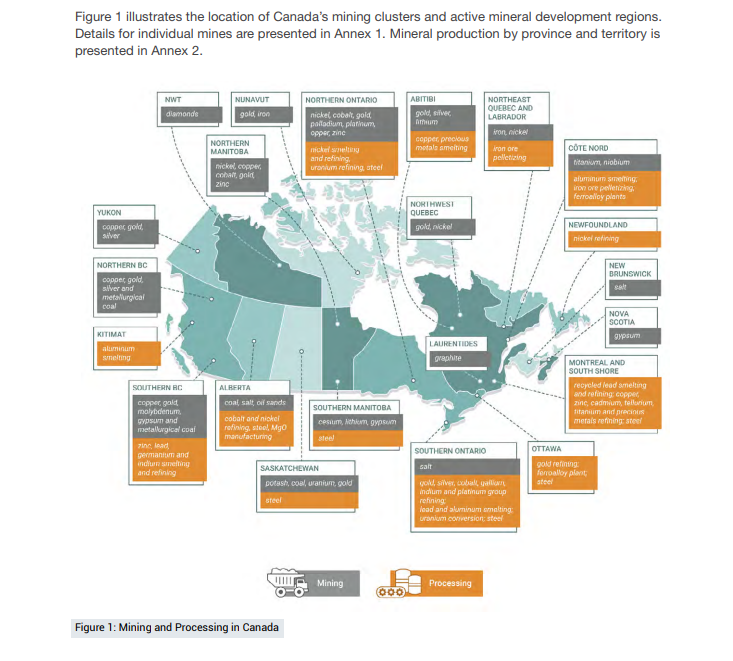
Canada’s mining sector generated C$111 billion of GDP in 2024 and C$152 billion in mineral exports (21% of all merchandise exports), yet the Mining Association of Canada is warning that slow project approvals and uncompetitive fiscal terms are eroding the country’s position amid volatile, trade-restricted critical mineral markets. MAC is urging Ottawa to accelerate federal impact assessments and permitting, improve federal‑provincial coordination, and expand northern geoscience and resource assessments. It also wants broader Canadian Exploration Expense eligibility, tax credits for brownfield expansions, and rapid implementation of 2025 budget measures such as clean technology credits and accelerated capital cost allowances.
Australia’s 2026/27 Federal Budget allocates more than $8.6 billion to new and ongoing nationally significant transport projects, while keeping a rolling infrastructure pipeline above $120 billion over 10 years. Funding profiles are being reshaped in the near term to reflect economic impacts from the Middle East conflict and broader fiscal pressures, rather than cutting headline commitments. Contractors and designers can expect continuity on major road and rail corridors but should plan for timing shifts in tender releases, cashflow and staging of large packages.
Australia’s 2026–27 Federal Budget directs major funding to critical minerals, fuel security and faster project approvals, signalling a more supportive policy setting for new mines and downstream processing. Industry groups point to expanded backing for strategic minerals supply chains and measures to shore up diesel and aviation fuel stocks, reducing exposure to import disruptions that can halt haulage and processing plants. Commitments to streamline approvals are expected to shorten lead times for greenfield projects, with direct implications for permitting schedules, early works planning and capital allocation.
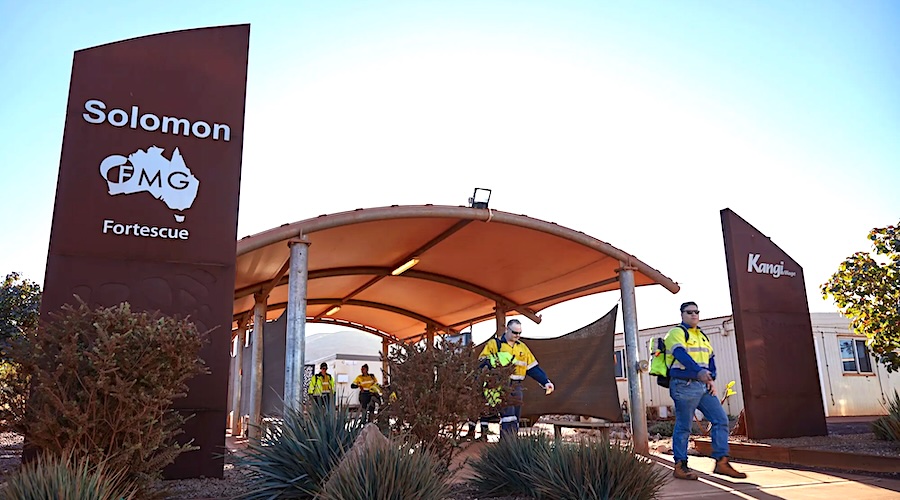
Fortescue has been ordered by the Federal Court of Australia to pay more than A$150 million (US$108 million) to the Yindjibarndi people for “significant damage” to cultural heritage sites caused during operations at its Solomon Hub iron ore mine in the Pilbara. The ruling, which also includes A$100,000 for economic loss, follows a native title dispute dating back to a 2003 claim and the Yindjibarndi’s 2017 grant of exclusive rights over a 2,700 sq km, iron ore-rich area. For miners, the case signals materially higher native title compensation exposure and ESG risk where projects pre-date or contest Indigenous land determinations.
The US Department of Energy has awarded contracts to exchange 53.3 million barrels of crude from the Strategic Petroleum Reserve’s Bayou Choctaw, Bryan Mound, Big Hill and West Hackberry salt cavern sites, as part of a 172-million-barrel commitment under the IEA’s coordinated release. The SPR currently holds about 384–397 million barrels, with 35 million barrels already delivered to market and an additional 35 million barrels generated for the reserve at no taxpayer cost through earlier exchanges. Under the new awards, DOE secures a 28% return premium—15.1 million barrels—and allows participating companies to use a limited Jones Act waiver to accelerate coastal shipments.
HSE has banned dry cutting of engineered stone in the UK and ordered a shift towards lower-silica materials after two worker deaths from silicosis in the sector. The guidance requires wet cutting or on-tool extraction with high-efficiency local exhaust ventilation for any remaining high-silica products, bringing practice closer to controls already used on tunnelling and concrete cutting. Fabricators and contractors now face mandatory process changes, material substitution reviews, and likely revisions to COSHH risk assessments and respiratory protection programmes.
India’s government is urging citizens to halt gold jewellery purchases for 12 months to protect foreign-exchange reserves as Middle East conflict-driven oil prices widen the trade deficit and pressure the rupee. Jewellery demand reached about 440 tonnes in 2025, with a further 280 tonnes in bars and coins, and gold already makes up roughly 17% of India’s FX reserves, so even partial compliance could soften physical premiums, lift London vault inventories and marginally cap global prices. Enforcement is unclear, with past curbs pushing buying into recycling and smuggling rather than cutting total consumption.
US federal critical minerals support under the Trump administration has reached about $18.6 billion across 60 financings, with roughly $15.9 billion in loans, $2.1 billion in equity and $615 million in grants, but BMO Global Commodities Research says the allocation is heavily skewed to rare earths despite their modest $3.5 billion global market. Major rare earth packages include a $565 million DFC facility for Brazil’s Serra Verde, USA Rare Earth’s planned $2.8 billion acquisition of the asset, and a $400 million US DoD stake in MP Materials. By contrast, tungsten projects such as Fireweed Metals’ Mactung and Northcliff Resources’ Sisson have received only about $15–16 million each, with antimony, nickel, cobalt, tantalum and tin seeing minimal support, signalling continued funding gaps for non-REE critical metals.
A bill to repeal New South Wales’ 1986 prohibition on nuclear energy and uranium mining has passed the state’s Upper House and now moves to the Lower House for a final vote. Introduced by Libertarian Party MLC John Ruddick, the Uranium Mining and Nuclear Facilities (Prohibitions) Repeal Bill could open uranium exploration around historic prospects such as the Broken Hill region, dormant since the 1970s–80s. The Minerals Council of Australia notes countries representing about 70% of global GDP are now looking to nuclear power and Australian uranium for energy security and grid decarbonisation.
Cenovus Energy CEO Jon McKenzie warns Canada is becoming uncompetitive for oil sands investment, citing lengthy approvals, higher operating costs and a proposed C$130/t industrial carbon tax that he says is unique globally and pushes capital to the US and Middle East. He notes only one new greenfield oil sands project has been approved and built since 2013 despite persistent global oil demand, arguing policy must support “filling a pipeline” with new developments. The warning comes as Cenovus posts Q1 net earnings of C$1.57 billion and record upstream output of 972,000 boe/d after acquiring MEG Energy.
The Uranium Mining and Nuclear Facilities (Prohibitions) Repeal Bill 2025 has passed the New South Wales Legislative Council, moving the state closer to lifting its long‑standing ban on uranium mining and nuclear facilities. The bill must still clear the Legislative Assembly before companies can advance exploration and project feasibility for uranium deposits previously sterilised by the prohibition. Any repeal would trigger new regulatory work on radiation protection, tailings storage design and long‑term groundwater monitoring frameworks specific to uranium operations in NSW.
Chile’s Senate is reviewing a cross‑party bill to create a dedicated legal regime for critical minerals, adding standards for management, information, traceability and operational continuity across the full value chain without amending core mining laws. The draft defines critical minerals as lithium, cobalt, nickel, graphite, copper, rare earths, molybdenum, rhenium, antimony, selenium, silicon, tellurium and indium, all tied to batteries, electrification and solar technologies. For operators, the shift signals tighter oversight on processing and supply‑chain transparency rather than new concession rules.
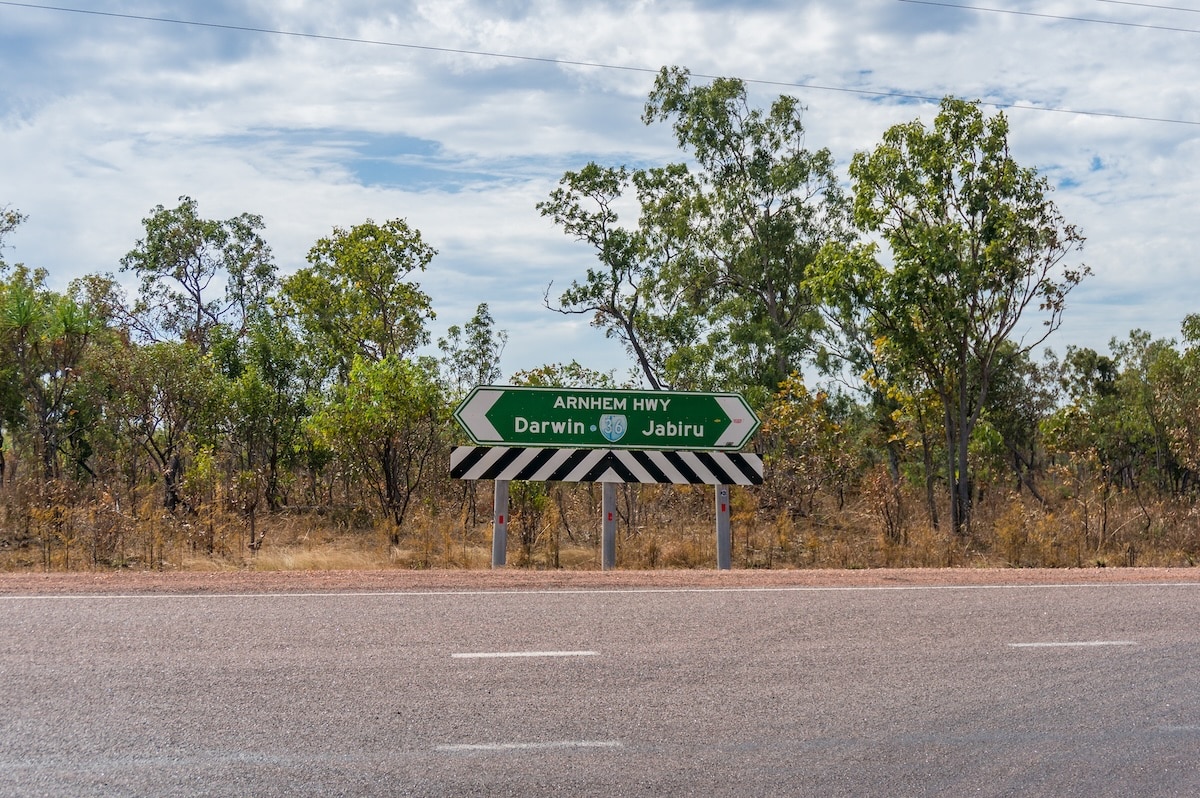
Mining royalties and payroll tax are again propping up the Northern Territory’s 2026–27 budget, with Treasury forecasts heavily reliant on existing operations such as McArthur River Mine and the Gove bauxite transition. Industry groups including the Minerals Council of Australia’s NT division are pushing for stronger incentives, calling for accelerated depreciation, streamlined approvals under the Territory’s Mineral Titles Act, and more funding for regional roads and power. The debate centres on whether current fiscal settings can attract new critical minerals projects in remote areas with high logistics and energy costs.
Construction in the UK has been formally classified as a “high-risk” sector for modern slavery in a new national report, alongside small cash-based businesses such as vape shops, barbers and hand car washes. The designation points to particular vulnerability in labour-intensive, subcontractor-heavy supply chains on building sites, including temporary works, groundworks and finishing trades where migrant and agency labour are common. Contractors can expect closer scrutiny of right-to-work checks, labour agency practices and tier-2/3 subcontractor oversight on major infrastructure and building projects.
The 2026 Women in Industry Awards will be held on 18 June at Doltone House Darling Island Wharf in Sydney, bringing together senior leaders and technical specialists from construction, transport, mining, manufacturing and related industrial sectors. The event recognises women driving operational, engineering and project delivery outcomes across areas such as major road upgrades, heavy plant operations, asset maintenance and advanced manufacturing. For civil, geotechnical and mining firms, participation signals support for workforce diversity in site-based roles and technical leadership, which is increasingly scrutinised in government procurement and Tier 1 contractor supply chains.
Balancing major infrastructure delivery with statutory nature recovery duties, Natural England’s chair and strategic director call for schemes to integrate biodiversity net gain and landscape-scale habitat restoration from the outset of design. They point to large transport corridors and housing allocations as opportunities to hard‑wire green infrastructure, floodplain reconnection and species-rich buffer zones into earthworks, drainage and bridge layouts rather than bolt them on at planning. For civil and geotechnical teams, this signals earlier engagement on soils, hydrology and long-term habitat management within standard design and cost models.