Geomechanics, Streamlined.
© 2026 Geomechanics.io. All rights reserved.
The European Commission has opened a call for evidence to shape an EU-wide Action Plan on digitalisation in the water sector, responding to projections that water demand could exceed available supply by around 40%. The initiative is expected to prioritise smart metering, real-time network monitoring and digital twins for treatment plants and distribution systems to cut leakage and optimise asset operation. Civil and water engineers should anticipate future requirements for interoperable data standards, sensor-ready infrastructure and integration of hydraulic models with EU-level digital platforms.
Resources Minister Madeleine King has backed the appointment of Lynas Rare Earths chief executive Amanda Lacaze as chair of the Minerals Council of Australia, signalling closer collaboration between government and major miners on critical minerals policy. King flagged a focus on accelerating resilient critical minerals supply chains, with Lynas already operating the Mt Weld rare earths mine in Western Australia and a major processing plant in Kalgoorlie. For mining executives, the move points to stronger industry input into approvals, downstream processing incentives and export market diversification.
Quad partners United States, Japan, Australia and India have launched a Quad Critical Minerals Initiative to mobilise US$20 billion in public and private finance across mining, processing and recycling to reduce reliance on China-centred supply chains. Projects must show a “Quad nexus” by being located in, operated from, or supplying Quad markets, with support channelled via export credit agencies, development finance institutions, guarantees, loans, equity and offtake agreements. The partners will coordinate on permitting practices, geological mapping, resource assessment and e-waste recovery to tighten technical and regulatory alignment across the supply chain.
Lynas Rare Earths chief executive and managing director Amanda Lacaze has been appointed chair of the Minerals Council of Australia, placing a rare earths producer at the centre of the country’s peak mining lobby. Her appointment comes as the MCA pushes for streamlined project approvals, stable royalty and tax settings, and large-scale investment in processing capacity for critical minerals such as neodymium–praseodymium. For geotechnical and mining engineers, this signals continued policy pressure to accelerate new pit developments and brownfield expansions in hard-rock rare earth and base metal deposits.
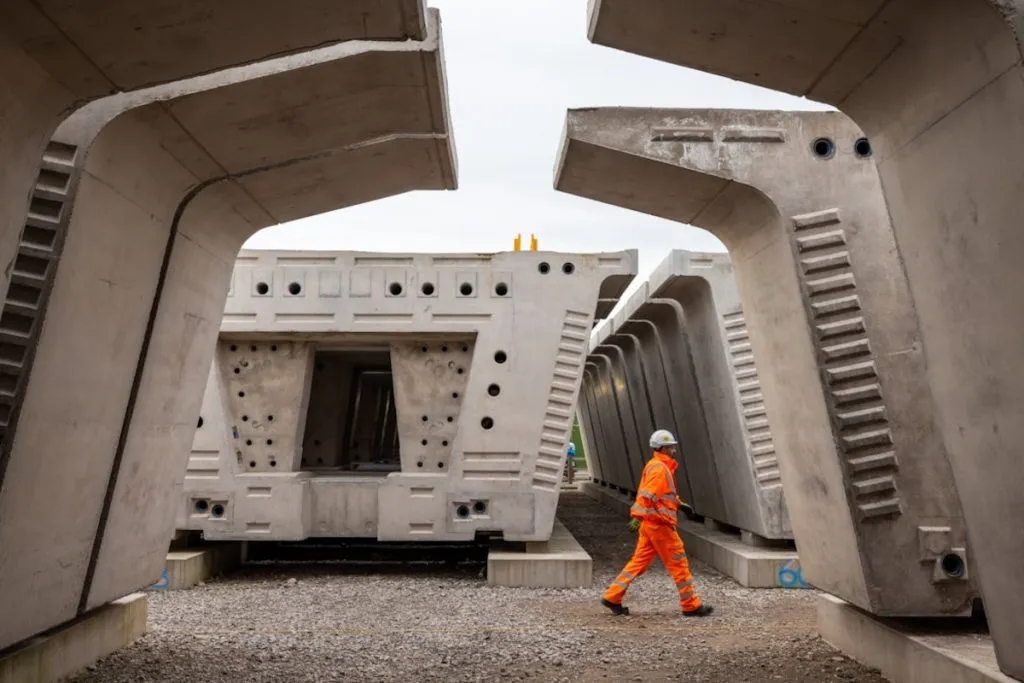
HS2’s latest cost estimates have triggered renewed criticism from Plaid Cymru transport spokesperson Delyth Jewell, who says Welsh passengers are being treated as “second class citizens” because the scheme is classified as an “England and Wales” project despite no HS2 track being built in Wales. That designation means Wales receives no Barnett consequential funding, unlike Scotland and Northern Ireland, even as HS2’s budget has escalated far beyond its original multi‑tens‑of‑billions envelope. The dispute affects prospects for upgrading key Welsh routes such as the South Wales Main Line and North Wales Coast Line.
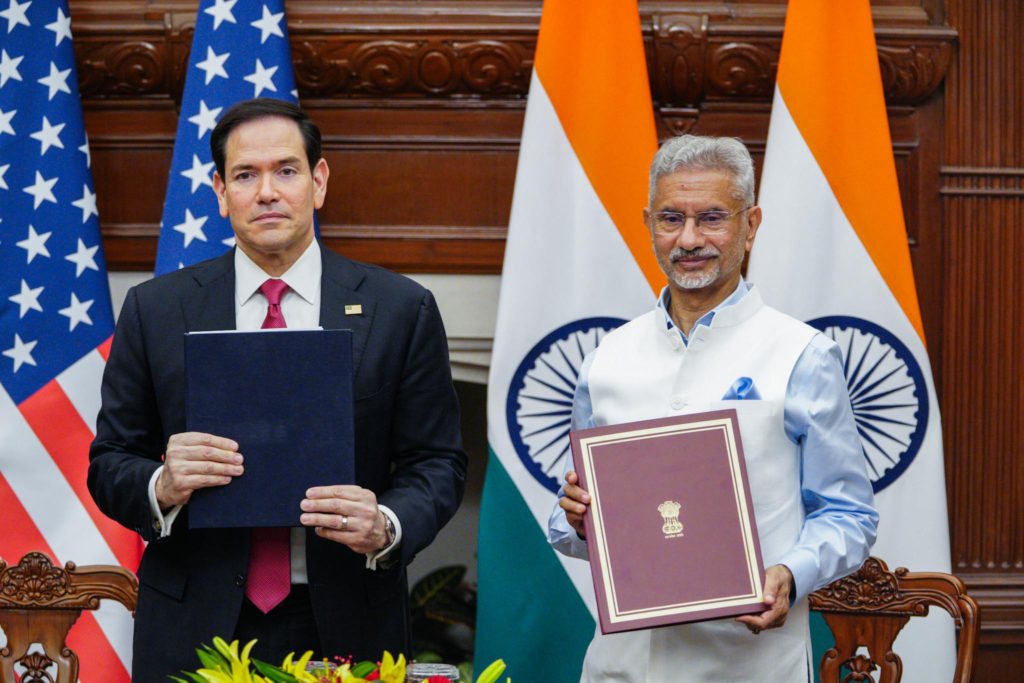
The US and India have signed a bilateral critical minerals framework, building on February’s launch of the Forum on Resource Geostrategic Engagement (FORGE) in Washington, to secure mining and processing supply chains against single-source monopolies and coercive market practices. India, which officially designates 30 critical minerals and holds an estimated 13 million tonnes of monazite, currently produces only copper, graphite, phosphorous and titanium at scale, signalling substantial greenfield and processing opportunities. Parallel Quad and prospective Russia pacts position India as a multi-aligned hub for rare earths and battery-metal projects.
The Climate Change Committee is for the first time proposing a national blueprint of climate adaptation targets to manage UK climate risks, moving beyond the current focus on net zero mitigation. Draft proposals point to sector‑specific metrics for infrastructure, such as maximum tolerable flood risk for critical assets, heat‑resilience standards for rail and highways, and performance thresholds for drainage and coastal defences under UKCP18 scenarios. Civil and geotechnical engineers should expect future investment cases and design codes to be benchmarked explicitly against these quantified adaptation targets.
Rwanda-backed M23 rebels controlling coltan-rich Rubaya in eastern DRC are seeking to sell tantalum, tin and tungsten directly to the United States, pitching themselves to the Trump administration as a strategic mineral supplier. Rubaya’s mines, under M23 control since April 2024, produce about 15% of global coltan and are estimated by Global Witness to generate roughly $800,000 per month for the group. Any US engagement would collide with existing DRC–US strategic partnership commitments, sanctions on Rwanda’s army, and conflict-mineral certification regimes.
National Highways has lodged a High Court breach of contract claim against WSP over the consultancy’s role as lead advisor on its roadmap to net zero for the strategic road network. The dispute centres on advisory work underpinning National Highways’ decarbonisation strategy, which covers construction materials, maintenance regimes and operational emissions across England’s motorways and major A-roads. Any adverse ruling or settlement could reshape how UK infrastructure clients scope, procure and manage consultancy input on carbon baselining, lifecycle assessments and compliance with government net zero targets.
Regulation giving Parliament, rather than the courts, final authority to approve large low‑carbon energy schemes has been unveiled by chancellor Rachel Reeves, sharply narrowing the grounds for judicial review. The change is expected to accelerate nationally significant infrastructure projects such as offshore wind farms, grid reinforcement corridors and carbon capture clusters, where planning and consent can currently add years to programme schedules. Developers and designers will need to front‑load environmental impact assessments, land rights strategies and stakeholder engagement, as legal challenge windows and procedural arguments are curtailed.
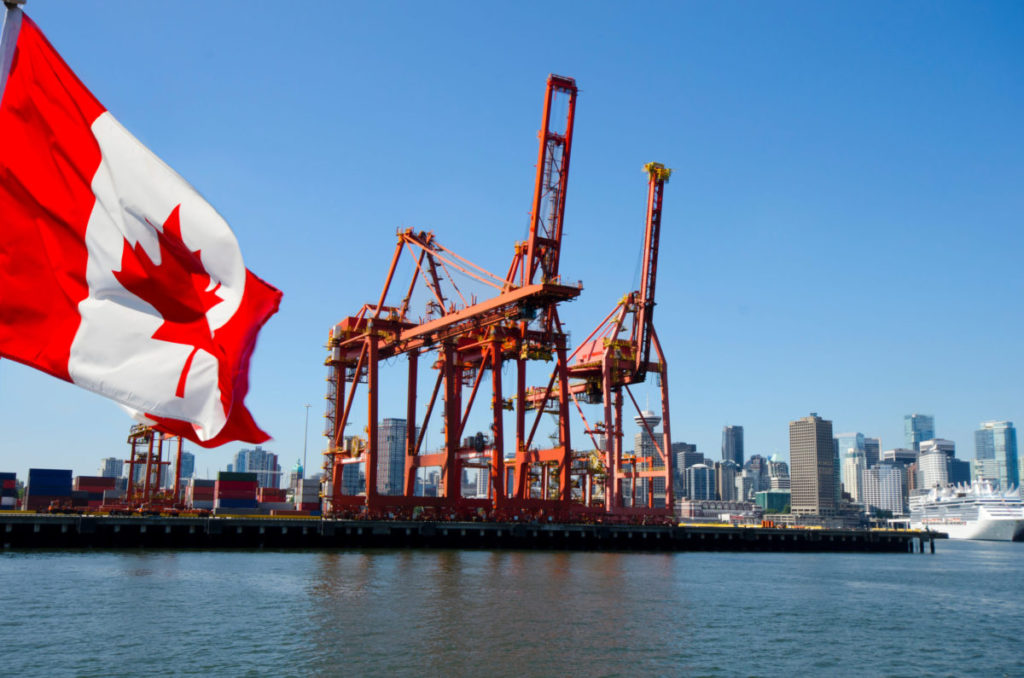
Canadian steel exports to the US have fallen to roughly one-third of pre-tariff values, with PwC Canada’s Gemma Stanton-Hagan estimating monthly steel revenues are about C$500 million lower than before the duties, leaving the sector under deeper and longer pressure than aluminium. Ottawa’s response centres on a C$1‑billion loan facility to address liquidity and a C$500‑million regional tariff response initiative to push diversification, which she characterises as a short-term stopgap. With 85–90% of Canadian steel exports historically bound for the US and global oversupply limiting alternative markets, producers are reassessing investment while policymakers weigh risks to domestic supply for housing, transport, energy and defence projects.
ICE has endorsed the Competition and Markets Authority’s recommendations from its market study into UK road and rail infrastructure, signalling professional backing for changes to how major highways and rail projects are procured and governed. The CMA review examined competition, delivery models and regulatory oversight across strategic roads and the national rail network, aiming to reduce cost pressures and improve long-term asset performance. ICE’s support increases pressure on government and clients such as National Highways and Network Rail to adjust frameworks for framework contracts, alliancing and supply-chain access.
The Institution of Civil Engineers is launching a new policy programme to examine how to increase investment in adapting UK infrastructure to climate change, and is seeking detailed input from its membership. The initiative will focus on practical incentives for resilience upgrades across assets such as flood defences, transport corridors and energy networks, where design lives of 60–120 years clash with rapidly shifting rainfall, temperature and coastal erosion patterns. For practitioners, this signals potential changes to funding models, appraisal methods and performance standards for climate‑resilient geotechnical and civil works.
The Construction Leadership Council (CLC) is working with the Institution of Civil Engineers (ICE) to coordinate industry-wide action on net zero, building safety and productivity across UK infrastructure and construction. Through joint task groups and themed workstreams, the ICE contributes technical input on areas such as carbon measurement, modern methods of construction and digital design, feeding practitioner experience into CLC policy and guidance. For engineers, this linkage means that site data, design practice and lessons from major projects can more directly shape government-backed standards, funding priorities and procurement models.
The Institution of Civil Engineers has revised and modernised its Code of Professional Conduct to tighten expectations on ethical behaviour, competence and accountability for members and registrants. The refreshed code is expected to place greater emphasis on managing safety risks, transparent decision-making on major infrastructure projects, and responsible use of emerging tools such as digital twins and AI-based design optimisation. Firms will need to review internal procedures, training and project governance to ensure alignment with the updated professional and regulatory obligations.
Midway through 2026, the Institution of Civil Engineers is moving to formalise its next phase of work after a first half-year focused on asset maintenance, ethics, intelligence and stewardship across the profession. Trustees are steering efforts towards more data‑driven asset management, with emphasis on whole‑life performance of critical infrastructure and clearer ethical frameworks for use of digital tools and automation. For practitioners, this signals tighter expectations on maintenance strategies, evidence‑based decision‑making and governance around intelligent infrastructure systems.
US Senators Catherine Cortez Masto and Jim Risch have introduced the bipartisan System Integrity through Licensed Vault Expansion and Resilience (SILVER) Act to amend the Commodity Exchange Act and mandate at least two licensed precious metal depositories in each US time zone, breaking the current concentration around New York City. The bill aims to cut systemic and national security risk, improve market liquidity and reduce storage and transport costs for miners and traders in Western states such as Nevada. Backers include Money Metals Depository, The Silver Institute, A‑Mark Precious Metals/Gold.com and Texas Precious Metals Depository, with a companion bill already filed in the House.
Canada’s Supreme Court will hear British Columbia’s appeal of the Gitxaala v. British Columbia (Chief Gold Commissioner) ruling, which found the province’s Declaration on the Rights of Indigenous Peoples Act (DRIPA) incorporates UNDRIP and creates immediate, legally enforceable obligations. The case follows a 2023 BC Supreme Court decision that the province’s automatic online mineral claim staking system breached the constitutional duty to consult Indigenous nations. Mining executives say the evolving interpretation of DRIPA is injecting significant uncertainty into BC mineral tenure and project approval processes, with no hearing date yet set.
The European Union is moving to create its first coordinated stockpile of critical minerals, initially targeting tungsten, rare earths, gallium and likely magnesium, germanium and graphite, with storage talks under way with the Port of Rotterdam as a central logistics hub. Ten member states, led by planning groups in Italy, France and Germany, are designing the scheme amid concerns over China’s export controls on gallium, germanium and graphite and its dominance in rare earth magnet supply, which covers about 93% of EU wind turbine permanent magnets. For miners and processors, the plan signals stronger EU-backed offtake certainty but also sharper scrutiny of permitting bottlenecks, as shown by delays at the Chvaletice manganese project despite its Strategic Project status.
China will impose new mining controls and security reviews on foreign investment from 15 June and require strategic mineral reserves to be stored at source for at least five years, with extensions decided by State Council reviews. The measures, announced via Xinhua, aim to accelerate construction of strategic reserve sites and tighten state control over unspecified “key” minerals. Coming days after the Trump–Xi summit, the move reinforces China’s dominance over rare earths such as yttrium, where it already controls over 60% of mined supply and almost all processing.
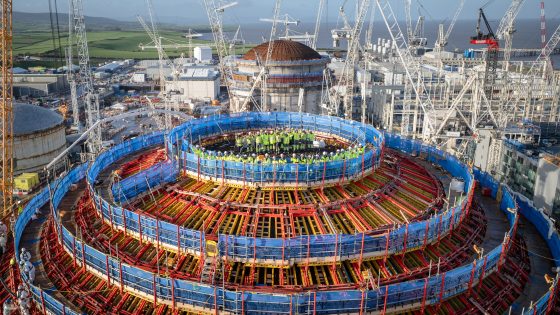
Financing for the 3.2GW Sizewell C nuclear plant has been criticised by the UK National Audit Office, which says the Regulated Asset Base (RAB) model and £700M of direct government investment place more risk on taxpayers and bill-payers than Contracts for Difference used on other low‑carbon projects. The NAO estimates consumer benefits will not exceed costs until after 2060, well beyond the station’s planned early‑2030s commissioning. For civil and nuclear contractors, the findings signal prolonged political and regulatory scrutiny of cost overruns, schedule risk and allowable returns.
The UK government is introducing the Small Business Protections Bill (Commercial Payments Bill) to parliament, imposing a statutory 60‑day cap on payment terms for large firms and mandatory interest on late payments to smaller suppliers. The bill grants the Small Business Commissioner new powers to investigate, adjudicate and levy fines worth tens of millions of pounds on persistent late payers. For construction, a planned ban on cash retentions could significantly alter contract structures, cashflow management, and security arrangements for defects and incomplete works.
More than 1,900 UK trade union members have signed a letter urging the government to reject development consent for the Rosebank oil and gas field in the North Sea, one of the basin’s largest undeveloped discoveries. The signatories, drawn from energy, construction and transport unions, argue that new offshore infrastructure such as production platforms, subsea pipelines and tie-backs would lock in high-carbon assets and divert investment from grid upgrades and large-scale offshore wind. For civil and marine contractors, the move signals potential political and permitting risk for future North Sea platform, export pipeline and onshore terminal works.
Greenland’s long-running dispute over Energy Transition Minerals’ Kvanefjeld rare earth and uranium-linked deposit shows that execution risk in permitting and regulatory stability can derail critical-minerals projects as effectively as metallurgy or ore grade. Alina Karpunina of GEM Mining Consulting argues that investors now price in years of legal conflict as a project cost, demanding higher premiums or walking away when uranium thresholds under Greenland’s 2021 law and shifting political signals make approvals look fragile. While projects like Malmbjerg molybdenum, Amitsoq graphite and Tanbreez progress under the 2025–2029 Mineral Resources Strategy and the 2023 EU-Greenland raw-materials partnership, she warns that unclear, revisable rules can render “strategic” deposits effectively unfinanceable.