Fortescue $108M Indigenous site ruling: ESG and tenure risks for mine planners
Reviewed by Tom Sullivan
First reported on MINING.com
30 Second Briefing
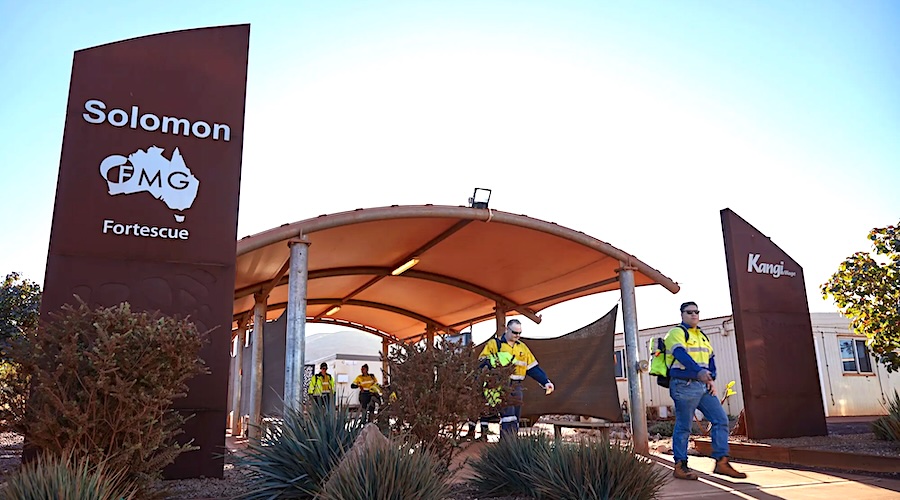
Fortescue has been ordered by the Federal Court of Australia to pay more than A$150 million (US$108 million) to the Yindjibarndi people for “significant damage” to cultural heritage sites caused during operations at its Solomon Hub iron ore mine in the Pilbara. The ruling, which also includes A$100,000 for economic loss, follows a native title dispute dating back to a 2003 claim and the Yindjibarndi’s 2017 grant of exclusive rights over a 2,700 sq km, iron ore-rich area. For miners, the case signals materially higher native title compensation exposure and ESG risk where projects pre-date or contest Indigenous land determinations.
Technical Brief
- Compensation split is A$150 million for cultural loss versus only A$100,000 for economic loss.
- Claimant Yindjibarndi Ngurra Aboriginal Corporation originally sought up to A$1.8 billion in compensation.
- Native title claim was lodged in 2003, with exclusive rights only determined in 2017, creating long regulatory uncertainty.
- Fortescue commenced Solomon Hub mining before native title resolution, exposing operations to retrospective heritage liability.
- Court found damage to Yindjibarndi songlines and “other areas of cultural heritage”, not just discrete artefact sites.
- Fortescue has publicly accepted that compensation is payable but is reviewing the detailed reasons before further action.
- For current and planned projects, long-running native title disputes of 10–20 years materially elevate ESG and legal risk exposure.
Our Take
In our database of 153 Policy stories, Fortescue appears frequently in Western Australia items focused on automation and green power, so this compensation ruling adds a significant ESG and social-licence dimension alongside its recent Pilbara Green Energy Project approval.
The fact that this dispute centres on the Solomon Hub in the Pilbara comes as Fortescue is also rolling out large-scale autonomy with Caterpillar across its Pilbara iron ore operations, suggesting that future project approvals and technology deployments will likely face closer scrutiny from native title holders.
Given the Yindjibarndi people secured exclusive native title rights only in 2017, this outcome is likely to be closely watched by other Indigenous groups in Australia’s iron ore regions as a benchmark for cultural loss claims tied to long-running operations rather than new greenfield projects.
Prepared by collating external sources, AI-assisted tools, and Geomechanics.io’s proprietary mining database, then reviewed for technical accuracy & edited by our geotechnical team.
Related Articles


Related Industries & Products
Mining
Geotechnical software solutions for mining operations including CMRR analysis, hydrogeological testing, and data management.
CMRR-io
Streamline coal mine roof stability assessments with our cloud-based CMRR software featuring automated calculations, multi-scenario analysis, and collaborative workflows.
HYDROGEO-io
Comprehensive hydrogeological testing platform for managing, analysing, and reporting on packer tests, lugeon values, and hydraulic conductivity assessments.
GEODB-io
Centralised geotechnical data management solution for storing, accessing, and analysing all your site investigation and material testing data.