NSW move to lift uranium ban: project pipeline and risk lens for engineers
Reviewed by Tom Sullivan
First reported on MINING.com
30 Second Briefing
A bill to repeal New South Wales’ 1986 prohibition on nuclear energy and uranium mining has passed the state’s Upper House and now moves to the Lower House for a final vote. Introduced by Libertarian Party MLC John Ruddick, the Uranium Mining and Nuclear Facilities (Prohibitions) Repeal Bill could open uranium exploration around historic prospects such as the Broken Hill region, dormant since the 1970s–80s. The Minerals Council of Australia notes countries representing about 70% of global GDP are now looking to nuclear power and Australian uranium for energy security and grid decarbonisation.
Technical Brief
- Uranium Mining and Nuclear Facilities (Prohibitions) Repeal Bill targets removal of NSW’s 1986 nuclear/uranium ban.
- John Ruddick framed the bill around enabling a “booming uranium mining industry” and associated employment.
- Australia is cited as holding ~40% of the world’s proven uranium reserves, underscoring potential project pipeline scale.
- South Australia and the Northern Territory remain the only Australian jurisdictions with active uranium mines under current law.
- Historic uranium exploration in NSW centred on the Broken Hill region during the 1970s–1980s, with no recent systematic work.
- Minerals Council of Australia argues the 1986 prohibitions became obsolete after the IPCC’s establishment two years later.
- Countries accounting for ~70% of global GDP are reported as planning to use nuclear and Australian uranium for grid decarbonisation.
- Oil prices have risen >50% since late February due to the Iran war and Strait of Hormuz disruption, sharpening energy security arguments.
Our Take
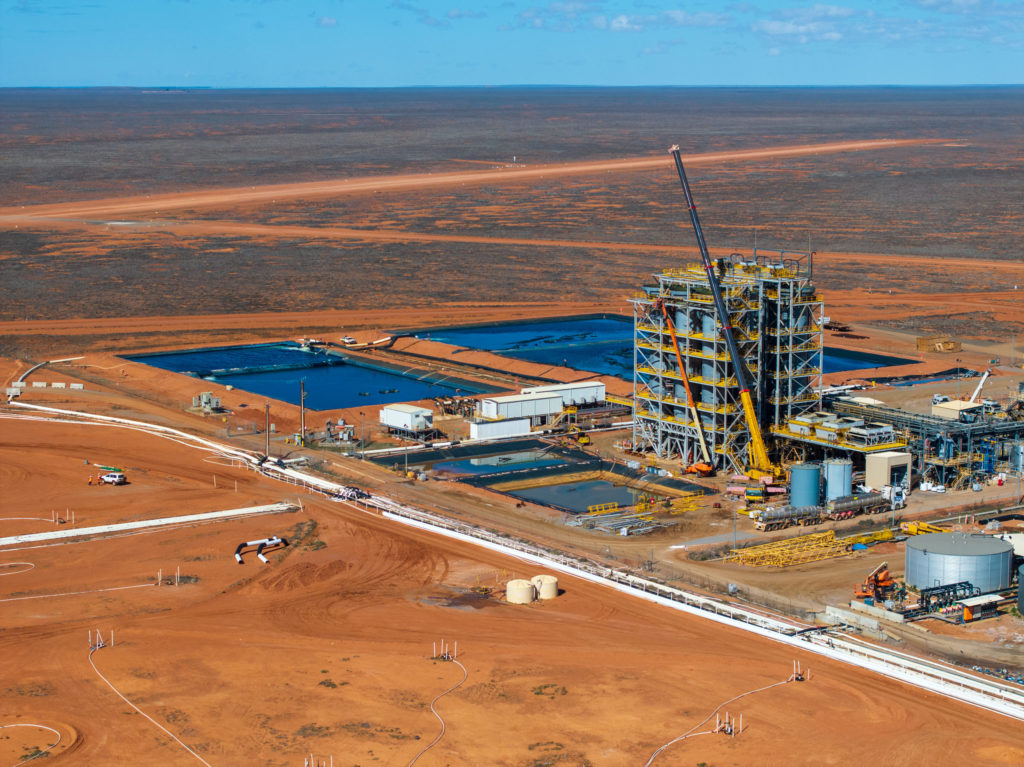
Boss Energy’s repeated resource upgrades and design changes at the Honeymoon uranium operation in South Australia suggest that, if New South Wales opens up, experienced ISR operators from neighbouring states will be well placed to move quickly on any Broken Hill region targets.
Within our 153 Policy stories, uranium appears far more often in project‑linked pieces than oil, so tying the NSW debate to a 50% oil price increase is unusual and may signal that proponents are deliberately framing uranium as an energy‑security hedge rather than just a decarbonisation tool.
With Australia holding about 40% of proven uranium reserves and countries representing roughly 70% of global GDP looking at nuclear, a policy shift in NSW would likely strengthen the Minerals Council of Australia’s hand in arguing for nationally consistent uranium and nuclear standards rather than state‑by‑state prohibitions.
Prepared by collating external sources, AI-assisted tools, and Geomechanics.io’s proprietary mining database, then reviewed for technical accuracy & edited by our geotechnical team.
Related Articles


Related Industries & Products
Mining
Geotechnical software solutions for mining operations including CMRR analysis, hydrogeological testing, and data management.
CMRR-io
Streamline coal mine roof stability assessments with our cloud-based CMRR software featuring automated calculations, multi-scenario analysis, and collaborative workflows.
HYDROGEO-io
Comprehensive hydrogeological testing platform for managing, analysing, and reporting on packer tests, lugeon values, and hydraulic conductivity assessments.
GEODB-io
Centralised geotechnical data management solution for storing, accessing, and analysing all your site investigation and material testing data.