US–India critical minerals framework: project pipeline signals for engineers
Reviewed by Tom Sullivan
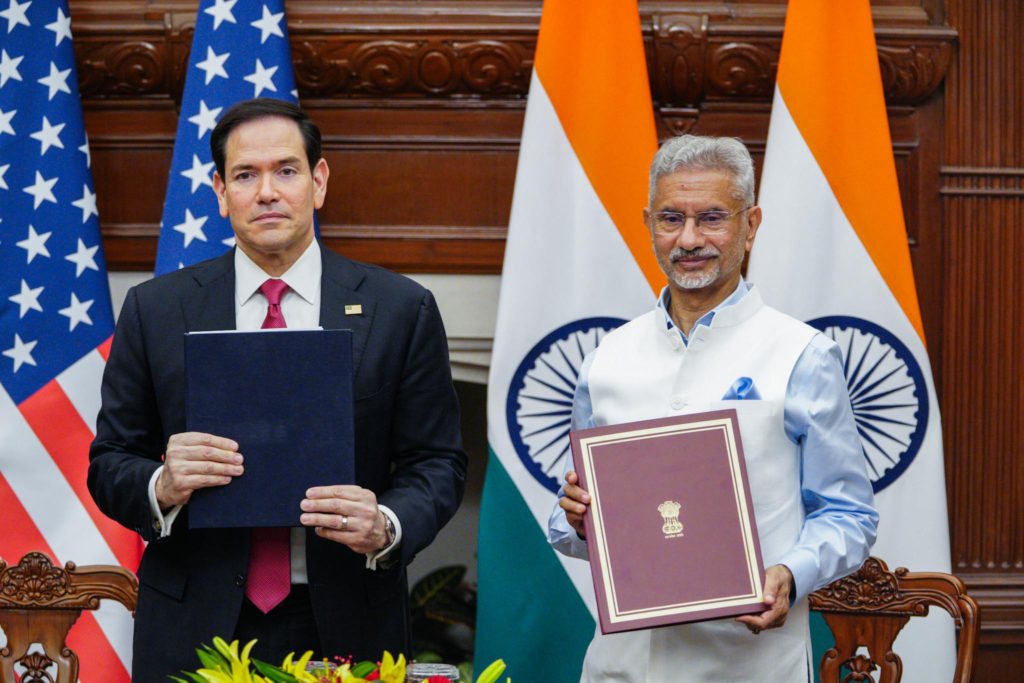
First reported on MINING.com
30 Second Briefing
The US and India have signed a bilateral critical minerals framework, building on February’s launch of the Forum on Resource Geostrategic Engagement (FORGE) in Washington, to secure mining and processing supply chains against single-source monopolies and coercive market practices. India, which officially designates 30 critical minerals and holds an estimated 13 million tonnes of monazite, currently produces only copper, graphite, phosphorous and titanium at scale, signalling substantial greenfield and processing opportunities. Parallel Quad and prospective Russia pacts position India as a multi-aligned hub for rare earths and battery-metal projects.
Technical Brief
- Framework was signed in India on Tuesday during US Secretary of State Marco Rubio’s visit.
- Agreement explicitly targets “sensitive supply chains” and “coercive market practices”, per the US Embassy statement.
- No binding terms, project lists or financing commitments have been disclosed; implementation mechanisms remain undefined.
- Forum on Resource Geostrategic Engagement (FORGE) was launched in Washington in February 2026 as the precursor platform.
- US International Trade Administration’s 2026 report identifies India’s current critical output as only four minerals.
- New Delhi has flagged an incentive scheme specifically for critical mineral processing capacity, not just primary mining.
- Parallel Quad critical minerals framework was announced the same day, aligning US, India, Japan and Australia on supply diversification.
Our Take
USA Rare Earth’s appearance in this US–India critical minerals framework comes as it is simultaneously pursuing a $2.8 billion acquisition of Brazil’s Serra Verde and DOE-backed magnet processing in the US, signalling that any India-facing monazite or rare earths cooperation will plug into an already multi-continent supply strategy rather than a greenfield play.
In our database of 161 Policy stories, India’s formal designation of 30 critical minerals stands out, as most recent US-focused pieces centre on financing envelopes (about $18.6 billion under the Trump administration) rather than explicit mineral lists, which could give New Delhi more leverage in prioritising which rare earth elements or battery metals it offers into joint supply chains.
The estimated 13 million tonnes of monazite in India, when viewed against BMI’s note that China still controls about 60% of mined rare earth output and almost all processing, suggests that any US–India framework will only shift market balance if it quickly couples Indian resource access with US- or allied-hosted separation and magnet plants such as those USA Rare Earth is piloting.
Prepared by collating external sources, AI-assisted tools, and Geomechanics.io’s proprietary mining database, then reviewed for technical accuracy & edited by our geotechnical team.
Related Articles


Related Industries & Products
Mining
Geotechnical software solutions for mining operations including CMRR analysis, hydrogeological testing, and data management.
Construction
Quality control software for construction companies with material testing, batch tracking, and compliance management.
CMRR-io
Streamline coal mine roof stability assessments with our cloud-based CMRR software featuring automated calculations, multi-scenario analysis, and collaborative workflows.
HYDROGEO-io
Comprehensive hydrogeological testing platform for managing, analysing, and reporting on packer tests, lugeon values, and hydraulic conductivity assessments.
GEODB-io
Centralised geotechnical data management solution for storing, accessing, and analysing all your site investigation and material testing data.