Geomechanics.io

  • Free Tools
Sign UpLog In

Geomechanics.io

Geomechanics, Streamlined.

© 2026 Geomechanics.io. All rights reserved.

Geomechanics.io

CMRR-ioGEODB-ioHYDROGEO-ioQCDB-ioFree Tools & CalculatorsBlogLatest Industry News

Industries

MiningConstructionTunnelling

Company

Terms of UsePrivacy PolicyLinkedIn
    Projects
    Sustainability

    Rosebank oil field rejection call: permitting and design risks for project teams

    May 18, 2026|

    Reviewed by Joe Ashwell

    Rosebank oil field rejection call: permitting and design risks for project teams

    First reported on New Civil Engineer

    30 Second Briefing

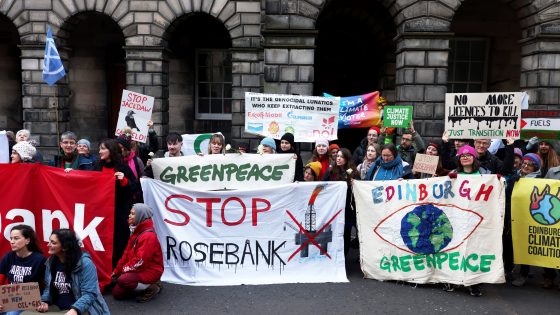
    More than 1,900 UK trade union members have signed a letter urging the government to reject development consent for the Rosebank oil and gas field in the North Sea, one of the basin’s largest undeveloped discoveries. The signatories, drawn from energy, construction and transport unions, argue that new offshore infrastructure such as production platforms, subsea pipelines and tie-backs would lock in high-carbon assets and divert investment from grid upgrades and large-scale offshore wind. For civil and marine contractors, the move signals potential political and permitting risk for future North Sea platform, export pipeline and onshore terminal works.

    Technical Brief

    • For similar North Sea schemes, stakeholder engagement and climate-aligned design justification become critical permitting deliverables.

    Our Take

    Because New Civil Engineer also fronts industry initiatives like the British Construction & Infrastructure Awards and Heathrow’s Early Careers Innovation Challenge, its coverage of Rosebank will feed directly into how future project teams frame ‘sustainable’ practice in oil and gas versus alternative energy projects in the United Kingdom.

    Geotechnical Software for Modern Teams

    Centralise site data, logs, and lab results with GEODB-io, CMRR-io, and HYDROGEO-io.

    No credit card required.

    • Save and export unlimited calculations
    • Advanced data visualisation
    • Generate professional PDF reports
    • Cloud storage for all your projects

    Prepared by collating external sources, AI-assisted tools, and Geomechanics.io’s proprietary mining database, then reviewed for technical accuracy & edited by our geotechnical team.

    Related Articles

    Sizewell C financing risks: NAO findings and delivery lens for project teams
    Policy
    about 21 hours ago

    Sizewell C financing risks: NAO findings and delivery lens for project teams

    Financing for the 3.2GW Sizewell C nuclear plant has been criticised by the UK National Audit Office, which says the Regulated Asset Base (RAB) model and £700M of direct government investment place more risk on taxpayers and bill-payers than Contracts for Difference used on other low‑carbon projects. The NAO estimates consumer benefits will not exceed costs until after 2060, well beyond the station’s planned early‑2030s commissioning. For civil and nuclear contractors, the findings signal prolonged political and regulatory scrutiny of cost overruns, schedule risk and allowable returns.

    Late Payments Bill moves forward: contract and cashflow impacts for UK project teams
    Policy
    1 day ago

    Late Payments Bill moves forward: contract and cashflow impacts for UK project teams

    The UK government is introducing the Small Business Protections Bill (Commercial Payments Bill) to parliament, imposing a statutory 60‑day cap on payment terms for large firms and mandatory interest on late payments to smaller suppliers. The bill grants the Small Business Commissioner new powers to investigate, adjudicate and levy fines worth tens of millions of pounds on persistent late payers. For construction, a planned ban on cash retentions could significantly alter contract structures, cashflow management, and security arrangements for defects and incomplete works.

    DOE order keeps J.H. Campbell coal plant running: grid risk lens for engineers
    Policy
    2 days ago

    DOE order keeps J.H. Campbell coal plant running: grid risk lens for engineers

    US Energy Secretary Chris Wright has issued an emergency order requiring Midcontinent Independent System Operator and Consumers Energy to keep the J.H. Campbell coal-fired plant in West Olive, Michigan available through 16 August 2026 to address critical summer grid reliability risks. The 3-unit plant, originally slated for closure on 31 May 2025, has been run during peak demand and low wind/solar periods and was key in stabilising the grid during recent winter storms. DOE’s Resource Adequacy Report and NERC’s 2025 Long-Term Reliability Assessment both flag MISO as high risk, with DOE warning outage frequency could rise 100-fold by 2030 if firm capacity is retired too quickly.

    Related Industries & Products

    Construction

    Quality control software for construction companies with material testing, batch tracking, and compliance management.

    Mining

    Geotechnical software solutions for mining operations including CMRR analysis, hydrogeological testing, and data management.

    QCDB-io

    Comprehensive quality control database for manufacturing, tunnelling, and civil construction with UCS testing, PSD analysis, and grout mix design management.

    AllGeotechnicalInfrastructureHazardsEnvironmental