Bankable rules for critical minerals: permitting risk lessons from Greenland
Reviewed by Tom Sullivan
First reported on MINING.com
30 Second Briefing
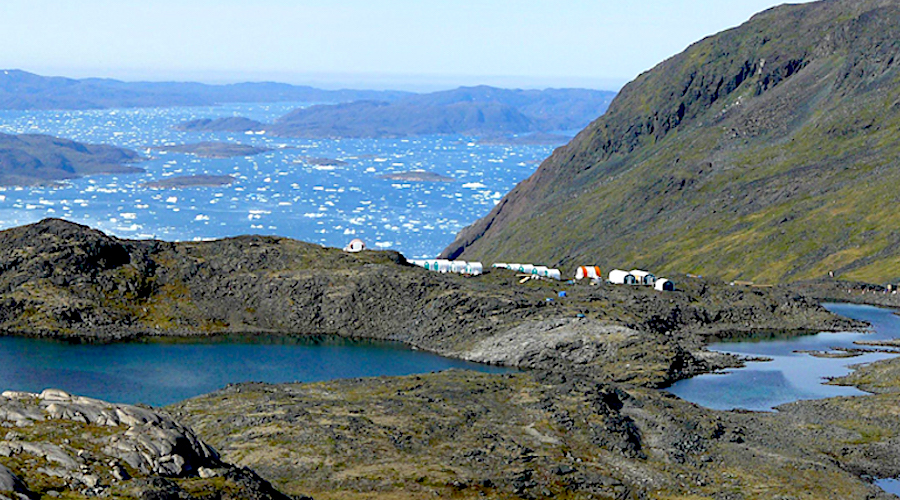
Greenland’s long-running dispute over Energy Transition Minerals’ Kvanefjeld rare earth and uranium-linked deposit shows that execution risk in permitting and regulatory stability can derail critical-minerals projects as effectively as metallurgy or ore grade. Alina Karpunina of GEM Mining Consulting argues that investors now price in years of legal conflict as a project cost, demanding higher premiums or walking away when uranium thresholds under Greenland’s 2021 law and shifting political signals make approvals look fragile. While projects like Malmbjerg molybdenum, Amitsoq graphite and Tanbreez progress under the 2025–2029 Mineral Resources Strategy and the 2023 EU-Greenland raw-materials partnership, she warns that unclear, revisable rules can render “strategic” deposits effectively unfinanceable.
Technical Brief
- Greenland’s 2021 uranium law bans mining where uranium exceeds a defined concentration threshold in ore.
- Kvanefjeld is treated as a uranium-linked rare earths deposit, so falls directly under this threshold regime.
- Years-long legal and regulatory disputes around Kvanefjeld are now treated by financiers as an explicit execution-cost line item.
- Malmbjerg molybdenum, Amitsoq graphite and Tanbreez are advancing under Greenland’s 2025–2029 Mineral Resources Strategy framework.
- The 2023 EU–Greenland raw-materials partnership is structured to support enabling infrastructure, investment and “sustainable” extraction projects.
- Greenland is simultaneously tightening rules on uranium while easing selected permitting and tax provisions for other mineral projects.
- Project finance models increasingly differentiate between definitive rejection and prolonged regulatory limbo when discounting cash flows.
- For Western critical-mineral supply chains, regulatory credibility is now treated as co-equal to resource size and metallurgy in bankability assessments.
Our Take
Energy Transition Minerals’ Kvanefjeld rare earth project in Greenland already features in our coverage via the 2026 draft decision not to renew its licence, so the op-ed’s focus on ‘bankable rules’ directly intersects with a live example of regulatory reversals chilling critical minerals investment.
Ghana’s move to channel up to 30% of large gold mines’ bullion through the Ghana Gold Board contrasts with the US and EU critical minerals policy pieces in our database, which increasingly emphasise downstream processing incentives rather than mandated offtake, signalling very different risk profiles for gold versus rare earth and lithium projects.
EnergyX’s three lithium projects, including two in the US, sit within a cluster of US-focused critical minerals stories where policy stability is being used to attract processing and refining (as in Aclara Resources’ Louisiana rare earth separation plans), suggesting that permitting clarity is becoming as valuable as resource quality for lithium developers.
Prepared by collating external sources, AI-assisted tools, and Geomechanics.io’s proprietary mining database, then reviewed for technical accuracy & edited by our geotechnical team.
Related Articles

Related Industries & Products
Mining
Geotechnical software solutions for mining operations including CMRR analysis, hydrogeological testing, and data management.
Construction
Quality control software for construction companies with material testing, batch tracking, and compliance management.
CMRR-io
Streamline coal mine roof stability assessments with our cloud-based CMRR software featuring automated calculations, multi-scenario analysis, and collaborative workflows.
HYDROGEO-io
Comprehensive hydrogeological testing platform for managing, analysing, and reporting on packer tests, lugeon values, and hydraulic conductivity assessments.
GEODB-io
Centralised geotechnical data management solution for storing, accessing, and analysing all your site investigation and material testing data.