Geomechanics.io

  • Free Tools
Sign UpLog In

    Geomechanics.io

    Geomechanics, Streamlined.

    © 2026 Geomechanics.io. All rights reserved.

    Geomechanics.io

    CMRR-ioGEODB-ioHYDROGEO-ioQCDB-ioFree Tools & CalculatorsBlogLatest Industry News

    Industries

    MiningConstructionTunnelling

    Company

    Terms of UsePrivacy PolicyLinkedIn
    Projects
    Standard/Guideline
    Sustainability

    China mining controls for strategic reserves: supply risk lens for engineers

    May 20, 2026|

    Reviewed by Tom Sullivan

    China mining controls for strategic reserves: supply risk lens for engineers

    First reported on MINING.com

    30 Second Briefing

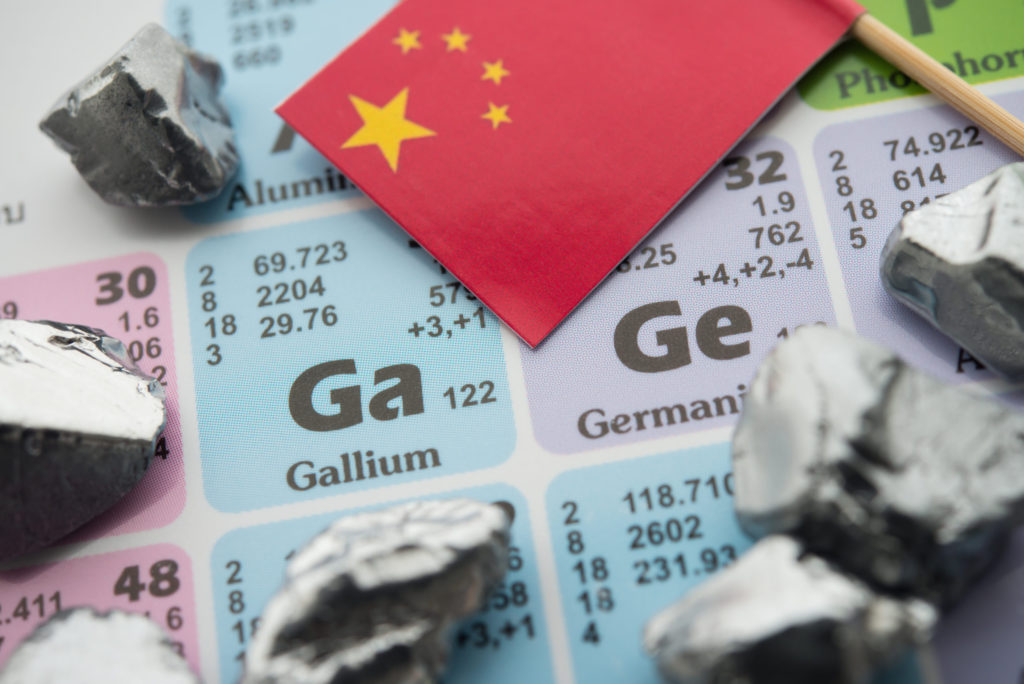
    China will impose new mining controls and security reviews on foreign investment from 15 June and require strategic mineral reserves to be stored at source for at least five years, with extensions decided by State Council reviews. The measures, announced via Xinhua, aim to accelerate construction of strategic reserve sites and tighten state control over unspecified “key” minerals. Coming days after the Trump–Xi summit, the move reinforces China’s dominance over rare earths such as yttrium, where it already controls over 60% of mined supply and almost all processing.

    Technical Brief

    • Covered minerals are not listed, creating regulatory uncertainty for rare earth, battery and alloy projects.
    • Policy language couples resource security with “high-quality development”, signalling tighter environmental and land-use constraints on new mines.
    • Strategic reserve buildout is framed as construction of dedicated storage “sites”, implying new surface facilities and logistics nodes.
    • China already enforces annual rare earth production quotas, so new controls layer onto existing quota-based mine planning.
    • Export restrictions imposed last year on some rare earths drove sharp price spikes in yttrium and related products.

    Our Take

    China’s move to lock in on-site reserves for rare earths and other critical minerals echoes, but also outpaces, supply‑security efforts seen in Canada’s fast‑tracked Matawinie graphite project, signalling that Western ‘major project’ regimes are still reacting to a more coordinated Chinese stockpiling strategy.

    With China already controlling around 60% of mined rare earth supply and, as noted in our related Beijing summit coverage, roughly 90% of global refining, these new controls likely tighten the effective floor under Western project pipelines for rare earths, yttrium and associated critical minerals that must now be sourced or processed outside China.

    The reference to Codelco’s targeted US$2 billion gain from unifying Chilean copper mines underlines how large incumbents in Chile and other non‑Chinese jurisdictions may gain pricing and strategic leverage as Chinese reserve‑building policies constrain export availability of copper and zinc alongside rare earths.

    Geotechnical Software for Modern Teams

    Centralise site data, logs, and lab results with GEODB-io, CMRR-io, and HYDROGEO-io.

    No credit card required.

    • Save and export unlimited calculations
    • Advanced data visualisation
    • Generate professional PDF reports
    • Cloud storage for all your projects

    Prepared by collating external sources, AI-assisted tools, and Geomechanics.io’s proprietary mining database, then reviewed for technical accuracy & edited by our geotechnical team.

    Related Articles

    EU tungsten and rare earths stockpile: supply security lens for project teams
    Policy
    about 14 hours ago

    EU tungsten and rare earths stockpile: supply security lens for project teams

    The European Union is moving to create its first coordinated stockpile of critical minerals, initially targeting tungsten, rare earths, gallium and likely magnesium, germanium and graphite, with storage talks under way with the Port of Rotterdam as a central logistics hub. Ten member states, led by planning groups in Italy, France and Germany, are designing the scheme amid concerns over China’s export controls on gallium, germanium and graphite and its dominance in rare earth magnet supply, which covers about 93% of EU wind turbine permanent magnets. For miners and processors, the plan signals stronger EU-backed offtake certainty but also sharper scrutiny of permitting bottlenecks, as shown by delays at the Chvaletice manganese project despite its Strategic Project status.

    Sizewell C financing risks: NAO findings and delivery lens for project teams
    Policy
    1 day ago

    Sizewell C financing risks: NAO findings and delivery lens for project teams

    Financing for the 3.2GW Sizewell C nuclear plant has been criticised by the UK National Audit Office, which says the Regulated Asset Base (RAB) model and £700M of direct government investment place more risk on taxpayers and bill-payers than Contracts for Difference used on other low‑carbon projects. The NAO estimates consumer benefits will not exceed costs until after 2060, well beyond the station’s planned early‑2030s commissioning. For civil and nuclear contractors, the findings signal prolonged political and regulatory scrutiny of cost overruns, schedule risk and allowable returns.

    Late Payments Bill moves forward: contract and cashflow impacts for UK project teams
    Policy
    2 days ago

    Late Payments Bill moves forward: contract and cashflow impacts for UK project teams

    The UK government is introducing the Small Business Protections Bill (Commercial Payments Bill) to parliament, imposing a statutory 60‑day cap on payment terms for large firms and mandatory interest on late payments to smaller suppliers. The bill grants the Small Business Commissioner new powers to investigate, adjudicate and levy fines worth tens of millions of pounds on persistent late payers. For construction, a planned ban on cash retentions could significantly alter contract structures, cashflow management, and security arrangements for defects and incomplete works.

    Related Industries & Products

    Mining

    Geotechnical software solutions for mining operations including CMRR analysis, hydrogeological testing, and data management.

    Construction

    Quality control software for construction companies with material testing, batch tracking, and compliance management.

    CMRR-io

    Streamline coal mine roof stability assessments with our cloud-based CMRR software featuring automated calculations, multi-scenario analysis, and collaborative workflows.

    HYDROGEO-io

    Comprehensive hydrogeological testing platform for managing, analysing, and reporting on packer tests, lugeon values, and hydraulic conductivity assessments.

    GEODB-io

    Centralised geotechnical data management solution for storing, accessing, and analysing all your site investigation and material testing data.

    AllGeotechnicalInfrastructureHazardsEnvironmental