UK climate adaptation targets: design and risk implications for engineers
Reviewed by Tom Sullivan
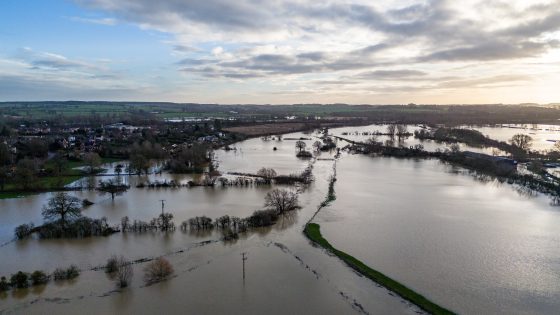
First reported on New Civil Engineer
30 Second Briefing
The Climate Change Committee is for the first time proposing a national blueprint of climate adaptation targets to manage UK climate risks, moving beyond the current focus on net zero mitigation. Draft proposals point to sector‑specific metrics for infrastructure, such as maximum tolerable flood risk for critical assets, heat‑resilience standards for rail and highways, and performance thresholds for drainage and coastal defences under UKCP18 scenarios. Civil and geotechnical engineers should expect future investment cases and design codes to be benchmarked explicitly against these quantified adaptation targets.
Technical Brief
- Targets are being framed as legally trackable metrics, not just qualitative “resilience” aspirations.
- Design approval and Development Consent Orders are likely to require explicit statements of adaptation performance.
- Asset owners will need auditable evidence trails linking site-specific design decisions to CCC-defined thresholds.
- Safety cases for critical infrastructure are expected to integrate climate risk exceedance probabilities alongside conventional hazards.
- Funding business cases may prioritise schemes that demonstrably close quantified adaptation “gaps” on existing networks.
- For geotechnical and civil works, future CDM and safety management documentation will need climate-risk method statements.
Our Take
The Climate Change Committee (CCC) features repeatedly in our Policy coverage, and its earlier warning that the “British way of life” faces escalating risk from heat, flooding and drought signals that UK‑wide adaptation targets are likely to drive mandatory resilience standards into civil infrastructure design rather than remain as voluntary guidance.
In our database, the CCC’s work on Scotland’s 2026–2030 carbon budget sits alongside this UK‑level adaptation push, suggesting practitioners should expect a tighter coupling between emissions policy (e.g. building heat decarbonisation) and physical‑risk adaptation requirements in future UK Government regulations.
With nearly 1,000 tag‑matched pieces on Sustainability and Safety, UK‑focused articles like this one indicate that adaptation targets are moving from strategic discussion into the same regulatory space as health and safety standards, which will matter for how New Civil Engineer’s audience documents and evidences compliance on major projects.
Prepared by collating external sources, AI-assisted tools, and Geomechanics.io’s proprietary mining database, then reviewed for technical accuracy & edited by our geotechnical team.
Related Articles

Related Industries & Products
Construction
Quality control software for construction companies with material testing, batch tracking, and compliance management.
CMRR-io
Streamline coal mine roof stability assessments with our cloud-based CMRR software featuring automated calculations, multi-scenario analysis, and collaborative workflows.
HYDROGEO-io
Comprehensive hydrogeological testing platform for managing, analysing, and reporting on packer tests, lugeon values, and hydraulic conductivity assessments.
GEODB-io
Centralised geotechnical data management solution for storing, accessing, and analysing all your site investigation and material testing data.