Geomechanics, Streamlined.
© 2026 Geomechanics.io. All rights reserved.
A new TESCAN Integrated Mineral Analyser (TIMA) at the University of Queensland’s Natural Resources Innovation and Characterisation Hub is providing high‑resolution mineralogical data on composition, grain size and texture from drill core and other mine samples. Led by Dr Pia Lois-Morales, the platform links automated mineralogy with geometallurgical and orebody models to track mineralogical variability across the life of mine. The aim is to tighten ore characterisation for mine planning, processing optimisation and tailings management by feeding consistent mineral data into decision workflows.
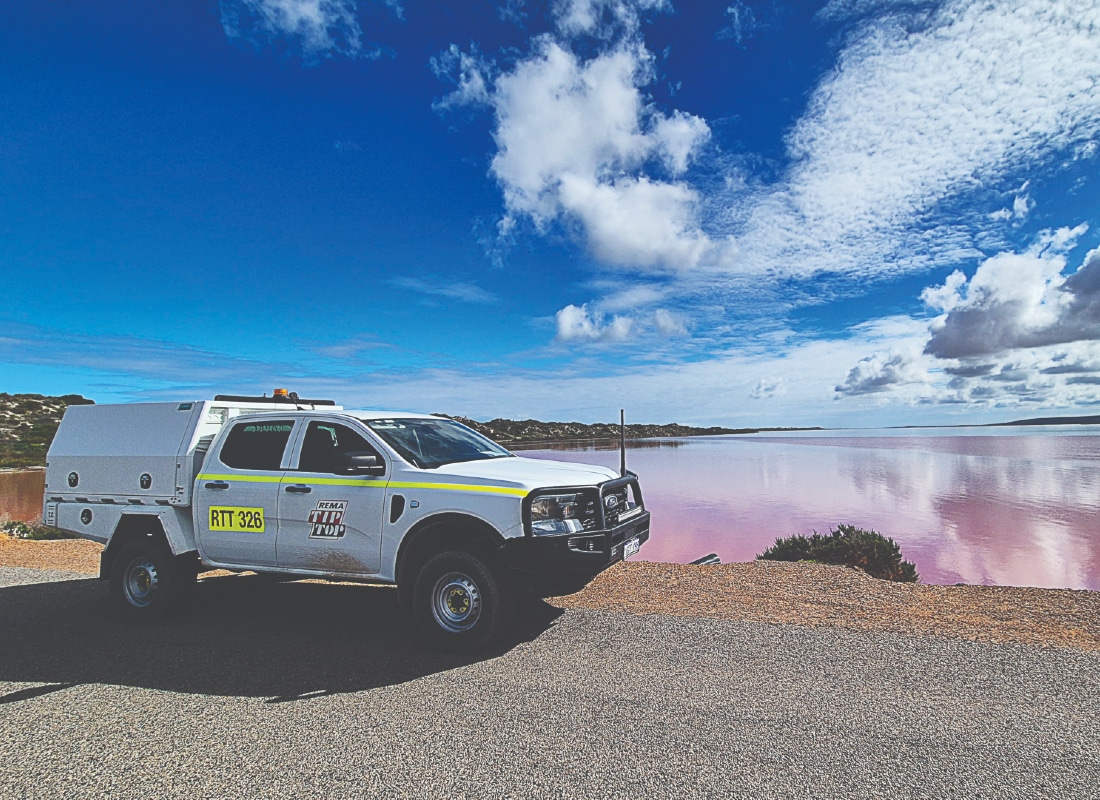
Advanced fibre optic cable systems combined with adaptive algorithms and machine learning are being deployed by REMA TIP TOP to monitor conveyor rollers in real time and detect early-stage faults. Mechatronics engineer Rachael Laudehr explains that continuous temperature and vibration profiling along the belt enables pinpointing of individual failing rollers before they cause belt damage, fires or unplanned stoppages. For mine operators, the approach shifts maintenance from periodic manual inspections to targeted interventions, reducing unnecessary roller change-outs and extended conveyor downtime.
Yorkshire Water has appointed Egis to Lot 1 of its £80m AMP8 technical services and assurance framework, a multi-year contract starting 1 July and running to 2030 with options to extend to 2032. Lot 1, worth a combined £12.7m, will see Egis deliver project-level engineering and design services across civil, mechanical and electrical disciplines, including feasibility testing, optioneering and construction support for critical infrastructure upgrades. The work targets long-term asset health and environmental performance across Yorkshire’s water and wastewater networks.
Vattenfall has appointed Natural Power to deliver comprehensive ground investigations for its planned 100MW Qurack and 90MW Quantans Hill onshore wind farms in Scotland, extending a 15‑year collaboration. Natural Power’s construction and geotechnical teams will deploy specialist site investigation techniques and advanced survey technologies to characterise geotechnical, geological and environmental conditions across both sites. The data will feed directly into turbine foundation design, access road alignment and construction risk reduction, giving Vattenfall higher confidence in earthworks, drainage and infrastructure layouts before detailed design and procurement.
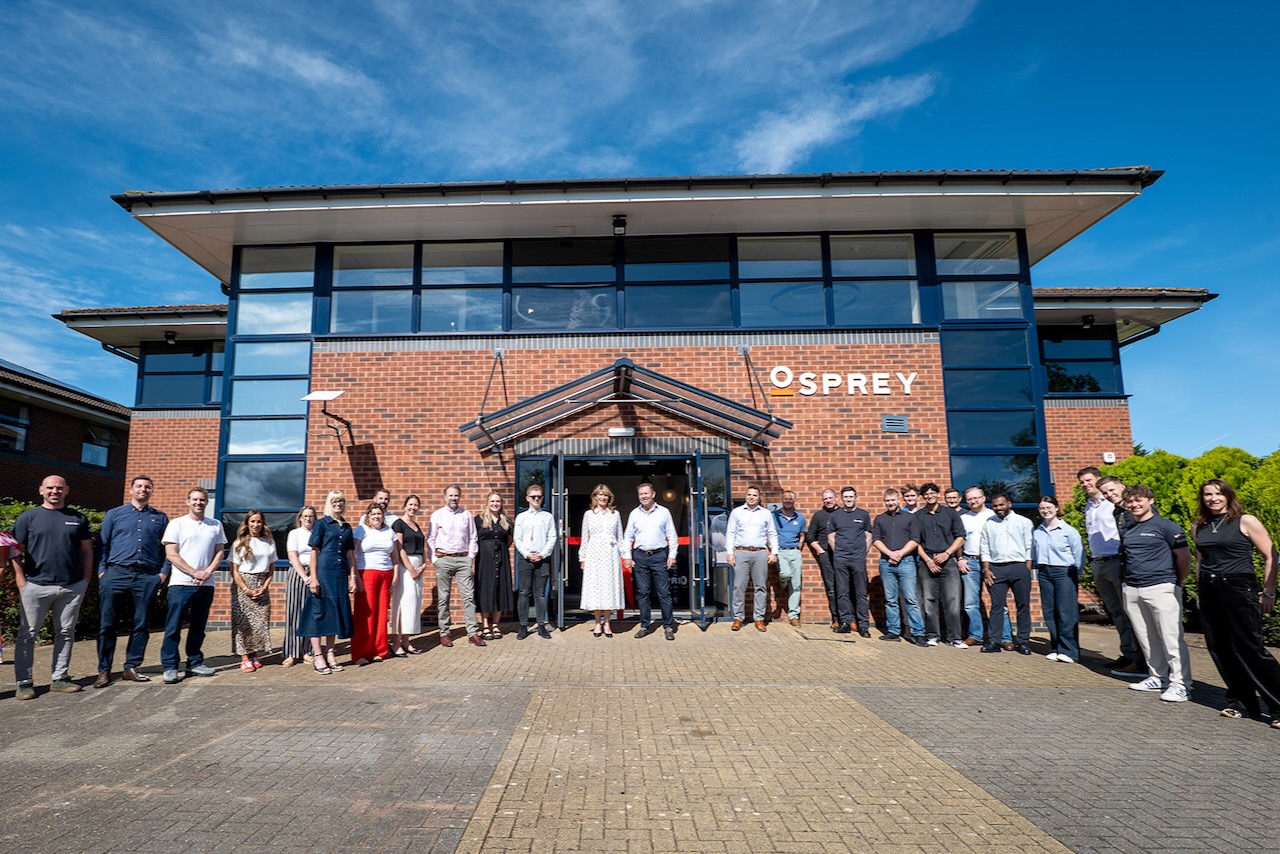
Osprey has opened a new headquarters in Portishead, consolidating its engineering, heavy transport, marine operations and project delivery teams to support integrated, engineering-led transport and installation planning for complex infrastructure, energy and defence projects. The expanded facility is positioned to handle continued growth in abnormal load movements, marine logistics and multi-modal heavy lift operations from a single hub. Proximity to universities and colleges in Bristol and North Somerset underpins the Osprey Skills Academy, targeting students, graduates and early‑career professionals for specialist project cargo and heavy engineering roles.
Build UK has published its first benchmarks on cash retentions, showing tier one contractor members withhold an average 2% and pass on 74% of retentions imposed by their clients to their own supply chains, absorbing 26% themselves. Since 2018, average payment times for these contractors have fallen from 45 to 29 days, with invoices paid within 60 days rising from 82% to 96% under the Reporting on Payment Practices and Performance Regulations. The data will act as a baseline as the Commercial Payments Bill, which includes a ban on retention clauses, moves through Parliament.
Muir Group reported a 30% rise in turnover to £113.9m for the year to January 2026, with profit before tax exceeding £3m. Muir Construction was the main driver, delivering £85.7m of segment turnover and more than doubling profit before tax from £2.2m to £4.8m. The figures signal strong demand in its construction pipeline, giving the contractor greater headroom for bidding, risk management and investment in project delivery capacity.
The Association for Environment Conscious Building has appointed architect and decarbonisation specialist Ste Garlick as CEO and business leader Chris Iredale as COO under a dual fractional leadership model, allowing both to retain external roles. Garlick, strategic and advisory lead for decarbonisation and retrofit at BDP, will focus on evidence-based building performance, retrofit and collaboration across the AECB’s growing membership. Iredale, who previously scaled a manufacturing business to over £9m turnover and delivered 38% direct sales growth for a construction group, will drive operational development, governance and organisational growth.
Pinnacle Group has appointed Zen Housing to manage 60 intermediate rent apartments at Market House within the Camden Goods Yard redevelopment near Chalk Farm and Primrose Hill, drawing over 600 priority applications for the units. The agreement takes Pinnacle’s management portfolio on behalf of Zen to 400 homes, consolidating a pipeline that now includes 85 recently handed-over units in New Malden and a further 60 due shortly. For housing and regeneration teams, the scheme signals sustained demand for mid-market rental in high-value London locations and growing roles for for‑profit registered providers.
Caddick Construction has been appointed principal contractor to design and build a four-storey Big Yellow Self Storage facility on Scotswood Road, Newcastle, providing 60,000 net sq ft of internal storage plus customer loading bays, staff welfare, office and reception areas. The scheme includes roof-mounted solar PV, on-site battery storage, car parking, landscaping and external works, and is targeting BREEAM ‘Very Good’ on completion in summer 2027. The contract forms part of Caddick’s £127m regional workload since opening its Durham office in 2025, alongside projects such as the DPD parcel hub at Newton Aycliffe.
Modular building specialist McAvoy has been appointed to the Everything Estates framework, giving UK public sector, devolved administrations and third-sector clients direct-award access to its offsite manufactured building solutions. The framework enables estates teams to procure factory-built interim or permanent accommodation that is delivered to site for rapid installation, helping address capacity pressures and replacement of ageing facilities on constrained, operational campuses. McAvoy says the controlled factory environment improves programme certainty and quality, which will appeal to clients managing tight timelines and live-site disruption risks.
The University of Hertfordshire has appointed CBRE to deliver integrated facilities management across its 1.8m sq ft campus, covering technical maintenance, cleaning, horticulture, waste and pest control. Services will run on an integrated, data-led computer-aided facilities management and helpdesk platform, with BMS-driven energy strategies to optimise building performance and campus operations. CBRE will also create an on-site campus ambassador role and provide 320 hours of student work experience annually, feeding into its Next Generation talent scheme.
Sphere has completed and handed over One Eastside, a 51-storey build-to-rent tower and Birmingham’s tallest skyscraper, to Pension Insurance Corporation, delivering 667 rental apartments plus co-working and amenity space on a remediated brownfield site. Construction used £15.7m of locally sourced materials, created 87 local jobs and 11 apprenticeships, with 61% of labour drawn from the surrounding area. The scheme incorporates new green space, on-site renewable energy infrastructure and the planting of 620 trees under the One Eastside Forest initiative to offset resident move-in emissions.
Anglian Water has appointed Barhale as principal contractor for an £18m stormwater scheme at Walton-on-the-Naze, centred on a new 5,000m³ “pill shaped” storm tank built in diaphragm wall construction adjacent to the existing terminal pumping station. The tank geometry is designed to avoid an existing aquifer and sewer, with excavation from within the wall to minimise the footprint on a constrained coastal site. Additional storage will be linked to the current tank via an 84m, 1,200mm concrete jacked pipeline installed by microtunnelling to manage extreme rainfall events and protect bathing water quality.
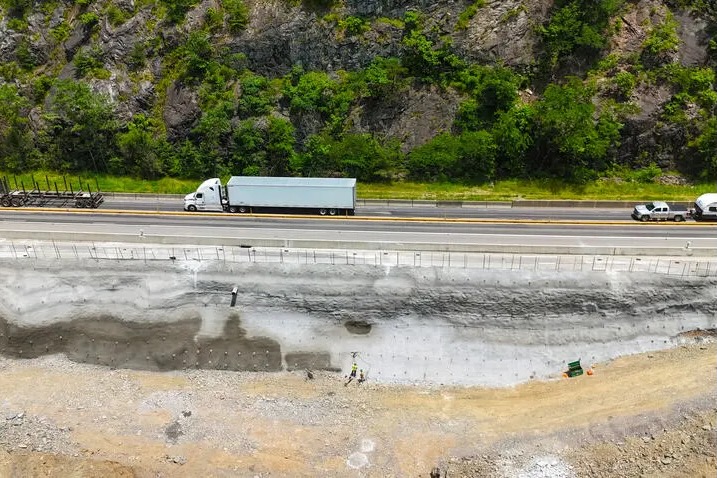
Geotechnical contractor Keller reported first-half 2026 revenue up 11% to £1,608m and underlying operating profit up 17.1% to £117.9m, driven by record North American volumes. Strong demand from interstate infrastructure and hyperscale data centre foundations, including an expanded ground engineering contract on the I-40 corridor, pushed the order book to a record £1.9bn, up from £1.6bn year-on-year. Margin and profit growth were strongest in the Middle East, and management signalled confidence in meeting recently upgraded full-year expectations.
Network Rail has begun a £3.6M restoration of the historic Avon Viaduct near Linlithgow, a key masonry rail structure on the Edinburgh–Glasgow main line. Works are expected to focus on repairing weathered stonework, repointing mortar joints and upgrading drainage to manage water ingress through the multi-span arches. For geotechnical and structural teams, access planning, scaffold foundations in the river corridor and careful load management under live rail traffic will be central to construction methodology.
HS2 Ltd has confirmed it has “successfully” renegotiated two main works civil engineering contracts as part of its programme-wide reset of Phase One delivery. The revised deals affect major earthworks, viaducts and tunnelling packages on the central section, where contractors have been grappling with inflation, changing scope and complex ground conditions. Engineers should expect rebaselined construction schedules, tighter cost controls and potential redesign or resequencing of key assets such as cuttings, embankments and bored tunnels.
Judges have refused campaigners permission to appeal the High Court decision backing Gatwick Airport’s plans to convert its existing northern runway into a routine second runway. The ruling leaves in place development consent for reconfiguring the 2,565m standby strip to allow dual-runway operations alongside the 3,316m main runway, increasing declared capacity without building a new strip. For civil and geotechnical teams, the decision clears a major legal hurdle for associated taxiway works, pavement strengthening, and airfield infrastructure upgrades.
Fresnillo nearly tripled first-half profit as a 74.7% revenue jump to $3.38 billion from stronger realised gold and silver prices outweighed lower grades and volumes, enabling a higher interim dividend of $0.43 per share and funding for the Probe Gold acquisition completed in January. Attributable silver output, including Silverstream, fell 11.4% to 22 million oz and gold production dropped 7.3% to 290,900 oz, hit by lower grades at Saucito, Juanicipio, Herradura and a fissure in a ball mill at Dynamic Leaching Plant I. For 2026, Fresnillo guides silver production at 42–46.5 million oz, gold at 500,000–550,000 oz, with capex cut to $500–$550 million and exploration around $260 million.
Kavango Resources has begun commissioning a 50‑tonne‑per‑day proof‑of‑concept gold processing plant at its Hillside project in Zimbabwe, with material already running through crushing, milling, gravity concentration and carbon‑in‑leach (CIL) circuits since 1 July. Between 18 and 28 July the plant averaged 69% capacity utilisation, with testwork confirming successful gold adsorption in the CIL circuit and expected commercial recoveries of 90–93%. An on-site laboratory with bottle roll, fire assay and atomic absorption spectrometer capability will support flowsheet optimisation ahead of scaling beyond the current 33,900 oz at 2.68 g/t JORC resource at Bill’s Luck Underground.
Startup Hades has secured a July 31 exploration licence over 28.4 sq. km at the Storkwitz rare earth project in Saxony, giving Germany direct access to its only known rare earth deposit, historically estimated at about 38,000 tonnes of rare earth oxides and 8,000 tonnes of niobium pentoxide. The Munich-based firm plans to deploy its proprietary Cerberus laser drilling system, targeting drilling cost reductions of more than 50% versus conventional rigs, and will test in-situ recovery as an alternative to open-pit mining. Backed by €20 million in venture funding, Hades aims to build a vertically integrated European critical raw materials business aligned with the EU Critical Raw Materials Act.
War-fractured Myanmar has become the world’s largest supplier of heavy rare earths, with Chinese companies running largely unregulated in-situ leaching operations in autonomous border regions such as Kachin and eastern Shan, guarded by ethnic armies including the United Wa State Army. Workers like “Min” are paid about 3,000 yuan (£330) per month for roadbuilding and pit work on steep slopes, amid frequent fatal landslides and exposure to toxic lixiviants that have poisoned rivers and farmland. Ore is trucked into China, mixed with other feedstocks and effectively laundered into global supply chains for EVs, wind turbines and advanced weapons, while revenues fund more than 1,200 armed groups in an already fragmented civil war.
A newly identified tungsten deposit at 3 Proton Lithium’s Railroad Valley Minerals project in Nevada hosts an inferred 1.78 million tonnes of tungsten, with an estimated in-situ value of $152 billion, but a NASA-driven federal land withdrawal is blocking exploration on roughly 17 square miles—about one-third of the claims. NASA uses the flat desert site to calibrate satellite instruments and verify signals, and the Bureau of Land Management formally withdrew the area from mining in 2023. Despite FAST‑41 permitting status and tungsten prices up nearly 600% since early 2025, analysts see first production at least five years away even if access is restored.
LBMA has suspended Shandong Gold Smelting Co. Ltd from its Gold and Silver Good Delivery Lists from 5 August after the Chinese refiner was placed on the US Uyghur Forced Labor Prevention Act Entity List. The London-based association has triggered an incident review under its Good Delivery Rules and Responsible Sourcing Programme, describing the suspension as an interim measure while it consults multiple stakeholders. Loss of Good Delivery status can restrict access to London bullion clearing and pricing, forcing counterparties to reassess sourcing, chain-of-custody controls and contractual compliance.