Japan 7.7 offshore earthquake: tsunami defence lessons for coastal engineers
Reviewed by Tom Sullivan
First reported on Geoengineer.org – News
30 Second Briefing
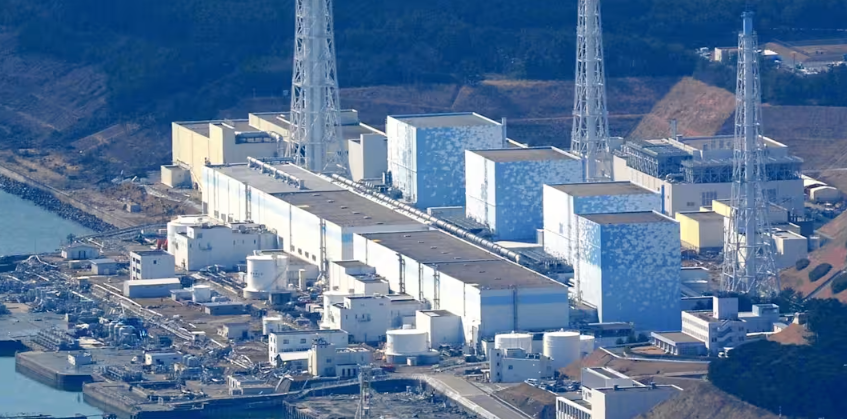
A magnitude 7.7 offshore earthquake struck northern Japan on 20 April 2026, generating initial tsunami waves up to 0.8 m and triggering warnings for possible 3 m run-up along the Pacific coast, rapid evacuations and temporary suspension of Shinkansen sections due to power loss. Inspections at Fukushima Daiichi and Fukushima Daini confirmed no operational abnormalities, with vertical evacuation routes enabling staff to move from seawall zones to elevated safe areas within minutes. For geotechnical and coastal engineers, the event tests post-2011 Tohoku upgrades, exposing ongoing overtopping risk and the need for conservative coastal defence design, redundant power and tightly integrated tsunami warning links.
Technical Brief
- Maritime operators shifted vessels to deeper water to reduce mooring failure and port-structure impact loads.
- Vertical evacuation routes at the Fukushima sites are configured from seawall operations areas to pre‑designated elevated refuges.
- For coastal and nuclear facilities globally, the event reinforces integrating vertical egress, redundant power and tsunami‑linked alarms into layouts.
Our Take
The presence of both iron and copper in the keyword set ties this event into a wider body of pieces on critical infrastructure and power systems, signalling that ports, refineries and transmission networks along the northeastern Japanese coastline should be stress‑tested for concurrent seismic and tsunami loading as part of asset integrity planning.
Past coverage of megaquake and tsunami simulations for regions like Kamchatka, Alaska and Crete in our Hazards category suggests operators in Fukushima and along Japan’s Pacific coastline can draw directly on cross‑regional scenario modelling to refine evacuation, shutdown and restart protocols for high‑risk facilities such as nuclear plants and major industrial hubs.
Prepared by collating external sources, AI-assisted tools, and Geomechanics.io’s proprietary mining database, then reviewed for technical accuracy & edited by our geotechnical team.
Related Articles

Related Industries & Products
Mining
Geotechnical software solutions for mining operations including CMRR analysis, hydrogeological testing, and data management.
Construction
Quality control software for construction companies with material testing, batch tracking, and compliance management.
CMRR-io
Streamline coal mine roof stability assessments with our cloud-based CMRR software featuring automated calculations, multi-scenario analysis, and collaborative workflows.
HYDROGEO-io
Comprehensive hydrogeological testing platform for managing, analysing, and reporting on packer tests, lugeon values, and hydraulic conductivity assessments.
GEODB-io
Centralised geotechnical data management solution for storing, accessing, and analysing all your site investigation and material testing data.