Geomechanics, Streamlined.
© 2026 Geomechanics.io. All rights reserved.
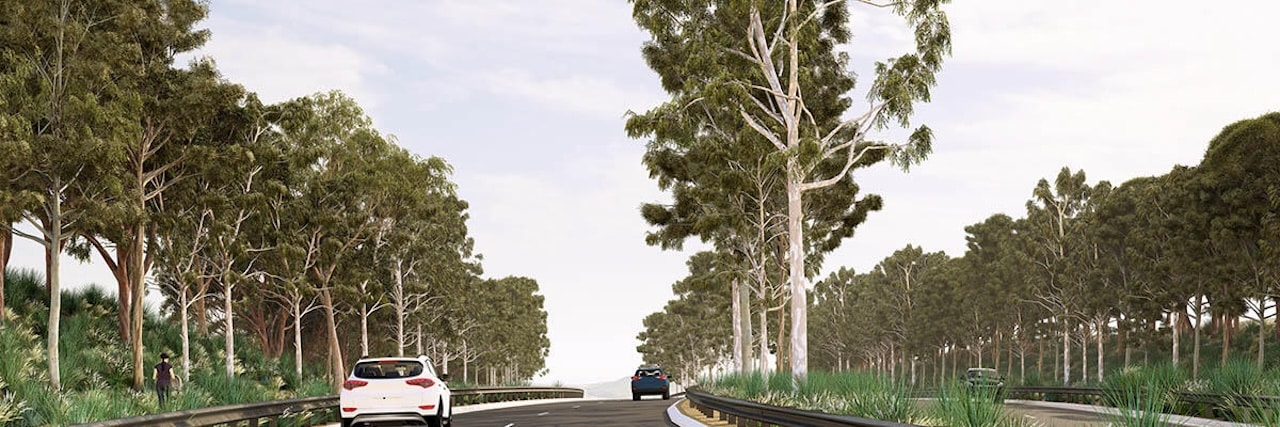
The Federal and New South Wales governments have released the proposed design for Spring Farm Parkway Stage Two, a three‑kilometre, four‑lane arterial that will complete the east–west link between Menangle Park and Spring Farm in Sydney’s southwest. The new section will connect directly with the already‑operational Stage One, opened to traffic in August 2024, creating a continuous corridor intended to cut local travel times and redistribute traffic from existing constrained routes. For designers and contractors, the scheme signals upcoming packages around earthworks, pavement, drainage and intersection tie‑ins on a greenfield suburban alignment.
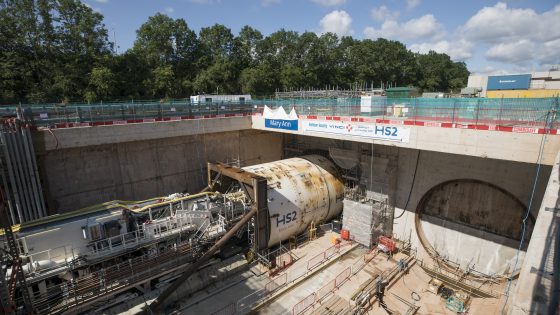
HS2 Ltd has appointed former Transpennine Route Upgrade (TRU) director Neil Holm as its new chief programme officer, bringing experience from a multi‑billion‑pound, 76-mile rail corridor modernisation involving major electrification, re-signalling and capacity upgrades. Holm previously oversaw complex works on constrained brownfield alignments, including track quadrupling, new overhead line equipment and major station remodelling between Manchester, Leeds and York. His move signals HS2’s focus on delivery discipline across long linear worksites, high-output rail systems installation and integration of civils, track and systems on a live national network.
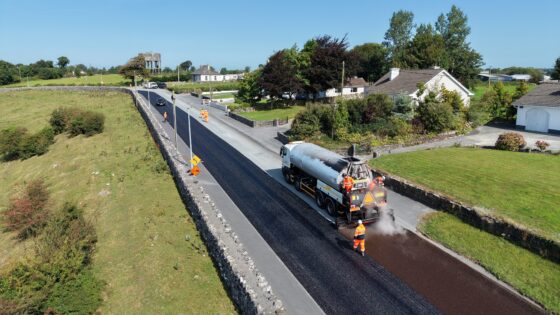
Kiely Group has entered the Irish infrastructure market after completing its first contract in Tuam Municipal District, County Galway, marking a return to founder Michael Kiely’s home region. The firm, which has UK experience in highways maintenance and term service contracts, is expected to target local authority frameworks and road asset management work across the west of Ireland. For contractors and consultants, the move signals additional competition for minor works, resurfacing and maintenance packages in a county with ageing regional road networks.
Redpath Africa Limited has completed equipping Northam Platinum’s No. 3 Men and Material Shaft at the Zondereinde Western Expansion Project in South Africa to a depth of 1,430 m, providing full personnel, material and services conveyance. The vertical system includes men-and-material cages, service compartments and associated shaft steelwork, enabling direct access to the Western Extension orebody rather than relying on declining ramps. For mine planners and shaft engineers, the completed equipping phase marks the transition to production-focused hoisting design, scheduling and maintenance strategies at depth.
Tonly Heavy Industries has presented its 70 t-class DTE95 battery electric wide-body dump truck at Steinexpo 2026 in the MHI basalt quarry at Homberg, Germany, signalling a push into the European quarrying and mining market. The Xi’an-based OEM is targeting quarry haulage with a fully electric platform rather than diesel–electric hybrids, positioning the DTE95 for short, repeatable cycles typical of basalt and aggregate operations. For mine planners, the key question will be matching truck duty cycles and charging infrastructure to existing pit layouts and power availability.
Barloworld has signed a distribution agreement with German OEM Hermann Paus Maschinenfabrik at Electra Mining Africa 2026 in Nasrec, Johannesburg, adding PAUS’s specialised underground mining vehicles to its portfolio. The deal covers Barloworld’s territories of South Africa, Eswatini (Swaziland), Botswana, Lesotho, Malawi, Mozambique, Zambia, Angola and Zimbabwe, significantly widening regional access to PAUS equipment. For mine operators, this brings local sales and support for niche underground fleets, reducing import lead times and simplifying maintenance logistics across multiple Southern African jurisdictions.
Kal Tire’s Mining Tire Group has secured independent ISO verification for the carbon footprint methodology underpinning its KalPRO Maple Program, which quantifies emissions savings from tyre management and retreading. The verification confirms that reported carbon reductions are calculated using recognised greenhouse gas accounting principles, giving mine operators stronger assurance when comparing Maple Program outcomes with Scope 1 and 3 inventories. For geotechnical and mining teams, this supports more defensible LCA inputs when evaluating haulage fleet tyre strategies and decarbonisation projects.
Ferreyros has delivered Peru’s 1,000th Caterpillar mining truck, a 410 short ton (372 t) payload Cat 798, to Compañía Minera Antamina for use at its copper-zinc operation at around 4,300 m elevation. The ultra-class truck will operate in high-altitude, low-oxygen conditions that challenge engine performance, tyre behaviour and haul road design, demanding close attention to cooling systems, fuel management and braking. For mine planners, the additional 372 t unit affects fleet dispatch, ramp geometry and crusher feed scheduling at one of Peru’s largest open pits.
Frost & Sullivan has ranked Jinan-based LGMG as the global number one by annual sales volume of off-highway wide-body dump trucks for 10 consecutive years from 2016 to 2025. The consultancy used multidimensional, long-term data tracking across the global rigid and wide-body dump truck market to validate LGMG’s position. For mine operators, the finding signals continued strong field penetration of LGMG haul trucks, which may influence fleet standardisation, parts availability and competitive pricing against established rigid-frame OEMs.
Weir has secured an order to supply two ENDURON® high-pressure grinding rolls (HPGRs) to Zijin Mining’s Golden Ridge operation at the Akyem gold mine in Ghana, as part of a brownfield optimisation of the existing comminution circuit. The HPGRs will be integrated into a flowsheet currently based on a conventional SAG and ball mill configuration that is struggling with higher ore competency. The move signals a shift towards more energy-efficient, dry grinding technology to debottleneck throughput and cut operating costs in a mature West African gold plant.
North America’s push to meet 2027 DFARS bans on Chinese-origin rare earth magnets is colliding with mine development timelines that can exceed 30 years from discovery to production, with 30–40% of that spent on PEAs, prefeasibility, feasibility and detailed engineering. AiMinr CEO Dr Ari Rostami argues the bottleneck lies in labour‑intensive, sequential study workflows, where changes in geology, mine design or prices can force months or years of rework across geotechnical, metallurgy, hydrology and financial models. AiMinr’s cloud platform links more than 50 AI agents via a central “orchestrated engine” to run these disciplines in parallel using deterministic algorithms, aiming to compress engineering phases from decades to years or even months.
Brazil’s Senate has approved a National Policy for Critical and Strategic Minerals, creating a presidential council empowered to review changes in control of companies holding critical mineral rights, scrutinise foreign influence and tie exports to value‑addition and processing commitments. The move comes as USA Rare Earth’s US$2.8 billion acquisition of Serra Verde and its 15‑year offtake of mixed rare earth carbonate, plus Australian‑backed projects like Viridis’ Colossus ionic‑adsorption clay deposit, position Brazil as a key rare earths supplier. Incentives include a 2‑billion real mineral guarantee fund and up to 5 billion reais in tax credits over five years for processing and transformation plants.
ACG Metals has agreed to acquire 100% of the 666-hectare Keşkek gold project in Türkiye from Meta Nikel Kobalt for over $7 million, with $4 million paid upfront and $3.85 million due in mid-2027 on first gold production. Located 70 km from ACG’s Gediktepe copper-gold mine and already linked by ore haulage infrastructure, Keşkek will supply oxide ore to the existing heap-leach plant, which is achieving about 85% gold recovery. ACG expects Keşkek to extend Gediktepe’s life and potentially double copper-equivalent output from 20,000 t/y to 40,000 t/y while its new flotation facility ramps up copper and zinc concentrate production.
BHP has awarded Worley study and EPCM contracts for planned expansion projects at the Olympic Dam underground copper-uranium mine and the Carrapateena sub-level cave operation in South Australia, both still subject to BHP final investment decisions. The work covers front-end studies through detailed engineering, procurement and construction management to support BHP’s Copper South Australia growth strategy. For geotechnical and mining teams, the contracts signal upcoming demand for cave design optimisation, shaft and materials handling upgrades, and brownfield integration around existing underground infrastructure.
Metso will supply the first commercial-scale DRI Smelting Furnace plant to Eti Bakir’s Mazidagi integrated fertiliser and metal complex in Türkiye, targeting higher metal recovery from leach residues. The major order covers furnace technology, associated process equipment and engineering, building on Metso’s existing partnership with Eti Bakir at the site. By treating leach residue in a dedicated smelting line rather than stockpiling or conventional disposal, the project aims to recover additional metal units and cut the operation’s overall environmental footprint.
Voith is launching its PowerDrive Mining electrified conveyor drive system at Electra Mining Africa 2026, held at the Johannesburg Expo Centre, Nasrec, from 7–11 September 2026. The package combines an electric conveyor drive with an integrated control solution, supplied as a fully coordinated system rather than separate components. Voith is pitching the system as a cost‑attractive alternative to conventional conveyor drive trains, targeting large overland and plant conveyors where harmonised drive and control design can reduce lifecycle and integration costs.
Tunnelling for Victoria’s Suburban Rail Loop East has started on schedule, with 137-metre-long Tunnel Boring Machine (TBM) Alice now driving the first twin tunnel from Burwood towards Glen Waverley. Sister TBM Hacia is fully assembled in the launch shaft and will begin excavating the parallel bore within weeks, using an “umbilical” power and services connection rather than a traditional trailing gantry. Early progress will set baseline advance rates, settlement performance and segment lining behaviour for subsequent SRL drives under Melbourne’s eastern suburbs.
Victoria will invest $550 million to upgrade the Western Freeway, adding about 30 kilometres of new lanes and widening key sections to three lanes in each direction between Melbourne’s western suburbs and regional centres. The works include multiple interchange upgrades along this corridor, targeting high-congestion nodes that currently constrain peak-hour throughput. For civil and pavement engineers, the scale implies major asphalt and subgrade strengthening, drainage adjustments and bridge/overpass modifications to accommodate the extra lanes and higher design traffic volumes.
Brightstar Resources has reported a record intercept at its Sandstone gold project in Western Australia, with one metre at 751g/t gold within a broader 7m interval grading 119g/t from 199m depth in reverse-circulation hole BORC26036 at the Bull Oak deposit. The ultra-high-grade shoot at ~200m vertical depth suggests strong potential for underground mining scenarios and tighter drill spacing to define continuity. Geotechnical and mine planning teams will now need to assess ground conditions around the high-grade zone and optimise stope designs and support for narrow, very high-grade veins.
Drilling at Focus Minerals’ Green Light deposit within the Coolgardie Gold Project in Western Australia has returned high-grade intercepts, including 3m at 30.48g/t gold, from 114 reverse circulation infill holes. The programme is aimed at defining an open-pit resource, tightening drill spacing to upgrade existing mineralisation and improve confidence in near-surface ounces. Results will feed into revised pit shell optimisation and mine scheduling, with potential to bring additional shallow ore into an early production phase.
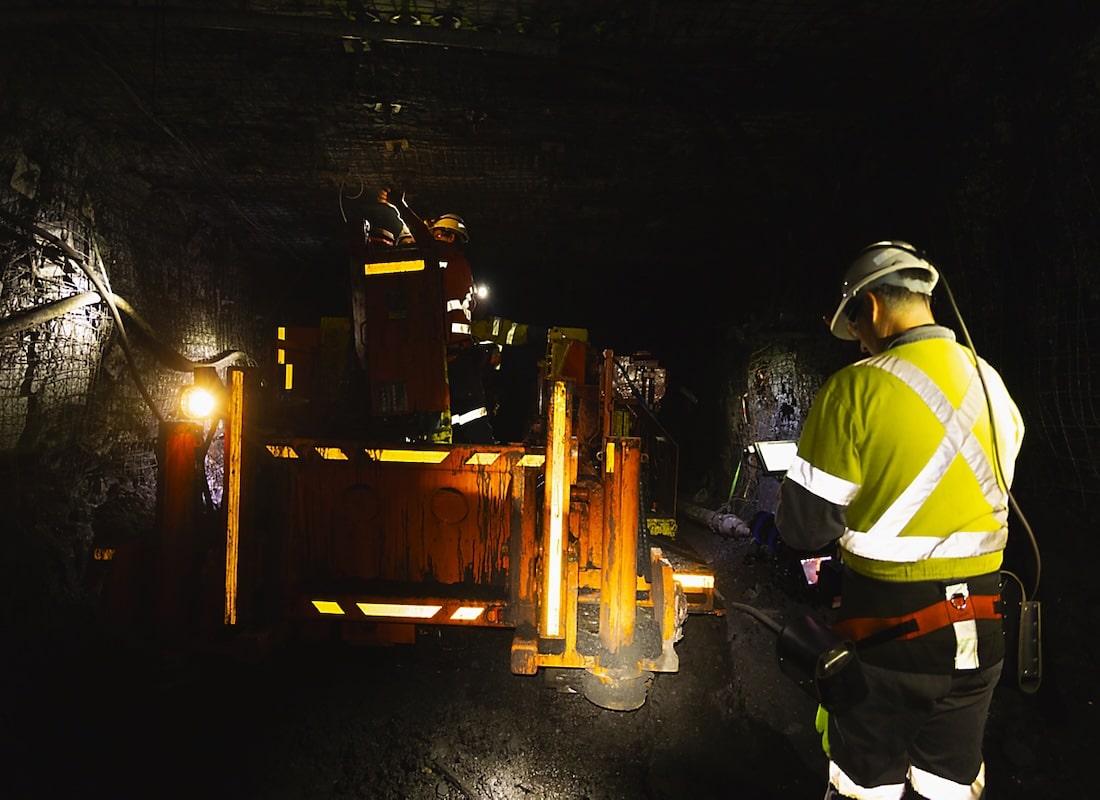
Komatsu is rolling out data-driven maintenance for underground fleets, using telemetry from assets such as Joy continuous miners and Z2 jumbo drills to shift from reactive repairs to predictive interventions. Machine health data, including hydraulic pressures, vibration signatures and duty-cycle histories, is streamed into Komatsu’s Uptime Centre, where condition-based alerts trigger planned component change-outs rather than unplanned stoppages. For geomechanics and production teams, higher availability of critical units like bolters and loaders stabilises heading advance rates, simplifies workforce scheduling and reduces exposure to breakdowns in constrained headings.
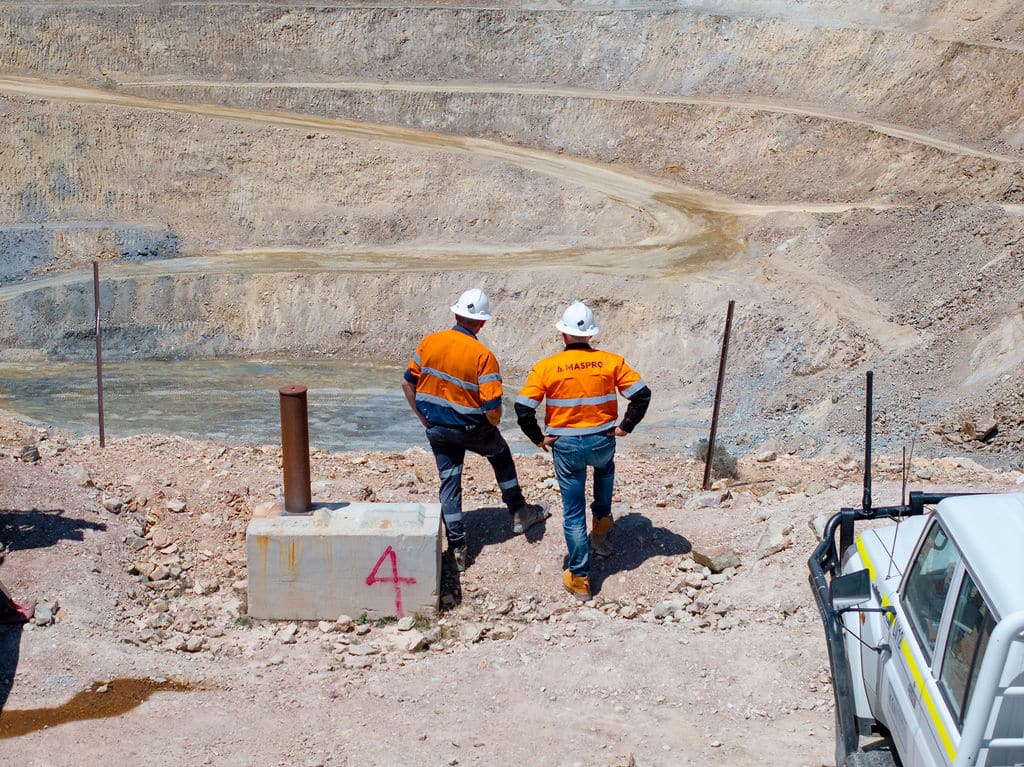
Surface reliability issues in drill rig breakout and rotation systems are being traced less to inadequate material hardness and more to surface engineering and load-path design, according to MASPRO’s field work on high-load components. MASPRO’s engineering team reports premature failures on rigs operating under continuous, shift-by-shift high torque and axial loads, where surface treatments and contact geometries, rather than bulk wear, govern life. For maintenance and design engineers, the findings point to closer scrutiny of surface finish, residual stress and lubrication regimes before simply specifying harder alloys.
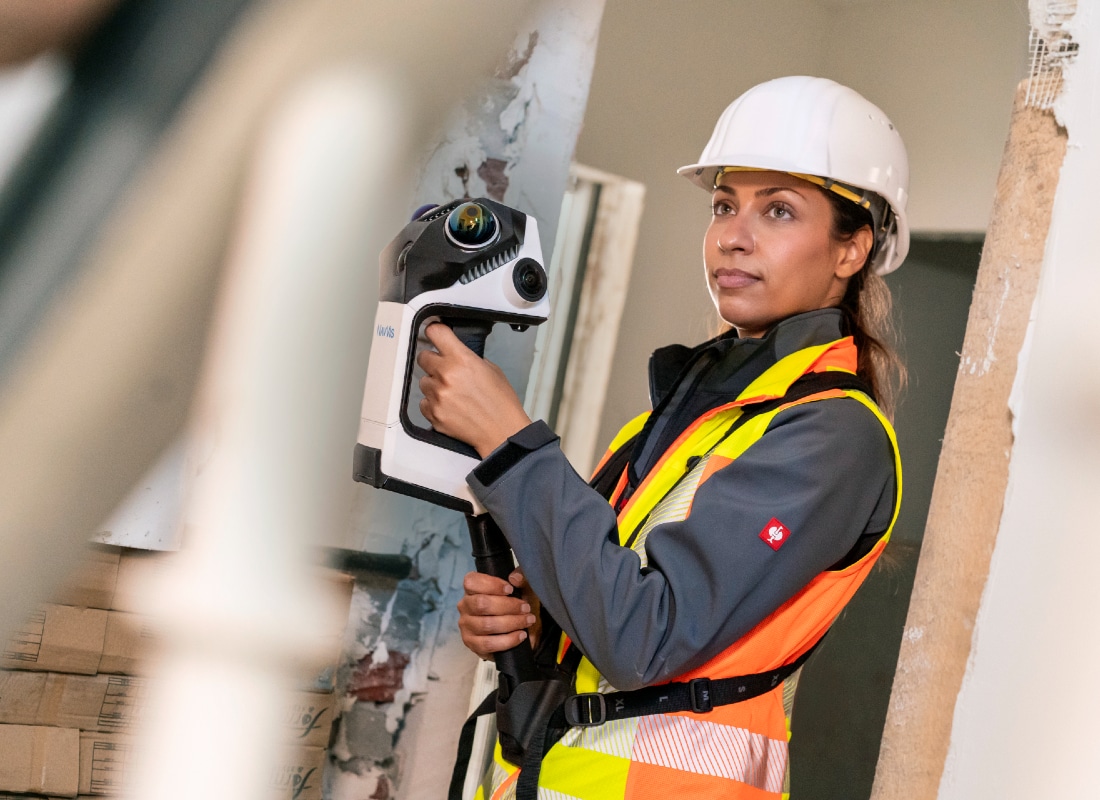
NavVis has launched the NavVis CLX, an agile handheld reality capture device using dual LiDAR architecture to generate clean, low-noise point clouds for high-volume, day-to-day mine and plant documentation. Positioned to complement the backpack-style NavVis VLX and trolley-based NavVis MLX, the CLX is intended for frequent use by non-specialist staff, putting “professional reality capture in every hand”. For mining engineers and survey teams, this points to wider, lower-cost 3D documentation of underground drives, process plants and brownfield modifications without full survey campaigns.
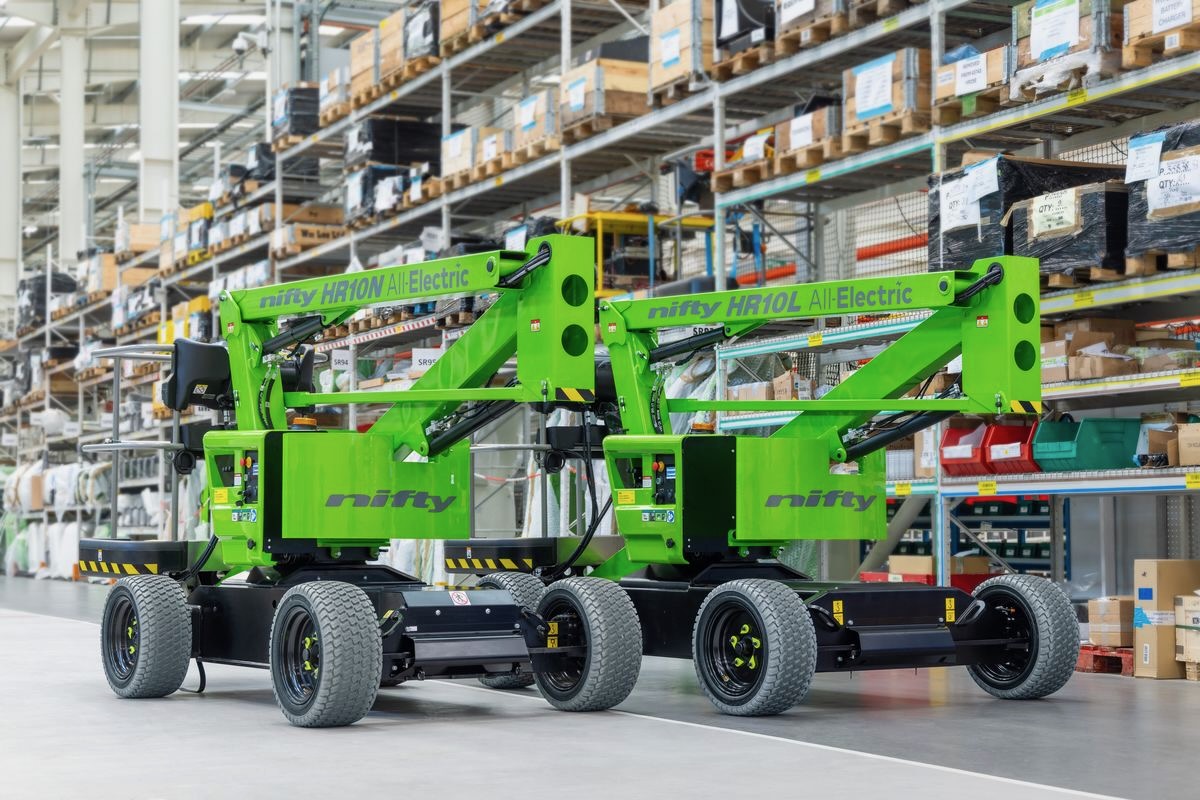
NiftyLift has introduced the HR10NE and HR10LE 10m electric access platforms, offering a 10m working height, 8m platform height and 4.3m outreach from a 1.2m × 0.85m basket, all on a chassis derived from the HR12 family. The HR10NE targets constricted access such as narrow warehouse aisles without adding weight, while the lighter HR10LE is engineered with a maximum point load suitable for raised access floors and other weight‑sensitive slabs. Both units stow below 2.0m at 1.98m and come with SiOPS, ToughCage and Niftylink as standard.