Geomechanics, Streamlined.
© 2026 Geomechanics.io. All rights reserved.
Eric Wright Construction has lifted profit before tax to £3.5m on a reduced £100.7m turnover for 2025, marking a fourth consecutive year of profit growth driven by tighter commercial control and overhead management. The year included completion of a multimillion-pound pharmaceutical development facility for Bristol Myers Squibb, the Lightbody Street scheme for Torus, and the Castlewood care home for Wrightcare, plus a 100‑home Passivhaus project for English Cities Fund and Salix Homes. Framework wins with JV North and Torus and ongoing work for Lancashire County Council, Lancashire Cricket and Lancashire Constabulary underpin the wider Eric Wright Group’s £16.9m pre-tax profit on £298.5m turnover.
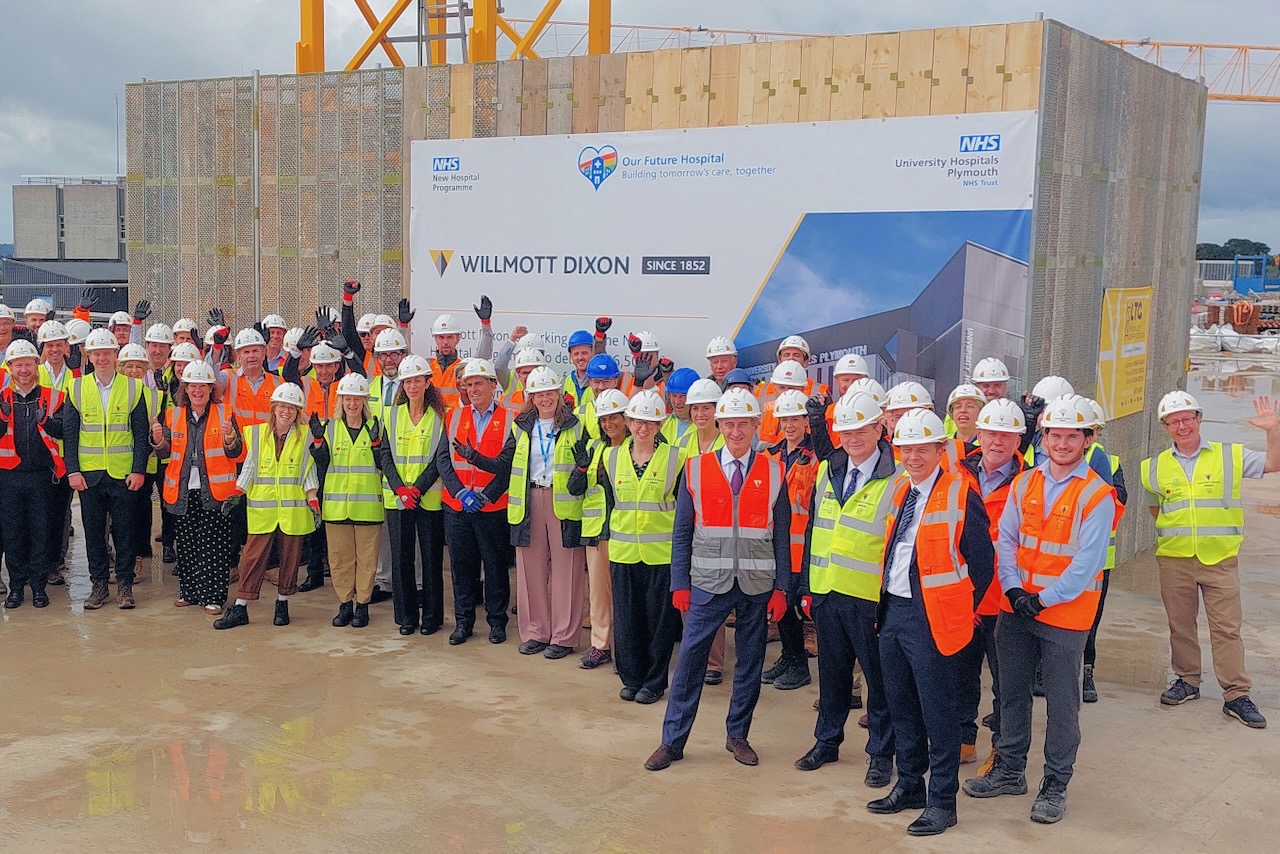
Willmott Dixon has topped out the £140m emergency care building at Derriford Hospital, using 10,900m³ of concrete and 1,900t of recycled steel reinforcement in a frame designed with 55% cement replacement by GGBS, cutting an estimated 1,625t of embodied carbon to date. Due to complete in April 2029, the facility will provide four clinical floors, including an expanded Emergency Department and a reconfigured, dedicated Paediatric Emergency Department. Procured under ProCure23, it is among the first New Hospital Programme projects designed to meet the NHS Net Zero Building Standard.
Construction charity Lighthouse has launched an urgent appeal to raise £200,000 by Christmas after a 51% jump in enquiries and a 65% rise in food deliveries from construction workers and their families. In the first seven months of this year it supported over 6,000 families, delivered more than 8,000 meals and funded over 7,000 counselling sessions via its 24/7 helpline and 1:1 online chat. The charity warns that rising costs of materials, fuel, housing and energy are leaving even full-time site workers unable to cover basic necessities.
Perega has secured its first HS2 commission, providing secondary steelwork design for Severfield on the T‑shaped Old Oak Common station roof, covering purlins, roof and soffit supports, edge details, walkways and brackets for guttering and rainwater chutes. With no penetrations allowed in the primary steel, all fixings must pick up welded tabs and connections on primary members, while blast loading criteria require connections to be weaker than the supporting members, driving highly robust yet sacrificial detailing. Perega is using extensive 3D modelling and IDEA StatiCa, and has redesigned brackets to eliminate box sections, cutting steel tonnage and simplifying maintenance.
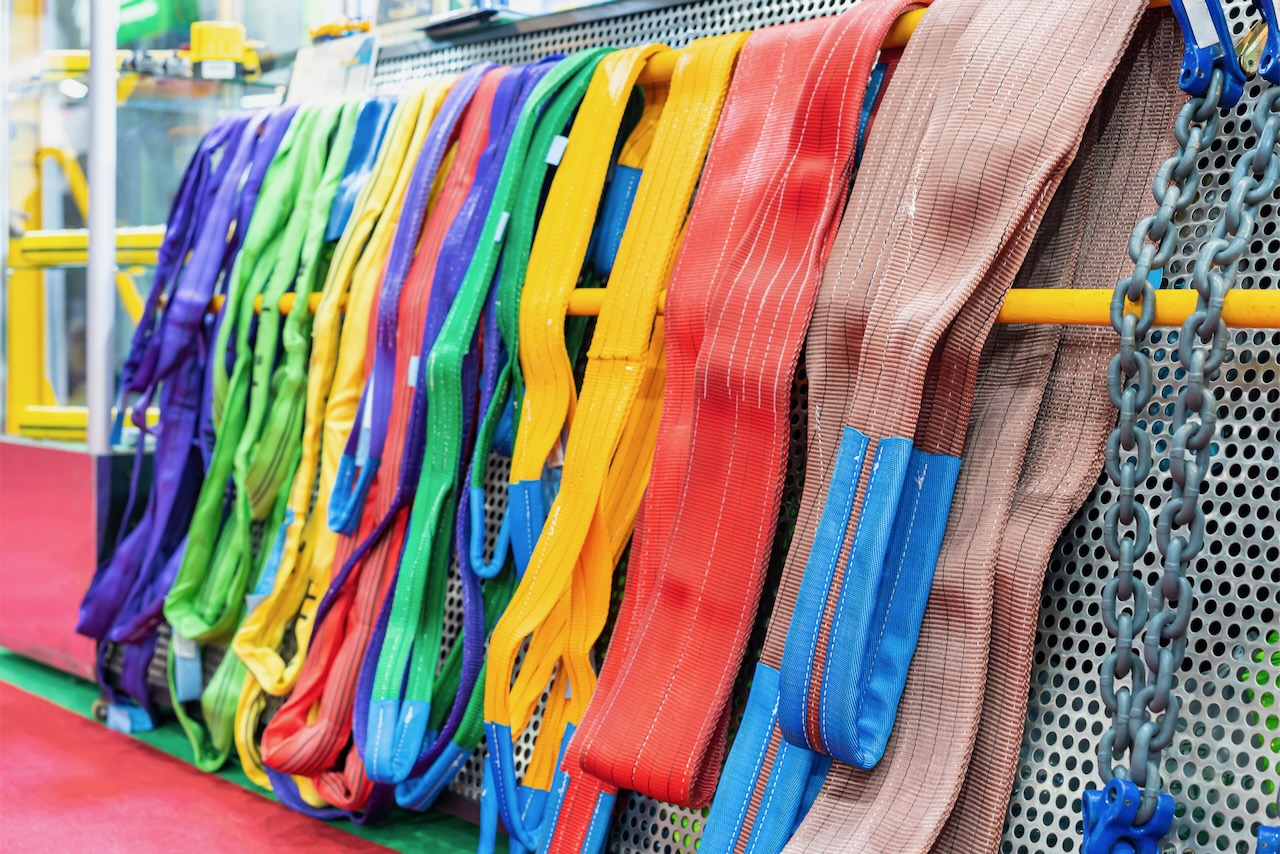
Falcon Group has acquired Robert Harwood Trading (East Anglia) Ltd, trading as RHT Lifting Equipment, adding a 9,000-strong UK and international customer base in lifting and material handling products to its traditionally tower crane-focused operations. RHT will retain its name, with directors Michelle Harwood and Hannah Smith staying on to drive expansion while integrating Falcon’s lifting gear division and both firms’ manufacturer relationships into a single group company. The deal expands product range, strengthens purchasing power and deepens Falcon’s position in the UK lifting equipment supply chain.
Creditors have approved Company Voluntary Arrangements for seven firms in the Ardmore group, allowing an orderly wind-down of contracting operations rather than immediate liquidation. The group will exit construction contracting and concentrate on activities expected to generate higher recoveries for secured and unsecured creditors. Contractors, subcontractors and suppliers now face counterparty risk on existing Ardmore projects and should review payment exposure, retention sums and bond arrangements on live infrastructure and building contracts.
Winvic Construction has been appointed by Durham County Council to design the Witton-le-Wear Bridge scheme on the A68, a key north–south arterial route carrying strategic traffic through County Durham. The commission covers full bridge design and associated highway tie-ins, drainage and earthworks, with Winvic expected to address river crossing constraints and maintain A68 traffic capacity during construction. For geotechnical and structural teams, early involvement signals upcoming demand for foundation investigations, hydraulic modelling and detailed assessment of existing approach embankment stability.
The West Highland Line between Glasgow and Mallaig/Oban will shut for nine days in November while Network Rail delivers a £13M package of track and asset renewals to improve reliability and resilience on the single‑track rural route. Works are expected to focus on replacing life‑expired rail and sleepers, targeted ballast and formation interventions, and drainage upgrades at known wet spots vulnerable to washout. The closure will compress disruptive possessions into a single blockade, affecting passenger and freight services that rely on limited diversion options in the Highlands.
Galliford Try’s environment business has secured a £110M contract from Severn Trent Water to deliver the River Mease improvement project, targeting water quality upgrades on the protected River Mease catchment in the Midlands. Works are expected to centre on wastewater treatment enhancements, sewer network upgrades and nature-based solutions to cut nutrient loading into this Special Area of Conservation. The scale of the programme signals significant opportunities for geotechnical input on riverbank stabilisation, outfall structures and construction in sensitive, high-groundwater environments.
A new £23M eastern entrance to Bristol Temple Meads station is scheduled to open at 16:00 today, creating a direct link to the Temple Quarter regeneration area. Delivered as part of the wider station upgrade, the entrance is designed to relieve pressure on the historic main concourse and shorten walking routes from new commercial and residential developments. For civil and rail engineers, the scheme signals further staged works around the Grade I-listed structure, with future packages likely to focus on capacity, accessibility and interchange layouts.
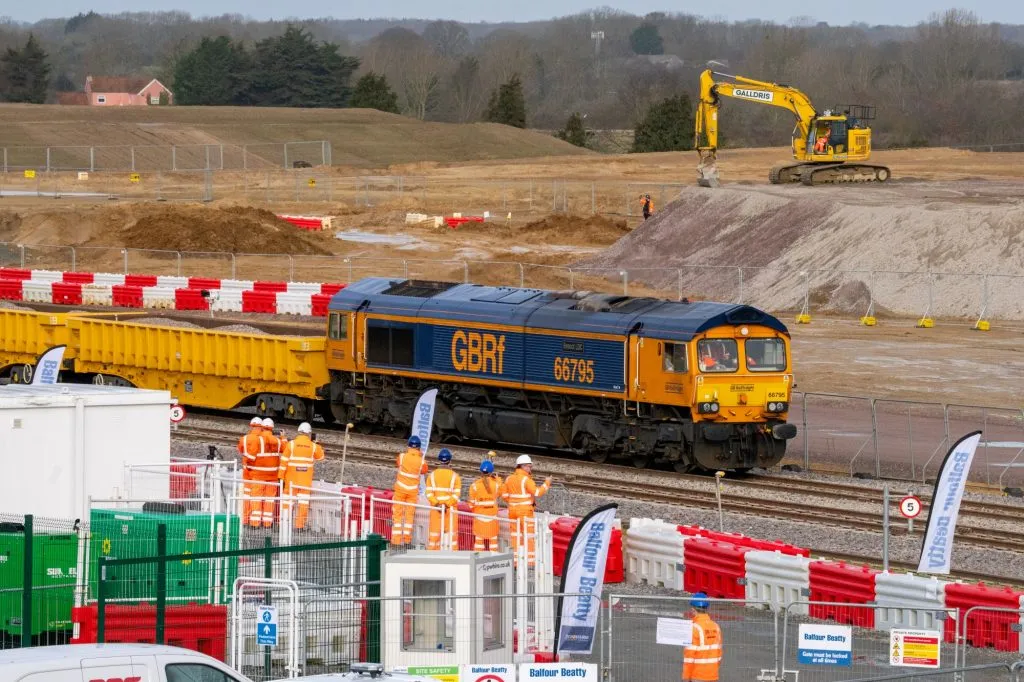
Saxmundham rail junction on Suffolk’s single‑track East Suffolk line will undergo major renewal this autumn to handle heavy construction freight for the Sizewell C nuclear project. Network Rail is preparing the junction for regular aggregates and concrete trains delivering bulk materials to the Leiston branch, where existing turnouts and signalling are nearing life expiry. The works are aimed at improving route resilience and timetable reliability before high-axle‑load freight paths are introduced on what is currently a predominantly passenger corridor.
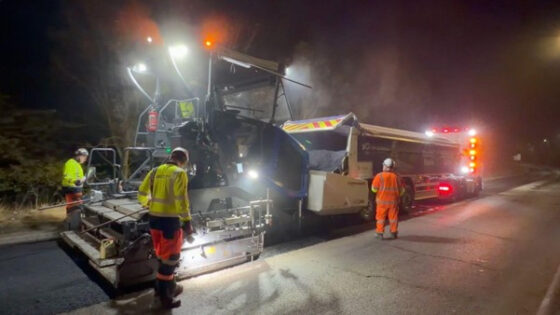
Eurovia Surfacing has run what it claims is the UK’s first operational trial of a fully electric highway‑class asphalt paver, using a Dynapac SD25 80C e on an overnight resurfacing shift on the A128 Tilbury Road in Brentwood, Essex. The battery‑powered paver completed a full night’s work at highway output without on‑site charging, signalling that EV plant can now match conventional pavers for shift duration on typical UK resurfacing schemes. Contractors will need to factor grid capacity, depot charging and noise advantages into future plant selection and traffic management planning.
Revisions to England’s National Planning Policy Framework tighten requirements on flood risk assessment and sustainable drainage for new developments, but drainage specialists warn they cannot match the statutory control offered by implementing Schedule 3 of the Flood and Water Management Act. The updated NPPF strengthens policy wording on SuDS, runoff management and surface water exceedance routing, yet still relies on local planning authorities’ capacity and variable guidance. Practitioners are cautioned that, without Schedule 3’s mandatory approval bodies and adoption duties, long-term performance and maintenance of SuDS assets remain uncertain.
Reports that the UK government is poised to approve the Jackdaw gas field for a second time signal renewed activity in the mature North Sea basin due east of Aberdeen. The project, delayed for years by legal challenges, would require new offshore production infrastructure tied into existing pipelines and onshore processing capacity, with implications for subsea routing, platform foundations and corrosion management in a high-salinity, high-fatigue marine environment. Civil and geotechnical teams should prepare for accelerated design and permitting once formal consent is issued.
UK construction output contracted again in August as the S&P Global UK Construction PMI fell further, with the sharpest declines in private housebuilding and residential starts. Commercial and civil engineering work reportedly held up better, but order books for new housing schemes weakened amid tighter financing and planning delays. Contractors may need to rephase labour and plant allocations, with potential easing of materials demand in housing offset by steadier requirements for infrastructure and non-residential projects over the next 6–12 months.
A £100M upgrade of the A47 in Norfolk is entering its final construction phase, with contractors targeting completion of new dual carriageway sections and junction improvements designed to increase capacity on this key east–west corridor. Works include realigned approaches, additional lanes and upgraded signalised junctions to reduce queuing and collision risk at existing bottlenecks. The scheme is also providing new access roads and serviced plots to unlock adjacent development land for local industrial and commercial use.
Hyva is moving to scale its digital tipping control systems for autonomous mining trucks after deploying its Hyva Smart autonomous tipping solution on XCMG AHS trucks at the Yimin coal mine in Inner Mongolia. The system provides electronic control of the hydraulic tipping cycle, integrating with the truck’s autonomous haulage stack to manage body lifting, lowering and sequencing without driver input. For mine operators, this closes a key automation gap at the dump point, reducing reliance on manual hydraulic actuation and enabling safer, more repeatable tipping in large open-pit fleets.
South American governments are moving to coordinate critical-mineral policy, with Chile, Argentina, Bolivia and Peru signing an Aug. 28 declaration on geology, regulation, suppliers, skills and financing, while Chile and Argentina revive a mining integration treaty that could unlock $20.7 billion and add 540,000 t/y of copper via cross-border projects such as El Pachón. Brazil’s new critical-minerals framework couples about $1 billion in tax incentives and a guarantee fund with tighter scrutiny of foreign partnerships and mining titles to expand refining, battery and magnet production. For engineers and operators, the opportunity lies in large copper, lithium and graphite reserves, but project viability will hinge on permitting timelines, fiscal stability and how far states push downstream value capture.
Vale has shelved the planned IPO of London-based Vale Base Metals Ltd., which holds its global copper, nickel and cobalt assets in Canada, Brazil, Japan, Britain and Indonesia, after political pushback in Brazil over foreign control of strategic mines. The unit, carved out in 2023 and readied for a mid-2026 listing under CEO Shaun Usmar, will remain fully owned as Vale pursues a strategy to double copper output over the next decade. Copper prices are up about 45% year-on-year, roughly four times nickel’s gain, reinforcing the group’s copper-first capital allocation.
Pentagon demand for rare earth magnets is forecast to triple to about 10,000 tonnes a year by 2030, potentially absorbing nearly half of today’s entire non-Chinese output of 20,000–25,000 tonnes in a 250,000‑tonne global market. China still controls 91% of refining and 94% of permanent magnet production, so US-backed projects such as Energy Fuels’ White Mesa expansion (up to US$725 million in conditional support, new dysprosium/terbium circuits by end‑2027) and MP Materials’ US$1.25‑billion 10X magnet complex in Texas focus on fully integrated mine‑to‑magnet chains. Washington is underpinning economics with price floors (US$110/kg for MP’s NdPr), long-term offtakes and a US$1.55‑billion financing package for Brazil’s Serra Verde, signalling that processing and magnet capacity, not ore availability, are the binding constraints.
Central-bank gold buying fell 54% in July to 23 tonnes, with China and Poland adding 20 tonnes and eight tonnes respectively while Russia sold six tonnes, yet bullion still traded above $4,475/oz as investor demand took over. Physically backed gold ETFs saw $3 billion of net inflows in July, adding 23 tonnes to reach 4,068 tonnes of holdings, almost matching net official purchases, with European-listed funds leading a year-to-date $11 billion, 39-tonne increase. For miners, S&P data show grassroots exploration at a record-low share of budgets while near-mine work hits a record high, even as Newmont reports $7.3 billion free cash flow alongside falling 2026 output guidance.
China Baowu Steel Group is weighing the purchase of a 15%–25% stake in BHP’s Jimblebar iron ore mine in Western Australia, which produced about 62.5 million tonnes in fiscal 2026, roughly a quarter of BHP’s iron ore output. The potential deal, sourced from BHP’s 85% holding alongside existing Itochu and Mitsui stakes, would give Baowu direct exposure to ore worth roughly $6.2 billion at current prices from a single Pilbara hub asset. Any transaction will face Australia’s tighter scrutiny of Chinese investment in strategic resources, adding regulatory risk to commercial negotiations.
Market value of the top 50 mining companies jumped by $357 billion in August, taking the group back above $2.5 trillion as gold hit nearly $4,660/oz and copper briefly topped $14,000/t. Gold, silver and royalty stocks contributed $183 billion of the gain, with Newmont and Agnico Eagle each now above $100 billion and AngloGold Ashanti up 41.6% after a 58% Q2 profit rise and a $2 billion buyback. Copper-focused majors surged as Southern Copper temporarily overtook Rio Tinto, BHP’s copper earnings surpassed iron ore, and twelve copper names added $70 billion, while iron ore-exposed Fortescue and Vale lagged.
Silver’s post-January 2026 parabola, which saw prices spike 149% in 3.1 months to an all-time high near $116/oz and a record 144.3% above its 200-day moving average, has been followed by a 52.3% correction that stopped above $55 rather than the 75%+ collapses seen after past manias such as 1980. Despite a one-day 27.5% crash and a mid-July year-to-date drawdown of 21.9%, silver has averaged about $74 in 2026, roughly 117% above the comparable 2025 period. Adam Hamilton argues that this “unsung strength”, plus a bullish falling-wedge pattern and a still-elevated silver/gold ratio, sets up conditions for another substantial bull leg.