Cobre Panamá audit release: environmental compliance lens for project teams
Reviewed by Joe Ashwell
First reported on MINING.com
30 Second Briefing
Panama will publish on Friday a third‑party environmental audit of First Quantum Minerals’ shuttered Cobre Panamá mine, a 350,000‑tonne‑per‑year copper operation that previously generated about 5% of national GDP, to guide President José Raúl Mulino’s decision on its future after the 2023 Supreme Court ruling voided the concession. Environment minister Juan Carlos Navarro and commerce minister Julio Moltó say the extensive report, following six preliminary technical reviews, will be released “with full transparency” and is the only basis for assessing environmental compliance. The move comes as new protests in Panama City, led by Sal de las Redes and Movimiento Independiente Voluntad, oppose any restart amid claims of irreversible environmental damage and debate over an estimated $3.5 billion economic loss since shutdown.
Technical Brief
- Final environmental audit follows six preliminary technical reports and a last-stage verification phase.
- Environment ministry and commerce ministry have jointly pre-approved a “safe management plan” for the suspended site.
- Safe management plan includes environmental preservation measures and phased removal of hazardous materials from Cobre Panamá.
- Government has formally rejected unverified social media claims alleging irreversible damage and skewed economic benefits.
- Only the final third‑party audit is recognised by authorities as evidence of environmental compliance or non-compliance.
- Recent protests in Panama City, organised by Sal de las Redes and Movimiento Independiente Voluntad, directly oppose any restart.
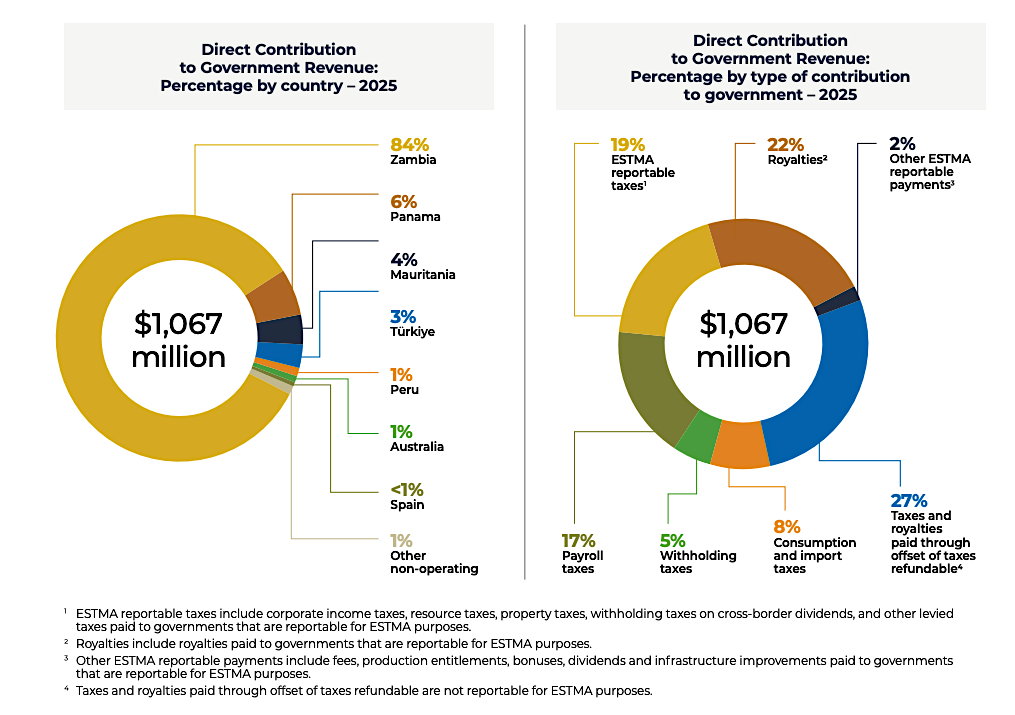
- First Quantum’s own 2025 Tax Transparency and Economic Contributions Report quantifies an estimated US$3.5 billion economic loss since suspension.
Our Take
Our recent coverage of Panama’s 2023 shutdown of Cobre Panamá notes a hit of about 7% to export earnings as well as the 5% of GDP, so the forthcoming audit will effectively determine whether the state prioritises macroeconomic stabilisation or doubles down on the legal and environmental stance that led to the closure.
First Quantum’s Q1 2026 net loss and lower copper output at Sentinel and Kansanshi in Zambia mean the company has less financial headroom; the audit outcome in Panama therefore has outsized leverage over its balance sheet and could influence capital allocation to projects like La Granja in Peru.
With copper and rare earths both flagged in our database as critical minerals, any long-term restriction or reconfiguration of Cobre Panamá would tighten supply options for North American and Asian buyers and likely increase the strategic value of alternative Latin American copper assets in permitting or early development.
Prepared by collating external sources, AI-assisted tools, and Geomechanics.io’s proprietary mining database, then reviewed for technical accuracy & edited by our geotechnical team.
Related Articles


Related Industries & Products
Mining
Geotechnical software solutions for mining operations including CMRR analysis, hydrogeological testing, and data management.
CMRR-io
Streamline coal mine roof stability assessments with our cloud-based CMRR software featuring automated calculations, multi-scenario analysis, and collaborative workflows.
HYDROGEO-io
Comprehensive hydrogeological testing platform for managing, analysing, and reporting on packer tests, lugeon values, and hydraulic conductivity assessments.
GEODB-io
Centralised geotechnical data management solution for storing, accessing, and analysing all your site investigation and material testing data.