Geomechanics, Streamlined.
© 2026 Geomechanics.io. All rights reserved.
Dalcour Maclaren has appointed Mike Kelly as director of growth to integrate its Land & Property, Environment & Planning, Geomatics and Stakeholder Engagement teams into a single project-lifecycle service for energy and infrastructure clients. With more than 30 years’ experience in renewable energy development and consenting major infrastructure, Kelly will focus on early-stage site identification and feasibility, including environmental constraints and planning risk before capital is committed. The move targets complex schemes where land availability, environmental impact assessment and planning requirements must be balanced from project inception.
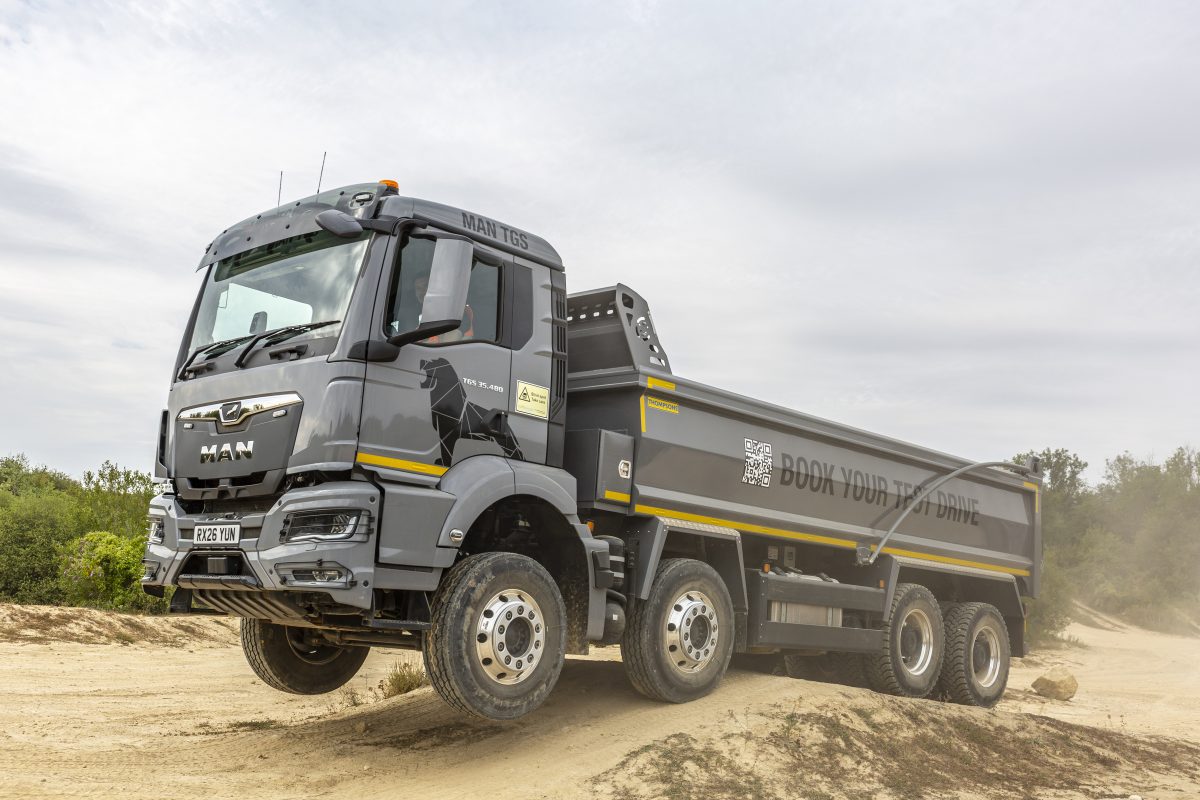
Michelin’s X Works Z2 and D2 315/80 R22.5 tyres are now available as original equipment on selected Man TGS construction trucks and tippers in the UK, offering the first B‑rated steer axle tyre for combined road and site use on fuel efficiency. Internal simulations show up to 10% longer life on steering axles and up to 25% on drive axles versus the previous generation, with a higher 158/150 load index adding 500kg capacity per single tyre position. The tyres are retreadable, feature reinforced sidewalls, 3PMSF winter approval and are compatible with electric trucks, targeting lower whole‑life operating costs.
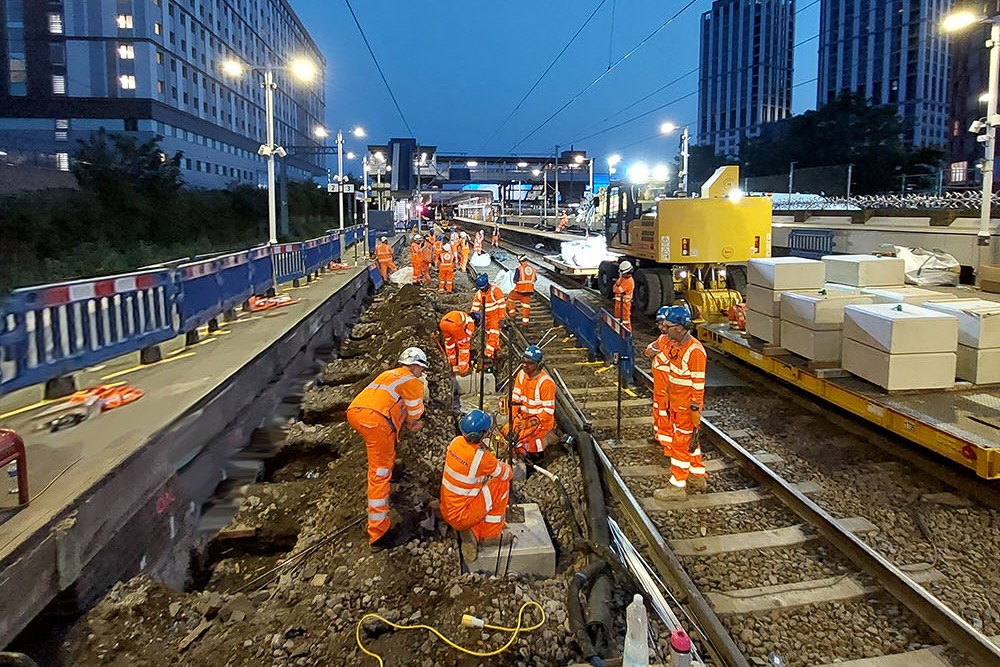
Ground engineer Mainmark UK has used its Teretek engineered resin injection system to improve ground conditions for 77 new foundation locations at Network Rail’s Tottenham Hale station, enabling replacement of deteriorating precast concrete platforms with glass‑reinforced polymer units. Working with tier one contractor CML over a single bank holiday weekend, the team completed the works in three shifts by injecting resin through small‑diameter access points to depths of around 2m, avoiding excavation. The solution densified variable made ground and granular soils, reducing programme risk and construction disruption for the live rail environment.
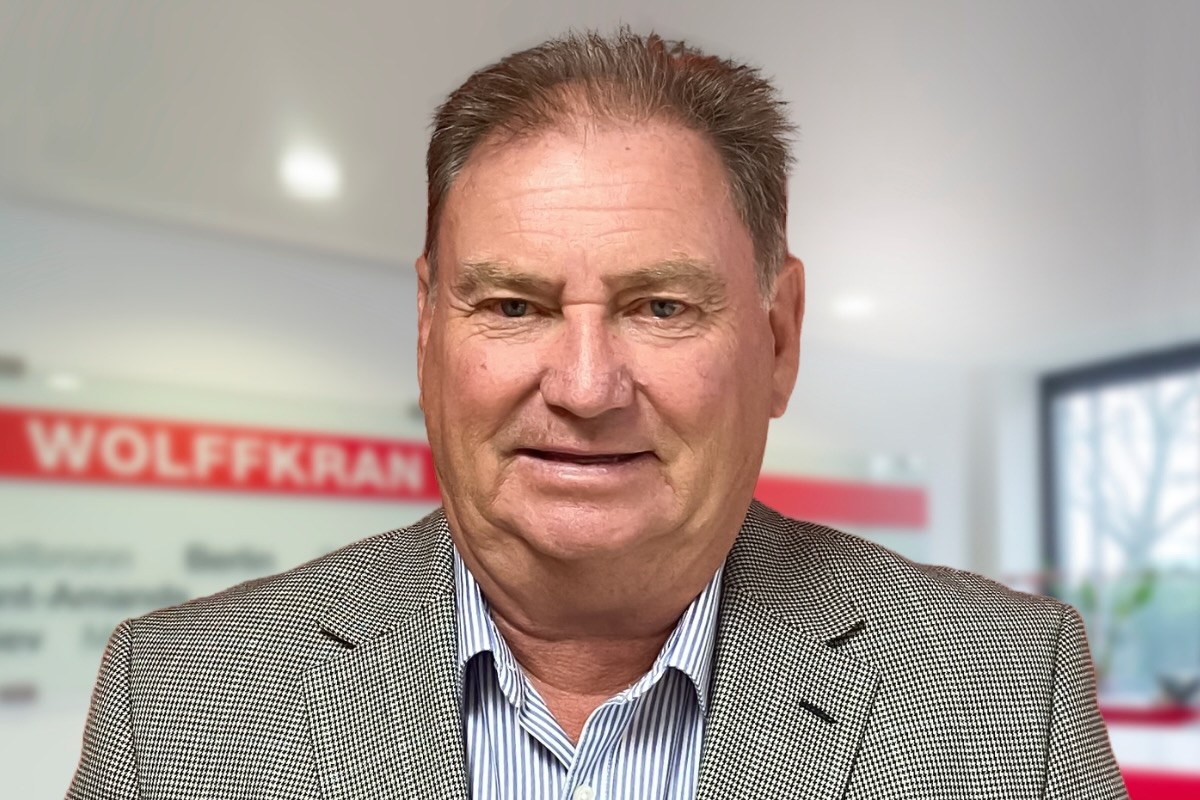
Mark Evans has rejoined Wolffkran as sales director for the UK and Ireland after roles with Terex and Liebherr distributor Armorum and a previous spell as managing director of Wolffkran Arabia. With more than 30 years’ crane industry experience across the UK, Europe and the Middle East, he brings detailed product knowledge of Wolff tower cranes and a strong sales and business development record. His appointment signals a push to expand Wolffkran’s UK tower crane fleet presence and deepen technical support relationships with major contractors and rental operators.
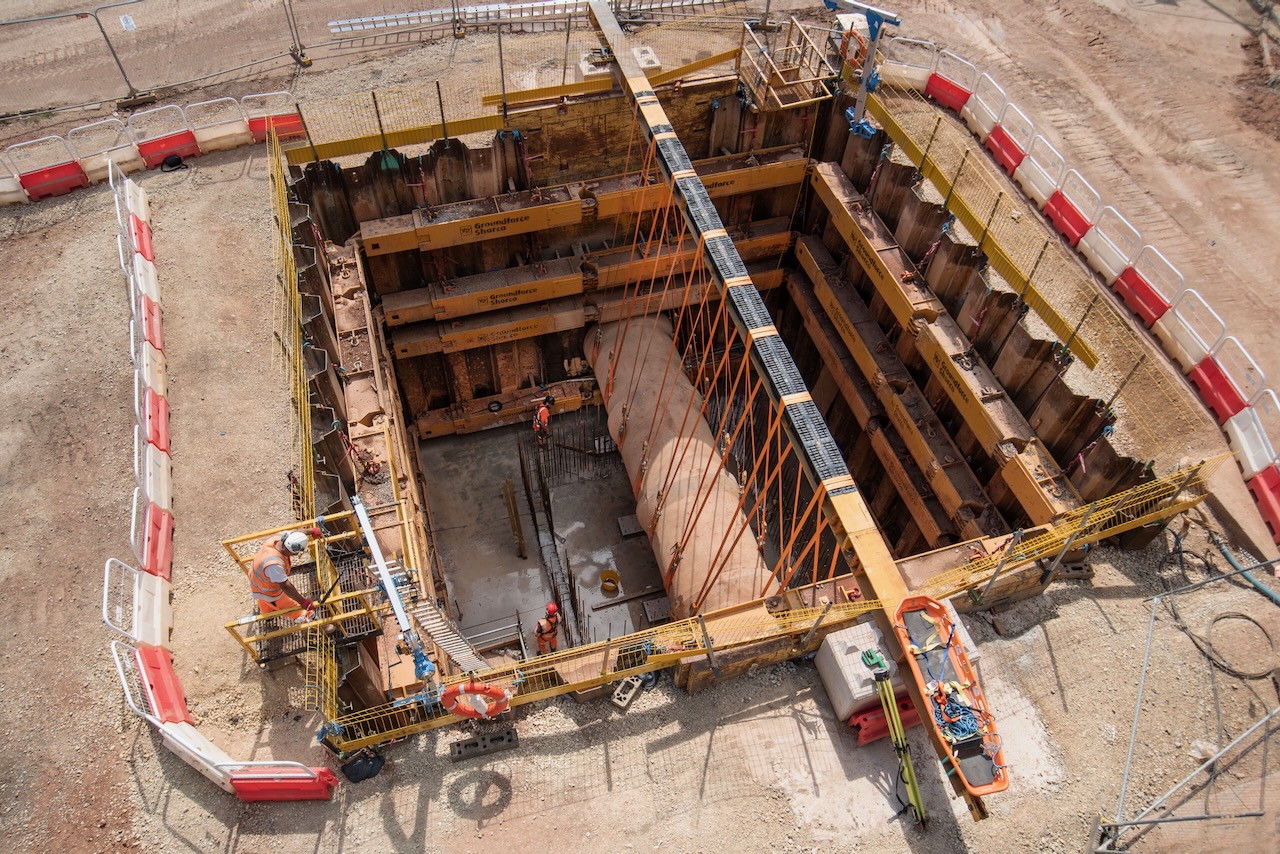
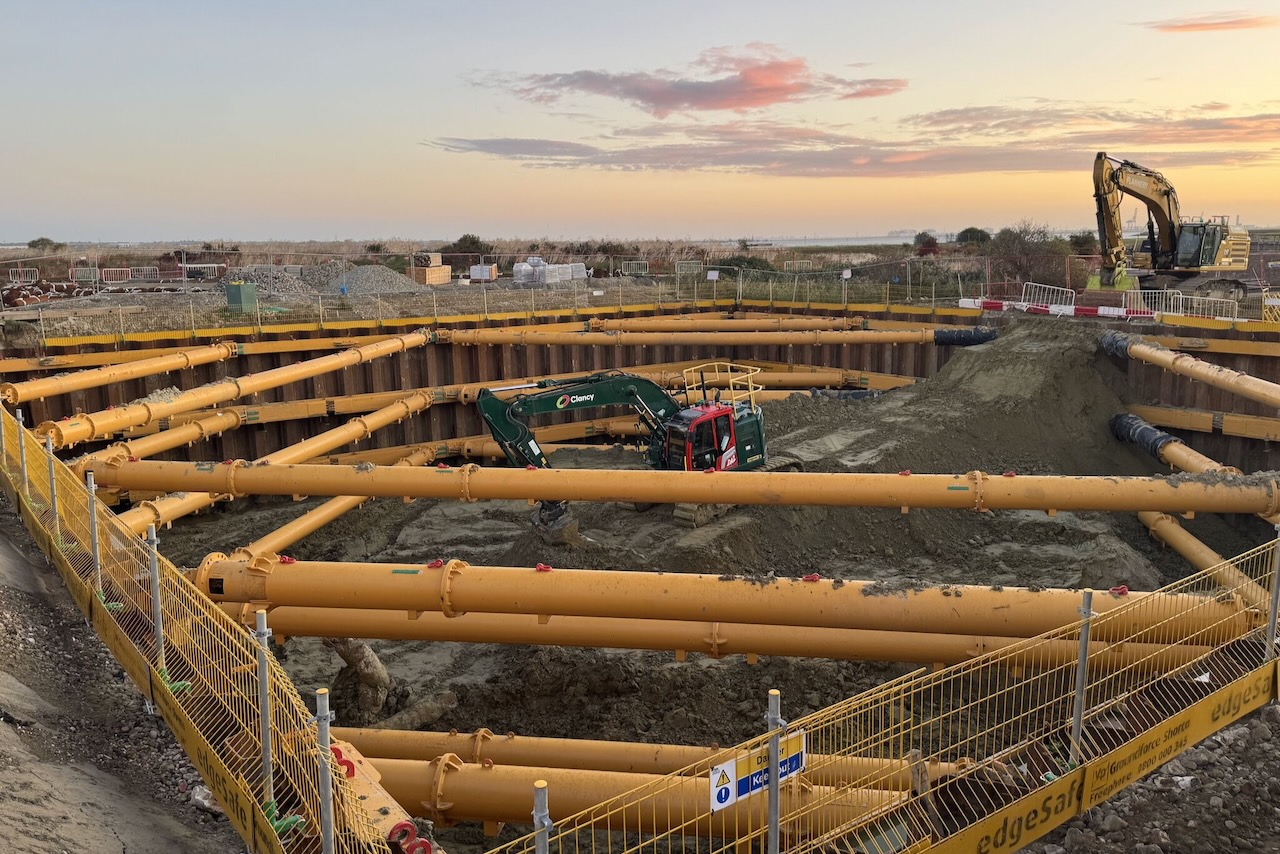
Groundforce Shorco is providing temporary works for Mott MacDonald Bentley on Severn Trent’s £56m upgrade of Longbridge Water Treatment Works, boosting treatment capacity from 734 to 1,261 litres/sec with four 32m-diameter final settlement tanks and a 27m-diameter primary tank. A 10.8m x 10.4m x 8.48m deep excavation in weak, high water-table ground is supported by 12m L605 sheet piles with 3m toe-in and four levels of Super Mega Brace hydraulic frames. The live 1,800mm, ~80-year-old concrete sewer is carried on eight heavy-duty slings from a Mega Brace beam, designed for 49.5kN/m pipe load and up to 77.5kN per strap, with daily monitoring to 1mm movement tolerance.
Clancy reported 2025/26 pre-tax profit of £31.7m, up from £28m, on revenues rising to £498m from £429.6m, supported by an order book now valued at £2.8bn. Management says the stronger balance sheet is funding new investment in delivery capability, including upgrading plant and fleet for utility and civils frameworks and expanding digital project controls. For geotechnical and civil contractors, the enlarged pipeline and capital spend signal continued demand for long-term infrastructure programmes rather than short-term, one-off schemes.
Equipment manufacturer Haulotte reported first-half equipment sales up 9% to €234 million, driven by demand for its mobile elevating work platforms and telehandlers. Total revenue rose 5% to €276 million, as rental income dropped from €12 million to €8 million and service revenue slipped from €37 million to €34 million. For contractors and plant hirers, the figures signal continued fleet investment in access equipment despite weaker rental and after-sales activity.
SEW‑EURODRIVE used Electra Mining Africa 2026 to position itself as a strategic engineering partner rather than a pure drive supplier, with National Sales and Marketing Manager Jonathan McKey outlining support from design through to refurbishment and retrofit of existing plants. The company focused on modernising conveyor, hoist and crusher drive trains using integrated gearmotors, condition monitoring and variable-speed drive systems to improve reliability and asset performance. For brownfield mines, the pitch centres on lifecycle services such as on-site diagnostics, planned overhauls and upgrades that fit within existing mechanical envelopes and power infrastructure.
New Cat D11 XE electric drive dozer is claimed to cut fuel use by up to 25% per unit of material moved while increasing material moved by 5–10% compared with the conventional D11. The electric drive system is aimed at high-production mining dozing, where lower specific fuel burn directly reduces cost per bank cubic metre and extends refuelling intervals. For mine planners and maintenance teams, the shift to electric drive also changes lifecycle cost profiles and may affect haul road design and push distances due to higher effective productivity.
Targeted AI deployments in mining are shifting from broad “digital transformation” to tightly scoped, outcome-driven use cases, with Emerson’s Aspen Technology business reporting faster ROI where operators focus on short-term, measurable wins. Ed Bardo, Senior Principal Solution Consultant for Metals & Mining at AspenTech, cites examples such as AI-powered optimisation of specific unit operations and asset health monitoring rather than site-wide rollouts. For engineers, the message is to ring‑fence problems with clear KPIs, deploy modular AI tools, and scale only once value is proven.
BME has launched its VIPERTRON® Electronic Initiation System to accelerate the shift from NONEL to electronic blasting, with Managing Director Ralf Hennecke citing consistently higher timing accuracy, improved safety margins and better blast performance. The system is aimed at overcoming barriers to wider electronic adoption, such as perceived complexity, cost and training requirements in large open-pit and underground operations. For drill-and-blast engineers, the move signals continued pressure to optimise timing designs, vibration control and fragmentation using fully programmable electronic detonators.
The £46.1M Leeds Station Sustainable Travel Gateway upgrade to the main entrance of Leeds City Station has been pushed back from its original September 2025 completion date, with only partial opening now “possible” in October 2026. The scheme, funded through the West Yorkshire Combined Authority’s transport investment programme, focuses on reconfiguring the station forecourt for buses, taxis and active travel, including widened pedestrian routes and segregated cycle access. Contractors and designers will need to manage prolonged interface risks with live rail operations and city-centre traffic management while phasing the delayed works.
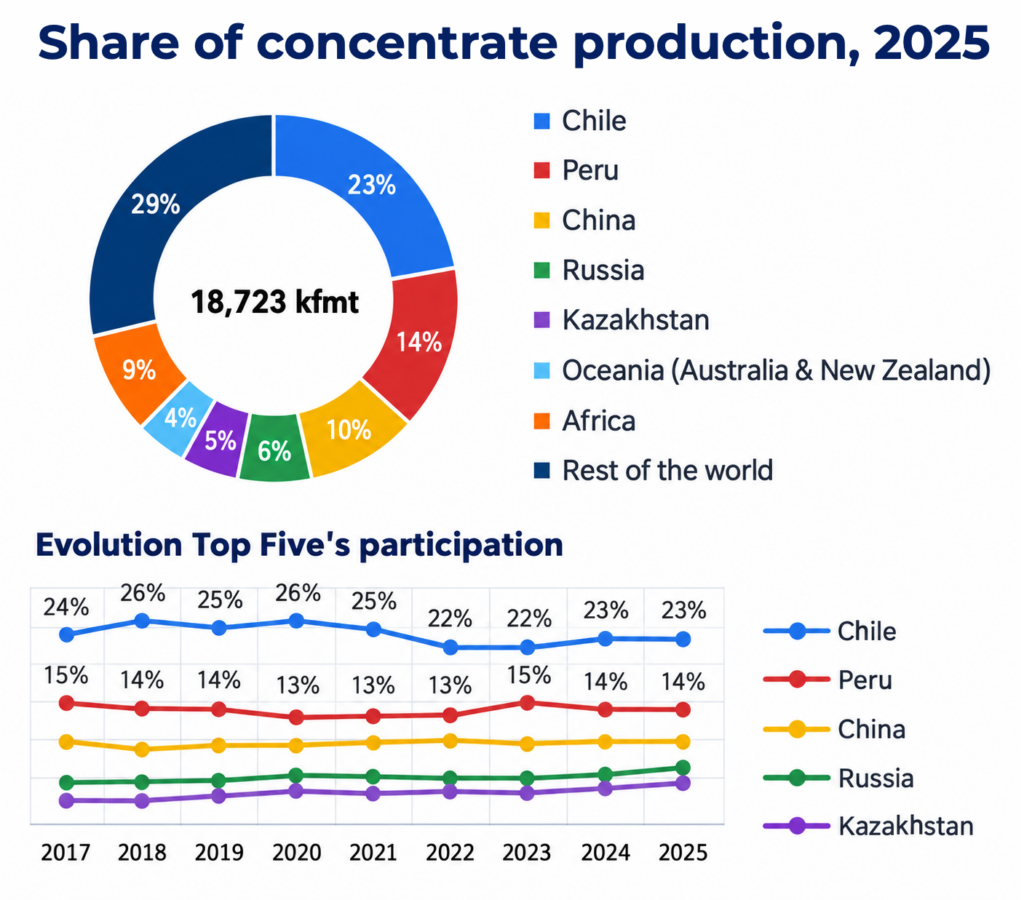
Chile is mining about 23% of global copper concentrate but smelting only 4.2% of world output, with its 5.44 Mt/y of concentrate treatment capacity running at roughly 60% utilisation across five major smelters including Codelco’s Caletones, Chuquicamata and Potrerillos, Glencore’s Altonorte and Anglo American’s Chagres. Cochilco urges restoring operational continuity and throughput at existing plants before any greenfield builds, as global TC/RCs have fallen towards zero or negative amid tight custom smelting markets and expanding Asian capacity. With around two‑thirds of Chilean concentrate exports going to China and copper hitting $6.78/lb on the CME, the country’s underused furnaces are becoming a strategic as well as economic constraint.
Troilus Mining’s updated technical report for its Quebec copper-gold project triples after-tax NPV to $3.2 billion, with a 22% IRR, 3.6-year payback, 26-year mine life and initial capex of about $1.43 billion, based on 478 million tonnes of reserves grading 0.44 g/t gold and 0.05% copper. The plan envisages a 50,000‑tonne‑per‑day open pit starting construction in 2027, first ore in September 2029 and commercial production in March 2030, with life-of-mine operating costs of $19.21 per tonne processed. Existing infrastructure includes a 50‑MW substation, 60 km of high‑voltage lines and a permitted tailings facility, materially reducing greenfield development risk.
Chile is moving to open its capital markets to junior explorers with a Senate-approved bill that creates a dedicated investment framework for early-stage mining and innovation companies, including a simplified regime that avoids full Securities Registry registration and uses sponsoring agents for compliance. The package offers capital gains tax exemptions on share sales, greenfield exploration write-offs and reworked reduced-fee rules for exploration and exploitation concessions, addressing long-standing issues flagged by Agrumin and Sonami over fee-related auctions. With exploration budgets at about $874 million in 2025, 76% in copper and only $206 million in initial exploration, the reform aims to push more private capital into grassroots projects rather than major-led brownfield programmes.
Galantas Gold has sold its remaining 20% indirect interest in Northern Ireland’s Omagh gold project to Ocean Partners UK for $5 million, using about $3.26 million to settle debt under a promissory note and related obligations. The deal follows Ocean Partners’ earlier conversion of roughly $14 million of debt into an 80% stake in Flintridge Resources and Omagh Minerals, giving it full control of the troubled underground operation, where blasting was repeatedly halted due to PSNI anti-terrorism security limits and funding shortfalls. Galantas now has no equity or NSR royalty rights over Omagh and is redirecting capital and management attention to its Andacollo and Indiana gold-copper projects in Chile.
Copper is trading just below record levels, with Comex December at about $6.85/lb ($15,110/t) after hitting an all‑time high of $6.8730/lb, while LME three‑month briefly reached $14,779/t as exchange inventories shift sharply into US Comex warehouses, now holding 695,624 t versus roughly 300,000 t combined on LME and Shanghai. China’s August imports fell to 382,000 t, their weakest August in six years, while US refined imports hit a record 225,094 t in July amid uncertainty over proposed 15–30% tariffs from 2027. High prices are reviving SX‑EW capacity at Collahuasi (targeting 6,000 t cathode in 2027) and Mantoverde despite sulphuric acid rising from $155/t to $400/t, as global mine output heads for its first annual decline since 2017 after disruptions at Grasberg and Kamoa‑Kakula.
Collective Mining shares fell 9.4% to $21.11 in Toronto after publishing a maiden resource for the Apollo deposit in Colombia totalling 4.1 million oz. gold within 37 million indicated tonnes at 1.38 g/t Au, 24.4 g/t Ag, 0.14% Cu and 0.011% WO₃ plus 48.2 million inferred tonnes at 1.6 g/t Au. The conceptual open pit carries a 3.4:1 strip ratio, while the high-grade Ramp zone hosts 6.04 million inferred tonnes at 5.2 g/t Au and 7.72 g/t Ag, with metallurgical testwork reporting 95% gold and 85% copper recoveries using conventional processing. National Bank and Scotiabank both model Apollo as a combined open-pit/underground operation, with National Bank suggesting conceptual throughput of 10,000–15,000 t/d and c.250,000 gold-equivalent oz. per year, pending a PEA targeted for H2 2028.
Better traceability of critical minerals such as lithium and nickel is needed to manage operational and governance risks in complex supply chains, with the OECD report flagging fragmented company-level systems, low adoption by miners, and opaque transnational ownership structures in Indonesian and Philippine nickel. Case studies of lithium from Argentina and Chile show heavy dependence on Chinese processing and major data gaps, limiting visibility on foreign upstream ownership despite existing tools like SIMBARA, LME responsible-sourcing rules and local audits. The OECD proposes a phased, risk-based approach: short-term use of current supplier mapping and bilateral mineral agreements, medium-term closure of data gaps via traders, exchanges and smelters, and long-term cross-border data sharing and aligned battery standards through platforms such as the G7 Critical Minerals Action Plan, FORGE and RESourceEU.
Agnico Eagle Mines is selling its Delta polymetallic sulphide and Helm Bay gold projects in southeast Alaska to Vizsla Copper for $32 million in shares, giving Agnico 19.9% of Vizsla on closing and 22% after a 18 November shareholder vote. Delta carries a 2006 historical inferred resource of 15.4 million tonnes grading 0.6% Cu, 1.6% Pb, 3.8% Zn, 62 g/t Ag and 1.7 g/t Au over 161 sq. km, while Helm Bay spans 675 claims with 10 km of quartz veins and historical underground samples averaging about 11 g/t Au. Agnico retains 2–3% NSR royalties plus up to $20 million in copper-equivalent and development milestones, while Vizsla avoids upfront cash but accepts equity dilution and future contingent payments.
Mining stocks captured a record 60% of the 2026 TSX30, with 18 miners on the list and Montage Gold delivering a 2,502% three-year dividend-adjusted share-price gain. Critical mineral names joined the traditional gold and silver leaders, with Faraday Copper up 688%, Aclara Resources 587% and Trilogy Metals 570%, signalling stronger market pricing of copper and rare earth exposure. Eleven of the 18 mining entrants are TSX Venture graduates, reinforcing Canada’s junior-to-main-board funding pathway for projects moving from exploration towards development.
Gold, silver and mining equities have staged a strong rally, but The Technical Traders CEO and chief market strategist Chris Vermeulen warns longer-term charts still show lower highs and lower lows, signalling an intact downtrend. He argues recent inflows into miners look like herd behaviour and expects a pullback, stressing the opportunity cost of holding stagnant precious metals when alternative assets could yield around 10% annually over several years. Bond-market fear and focus on rising yields are driving investors towards gold as a perceived refuge from the US dollar, but Vermeulen remains cautious on timing entry.
Advanced thermal scanning combined with modern belt scanning is being deployed by Tru-Trac to detect hotspots, misalignment and structural defects on high-capacity mining conveyors before they escalate into catastrophic failures. David Pereira, Head of Sales, points to continuous infrared monitoring of idlers, pulleys and drive stations, integrated with belt rip and splice detection systems, to trigger early interventions rather than reactive shutdowns. For engineers, the key shift is moving condition monitoring from periodic manual inspections to automated, full-length conveyor health scans that can be trended and alarmed in real time.
Eldorado Gold has produced first copper-gold concentrate from its wholly owned Skouries project in northern Greece, signalling the shift from construction to operational ramp-up at this long-delayed porphyry deposit. The company is targeting commercial production in the December quarter of 2026, with Skouries designed as a combined open-pit and underground operation using conventional crushing, grinding and flotation to generate a high-grade copper-gold concentrate. Early plant performance and de-bottlenecking over the next two years will be critical for validating throughput, recovery assumptions and tailings management strategies.