Geomechanics, Streamlined.
© 2026 Geomechanics.io. All rights reserved.
Mining stocks reversed sharply as copper producers Freeport-McMoRan and Teck Resources fell about 7% after a report that the White House has yet to decide on refined copper tariffs. The pullback comes just as Freeport’s $100 billion valuation is again in focus, magnifying sensitivity to policy risk around US trade measures. For mine planners and project financiers, the move signals renewed volatility in copper, silver and gold pricing that could affect hurdle rates, hedging strategies and near-term approvals for large capital projects.
Platinum and palladium price forecasts have been cut by BMI as shrinking global car sales curb autocatalyst demand and South African PGM supply recovers, easing earlier deficit concerns. Sibanye-Stillwater is restructuring a loss-making shaft in South Africa and simultaneously facing a strike at its Stillwater and East Boulder palladium operations in Montana, adding mine-level uncertainty. The World Platinum Investment Council estimates above-ground platinum stocks will fall to cover only about 3.4 months of demand by year-end, signalling tighter physical availability despite softer prices.
Orica Digital Solutions has released a next-generation FRAGTrack™ system that can now be deployed on excavators, pushing fragmentation measurement directly to the dig face rather than relying solely on fixed crusher or conveyor installations. The upgraded hardware platform delivers higher-resolution image capture and faster on-board processing, giving mine operators near real-time particle size distribution data to tune blast designs, loader bucket selection and crusher settings. Closer-to-face deployment should reduce sampling bias from oversize rejection and improve calibration of blast models against actual muckpile fragmentation.
The University of Arizona has secured $20 million from the US Department of Energy’s Office of Critical Minerals and Energy Innovation to expand and upgrade its San Xavier Underground Mining Laboratory. The project will add new underground workings, a dedicated microgrid and advanced electronics infrastructure to support full-scale mining systems testing and digital mine research. The investment is aimed at strengthening workforce development in underground operations, power systems and automation, giving industry partners a controlled testbed rather than relying solely on active production mines.
MLG Oz has secured a three-year extension to its haulage and site services contract at Ora Banda Mining’s Davyhurst gold project in Western Australia, expected to generate about A$16 million per year in revenue. The scope covers continuous 24/7 operations, including ore and waste haulage, likely involving high-capacity road trains on regional haul roads and intensive load–haul cycles between pit, ROM pad and processing plant. For mine planners and contractors, the deal signals stable medium-term demand for bulk logistics capacity and sustained production scheduling at Davyhurst.
Codelco’s Ventanas Division has become the company’s first operation to reach 100% electromobility for worker transport, launching a fully zero-emission industrial bus and shuttle fleet on World Electric Vehicle Day in Chile’s Valparaíso Region. The system replaces all previous diesel-based personnel transport on internal routes, cutting tailpipe emissions to zero at the smelter–refinery complex and reducing noise and particulate exposure along access roads and loading areas. Regional Energy and Mining Secretaries Celso Quezada and Cristian Vasseur attended, signalling regulatory backing for wider fleet electrification across Codelco sites.
Metso has launched the Sampo Cell coarse particle flotation technology, designed to increase recovery of coarse particles while maintaining fine particle performance in conventional flotation circuits. The cell targets more complex, lower-grade ores where coarse gangue rejection and reduced overgrinding can cut specific energy use and tailings volumes. For plant designers and metallurgists, the concept enables coarser primary grind sizes, potential debottlenecking of milling, and improved overall circuit recovery without wholesale replacement of existing flotation banks.
Master Drilling has secured its first Portuguese contract from copper-zinc producer Boliden Somincor to construct two raisebored shafts, each 630 m deep and 4.5 m in diameter. The twin vertical excavations will be critical for long-term hoisting, ventilation or service access, demanding precise control of deviation over the full 630 m and careful management of rock stability around the 4.5 m diameter openings. For geotechnical and mine planning teams, the project signals growing availability of large-diameter raiseboring capacity in European base metal operations.
Metso has expanded its Metso Digital portfolio with three new platforms – Digital Production Management, Data-driven Performance Analytics and Safety Performance Platform – aimed at turning plant and fleet data into actionable production and safety decisions. Digital Production Management targets end-to-end throughput optimisation across crushing, grinding and downstream circuits, while Data-driven Performance Analytics applies advanced analytics to equipment condition and process KPIs. The Safety Performance Platform centralises incident, near-miss and behavioural data to support risk control and compliance in large, multi-site mining operations.
Innovative Wireless Technologies (IWT) has been selected for negotiation of a US Department of Energy award to lead the Mine of the Future: Proving Ground Initiative, a national programme to accelerate advanced mining technologies. The initiative will focus on development, testing and deployment of new systems in operating US mines, creating dedicated proving-ground sites rather than relying on ad hoc pilots. For geotechnical and operations teams, this signals forthcoming funded trials of next-generation communications, sensing and automation platforms under real production conditions.
Stage One of New South Wales’ $130 million Avoca Drive Upgrade is starting 18 months early on the Central Coast, where the two-lane east–west arterial currently carries about 26,000 vehicles per day and is a known congestion pinch point. Funded by $100 million from the Federal Government and $30 million from NSW, the works will focus on upgrading Avoca Drive’s capacity and geometry. Civil contractors can expect complex traffic staging and pavement reconstruction on a constrained corridor that must remain operational throughout construction.
Catalyst Metals has lifted the Mineral Resource at its Keillor gold mine in Western Australia by about 280 per cent to 3.2 million tonnes at 3.0g/t gold for 307,000oz, up from 81,000oz. The company is targeting an extension of the operation beyond its initial three‑year mine life, signalling scope for revised pit designs, updated production schedules and potential plant throughput adjustments. Geotechnical and mine planning teams will need to reassess slope designs, sequencing and ground support to accommodate the larger, higher‑confidence inventory.
Forrestania Resources has moved to restart the Edna May Gold Project in Western Australia after completing its $210 million acquisition from Ramelius Resources on 4 September, securing a suite of operational and supply agreements to underpin the transition. The company is developing a two-hub processing strategy, with Edna May as a central processing facility integrated with its existing Western Australian assets to optimise mill utilisation and ore haulage. For mine planners and metallurgists, the agreements de‑risk near‑term feed, contracting and processing routes ahead of a formal restart decision.
Gateway Mining is preparing first-pass air core drilling in early October over its newly defined 3km-long Pewy gold target within the Yandal gold project in Western Australia, testing a major untested structural corridor immediately south of the Ward prospect. The programme will focus on shallow AC holes to map oxide and transported cover geochemistry across the full strike length, aiming to vector towards primary bedrock mineralisation. For geologists and mine planners, results will clarify structural controls and help prioritise follow-up RC or diamond drilling in the broader Yandal belt.
Consent from the Nyangumarta People for Rio Tinto’s proposed Winu copper–gold mine in Western Australia clears a key approvals hurdle as the project targets first copper by 2030. The project agreement between the Nyangumarta Warrarn Aboriginal Corporation and Rio Tinto covers the mine and associated infrastructure on Nyangumarta Country, including access corridors and services. For project teams, the deal provides a framework for land access, cultural heritage management and scheduling of early works, enabling more detailed mine design and infrastructure planning to proceed.
Tungsten Mining’s Watershed project in Far North Queensland is now fully permitted for mining and production, with all primary approvals secured, including its Environmental Authority and Progressive Rehabilitation and Closure Plan. The company is targeting a final investment decision later in 2026 on the 100 per cent-owned tungsten deposit, which is positioned as a long-life open-pit operation. Full permitting de-risks project scheduling for mine development, tailings and waste landforms, and staged rehabilitation, giving contractors and financiers clearer visibility on execution and closure obligations.
Kier has been appointed by Hertfordshire County Council to build a 3,263 m² single-storey satellite extension to Amwell View School in Stanstead Abbotts, providing 100 specialist places for pupils aged 11–19 with severe learning difficulties on a 1.34 ha greenfield site. The layout uses a single-storey teaching block to minimise level changes and circulation complexity, with specialist internal spaces and outdoor learning areas designed around accessibility, wellbeing and independence. The scheme, procured via Pagabo’s major works framework, includes a new car park with 63 bays and 15 EV charging points and will support around 65 full-time staff.
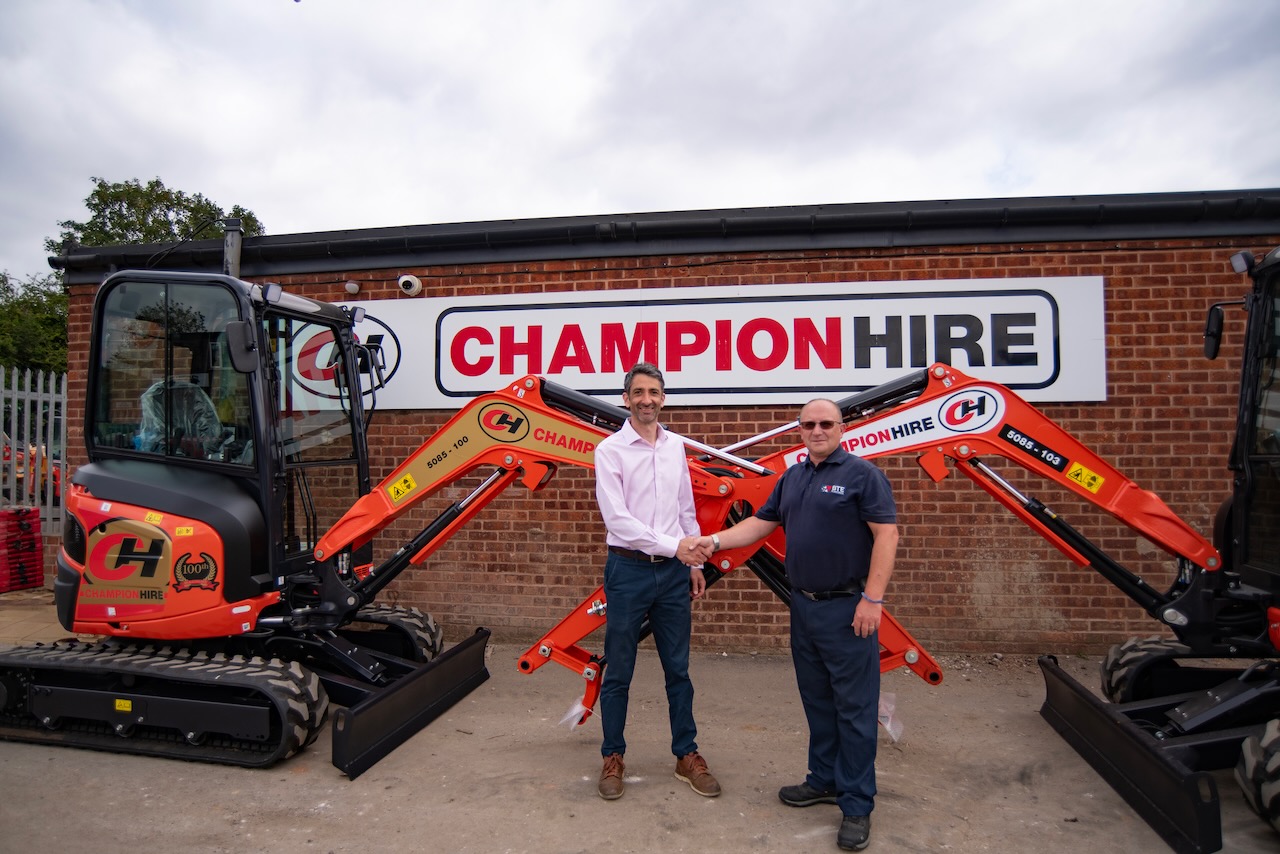
Champion Hire has taken delivery of its 100th Kubota U27-4 mini excavator via BTE Plant Sales, marking a long-running fleet standardisation that began with Kubota K008 units in 2001 and KX36 and KX61-3 models in the early 2000s. The 2.6‑tonne U27-4 is a zero tailswing machine with a 15.6kW (21.6hp) diesel engine, 4.74m reach and 2.82m maximum dig depth, designed to be towed behind a light commercial vehicle. For contractors, this keeps typical 1.5–3t hire needs within a compact, transportable platform with a relatively large cab for the 2.5t class.
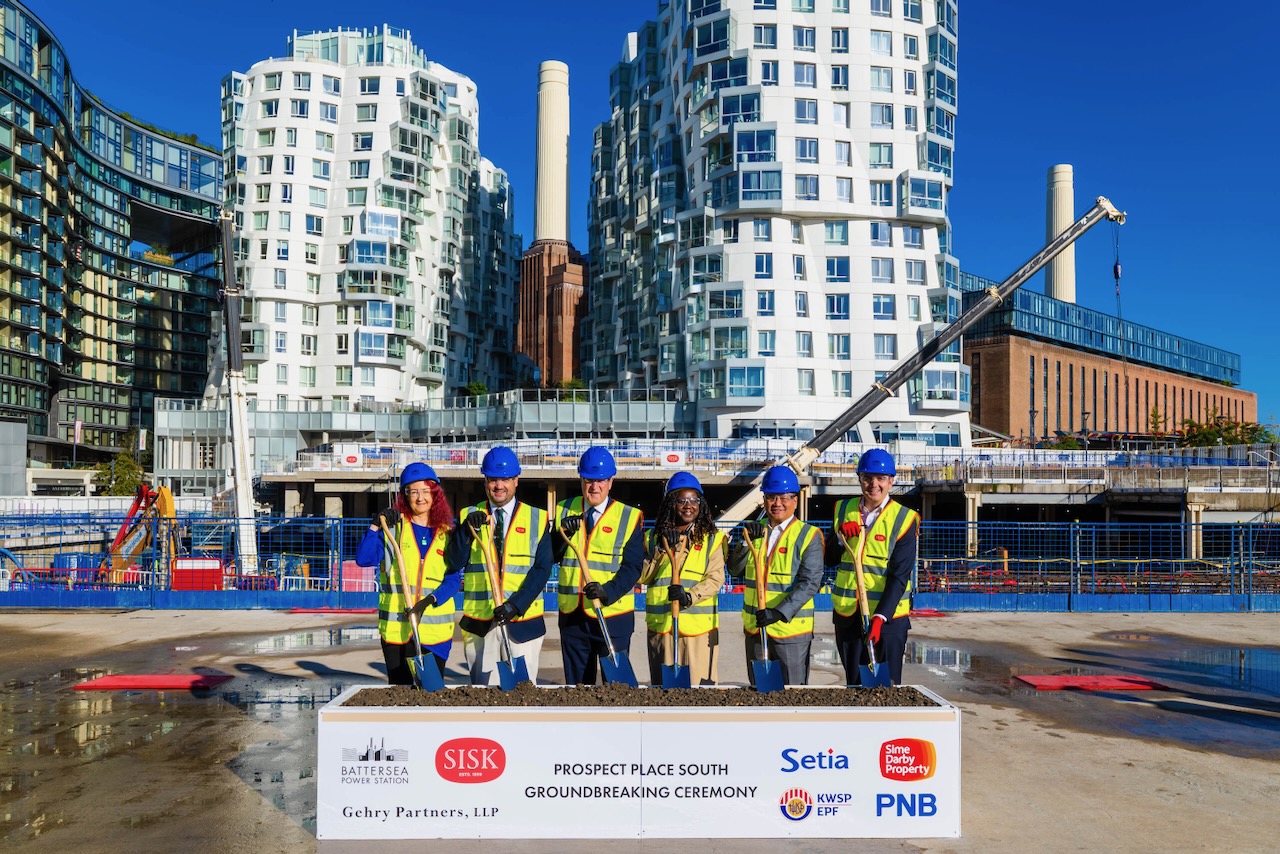
Sisk has broken ground on Prospect Place South at Battersea Power Station, a brownfield riverside scheme delivering around 300 homes, 65,000 sq ft of commercial space, a 15,000 sq ft community hub and a 600-space cycle hub across two Gehry Partners-designed blocks, Rosewood House and Hayworth House. Gehry’s design targets a reduced carbon footprint with green roofs specified to secure at least a 10% biodiversity net gain, while construction is expected to create 400 jobs, 20% locally sourced, ahead of completion in 2030. Masterplanner Studio Egret West will submit a revised plan this month for the remaining 16 acres, enabling up to 3.2 million sq ft of additional residential, commercial, cultural and leisure floorspace.
Doncaster Council has approved Vistry’s Kings Brook scheme in Conisbrough, a 226-home mixed-tenure development on former agricultural land, comprising 109 affordable units with Sage Homes and 117 private homes, using a mix of traditional masonry and timber frame construction across 16 house types. All units will include roof-mounted solar PV and EV charging points as standard, with extensive public open space and landscaping integrated through the layout. Construction, which started in spring 2026, is scheduled to complete in 2028, with the site benefiting from direct access to the A1(M) and M18 corridors.
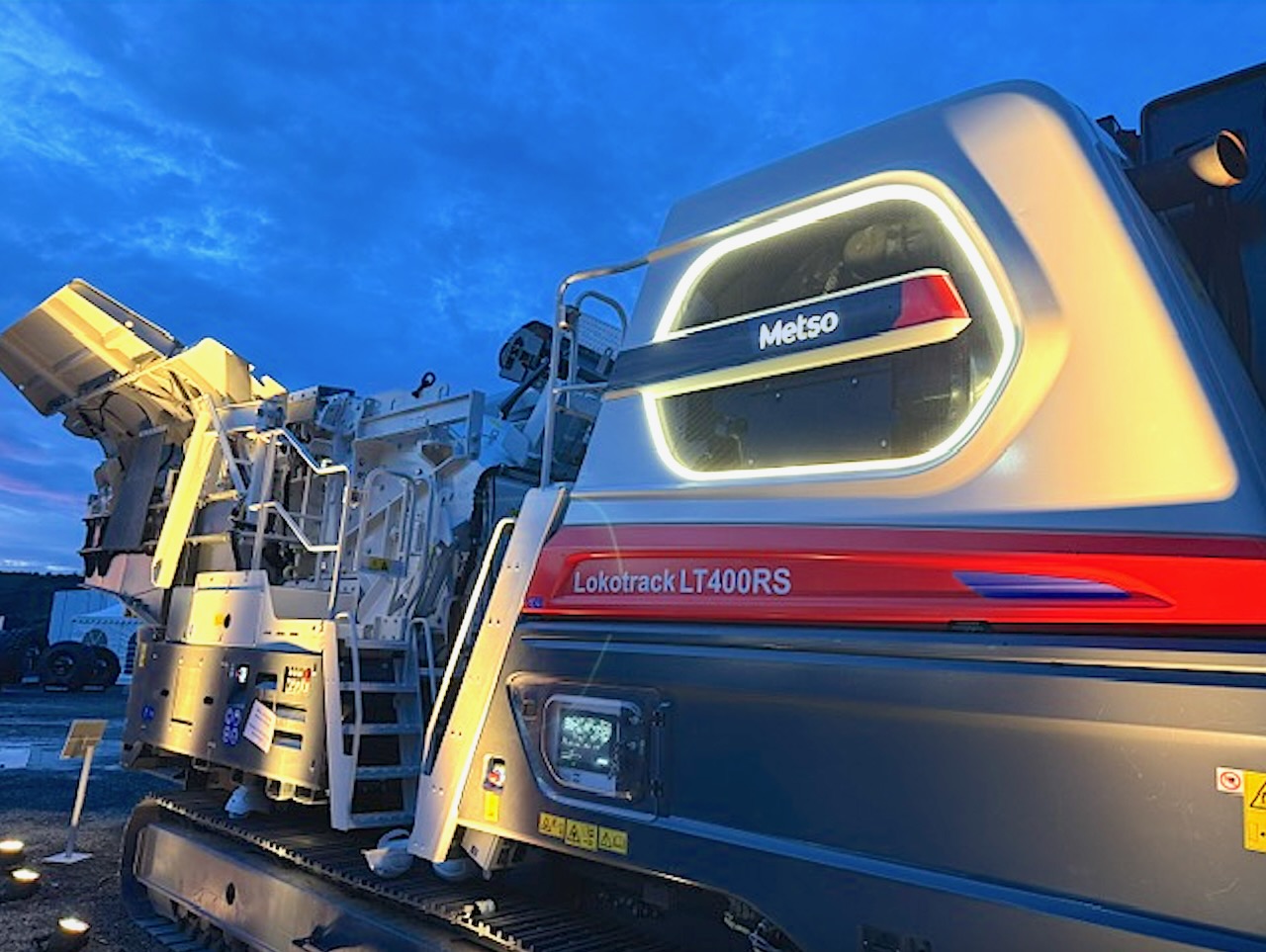
Metso distributor McHale Plant Sales is taking orders in the UK and Ireland for two new Lokotrack units – the 70‑tonne LT400RS diesel‑electric mobile impact crusher and the LT200HPX mobile cone crusher with integrated screening – with deliveries from early 2025. The LT400RS, built around a 250 kW Nordberg NP1213MR impactor and 430 kW genset, targets concrete, asphalt and mixed demolition waste containing rebar and wood, using a 6.4 m² two‑deck screen, wind sifter and electromagnet to improve separation, fuel use and CO₂ output. The LT200HPX packages a Nordberg HP200e cone, two‑deck pre‑screen and 5.6 m² product screen on a single track chassis with wide conveyors and smart folding for high‑capacity, easily transported hard‑rock and aggregate production.
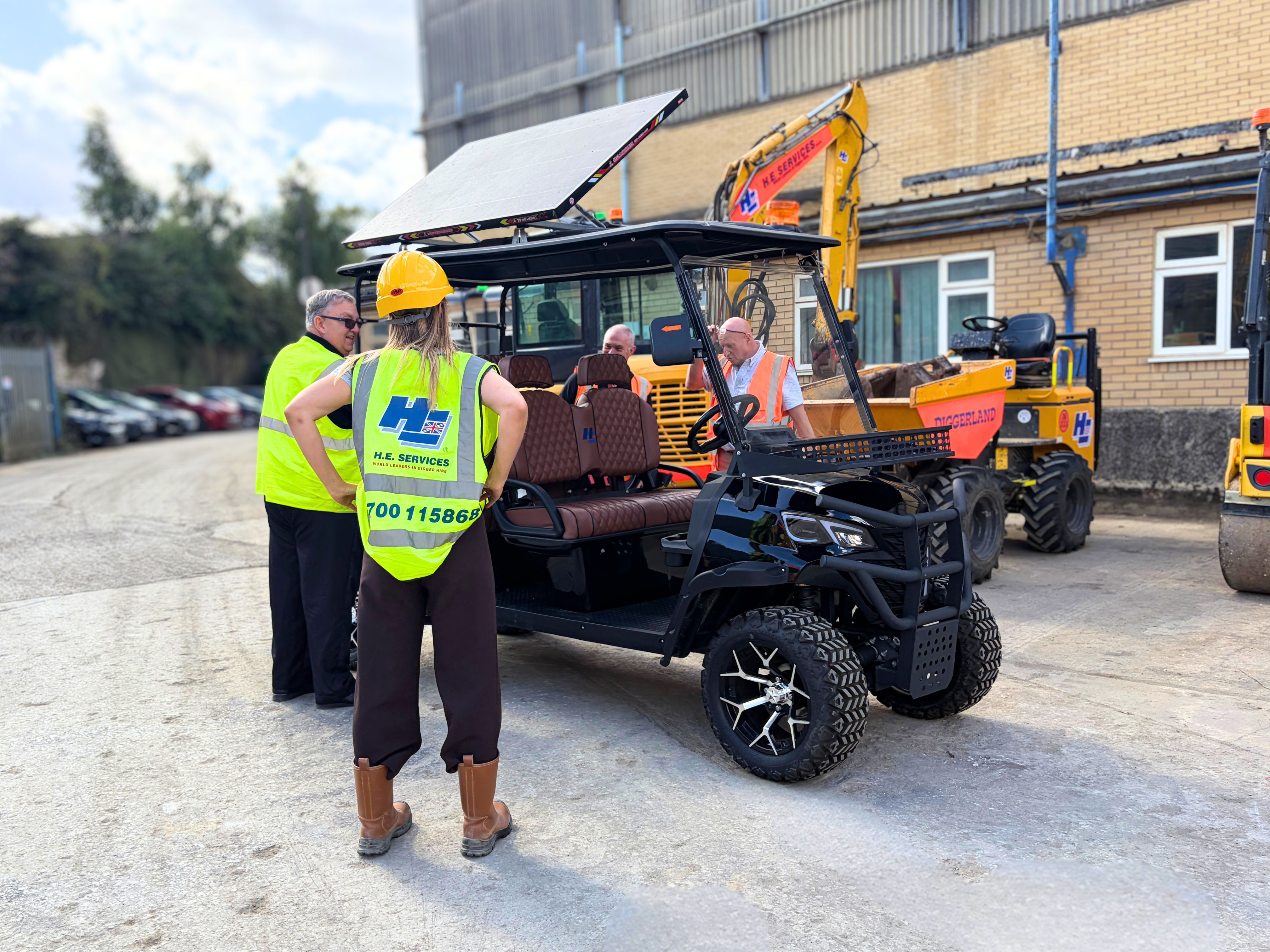
Excavator hirer H E Services has trialled two- and four-seater EVision electric golf carts at its Strood depot to move staff around busy construction areas more quickly on private land. The carts use integrated roof-mounted solar panels to trickle-charge batteries during daylight, cutting reliance on mains charging and keeping vehicles available for short shuttle movements around large sites. H E Services reports lower walking times, reduced on-site emissions and quieter operation, while EVision is pushing nationwide delivery with hire terms from single-day to long-term agreements.
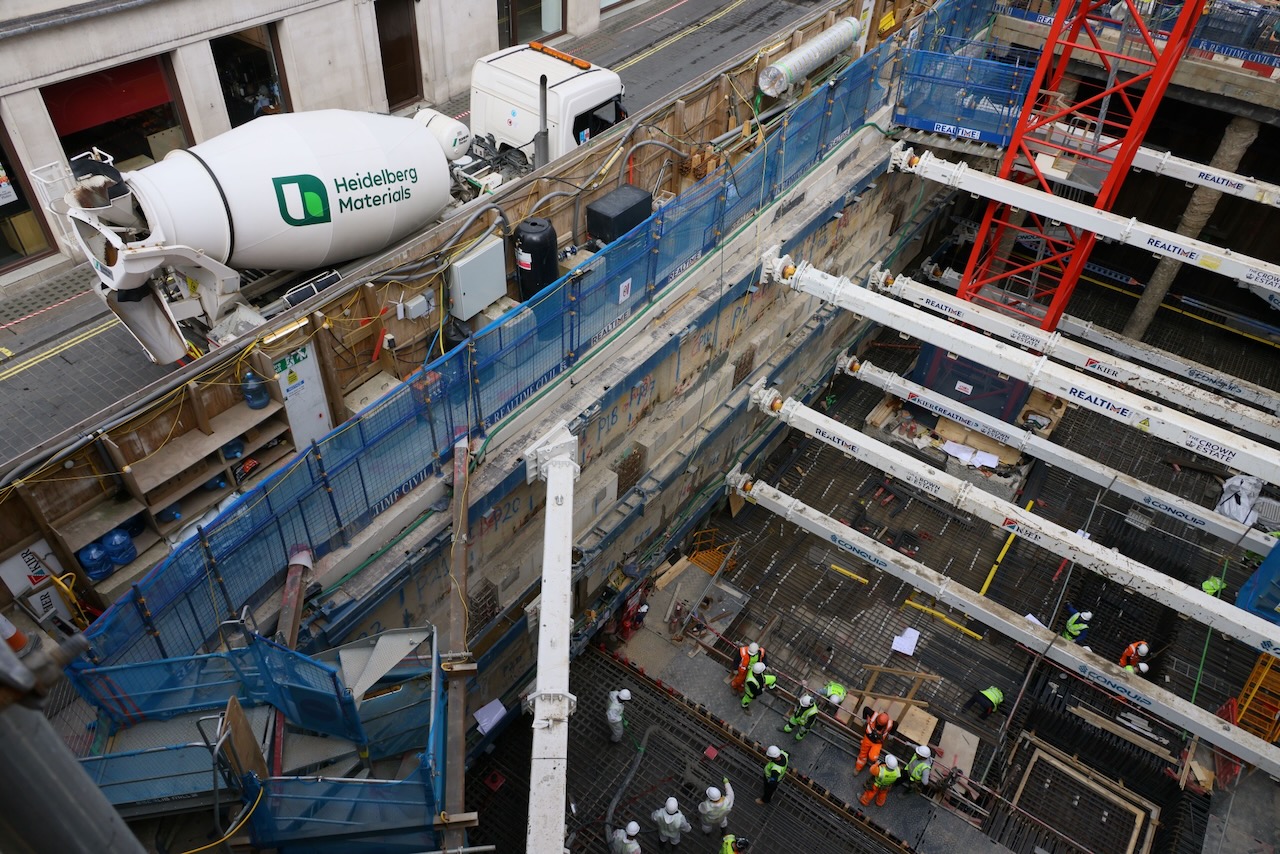
Heidelberg has supplied low carbon concrete, using carbon capture–decarbonised cement and GGBS, to Realtime Civil Engineering and Kier for the Crown Estate’s 33–35 Piccadilly redevelopment in central London. The mix design replaces a significant portion of Portland clinker with ground granulated blast-furnace slag, cutting embodied CO₂ compared with conventional CEM I concrete while maintaining structural performance suitable for a high-end commercial building. For contractors and designers, the project shows practical deployment of carbon capture–enabled binders on a constrained urban site with demanding specification control.
Bovis Construction (Europe) Limited has opened a new office at Northspring | Peter Street in Manchester city centre, reinforcing an 88‑year presence that began with projects such as Manchester Dental Hospital. The office sits close to Manchester Town Hall, where Bovis is currently delivering major restoration works, and supports ongoing schemes including North Manchester General Hospital under the Hospital 2.0 Alliance. Positioned alongside its London and Birmingham bases, the site is intended as a national hub for public sector framework delivery and client engagement.