Geomechanics, Streamlined.
© 2026 Geomechanics.io. All rights reserved.
Technology-led optimisation of comminution circuits can deliver immediate, material efficiency gains when applied with tight process control, argues JD Singleton, Comminution Director for EMEA at Weir. Singleton links precision deployment of tools such as high-pressure grinding rolls, advanced process control and real-time ore characterisation to lower specific energy consumption and reduced CO₂ per tonne milled. He stresses that disciplined implementation and continuous performance tracking are essential if mines are to meet carbon targets without escalating unit operating costs.
Darma Henwa has expanded its fleet with 10 new Liebherr machines to support increased overburden and coal production at Kaltim Prima Coal’s Bengalon mine in East Kalimantan and Arutmin’s Kintap mine in South Kalimantan. The additional units, likely including large hydraulic excavators and ultra-class mining trucks typical of Liebherr’s Indonesian deployments, are being deployed to a new pit at Bengalon and to meet higher production targets at Kintap. For mine planners and geotechnical teams, the larger fleet implies higher stripping rates, faster pit advance and tighter haul road and dump stability requirements.
The Institution of Civil Engineers is urging UK ministers to commission an independent economic review to quantify the costs and benefits of climate adaptation across national infrastructure, from flood defences and coastal protection to transport and energy networks. ICE wants a Treasury-level assessment, akin to the Stern Review on climate mitigation, to compare upfront capital for resilience upgrades against avoided damage to assets, service disruption and long-term maintenance. Such a review could directly influence design standards, appraisal methods and funding priorities for major projects and asset renewals.
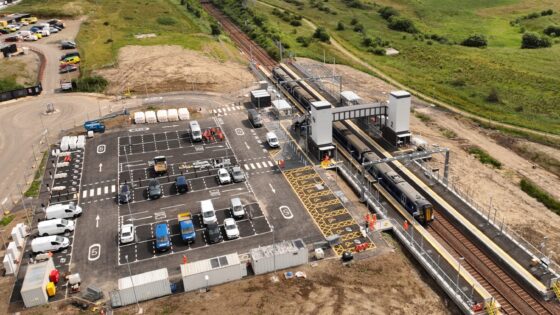
The Office of Rail and Road has authorised opening of the £18.3M Balgray railway station in Barrhead, East Renfrewshire, allowing passenger services to start later this month on the Glasgow South Western route. The new stop is expected to relieve pressure on nearby Barrhead station and support housing growth around Balgray Reservoir, with platforms designed for modern ScotRail rolling stock and full step-free access. For civil and rail engineers, the approval confirms compliance with current ORR and Network Rail standards on platform geometry, accessibility and signalling integration.
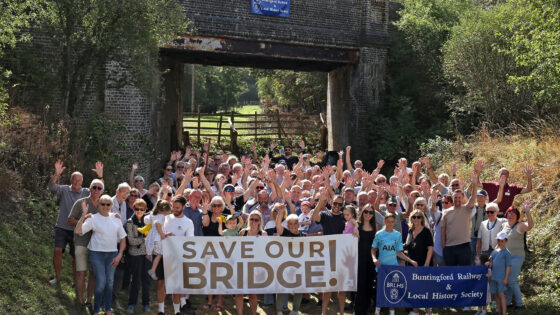
More than 100 campaigners have protested against National Highways’ plan to infill a historic disused railway overbridge in Hertfordshire, a treatment typically involving mass concrete or foamed fill placed between abutments to avoid structural repairs. Opponents argue that infilling would permanently block the former rail corridor for future active travel or rail reuse and alter the masonry structure’s heritage character. For asset managers and bridge engineers, the dispute signals continuing scrutiny of infill as a low-maintenance option for ageing masonry spans on disused lines.
VolkerRail has completed the Sheffield Supertram “Delta Junction” track renewal ahead of programme, finishing works on one of the network’s most complex multi‑track, tight‑radius junctions earlier than planned. The project involved replacing heavily worn embedded rail and special trackwork within a constrained urban corridor, maintaining tram clearances and geometry while working around live utilities and adjacent carriageways. Early completion reduces possession time on a critical interchange, limiting disruption to tram operations and road traffic and providing a more robust trackform for future high‑frequency services.
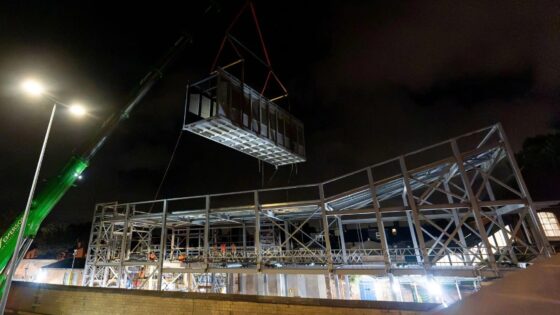
A new steel footbridge has been lifted into position at Leyton Underground station in north London by Bam during a tightly sequenced overnight crane operation over the August Bank Holiday. The bridge was installed above live tracks, requiring full possession of the line, precise lifting tolerances and pre-assembled sections to minimise disruption to Central line services. For station upgrade teams, the operation illustrates continued reliance on heavy night-time cranage and modular steelwork to deliver step-free access and capacity improvements on constrained urban rail sites.
Rio Tinto has agreed to acquire the Aurukun bauxite project in Western Cape York, Queensland, from Glencore and Mitsubishi Development, with financial terms undisclosed and completion subject to Queensland and federal regulatory approvals. The undeveloped deposit is expected to support a long-life, open-cut bauxite operation feeding Rio’s existing alumina refineries and export terminals in northern Australia, consolidating its position in Cape York alongside Weipa and Amrun. For geotechnical and mine planners, the move signals further large-scale pit development and associated haul, port and water infrastructure in a sensitive coastal environment.
Astral Resources has intersected 1m at 219g/t gold within the proposed Stage 1 open-pit shell at Theia, part of the Mandilla gold project 70km south of Kalgoorlie, from RC hole AMRCD374 with a diamond tail. The interval sits inside a broader 35m zone grading 7.09g/t from 181m downhole, including 5m at 29.9g/t, supporting higher-grade starter pit scheduling and potentially lower strip ratios. Results will feed into the Mandilla PFS mine design, pit optimisation and early cashflow modelling.
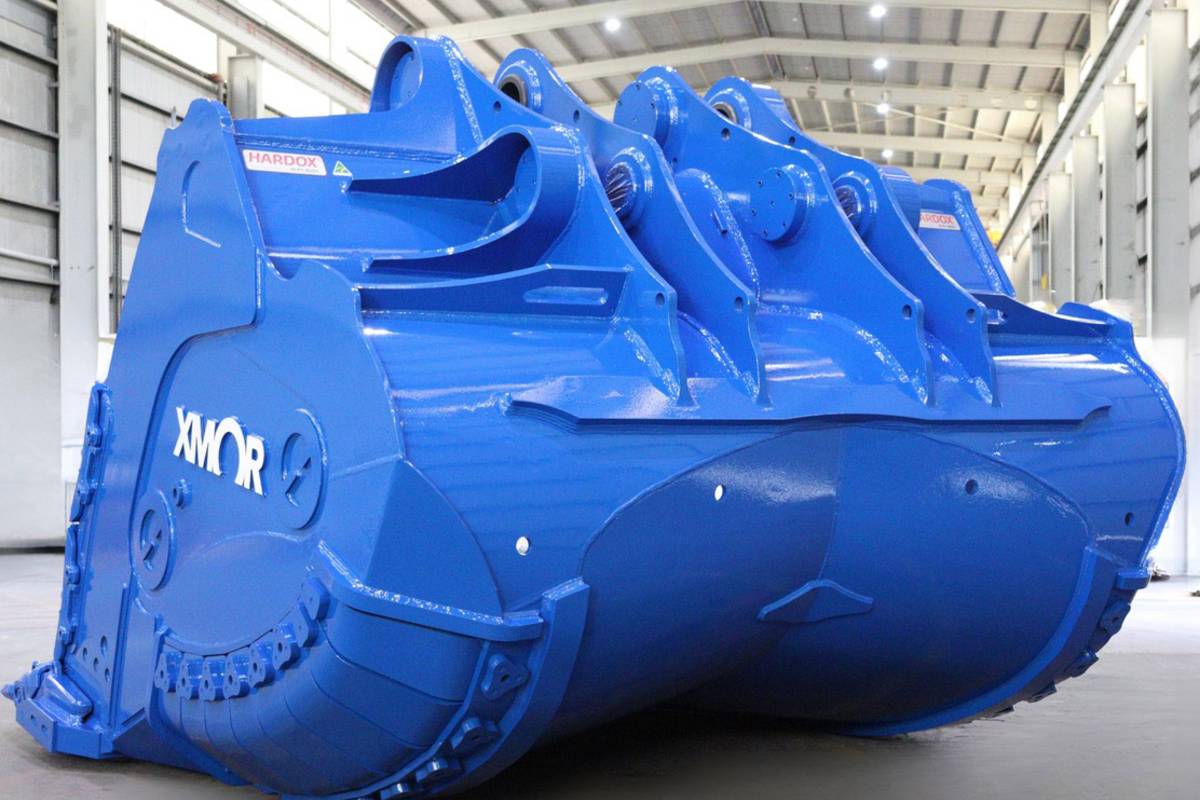
ONTRAC Group’s XMOR bucket range, manufactured in Australia under licence from SSAB, cuts dead weight so every kilogram of removed steel becomes additional payload. The design uses high-strength, wear-resistant steels and a re‑engineered back and sides with an inverted keel supplied as a plug‑and‑play modular unit, shifting material away from low-stress zones. For mine operators, this allows larger effective payloads per pass without upsizing the excavator, with implications for haulage cycle times, fuel burn and wear on ground‑engaging tools.
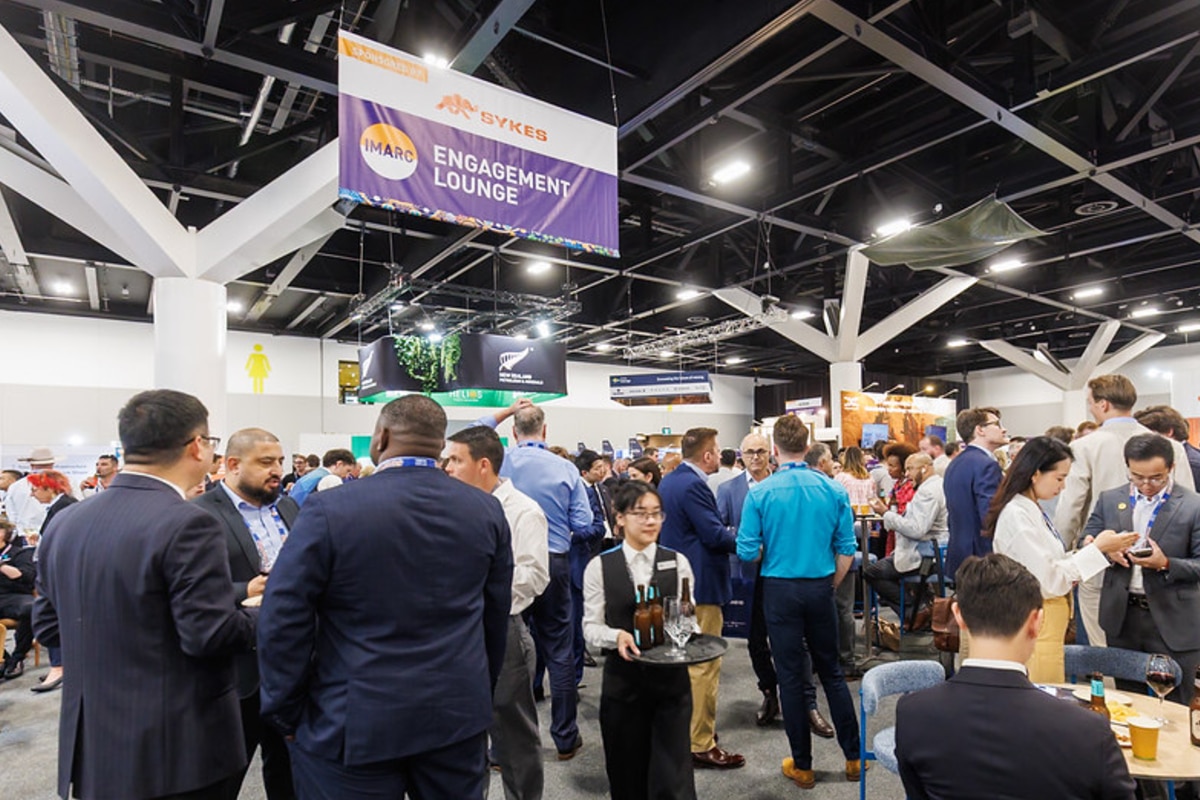
A looming “space race” for critical minerals is set to accelerate state-backed mining investment, with International Council on Mining and Metals chief executive Rohitesh Dhawan arguing that geopolitical competition could rapidly expand permitting, infrastructure funding and offtake guarantees. The 2026 International Mining and Resources Conference (IMARC) in Melbourne is being framed as a test of whether governments will move beyond rhetoric to concrete policy support, including streamlined approvals and public–private financing for new copper, nickel and rare earths projects.
Innovative Wireless Technologies’ SENTINEL underground network uses a self-healing, mesh-based architecture to maintain voice, data and personnel tracking when mine infrastructure is damaged or power is lost. The Mine Rescue System integrates directly with existing SENTINEL nodes to extend communications and location coverage into previously uninstrumented headings during emergencies, without new cabling. For geotechnical and operations teams, this supports real-time situational awareness during roof falls, explosions or inundations, with redundant wireless paths reducing single-point failures common in conventional leaky-feeder systems.
Government review of the Office of Rail and Road finds the regulator will need “new capability and skills” to oversee road schemes delivered under a regulated asset base, with the Lower Thames Crossing expected to be the first Rab project. The review points to gaps in expertise for long-term economic regulation of a multi‑billion‑pound, multi‑decade road tunnel and approach roads, compared with ORR’s established rail and strategic roads roles. For designers and contractors, this signals closer scrutiny of lifecycle cost, performance metrics and risk allocation on LTC and future Rab schemes.
The National Wealth Fund has signed new partnership agreements with four additional mayoral and city-region authorities to accelerate delivery of local infrastructure schemes across the UK. The expanded programme is aimed at bringing NWF equity and debt into regionally led projects such as urban regeneration, transport upgrades and energy-transition assets, alongside existing local funding streams. For civil and geotechnical teams, this signals a larger pipeline of shovel-ready schemes where early-stage ground investigation, value engineering and risk-sharing structures will be critical to secure NWF backing.
Keeping outcomes at the heart of rail infrastructure delivery means designing projects around measurable benefits such as reduced journey times, higher train frequencies and improved freight paths, rather than simply delivering new track, signalling or stations. The approach pushes teams to link early option selection, GRIP/Project SPEED-style staging and whole-life asset management to specific passenger and freight outcomes, for example peak-hour capacity targets or reliability thresholds. For engineers, this shifts success metrics from capital spend and completion dates to operational performance, resilience and user experience over the asset’s design life.
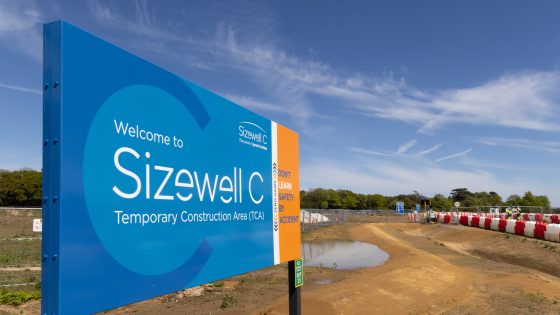
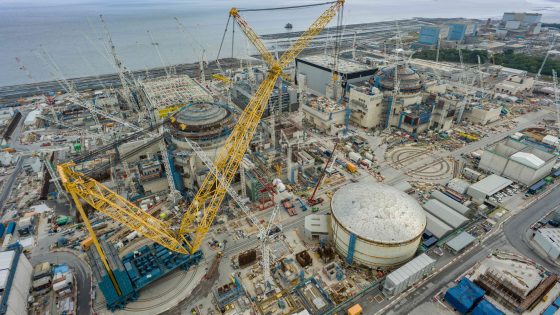
G4S has secured a 10-year facilities management contract for the Sizewell C nuclear power station, initially creating 150 jobs and rising to about 400 over the contract’s duration. The scope will cover hard and soft FM across construction compounds and operational buildings, supporting a twin EPR plant designed for 3.2GW capacity on a constrained Suffolk coastline site. For civil and nuclear engineers, stable long-term FM support should aid site logistics, security integration and maintenance planning during both major earthworks and later commissioning phases.
EDF’s Hinkley Point C nuclear project has applied for permission to appeal a tribunal decision that would bring the 3.2GW plant under Environmental Information Regulations, forcing greater disclosure of environmental data. The ruling, won by campaigners, could require release of detailed monitoring on coastal impacts, cooling water abstraction and construction emissions from major works such as the 900m seawater intake tunnels. Designers, contractors and consultants on similar large infrastructure schemes may face tighter scrutiny over environmental modelling assumptions, baseline data and ongoing performance reporting.
Eighty-three per cent of Britain’s cities – 59 urban areas – are classed as highly vulnerable to urban heat in new spatial analysis by Ordnance Survey, the Met Office and 4 Earth Intelligence. The dataset combines OS building footprints, surface cover and green space with Met Office temperature projections to map local heat exposure at street-block scale. For civil and geotechnical engineers, this points to urgent retrofit of shading, permeable and high-albedo surfaces, and revised pavement and rail design to cope with more frequent extreme surface temperatures.
Government will develop a national strategy for applying artificial intelligence across the UK energy system after launching a call for evidence on how AI can support a greener, more flexible grid. The review will look at AI uses such as real‑time optimisation of transmission and distribution networks, forecasting variable wind and solar output, and managing demand response from EV charging and heat pumps. Grid planners, civil engineers and asset owners should expect future guidance on data standards, digital twins and control algorithms influencing reinforcement, storage siting and interconnector design.
Infrastructure projects deemed of “critical national importance” will be fast-tracked under new powers allowing Parliament to let ministers designate schemes for accelerated delivery. The chancellor signalled that nationally significant works such as major rail upgrades, strategic highways and large energy or water infrastructure could move more quickly through planning and approvals. For engineers, this points to compressed design and procurement timetables, earlier geotechnical investigations, and tighter coordination of statutory undertaker diversions and environmental consents.
Anglian Water’s @one Alliance has hired 269 engineers in the first year of AMP8 and plans to recruit a further 200 to deliver its regulated water and wastewater capital programme under AMP9. The alliance, which delivers large-diameter mains, treatment works upgrades and resilience schemes across eastern England, is scaling design and site teams to handle a rising volume of complex civils and MEICA projects. Rapid expansion of engineering capacity signals strong demand for geotechnical, structural and pipeline specialists familiar with UK water sector standards and long-duration framework delivery.
Sandvik is overhauling its 23-vehicle Toro® load and haul line-up, with the new Toro® TH663i Gen2 underground truck introducing a 63‑t payload platform as a central element of the Turku factory’s “Future of Loading and Hauling” programme. The TH663i Gen2 builds on the i-series digital architecture and automation readiness already used across Sandvik’s intelligent trucks, targeting high-capacity, long-haul underground applications. For mine planners, the larger payload and integrated data capabilities signal scope to re-optimise ramp profiles, fleet sizing, and traffic management in deep-level operations.
CDE Group has secured orders from Stevin Rock to design and build two modular sand and aggregates wash plants rated at 1,000 t/h and 250 t/h for the company’s Al Ghail limestone operation in the UAE. The plants will process material from a site producing over 100 Mt/y, targeting improved recovery of manufactured sand and washed aggregates from high-volume quarry fines. For process and tailings engineers, the scale signals continued investment in wet processing to maximise resource utilisation and reduce waste in large Gulf limestone quarries.
BHP and KGHM have signed a global memorandum of understanding to jointly identify new copper targets, exchange technical expertise and benchmark operating practices across their portfolios in Australia, Poland, Chile, Canada, Peru, Brazil and the US. The MoU formalises earlier collaboration in Chilean copper operations and creates a structured framework for project screening, with teams tasked to refine shared priorities before committing to specific ventures. For geologists and mining engineers, the deal signals potential joint exploration campaigns and shared learnings on deposit models, jurisdictional risk and copper–silver operating strategies.