Geomechanics, Streamlined.
© 2026 Geomechanics.io. All rights reserved.
USA Rare Earth has produced its first commercial pour of 2N–2N5 purity (99%–99.5%) yttrium metal via subsidiary Less Common Metals at its Cheshire, UK facility, joining the small group of non-Chinese commercial yttrium suppliers after 2025 prices spiked about 1,500% on Chinese export curbs. The output underpins USAR’s mine-to-magnet plan anchored by the Round Top rare earth deposit in Texas, targeted for 2028 production, and a newly commissioned sintered neodymium magnet line in Stillwater, Oklahoma, with a potential second magnet plant in France. Backed by a US$1.58 billion Trump administration investment for an 8%–16% equity stake, USAR is positioning to supply aerospace, defence and advanced ceramics users seeking alternatives to Chinese yttrium.
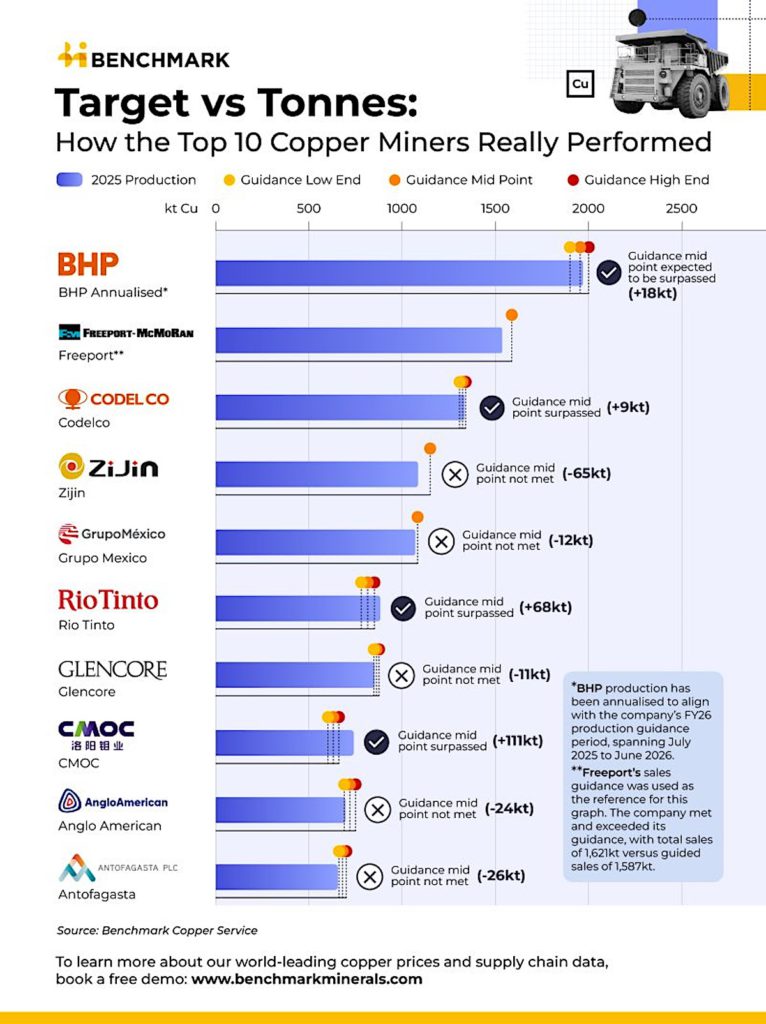
Benchmark Mineral Intelligence reports that 2025 copper production deviated sharply from company guidance, with CMOC beating its target by 111,000 tonnes while Zijin Mining missed by 65,000 tonnes due to delays at the Julong expansion and weaker African output. The analysis explicitly separates stated guidance from realised tonnages, showing that most copper supply models still treat guidance as production. For mine planners and market modellers, the data signal that project delays and operational volatility can materially distort supply curves if guidance is used unadjusted.
Fast-tracking US critical minerals projects under President Trump’s March 2025 executive order has seen some mining permits issued in as little as 20 days, prompting Oxfam America to warn that compressed timelines without robust environmental review and community consultation could trigger force majeure events, legal challenges and multimillion-dollar delays. Oxfam policy leads Emily Greenspan and Andrew Bogrand argue that IFC performance standards should be treated as a minimum and that US-backed export credit and development finance should be tied to IRMA’s more stringent audit regime. They also caution that the industry-led Consolidated Mining Standard Initiative could dilute existing benchmarks and that policymakers still underestimate the globalised nature of refining and processing, particularly in regions such as Africa’s Copperbelt.
The Metals Company’s NORI and TOML subsidiaries have submitted 2013–2022 exploration data from the eastern Clarion‑Clipperton Zone to the ISA’s DeepData system, including 777 equipment deployments, over 4,800 environmental samples, 76,000 biological records and 69,185 geochemical data points from depths beyond 4,000 m. The dataset now accounts for roughly one‑third of all CCZ entries in DeepData and 54% of biological records in the OBIS‑ISA node, positioning it as a key reference for Environmental Impact Assessments. TMC argues this evidence base is sufficient to start monitored commercial nodule collection, despite ongoing calls from NGOs for a moratorium.
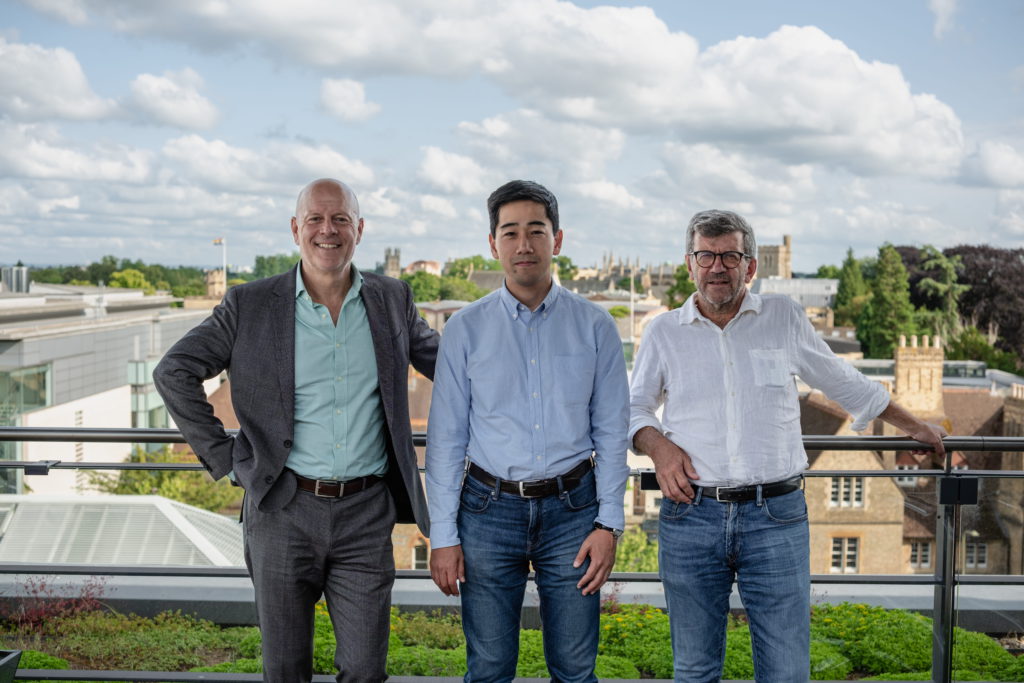
Oxford University spinout Ascension has raised £1.7 million in new funding, combining a £670,490 Innovate UK Growth Catalyst grant with £1 million from UKI2S, Oxford Science Enterprises and East X, bringing total capital raised to £6.2 million. The company’s Selective Recovery programme targets rare earths and other critical minerals in deep volcanic glass, aiming to separate metals in situ and cut surface processing stages. Ascension’s process uses natural geothermal heat in volcanic rock deposits, avoiding excavation, high-temperature surface processing and associated land disturbance.
MMD Group has signed a Memorandum of Agreement with CiDi Inc. to embed CiDi’s autonomous driving technology into MMD’s TraxIQ material handling platform, adding driverless capability to its existing digital haulage management. MMD will retain responsibility for global commercialisation and deployment of TraxIQ, while CiDi supplies the autonomy stack, sensors and control software for mobile equipment operating within the system. The move signals further integration of fleet autonomy with real-time material tracking, dispatch and crusher-feed optimisation in brownfield and greenfield haulage circuits.
Australia’s asphalt sector, led by guidance from the Australian Flexible Pavements Association (AfPA) and Projects Technical Advisor Trevor Distin, is pushing performance-based mix design to exploit asphalt’s 100 per cent recyclability and cut pavement carbon. Reclaimed asphalt pavement (RAP) is being reprocessed into new surface and base courses, with higher RAP contents enabled by rejuvenators, tighter binder grading and improved plant controls. For designers and asset owners, the shift means specifying functional performance (rutting, fatigue, texture, skid resistance) and lifecycle cost rather than prescriptive mix recipes.
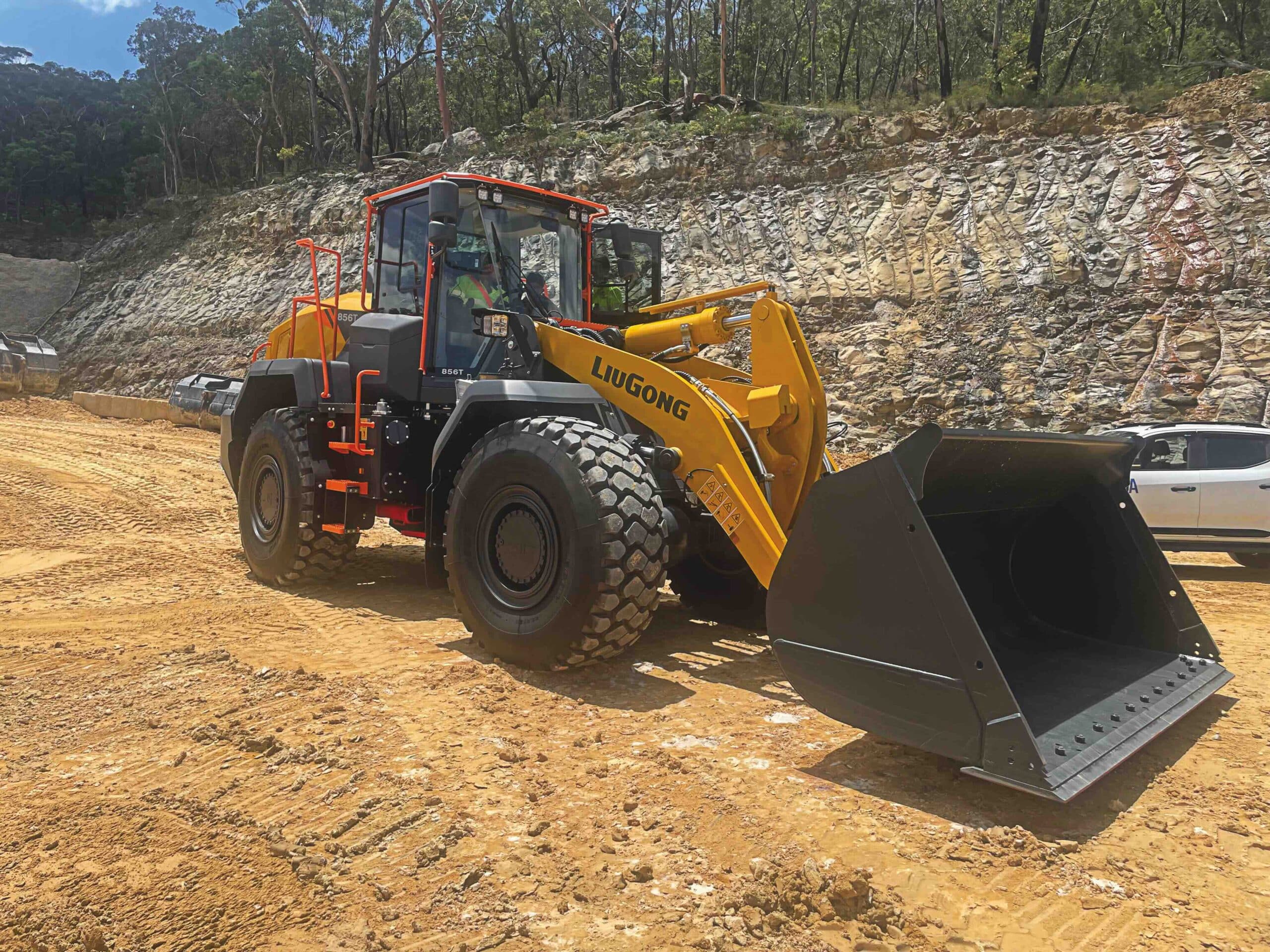
LiuGong’s 856T wheel loader has been selected by Australian Sandstone Merchants in New South Wales as the primary machine for high-duty quarry operations, handling dense sandstone blocks and continuous loading cycles. The 856T, part of LiuGong’s long-running wheel loader line dating back to 1958, is being used for both face loading and stockpile management, where breakout force and stability on uneven quarry floors are critical. For operators, the choice signals growing confidence in Chinese-built loaders for heavy quarry applications traditionally dominated by established Western brands.
Wirtgen has launched its next-generation WR series stabilisers, led by the WR 240 X, for cold recycling and in-situ pavement stabilisation across Australian road projects. The machines build on the previous WR range with higher fuel-efficiency, integrated operator assistance systems and smarter process control for mixing, water and binder dosing. For geotechnical and pavement engineers, the focus is on more consistent subgrade and basecourse treatment in a single pass, improving layer uniformity and shortening construction windows on rehabilitation jobs.
AIC Mines reported strong March quarter 2026 growth driven by the Eloise copper mine, where successful drilling extended high-grade mineralisation and a process plant expansion lifted nameplate throughput. The upgraded concentrator, incorporating additional grinding capacity and upgraded flotation cells, is targeting higher copper recovery and lower unit costs as ore feed ramps up. For engineers, the key watchpoints are how the expanded plant handles variable underground ore characteristics and whether further debottlenecking of crushing and tailings infrastructure will be required as throughput approaches design limits.
Catalyst Metals is advancing towards first gold production from the Trident underground mine at Plutonic after reporting strong grade control drilling results that confirm continuity of high-grade lodes. The work forms part of Catalyst’s broader Plutonic gold strategy in Western Australia, where detailed grade control is being used to refine stope designs and de-risk early mining panels. For geotechs and mine planners, the results support tighter reconciliation, more confident ore–waste boundaries and potentially improved scheduling for initial stoping blocks.
Rising global defence spending on missiles, drones and advanced electronics is sharply increasing demand for critical minerals such as rare earths, high‑purity aluminium, titanium, nickel and specialised battery metals. Modern defence platforms now embed complex materials across guidance systems, radar, propulsion and armour, tightening specifications on purity, magnetic behaviour and high‑temperature performance. For miners and processors, this points to long‑term offtake potential for Australian rare earths, titanium and nickel projects, but also stricter ESG, traceability and supply‑security requirements in defence‑linked supply chains.
Newmont is steadily ramping up processing operations at the Cadia gold mine in New South Wales after a magnitude-4.5 earthquake on Tuesday, with inspections so far indicating no material impact to underground workings or surface infrastructure. Geotechnical and structural assessments are ongoing across key assets including the tailings storage facilities, process plant foundations and underground openings. The event will interest operators of deep and seismically sensitive mines reviewing ground support design, real-time seismic monitoring and business-continuity planning for moderate local seismicity.
Exploration activity is ramping up across Australia, with Rincon Resources expanding gold–copper targets at its Telfer South project, Hillgrove Resources progressing work at the Kanmantoo copper mine, and Auravelle Metals advancing its battery metals portfolio. Rincon is extending drilling and geophysics south of Newcrest’s Telfer operations, targeting deeper intrusive-related mineralisation, while Hillgrove focuses on resource growth and underground potential at the existing open pit. For geotechs and mine planners, the work signals more near-mine drilling, deeper targets and potential future cutbacks or underground access designs.
NG Bailey has created a new low carbon director role and appointed Jonathan Kershaw, former managing director of Dalkia Energy Services, to lead development of its low carbon business across the group. Kershaw will design and implement a strategic plan that uses data insight, engineering expertise and on-site delivery to cut operational carbon in building and infrastructure assets and quantify long-term value. With 15 years’ experience in carbon reduction and resilience on large infrastructure projects, he is tasked with accelerating clients’ transition to more efficient, resilient building portfolios.
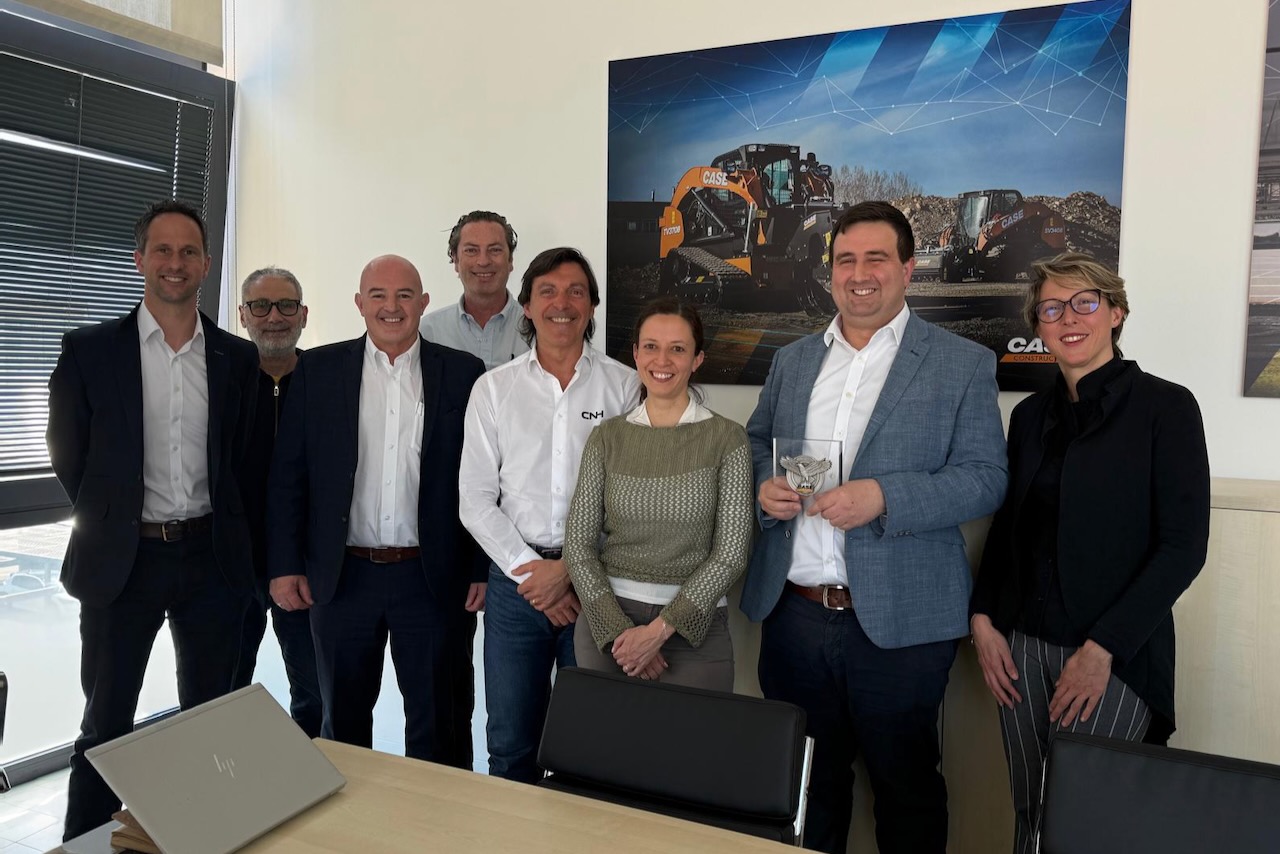
Case Construction Equipment has appointed Ernest Doe & Sons as its authorised dealer for London, the South East, East Anglia and parts of the Midlands, covering 16 counties. The dealership will supply the full Case range – including excavators, loaders and compaction equipment – with aftersales supported by parts from Case’s Daventry distribution centre. For contractors, the move consolidates access to OEM service and spares across a wide geographic area, potentially simplifying fleet support and standardising equipment specifications on Case platforms.
Persimmon Homes South Coast and CBRE Investment Management are expanding their partnership at the 1,250‑home St Peter’s Place scheme in Salisbury to deliver 365 affordable units. The new agreement adds 152 homes in this phase alone, split into 78 for affordable rent and 74 for shared ownership. Across the project the partners will now provide 220 affordable rent homes and 145 shared ownership units, materially increasing tenure mix and long‑term institutional ownership within this large greenfield community.
Henry Brothers Construction has begun a £1.9m first-phase project at Lincoln County Hospital to expand the Stroke Unit by reconfiguring Navenby Ward into a single Hyper Acute Stroke Unit (HASU) from two existing five-bay wards. Works include full mechanical, electrical and plumbing modernisation plus new joinery, floors, doors, ceilings and lighting to refresh the existing ward environment. Procured via the Pagabo Refit and Refurbishment Framework, the scheme involves Day Architectural for architecture, project management and QS services, with DSSR delivering M&E engineering design.
McLaughlin & Harvey has completed the University of Edinburgh’s 6,500 m², five-storey steel-framed Engineering Forum building, delivered through the SCAPE Scotland Framework for the School of Engineering’s Institute for Energy Systems. The facility is designed as a “living lab” for renewable energy, power systems and electronics, directly supporting experiential teaching and active research. Construction was carried out within the live King’s Buildings Campus, adding to McLaughlin & Harvey’s recent projects there, including the Nucleus Building (opened 2022) and the Usher Institute (2024).
Julie White, managing director of diamond drilling and concrete sawing specialist D-Drill & Sawing, has been appointed a trustee of social mobility charity Construction Youth Trust. She will help connect young people from low-income and underrepresented backgrounds with employers across the construction sector, drawing on experience running a subcontractor where around 80% of the workforce began as apprentices. White also sits on the Government’s Construction Skills Mission Board, tasked with delivering a workforce action plan to recruit 100,000 new workers annually until 2029.
Ridge has appointed Steve Williams as head of infrastructure, following its 2025 acquisition of Adept Management and a targeted senior recruitment drive to expand its infrastructure portfolio. Williams previously led major programme advisory work at Turner & Townsend for clients including Thames Tideway, Thames Water, Transport for London, Anglian Water, Heathrow Airport, the Ministry of Defence and Babcock. He will focus on project readiness before planning applications, robust business cases and data-led investment decisions to future‑proof large UK infrastructure schemes.
Ørsted has lost a UK Supreme Court case over whether it could claim tax relief on geotechnical and environmental surveys for offshore wind farms that never progressed to construction. The ruling confirms that expenditure on early-stage site investigation and feasibility work for prospective projects does not qualify as “research and development” for UK tax purposes when no tangible asset is created. Developers may now need to reprice front-end survey campaigns and reconsider how they structure pre-consent ground investigation and design studies.
Transport secretary Heidi Alexander’s ministerial car has been damaged by a UK pothole, prompting the Asphalt Industry Alliance (AIA) to warn that such defects are “a curse for road users” but “not inevitable”. The AIA stressed that systematic, funded programmes of planned resurfacing and structural maintenance are needed, rather than reactive patching, to prevent tyre, wheel and suspension damage and reduce collision risk. For highway engineers, the incident is likely to intensify scrutiny of condition surveys, whole-life asset management and backlog estimates on the local road network.
Publication of the UK government’s Better Connected: a strategy for integrated transport signals a shift towards devolving more powers and funding to city regions and combined authorities to plan rail, bus and active travel networks as a single system. The approach leans on existing models such as Transport for London and Transport for the North, aiming to integrate local rail timetables, bus franchising and multimodal ticketing under regional control. For engineers, this points to more corridor-based, cross‑modal schemes and long‑term pipelines shaped by devolved transport bodies rather than central departments.