Rio Tinto $10B asset selloff: portfolio, capex and cost reset for mine planners
Reviewed by Tom Sullivan
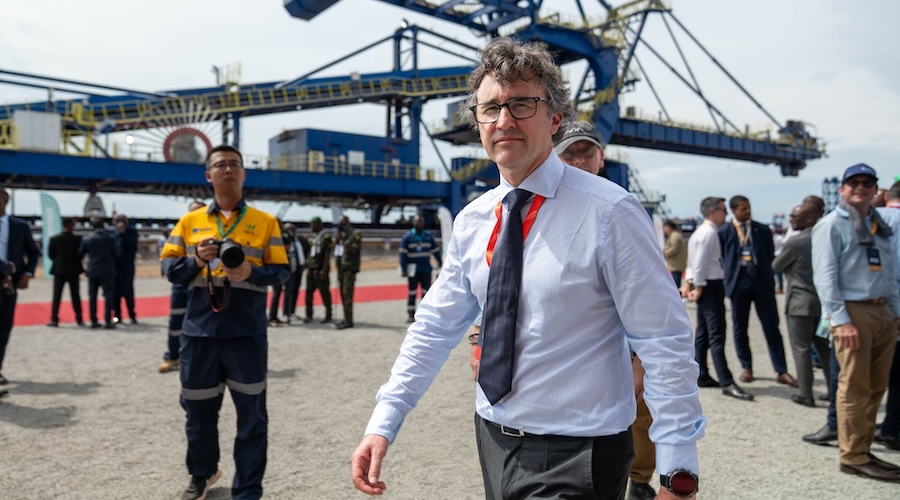
First reported on MINING.com
30 Second Briefing
Rio Tinto chief executive Simon Trott is targeting $5–10 billion from divestments and productivity gains by 2030, narrowing the portfolio to iron ore, copper, aluminium and lithium while cutting annual group capex to below $10 billion from 2028 and trimming decarbonisation spend to $1–2 billion through 2030. Non-core assets on the block include titanium dioxide, borates, land, infrastructure and processing facilities, with unit costs targeted to fall 4% between 2024 and 2030. Copper output is forecast at 860,000–875,000 tonnes in 2025, rising toward a 1 Mtpa target by 2030, while Simandou’s ramp-up is now guided at only 5–10 Mt of iron ore sales in 2026.
Technical Brief
- Leadership ranks have already been reduced, with associated restructuring expected to yield about $650 million annual productivity gains.
- Capital will be withdrawn from projects where third‑party funding is below Rio Tinto’s cost of capital threshold.
- Spending on BioIron and the Jadar lithium project in Serbia is currently paused pending portfolio and returns review.
- Non‑core disposals explicitly target titanium dioxide and borates businesses, plus selected land, infrastructure and processing assets.
- Governance constraints on share buybacks are being negotiated with major shareholder Chinalco to enable more flexible capital returns.
- Unit operating costs across the group are planned to fall by 4% between 2024 and 2030 via efficiency programmes.
Our Take
With Rio Tinto signalling $5–10 billion of divestments while BHP is pursuing large-scale M&A around Anglo American and Teck Resources in our recent coverage, the competitive gap may widen between Rio’s balance-sheet ‘tidying’ and BHP’s push for copper and iron ore growth optionality.
The reduced decarbonisation spend (from a previously flagged $5–6 billion down to $1–2 billion through 2030) suggests that lower-return abatement projects at assets such as Pilbara iron ore and aluminium/bauxite operations could be deferred, which may leave Rio more exposed if carbon pricing tightens in Australia, Canada or the EU.
Rio’s plan to cap group capex below $10 billion per year from 2028, even as Simandou and Oyu Tolgoi copper ramp up, implies that non-core growth options in commodities like borates, titanium dioxide and antimony-gold (Hillgrove) are more likely to be shelved or sold rather than advanced to construction.
Prepared by collating external sources, AI-assisted tools, and Geomechanics.io’s proprietary mining database, then reviewed for technical accuracy & edited by our geotechnical team.
Related Articles


Related Industries & Products
Mining
Geotechnical software solutions for mining operations including CMRR analysis, hydrogeological testing, and data management.
Construction
Quality control software for construction companies with material testing, batch tracking, and compliance management.
CMRR-io
Streamline coal mine roof stability assessments with our cloud-based CMRR software featuring automated calculations, multi-scenario analysis, and collaborative workflows.
HYDROGEO-io
Comprehensive hydrogeological testing platform for managing, analysing, and reporting on packer tests, lugeon values, and hydraulic conductivity assessments.
GEODB-io
Centralised geotechnical data management solution for storing, accessing, and analysing all your site investigation and material testing data.