Geomechanics, Streamlined.
© 2026 Geomechanics.io. All rights reserved.
Texas startup Hertha Metals has raised $133.65 million in Series A funding, including $65 million from the US government’s IBAS programme, to build its Hertha Chalyx plant targeting 10,000 tonnes per year of steel-grade and magnet-grade high-purity iron. The facility will deploy the FLEXHERS process—a single continuous hydrogen/natural-gas reduction reactor coupled with electric arc furnace technology—claiming 25% lower production costs than blast furnaces and emissions cuts of 50% (natural gas) to up to 98% (hydrogen). Chalyx, alongside the existing 360 t/y Pi100 pilot in Conroe, aims to create a fully domestic feedstock source for NdFeB magnet and defence manufacturers.
We Recycle Solar will build the US’ first end-to-end critical materials recovery facility for retired solar panels on a 10-acre campus outside Dallas, targeting Q3 2027 start-up. The Arizona-based firm says the commercial-scale plant will process one panel per minute and recover up to 96% of contained silver, copper, silicon, aluminium and glass through a proprietary extraction process that avoids any offshore smelting. WRS plans a further $100 million investment in four additional US facilities within four years, aiming to capture value from an $80 billion projected 2050 solar-panel waste stream.
MACA has secured a A$170 million, two-year contract extension with Emerald Resources to continue mining operations at the Okvau gold mine in Cambodia, taking the engagement through to February 2030. The scope covers full open-pit production services, including mine development, drill-and-blast, overburden stripping, ore mining and on-site mining support. For contractors and mine planners, the long-term commitment signals stable demand for production drilling, blasting consumables and fleet deployment strategies in a relatively new gold jurisdiction.
Perenti has secured more than A$200 million in new work, with drilling contracts spread across Ausdrill, DDH1 Drilling, Ranger Drilling, Swick Mining Services and Strike Drilling, covering both surface and underground exploration and resource definition programmes. Its underground mining arm AUMS has also won a new contract with Endeavour Mining at the Sabodala-Massawa Mining Complex in Senegal, extending Perenti’s footprint in West African hard-rock underground operations. The awards signal continued demand for specialist RC, diamond and production drilling capacity bundled with contract mining services.
Anglo American has started supplying desalinated water to its Los Bronces copper mine in Chile via the newly commissioned Quilapilún Station in Colina, where collection pools feed a dedicated pipeline into the operation. Chile’s Joint Minister of Economy, Development and Tourism, and Mining, Daniel Mas, formally opened the valve on 28 September, signalling a shift away from direct freshwater abstraction in a highly water-stressed region. For mine planners and process engineers, the move implies tighter integration of desalinated supply into plant water balances, pumping energy demand, and long-term permitting strategies.
Caterpillar is extending its Command for hauling autonomous haulage system into quarry-scale operations with a new deployment at Dolese Bros’ Richards Spur quarry in Oklahoma, following its earlier rollout on Cat 777 trucks at Carmeuse’s Drummond Island quarry in Michigan supported by Fabick Cat. The Richards Spur project applies AHS to a high-production limestone operation using rigid-frame haul trucks on short, repetitive quarry cycles rather than traditional large open-pit layouts. For geotechnical and quarry planners, this signals OEM confidence that AHS can handle tighter haul roads, variable bench conditions and more constrained traffic patterns typical of aggregates sites.
Eldorado Gold has completed permanent energisation of the Skouries gold-copper project in northern Greece, connecting the site to the Greek national power grid after final inspection, testing and approval by the transmission authority. The grid tie-in replaces temporary power and enables commissioning of major process plant systems, underground infrastructure and dewatering equipment ahead of ramp-up. Reliable high-voltage supply is critical for Skouries’ planned large-scale concentrator and will influence mine scheduling, ventilation design and long-term operating costs.
The $83.5 million Thompsons Road and Berwick-Cranbourne Road intersection upgrade in Victoria is now open to traffic seven months ahead of schedule, replacing the existing roundabout with signalised controls. The design adds new approach lanes to increase throughput for the 47,000 vehicles using the junction daily and incorporates upgraded bus infrastructure to improve public transport priority and dwell times. For civil designers and traffic engineers, the scheme signals continued preference for signalised, multi-lane layouts over large roundabouts on high-volume peri-urban arterials.
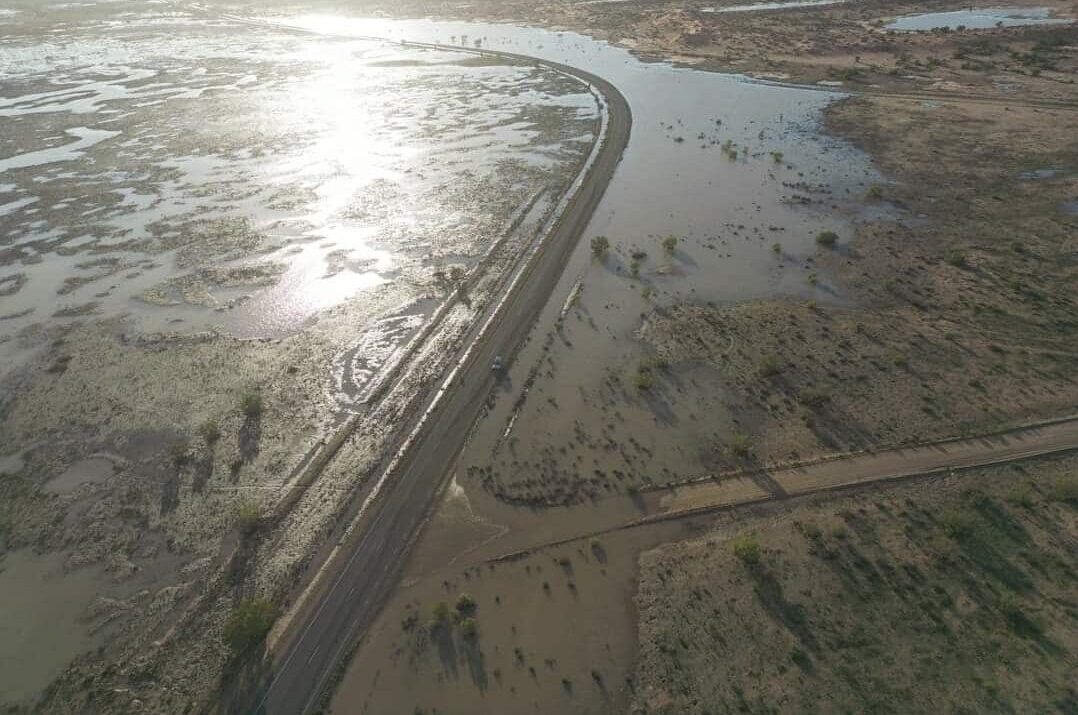
Ongoing works to fully seal the 472‑kilometre Strzelecki Track between Lyndhurst and Innamincka in outback South Australia are accelerating after completion of a major milestone on the $215 million upgrade. The formerly unsealed freight route, which suffered severe flooding and closures in 2024, is being progressively converted to an all‑weather sealed standard to support heavy vehicle access to remote communities and energy projects. For designers and contractors, key issues include pavement design for expansive clays, flood‑resilient drainage, and construction logistics over long, isolated sections.
Hot Driveways QLD is expanding from domestic asphalt driveways into small to medium civil works, delivering car parks, access roads and minor subdivisions with its own paving crews and compact plant fleet. Project Manager Lincoln Bernstein says the business targets a niche between large Tier 1 contractors and small owner-operators, taking on jobs typically in the hundreds to low thousands of square metres. The model allows councils and developers to package works such as cul-de-sacs, commercial forecourts and urban infill access lanes with tighter programming and simpler contract administration.
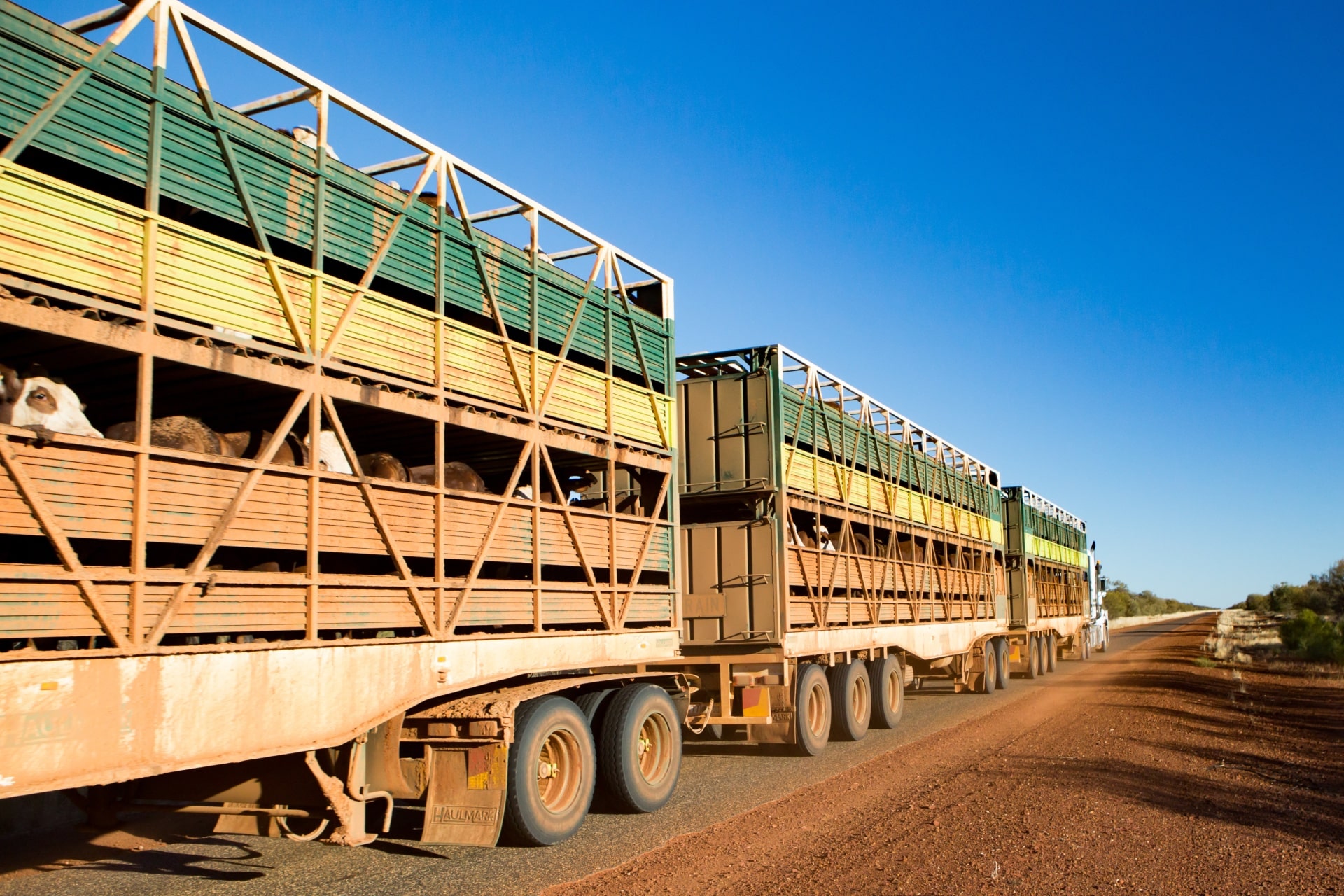
Completion of the first early works package under the A$500 million Central Queensland Beef Roads Program marks the start of progressive upgrades and sealing on nine key freight corridors across Central and Western Queensland. Priority routes include the Clermont–Alpha corridor and other cattle haulage links that currently rely on unsealed or substandard pavements, limiting heavy vehicle access and wet‑season reliability. For pavement and drainage designers, the program signals sustained demand for heavy‑duty rural road designs tailored to high-mass livestock and feed transport in expansive blacksoil and dispersive subgrade conditions.
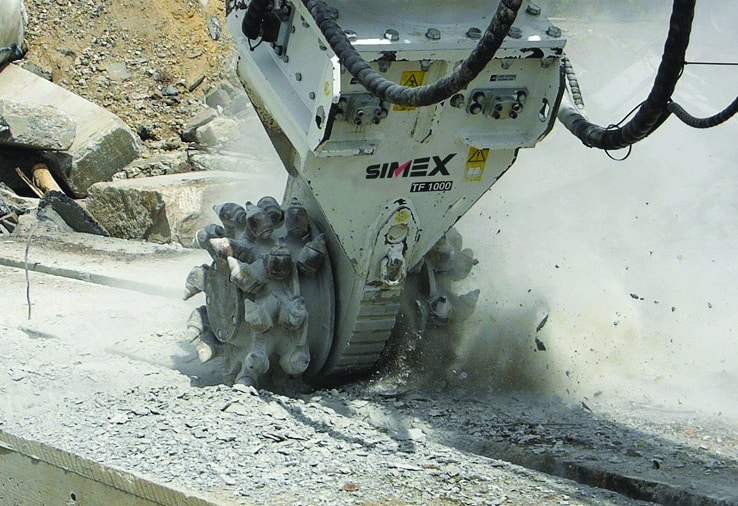
SIMEX rotary cutters distributed by GroundTec Equipment across New South Wales are being used as excavator attachments with dual drums and reinforced carbide teeth to break and mill hard rock, concrete and asphalt. The hydraulic units deliver controlled profiling for trenches, tunnel cross-sections and rock face scaling where impact hammers risk overbreak or vibration damage to adjacent structures and buried services. For civil contractors, the cutters enable tighter tolerances on excavation geometry and smoother surfaces, reducing secondary trimming and improving productivity on constrained urban and roadside works.
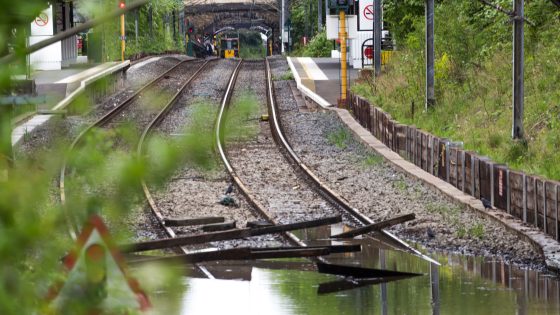
Government Actuary’s Department actuaries have delivered probabilistic analysis to the Office of Rail and Road on how climate-related hazards such as extreme rainfall, heat and flooding are evolving across UK rail and strategic road assets. Using long‑term climate projections and hazard frequency–severity modelling, the work maps where risks to embankments, cuttings, track buckling and drainage exceedances are likely to increase. The outputs will feed into ORR’s scrutiny of Network Rail and National Highways’ asset management, resilience upgrades and future capital planning.
Heathrow Airport’s third runway is now scheduled to open in 2039, a delay of roughly a decade on earlier expectations, with the promoter still targeting development consent by 2029 under the UK’s Development Consent Order regime. The scheme, previously costed in the tens of billions of pounds and involving major earthworks in the Colne Valley floodplain plus diversion of the M25 in a cut-and-cover tunnel, will now have to be revalidated against updated demand forecasts, carbon budgets and design standards. This extended timeline increases planning, geotechnical risk and cost uncertainty for contractors and consultants positioning for enabling works.
Creation of Great British (GB) Grid will establish a publicly owned electricity grid investment body with access to up to £4bn from within Great British Energy’s existing budget. The organisation is expected to focus on accelerating grid reinforcement and new transmission capacity to connect large-scale offshore wind, solar and storage projects, where current connection queues often exceed 5–10 years. For civil and electrical engineers, this signals forthcoming demand for high-voltage substations, overhead line upgrades and underground cable corridors, alongside associated consents and geotechnical works.
A new £10M treated water reservoir at Chaul End near Caddington has almost doubled storage capacity at the Affinity Water site, boosting resilience for supplies to Luton, Hemel Hempstead and St Albans. The additional covered storage is integrated into the existing treatment works, allowing more buffered output from the works to the trunk main network during peak demand and outage events. For civil and geotechnical teams, the scheme signals continued investment in service reservoirs and associated earthworks to harden southern England’s potable water infrastructure against drought and network shocks.
Waratah Minerals’ first deep test at the Spur project in New South Wales, diamond hole IDD001 drilled about 230m north of the historic Ironclad headframe, has intersected multiple gold-bearing structures outside the known mine footprint. The intercepts support a larger mineralised corridor linking the Ironclad and Consols workings, rather than isolated pods around the old stopes. For geologists and mine planners, this points to a potentially continuous lode system with scope for step-out drilling and future underground resource definition.
Encounter Resources has defined multiple shallow copper oxide blankets at the Parbo system in Western Australia, extending for more than 1km along strike and up to 800m wide within an 8km-long mineralised corridor at its Yeneena copper project. Plus-0.4 per cent copper domains have been modelled from historical drilling, indicating laterally continuous oxide mineralisation at relatively shallow depths. The scale and geometry suggest potential for open-pit, oxide-focused development, with follow-up drilling likely to refine thickness, continuity and leachability for heap or SX–EW processing options.
Sky Metals has started a >150-hole drilling campaign at its Tallebung tin–tungsten–silver project in New South Wales after new diamond core results pointed to resource growth potential. Recent drilling returned 17m at 0.70 per cent tin, 0.03 per cent tungsten trioxide and 14.8g/t silver from 26m depth, including higher-grade internal intervals. The scale of the programme suggests a focus on expanding shallow mineralisation, with implications for open-pit geometry, geotechnical characterisation of near-surface host rocks and future mine design.
Torque Metals has recorded its deepest intercept at the HHH deposit within the Ritz gold project, with diamond hole 26HRCDD151 returning 8.9m at 17.50g/t gold from 344m, including 3m of higher-grade mineralisation. The company is using a combination of diamond and reverse circulation drilling across multiple lodes at HHH to test down-dip and along-strike extensions. Results point to resource-growth potential at depth, with implications for underground mine design, geotechnical characterisation of deeper host rocks, and future drilling density requirements.
Tungsten Mining has secured non-binding indicative debt proposals for its Watershed tungsten project in far North Queensland, targeting gearing of up to 70 per cent and potential debt funding of about $200 million against a pre-production capital cost of $274 million. The company is now progressing lender due diligence and credit approvals, with the debt package expected to be complemented by equity and potential offtake-linked funding. For project engineers, the high gearing assumption will drive tight control of pre-strip, plant construction and ramp-up schedules to meet financier covenants.
Above-ground risks have imposed or frozen more than $54 billion in Latin American mining since 2018, including a $31.7‑billion settlement for the 2015 Mariana tailings dam failure in Brazil and roughly $7 billion in stalled Peruvian copper projects plus $4 billion tied up in Mexico’s El Arco, San Nicolás and Cordero developments. AMI also cites Panama’s $6.8‑billion Cobre Panamá copper mine closure and over 700 days of transport-corridor blockades at Peru’s Las Bambas as emblematic of execution and social risk. Consultants report investors now heavily discount projects with uncertain permitting timelines, weak institutional legitimacy or high exposure to illegal mining.
George Bamford has been appointed joint chairman of JCB as the privately owned manufacturer reported 2025 turnover of £5.7bn and profit before tax of £642m, with machine sales dipping to 113,948 units amid flat demand in North America and a 12% market contraction in India. JCB remains debt-free and says it has grown global market share while committing £100m to hydrogen combustion R&D, including a hydrogen-fuelled engine now in commercial production. The technology’s performance was showcased when Andy Green reached 406.32mph at Bonneville in the world’s fastest hydrogen-powered vehicle.
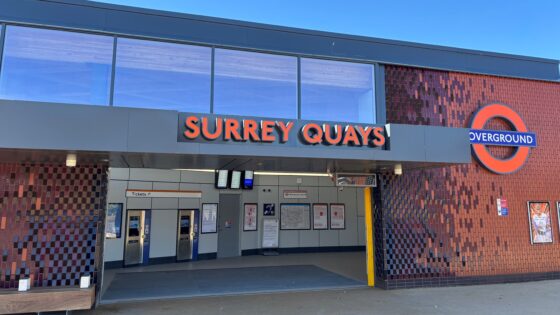
Step-free upgrades at Surrey Quays and Northolt stations have been completed under a £15.3M Transport for London programme to provide level access for wheelchair users, buggies and luggage. Works included new lifts integrated into existing station structures, regraded or rebuilt platforms to remove stepping gaps, and structural alterations within constrained Victorian and mid‑20th‑century fabric. For civil engineers, the schemes illustrate typical retrofit challenges: limited possession windows, maintaining live services, and threading new lift shafts and circulation routes through heavily used, spatially constrained assets.