St Barbara’s Nova Scotia gold hub approval: design and ESG notes for mine planners
Reviewed by Joe Ashwell
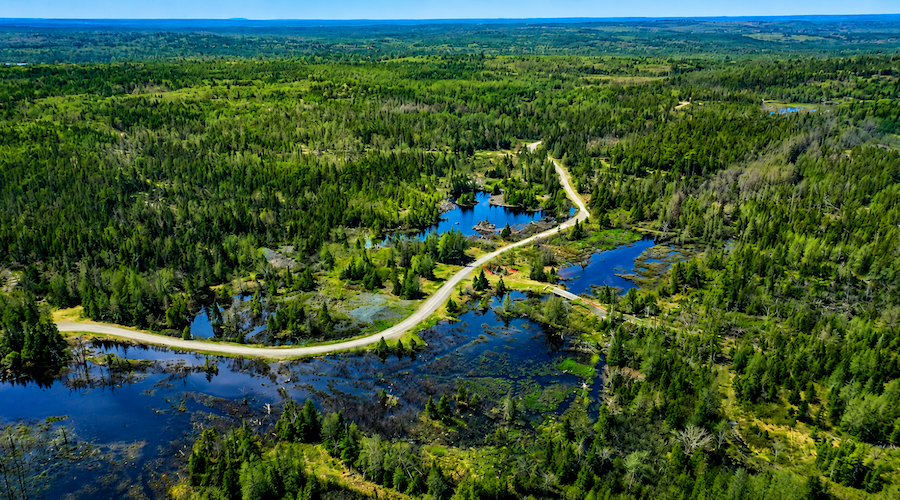
First reported on MINING.com
30 Second Briefing
St Barbara’s 15‑Mile Processing Hub in Nova Scotia has cleared the federal conformity review, triggering a 20‑day public comment and First Nation consultation period under Canada’s impact assessment regime and the new “one project, one review” cooperation agreement. The central plant is designed to treat 3 million tonnes of ore per year from the 15‑Mile, Old Austen and Old Mitchell mines, targeting over 100,000 oz of gold annually for more than 11 years based on proven and probable reserves. Redesign work claims to cut land disturbance by 23–55% across the three sites, remove several access roads and legacy facilities, and integrate remediation of historic mercury and arsenic contamination, with a feasibility study and full environmental assessment filing planned by Q3 FY2027.
Technical Brief
- A 20‑day public comment and Mi’kmaq/First Nation consultation window now precedes any decision on a full federal impact assessment.
- Redesign consolidates earlier multi‑plant concepts into a single 15‑Mile Processing Hub serving 15‑Mile, Old Austen and Old Mitchell.
- Revised layout cuts land disturbance by ~23% at 15‑Mile, ~43% at Old Austen and ~55% at Old Mitchell.
- Several previously proposed access roads and processing facilities have been removed to shrink the project footprint and linear disturbance.
- Design changes explicitly target reduced wetland and watershed impacts while integrating remediation of legacy mercury and arsenic contamination zones.
- St Barbara cites ~C$5 billion in total economic activity, with ~1,386 construction and ~740 long‑term operating jobs in rural Nova Scotia.
- Environmental Assessment Registration Document and multiple provincial/federal permits will follow, with full EA documentation targeted for Q3 FY2027 alongside the feasibility study.
Our Take
St Barbara’s 15‑Mile Processing Hub in Nova Scotia sits alongside its approved Touquoy stockpile reprocessing campaign (about three million tonnes over 10–14 months), signalling a strategy to sweat existing Atlantic Gold infrastructure while transitioning to a longer‑life hub-and-spoke operation.
The 3 Mt/y central plant and >11‑year mine life at 15‑Mile align with St Barbara’s earlier 697 sq. km exploration push around the planned hub, suggesting the company is banking on additional mesothermal gold discoveries to keep the facility filled beyond the initial plan.
Nova Scotia already features heavily in our gold coverage, and the province’s recent easing of permitting and investment in geoscience tools means the Impact Assessment Agency of Canada’s approval here is likely to be read by other gold and critical mineral proponents as a positive signal for future project timelines in the region.
Prepared by collating external sources, AI-assisted tools, and Geomechanics.io’s proprietary mining database, then reviewed for technical accuracy & edited by our geotechnical team.
Related Articles
Related Industries & Products
Mining
Geotechnical software solutions for mining operations including CMRR analysis, hydrogeological testing, and data management.
Construction
Quality control software for construction companies with material testing, batch tracking, and compliance management.
CMRR-io
Streamline coal mine roof stability assessments with our cloud-based CMRR software featuring automated calculations, multi-scenario analysis, and collaborative workflows.
HYDROGEO-io
Comprehensive hydrogeological testing platform for managing, analysing, and reporting on packer tests, lugeon values, and hydraulic conductivity assessments.
GEODB-io
Centralised geotechnical data management solution for storing, accessing, and analysing all your site investigation and material testing data.