Newmont’s Cadia mine halt: seismic risk and production impacts for engineers
Reviewed by Joe Ashwell
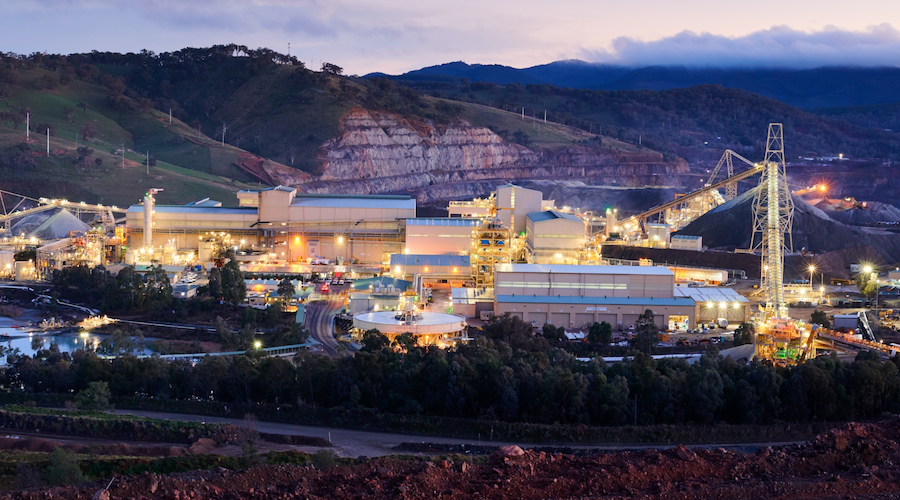
First reported on MINING.com
30 Second Briefing
Underground operations at Newmont’s Cadia mine in New South Wales have been halted for the second time in nine weeks after magnitude-3.2 and 3.4 earthquakes struck the site early Friday, with the latter event occurring about 1 km below surface. Cadia, a panel-cave operation producing roughly 385,000 oz of gold and 82,000 tonnes of copper annually and contributing about 11% of Newmont’s net asset value, had only recently undergone a five-week rehabilitation to restore output to 80% capacity after an April magnitude-4.5 tremor. RBC warns that recurring seismicity introduces material safety, production and regulatory uncertainty for the long-life operation, currently approved to 2031.
Technical Brief
- All underground workers were evacuated to surface with no injuries, indicating effective emergency egress protocols.
- Underground inspections are underway, implying systematic ground support, infrastructure and services integrity checks post-event.
- For similar deep caving operations, clustered local earthquakes of M3–4 range typically drive stricter seismic monitoring, re‑entry rules and regulator scrutiny.
Our Take
With Cadia contributing about 11% of Newmont’s net asset value, repeated seismic-related stoppages at this New South Wales gold–copper asset heighten portfolio concentration risk at a time when our database shows Newmont is also advancing other large underground caving projects like Red Chris in British Columbia.
The suspension at Cadia adds to a run of Australian gold output disruptions recently flagged by Surbiton Associates, suggesting that weather- and geotechnical-related downtime is becoming a material planning factor for operators such as Newmont and Northern Star across the country.
Given Cadia East has been in commercial production only since 2013 yet has resources modelled out to at least 2048, Newmont has a long remaining mine life to justify further seismic monitoring, ground support upgrades and potential redesign of high-stress panels rather than accepting recurring multi-week shutdowns.
Prepared by collating external sources, AI-assisted tools, and Geomechanics.io’s proprietary mining database, then reviewed for technical accuracy & edited by our geotechnical team.
Related Articles
Related Industries & Products
Mining
Geotechnical software solutions for mining operations including CMRR analysis, hydrogeological testing, and data management.
Construction
Quality control software for construction companies with material testing, batch tracking, and compliance management.
CMRR-io
Streamline coal mine roof stability assessments with our cloud-based CMRR software featuring automated calculations, multi-scenario analysis, and collaborative workflows.
HYDROGEO-io
Comprehensive hydrogeological testing platform for managing, analysing, and reporting on packer tests, lugeon values, and hydraulic conductivity assessments.
GEODB-io
Centralised geotechnical data management solution for storing, accessing, and analysing all your site investigation and material testing data.