Geomechanics, Streamlined.
© 2026 Geomechanics.io. All rights reserved.
Construction projects are losing productivity not from lack of BIM, drones or field apps, but from fragmented information spread across client CDEs, ERPs, email, shared folders and specialist platforms. Procore/Dodge data show UK and Irish professionals spend about 18% of project time – over eight working weeks a year – just searching for information, while 74% of US professionals move AI-generated work between applications at least three times a day. The emerging focus is on permission-aware integration so tools like Autodesk, Dropbox Sign and AI search (e.g. ChatGPT connected to Dropbox) can surface authoritative, up-to-date records without forcing all parties onto a single system.
New home planning approvals in England fell to 45,315 in Q2, the weakest quarter since 2012, with annual permissions at 214,515 – just 58% of the 370,000 units a year implied by the NPPF’s 300,000-home target. Permissions on larger sites over 10 units dropped 21% quarter-on-quarter to 39,689 homes, while approvals for private homes fell 19% over the same period and projects of three or more homes hit a record low of 1,234 in Q2. The Home Builders Federation cites weak mortgage-backed demand, rising construction costs and new taxes and levies as eroding development viability and is calling for a moratorium on further policy-driven costs.
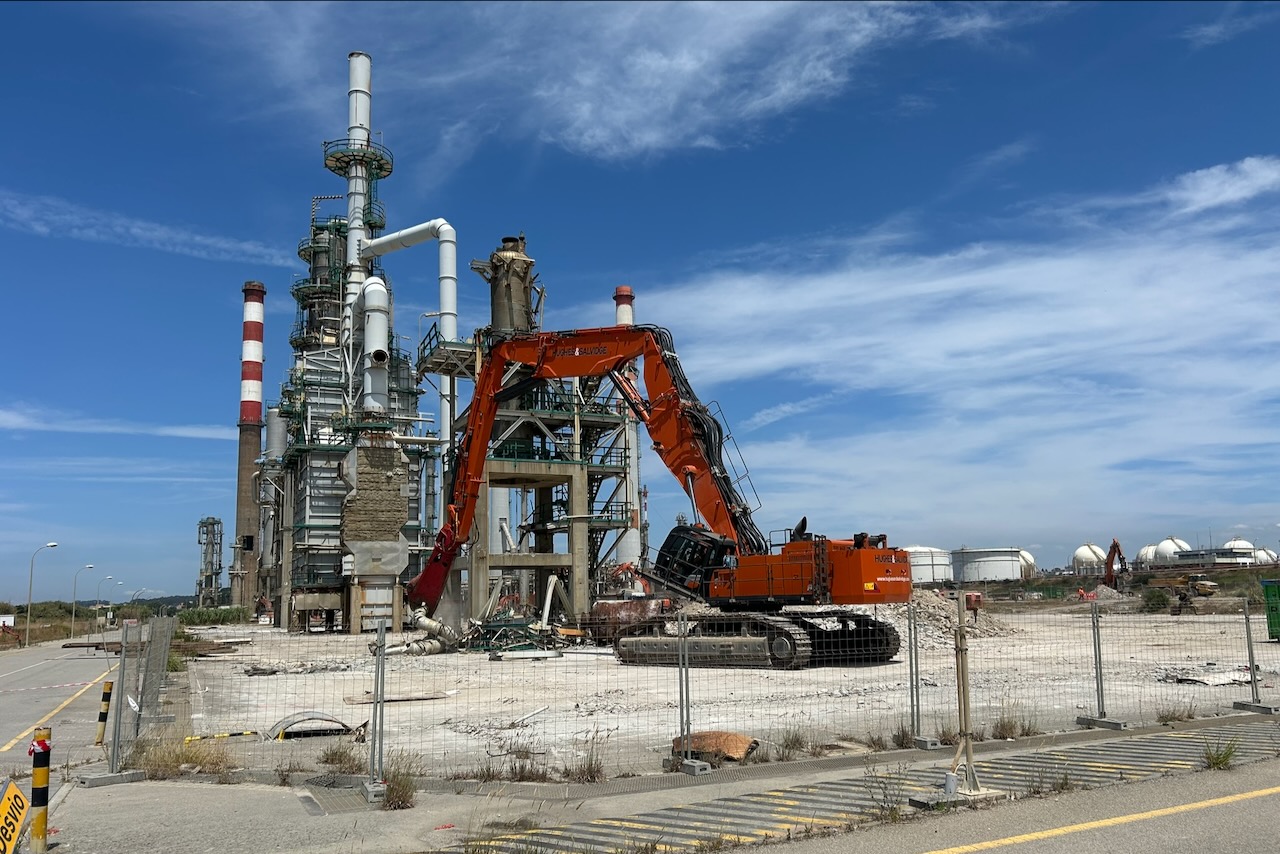
Demolition contractor Hughes and Salvidge reported turnover for the year to 31 March 2026 falling from £54.5m to £51m, with gross margin dropping from 19.2% to 16.5%. Management has responded by cutting administrative expenses from £7.9m to £7.1m and focusing on strengthening its asset base, signalling tighter cost control and balance sheet resilience. Contractors and clients can expect continued competitive pressure on pricing as margins compress, but with a financially cautious counterparty on large demolition and enabling works.
Global coal financing has held near $117 billion a year since COP26, with Urgewald tracking $467 billion in loans and underwriting from 744 banks to thermal coal companies between 2022 and 2025, 62% of it from Chinese lenders and 14% from US banks. EU-headquartered banks cut annual coal financing 46% to $2.6 billion by 2025, while UK banks increased support 17%, led by Barclays at $5.7 billion over four years and a 34% annual rise to $1.6 billion. In contrast, Chinese annual coal financing climbed to $75 billion, US banks to $16.7 billion, and South Korean banks more than doubled exposure to $1.75 billion, signalling capital is concentrating in jurisdictions with weaker coal policies.
Atlas Critical Minerals’ Malacacheta project in Minas Gerais, Brazil, has debuted with an initial resource of 17.2 million indicated tonnes at 5.73% Cg (about 986,000 tonnes contained graphite) plus 7 million inferred tonnes at 5.4% Cg (around 378,000 tonnes), making it South America’s largest compliant, publicly reported graphite resource. The grade is roughly 25% higher than Graphite One’s Graphite Creek in Alaska and exceeds South Star Battery Metals’ Santa Cruz mine, which has 14.9 million measured and indicated tonnes at 2.29% Cg. The estimate, based on 2,394 metres of drilling in 21 holes over just 2.5 km of an 11-km corridor, underpins a planned preliminary economic assessment.
Cruden has begun pre-construction works for a 90-home scheme off Kirkton Road, Neilston, comprising 66 three- and four-bedroom private units and 24 affordable homes, with first timber kits due on site early next year and initial completions targeted for next summer. The layout retains existing access points from Kirkton Road and the approved landscape strategy, adding new tree planting, walking routes and sustainable drainage features integrated with surrounding green space. Homes will incorporate air-source heat pumps and electric vehicle charging, signalling fully electric, low-carbon building services.
Penshurst Construction has secured a £7m contract from Swindon Borough Council to replace around 200 obsolete council-home kitchens per year, including strip-out, preparation works and full supply-and-install. The 36‑month framework, which started in September 2026 and can be extended by a further 24 months, will move into full delivery from January 2027 after a three‑month mobilisation phase. For asset managers and contractors, the programme signals steady planned-maintenance workload and a structured kitchen lifecycle replacement model in Swindon’s social housing stock.
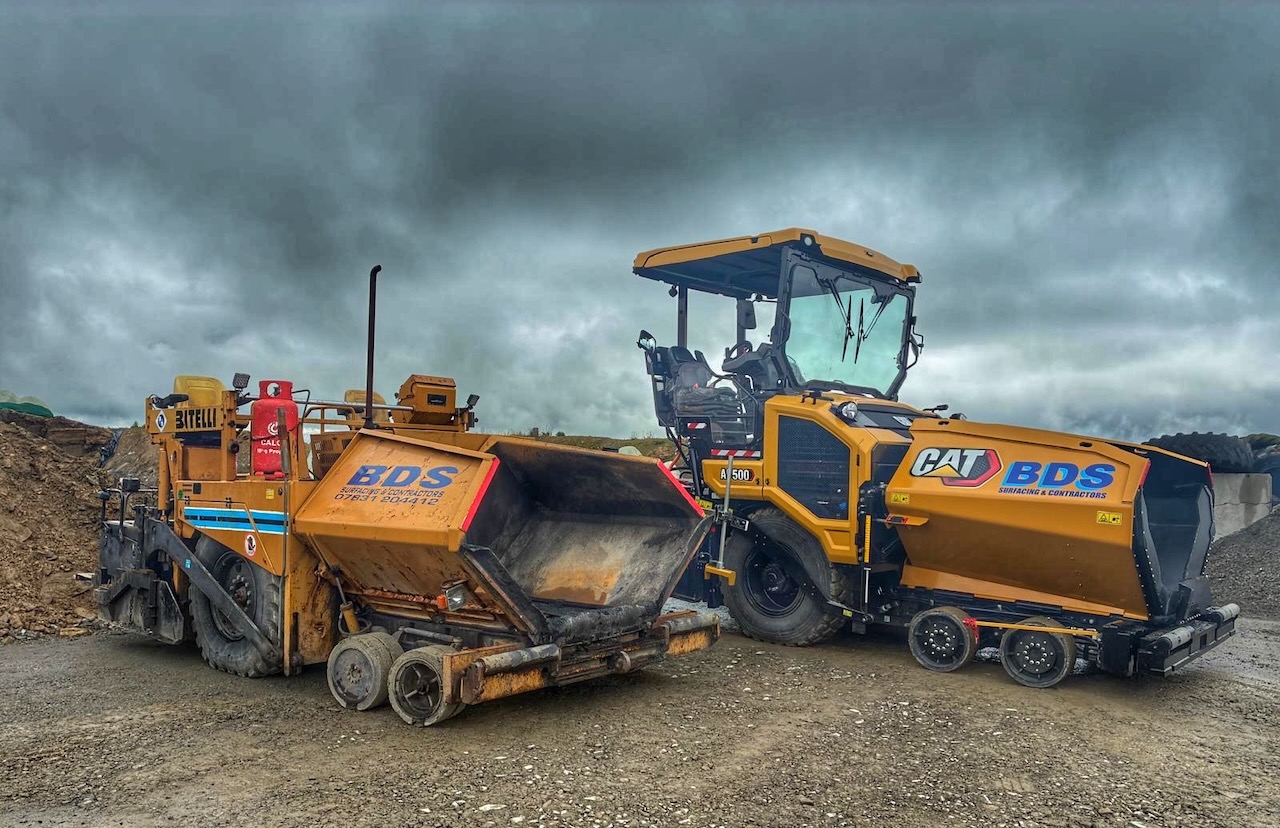
BDS Plant Hire (Orkney) Ltd has replaced its long‑used Bitelli units with a new Cat AP500 wheel asphalt paver supplied by Finning UK & Ireland to modernise its paving fleet. The AP500 offers compact dimensions suitable for Scottish single‑track and rural roads, permit‑free transport, Stage V emissions compliance and a wide screed range, giving BDS more flexibility across mixed urban and trunk‑road work. Finning provided application guidance during the transition, with BDS targeting higher laying efficiency and more consistent mat quality on infrastructure projects.
Develon has launched the 32‑tonne DX300LC‑9 excavator to its Series 9 range, powered by a DX08 engine delivering 207 kW at 1,800 rpm and 1,230 kgf·m torque, with a maximum digging depth of 7.3 m and reach of 10.5 m. A super long reach variant, the DX300SLR‑9, extends reach by a further metre over the previous DX300SLR‑7 for applications such as riverworks and slope stabilisation. The machine adds electro‑hydraulic control, 360° Smart Around View Monitor, AI‑based person detection with E‑Stop, virtual walls, Advanced Lift Assist and ultra‑low 67 dBA cab noise.
Costain has appointed Rohan O’Grady as managing director of the Skanska‑Costain‑Strabag (SCS) joint venture delivering HS2’s London tunnels, a multi‑billion‑pound package including twin‑bore, high‑speed rail tunnels and associated underground structures. O’Grady joins from CPB Contractors, CIMIC Group’s construction arm, bringing over 20 years’ experience on complex, large‑scale transport and infrastructure schemes in both public and private sectors. His remit centres on safe, efficient delivery of the London tunnelling works, a critical element for HS2’s capacity uplift on the UK rail network.
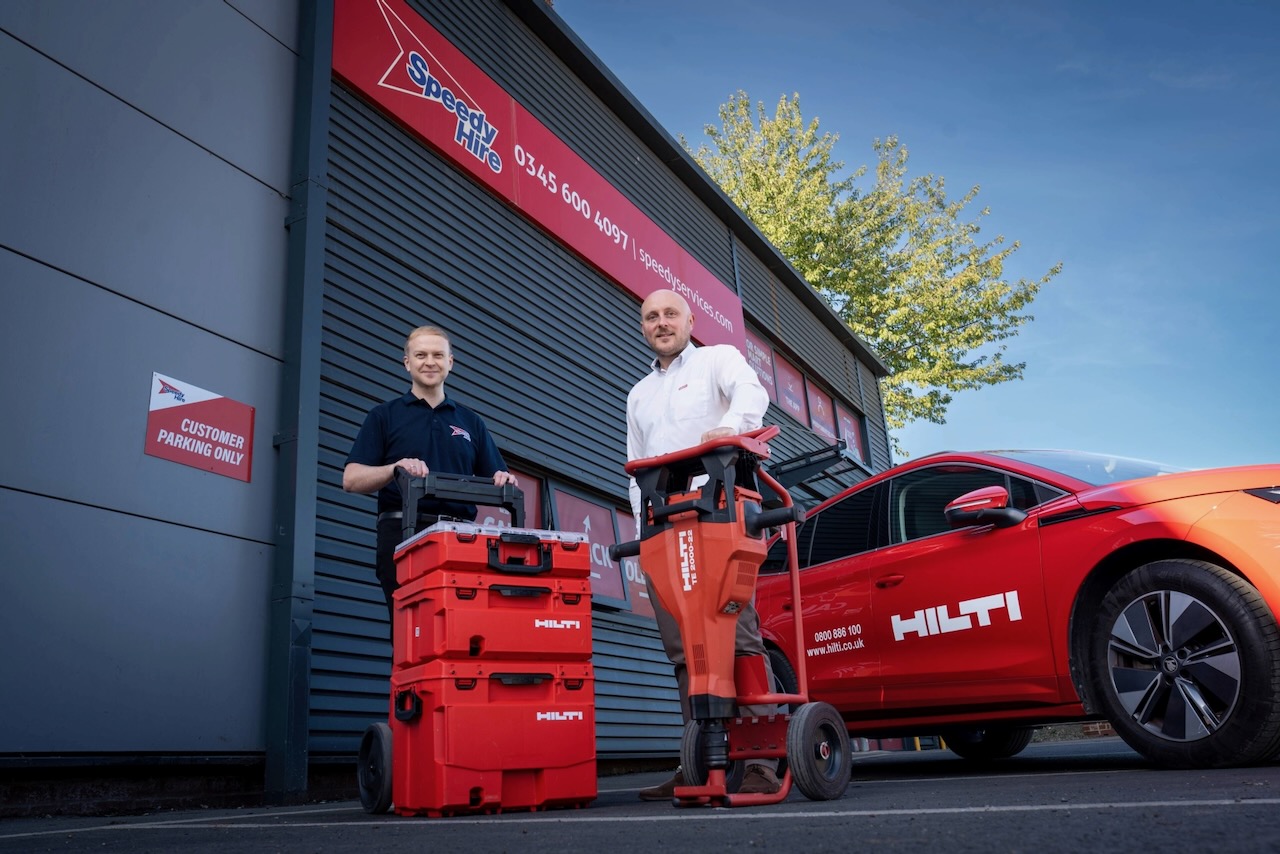
Speedy Hire has signed a rolling five-year deal to purchase 25,000 Hilti assets, expanding its fleet to more than 60 Hilti product lines including the Nuron 22V single-platform cordless range with interchangeable batteries. Hilti will provide servicing through its dedicated repair centre in Glasgow and give Speedy customers access to its digital fleet management programme for tool tracking and utilisation data. The move positions Speedy with a highly standardised, battery-powered small tools fleet, simplifying site logistics and maintenance planning for contractors.
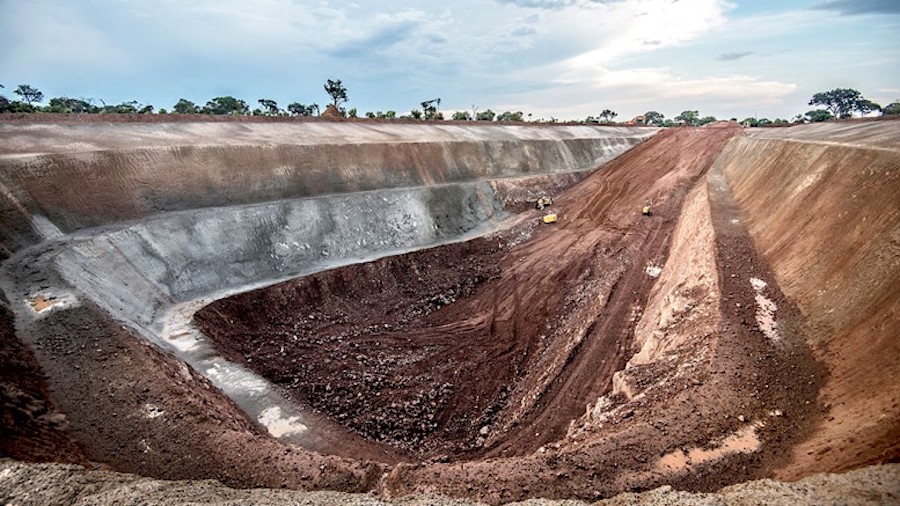
Sumitomo Corporation of Americas is using its Dos Amigos copper project in Chile to illustrate a strategy of entering early-stage assets alongside local partners rather than waiting for fully derisked operations. The company’s VISIONS September 2026 edition describes a focus on long-life sulphide resources and shared development of mine, concentrator and associated infrastructure with Chilean operators, instead of purely financial offtake deals. For engineers, this signals continued appetite for greenfield copper projects in Chile requiring joint design of pits, tailings storage and processing plants with Japanese technical input.
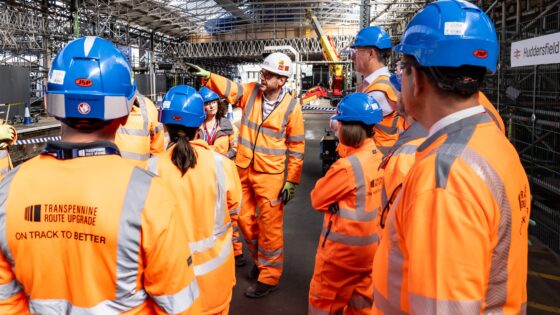
Transpennine Route Upgrade teams have used a 16-day blockade of the Huddersfield section to advance major rail works, with possessions running through to Sunday 4 October. The closure enables intensive track, signalling and civils activities that cannot be done under normal traffic, including renewal and reconfiguration of key junctions and structures on this constrained four-track corridor. For contractors and designers, the works illustrate continued reliance on extended blockades to deliver complex staging on live main lines with limited diversionary capacity.
M Group has launched its first Sustainability Strategy, targeting a 42% cut in Scope 1 and 2 emissions and a shift to 100% electric company cars by FY2030. The infrastructure services provider plans to decarbonise its directly controlled fleet and site operations, signalling tighter control of fuel use, plant selection and temporary power on projects. Contractors and suppliers can expect growing pressure for low‑emission vehicles, alternative fuels and better energy data to align with M Group’s interim and 2030 targets.
Plans to make Wellington station in Shropshire fully step-free have been approved, with construction of a new footbridge and two passenger lifts due to start later this year. The scheme will replace the existing stair-only bridge to provide lift access between platforms, improving vertical circulation for wheelchair users, passengers with luggage and those with limited mobility. Contractors will need to manage works within a live rail environment, coordinating possessions and maintaining safe passenger flows during bridge removal and lift shaft construction.
City of York Council has let a £15.36M (ex VAT) Minor Civils Framework 2025 to five civil engineering contractors to deliver small-scale infrastructure works across the city. The framework, worth £19.3M including VAT, will cover routine highways, drainage, footway and structures maintenance, plus minor improvement schemes typically below traditional capital project thresholds. Contractors can expect a steady pipeline of short-duration packages, with emphasis on rapid mobilisation, traffic management planning and coordination with existing utilities in a dense urban network.
Washington’s post-2025 critical minerals strategy is now backing more than 180 projects with tools such as equity stakes, loans, offtake guarantees and price floors, including $7.6 billion in non-equity support for rare earth and magnet projects in the 18 months to June. The Pentagon has taken $400 million in preferred shares and a $150-million loan in MP Materials, while guaranteeing a $110/kg neodymium-praseodymium floor price and magnet offtake from a second Texas plant, and the Department of Energy has issued a $2.23-billion loan plus warrants for Lithium Americas’ Thacker Pass. A conditional $725-million loan to Energy Fuels and over two dozen mineral agreements with partners from Australia to the DRC signal a deliberate build-out of non-Chinese mining, separation and refining capacity, with CRU projecting Chinese market share erosion by 2030.
Golden Cariboo Resources has reported an initial resource at its past-producing Quesnelle property in central British Columbia of 10 million indicated tonnes at 0.55 g/t gold and 1.5 g/t silver (175,000 oz. Au, 494,000 oz. Ag) plus 70.9 million inferred tonnes at 0.44 g/t gold and 1.2 g/t silver (995,000 oz. Au, 2.63 million oz. Ag) across the Halo and North Hixon zones. The estimate, based on 24 diamond drill holes totalling 8,466 metres and excluding the Main zone, follows drilling that intersected 268.24 metres at 0.58 g/t gold from 28.26 metres depth, including 30.62 metres at 1.16 g/t from 140.03 metres. Shares fell 31% to C$0.09, despite Couloir Capital maintaining a Buy rating and 40¢ fair value, as the company advances a further 7,500 metres of drilling in 2026 on its 949-sq.-km Cariboo land package.
Fifteen of 19 major miners tracked by McKinsey reported third‑quarter financial gains from AI, with the consultancy estimating potential EBITDA uplifts of 10%–15% from roughly 5% higher production and 10% lower C1 cash costs. The strongest evidence is in processing, where AI-driven mill and flotation control has reached “proven in the P&L” status, with ore-blending, stockpile optimisation and shutdown planning also rated proven, while leaching, water‑and‑reagent optimisation and most mine planning, dispatch and exploration tools remain emerging or aspirational. McKinsey’s Ferran Pujol and Freeport-McMoRan’s Ravi Malladi stressed that value depends on robust data flows, condition-based maintenance and embedded site-level tech teams, not just standalone pilots.
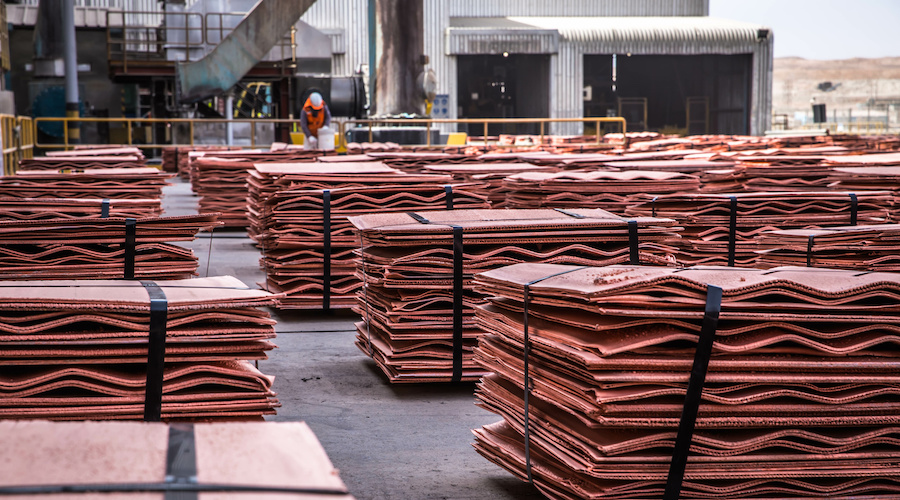
Copper held at $14,446/t on the LME on Tuesday, near this month’s $14,875 record, as workers in two unions at Antofagasta’s Centinela mine in Chile rejected a final contract offer and triggered a mediation period ahead of a possible strike. Wage talks at BHP’s Escondida, the world’s largest copper mine, have also been delayed after a fatal accident, compounding supply concerns. ICSG data show mine output running at an annualised 23 Mt in July versus refined demand of 29 Mt and supply of 28.4 Mt, with Deutsche Bank projecting prices could reach $22,000/t by Q2 2027.
Robert Friedland is pushing to replace conventional SAG and ball mills with I-Pulse’s I-ROX pulsed-power comminution, which stores electricity then releases nanosecond–microsecond bursts to fracture ore internally along mineral boundaries, with projected energy cuts of up to 80% and about 5% higher metal recoveries. A 2,500 m² I-ROX research centre in Toulouse is testing Kamoa-Kakula copper ore and tailings, while I-Pulse has also secured a US$250 million CHIPS Act award for silicon-carbide semiconductors. The same platform underlies G-Pulse drilling, claimed to triple penetration rates and extend bit life sixfold, to be trialled on the Millungera Basin geothermal project in Queensland.
Copper Intelligence and CoTec Holdings have formed a British Virgin Islands joint-venture company to process historical copper tailings across the Democratic Republic of Congo’s legacy copper districts, which have generated waste since the 1950s. CoTec will deploy its extraction technologies for rare earth and strategic materials to upgrade old tailings and redundant copper deposits, while Copper Intelligence provides regional execution capability and targets high-potential DRC assets. Projects will be advanced asset-by-asset, subject to detailed legal and technical due diligence and board approvals, with scale-up funding sought from the US International Development Finance Corporation and others.
Lake Resources has secured the key Environmental Impact Declaration for its Kachi lithium brine project in Catamarca, Argentina, clearing the project to enter front-end engineering design for a 25,000 tpa lithium carbonate equivalent facility using Lilac Solutions’ direct lithium extraction process and prior engineering work with Hatch. The DIA confirms compliance with provincial environmental and social standards, imposes a 200 m surficial exclusion zone around the lagoon shoreline, and sets pre‑operations obligations. Lake has also committed $1 million to Catamarca’s Mining Royalty Trust Fund, to be paid between October 2026 and June 2027 for local infrastructure.
Hundreds of millions of dollars’ worth of Venezuelan gold flown into the US under a Trafigura–Minerven deal backed by President Trump and Interior Secretary Doug Burgum is sitting idle because refiners refuse to process it without proof it meets responsible-sourcing standards. The gold, including about $100 million shipped within hours of the March signing, comes from guarded Minerven underground mines where small-scale producers reportedly pay protection money to the Tren de Guayana gang. Similar deals by Heeney Capital and Mercuria, targeting up to $2.2 billion a year in Venezuelan mineral exports, face the same due‑diligence bottleneck.