Geomechanics, Streamlined.
© 2026 Geomechanics.io. All rights reserved.
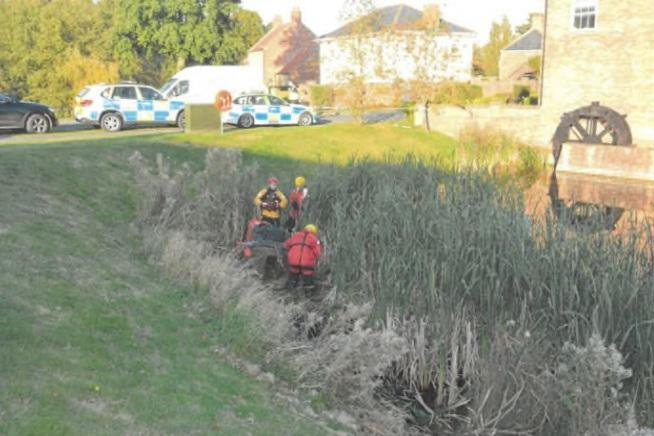
A 23-year-old grounds worker, Kamil Grygieniec, was killed when a ride-on mower without its roll-over protection system (ROPS) descended a steep slope and overturned into a village pond at North Stainley, near Ripon, on 8 October 2021. HSE investigators found the factory-fitted ROPS had been removed and that no suitable, site-specific risk assessment for mowing on sloping, uneven ground had been carried out. Employer MHS Countryside Management Limited, of Bishop Auckland, was fined £27,000 plus £11,166 costs at York Magistrates’ Court for breaching Section 2(1) of the Health and Safety at Work etc. Act 1974.
Rainfall 64% above the February average has triggered widespread flooding and landslides across Colombia, killing at least 13 people and affecting more than 10,000, with Antioquia, Cundinamarca and Valle del Cauca among the hardest-hit departments. Rivers including the Magdalena and Cauca have overtopped banks, damaging road embankments, bridge approaches and hillside settlements, and forcing evacuations in multiple municipalities. Geotechnical teams face saturated slopes, debris flows and scour at culvert and retaining-wall foundations, with authorities warning of further failures if intense rainfall persists.
More than 140,000 people have been evacuated from low-lying towns and rural communities in northwestern Morocco after extreme rainfall and emergency releases from multiple upstream dams caused major flooding along several river valleys. Rapid drawdown and high downstream discharges are stressing ageing embankment protections, inundating agricultural terraces and damaging road and bridge approaches, with several river crossings reportedly overtopped. Geotechnical teams now face urgent inspections of dam abutments, spillway structures and saturated slopes, alongside rapid debris clearance to reopen key access routes for relief and repair works.
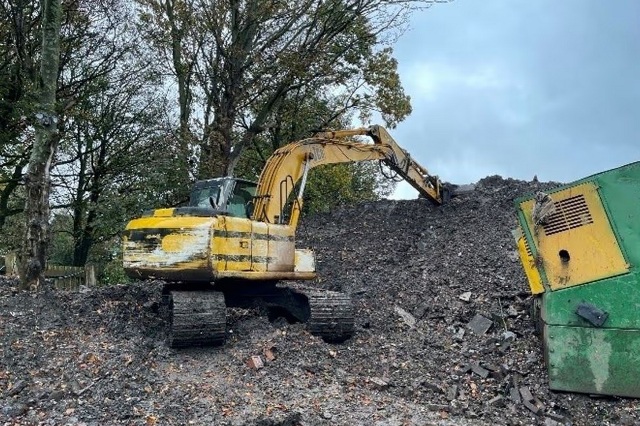
A Manchester-based grab hire firm, Salford Grab Hire Limited, has been fined £10,000 plus £3,475.90 costs after a one-tonne excavator bucket, used to prop a raised tipper truck body during repair, became dislodged and crushed a mechanic in October 2023. The worker sustained multiple fractures to his hand, shoulder blade, ribs, shin and thigh, a crushed ankle and foot, and a pulmonary blood clot. HSE found the bucket lacked a quick hitch or retaining pin and that no appropriate tipper body support equipment or safe system of work had been used.
A 21,000 m² reactivated landslide threatening the settlement of Köprülü in northeastern Turkey forced engineers to combine InSAR, GNSS, inclinometers, piezometers and detailed geomorphological mapping to understand rapidly accelerating ground deformation and building cracking. The team distinguished an active deep-seated slide from adjacent dormant and secondary movements, using displacement rates and groundwater data to refine the failure surface geometry and kinematics. This combined analysis directly informed whether to pursue large-scale stabilisation works or managed relocation, illustrating how multi-sensor monitoring can de-risk high-consequence decisions on inhabited slopes.
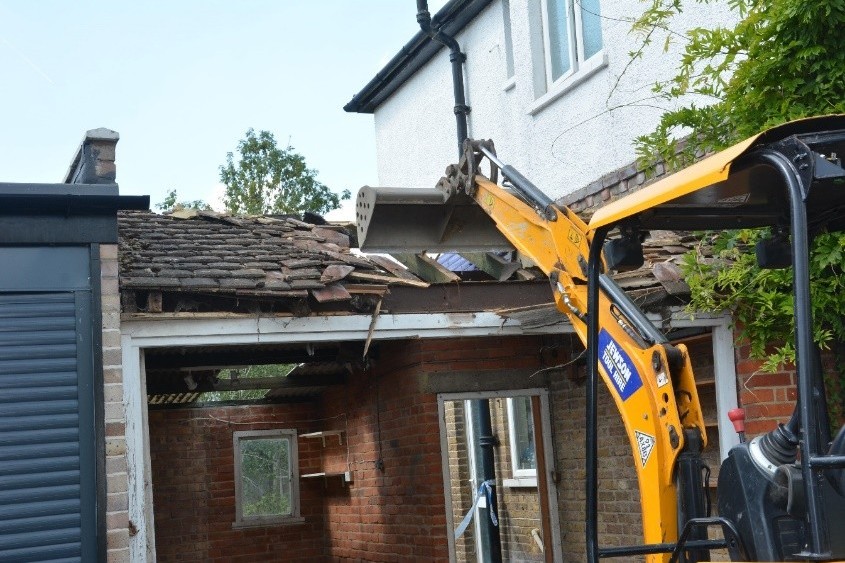
A self-employed contractor has been jailed for 12 months after 19-year-old labourer Thomas Neate died from head injuries sustained when he fell through an opening while stripping tiles from a domestic garage roof in Staines-upon-Thames on 16 August 2023. HSE investigators found the demolition was carried out directly from the roof with no scaffolding, decking or fall-prevention system, alongside unsafe mini-digger use and unrestricted public access to the site. Asbestos cement sheets were also broken up and removed by hand with no prior survey, exposing three other workers and the household to fibre risk.
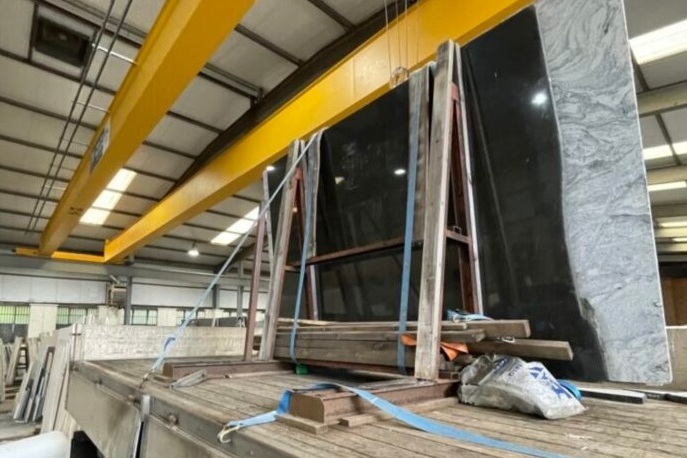
Blyth Marble Limited has been fined £50,000 plus a £3,750 victim surcharge after 61-year-old worker Steven White was fatally struck by two granite slabs with a combined weight of more than 900 kg during offloading from a lorry loader at its Larkhall, Lanarkshire premises on 4th September 2024. HSE investigators found vertical safety posts, intended as a physical barrier to prevent slab toppling, had been removed despite custom and practice to leave them in place and no explicit requirement in the safe working manual. The Safe System of Work also failed to distinguish between single and multiple slab lifting and was breached when White worked alone despite a two-person offloading requirement.
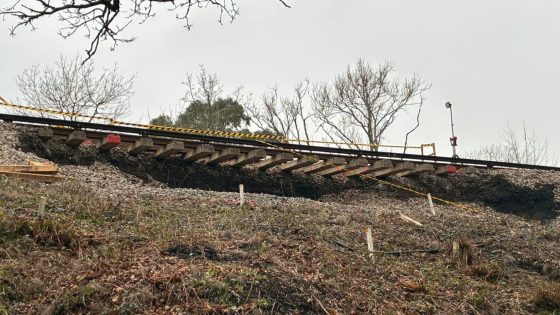
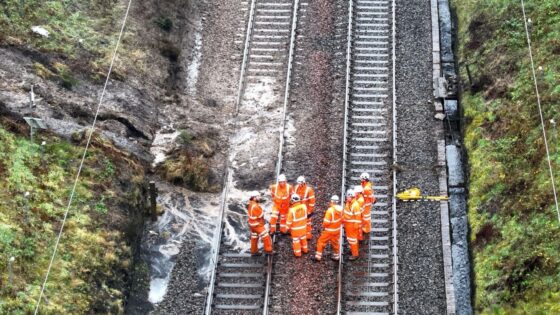
A landslip south of Ockley station in Surrey has stripped away the embankment supporting one of the two Horsham–Dorking tracks, leaving the rail and sleepers cantilevered in mid‑air and forcing full closure of the route until at least mid‑February. Network Rail engineers now face emergency stabilisation of the failed cutting or embankment, reconstruction of the formation, and re‑ballasting before traffic can resume. The incident will focus attention on drainage, slope monitoring and resilience of Victorian earthworks under increasingly intense winter rainfall.
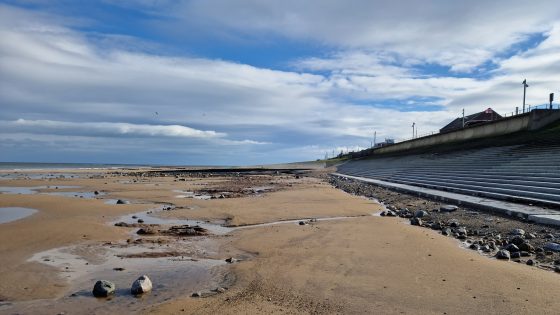
Storm Goretti’s impact on North East Yorkshire and Eastern Scotland is reviving concern over how Storm Babet in 2023 stripped and reprofiled beaches, exposing the limits of fixed “hold-the-line” coastal defences. Engineers are being urged to adopt adaptive pathways planning, sequencing measures such as managed realignment, dune and beach nourishment, and periodic crest raising rather than relying solely on hard sea walls and rock armour. The approach hinges on trigger points tied to beach levels, overtopping rates and asset condition, enabling long-term, staged investment under rising sea levels and more frequent extreme storms.
A major landslide in Pasir Langu village, West Bandung, West Java has left at least 17 people confirmed dead and dozens missing, triggering large-scale search and recovery operations using excavators, drones and K9 units on steep, rain-saturated slopes. Continuous heavy rainfall and highly weathered volcanic soils are complicating access to buried houses and farm structures, with rescuers reporting repeated minor slope failures and debris up to roof level. Authorities are assessing the stability of adjacent hillsides and considering temporary evacuation zones and traffic restrictions on nearby rural roads.
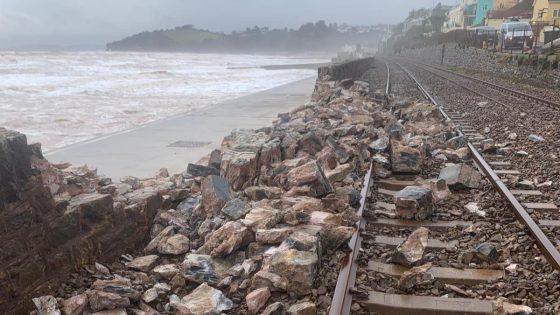
Rail services between Teignmouth and Dawlish Warren have restarted after Network Rail engineers removed debris from the coastal tracks caused by a sea wall collapse during Storm Ingrid. The failure occurred on the exposed Dawlish–Teignmouth frontage, a critical single coastal rail corridor where wave loading and overtopping have previously driven major resilience works. Engineers will now need to reassess wall stability, drainage and scour protection along this reach, with likely implications for design freeboard, armour detail and inspection regimes under more frequent extreme storm events.
Millions more homes across England, Scotland and Wales are projected to face severe flood risk as climate breakdown accelerates, with some communities likely to become effectively uninsurable and potentially require managed retreat. The Guardian’s investigation points to sustainable drainage systems (SuDS) – such as permeable pavements, swales, detention basins and green roofs – as critical to reducing peak flows and surface water overload in urban catchments. For civil and drainage engineers, the message is rapid retrofitting of SuDS into existing streets and developments, not just tightening design standards for new builds.
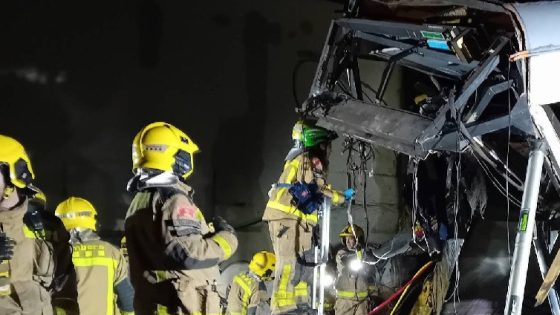
A commuter train derailed in Gelida, near Barcelona, on 20 January after striking a collapsed retaining wall that had fallen onto the track, killing the driver and injuring 37 passengers. The incident, Spain’s second fatal rail accident in a week, occurred on a section of line with trackside earth-retaining structures, raising immediate questions over wall design, drainage, inspection frequency and slope stability under recent weather conditions. For civil and geotechnical engineers, failure mode identification and rapid condition assessment of similar retaining systems on active corridors will be a priority.
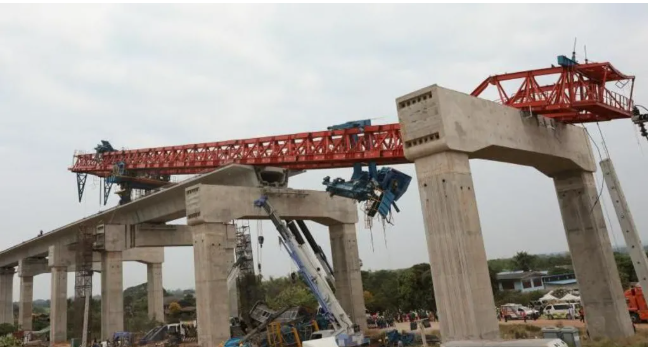
A construction crane collapsed onto a moving passenger train in northeastern Thailand on Wednesday morning, killing at least 32 people and injuring more than 60. The crane, operating on an adjacent construction site, failed and toppled across active railway tracks, striking multiple carriages at speed and causing extensive structural damage and derailment. Investigators are expected to focus on crane foundation design, ground conditions near the rail corridor, lift planning, exclusion zones and compliance with Thai standards for plant operating beside live transport infrastructure.
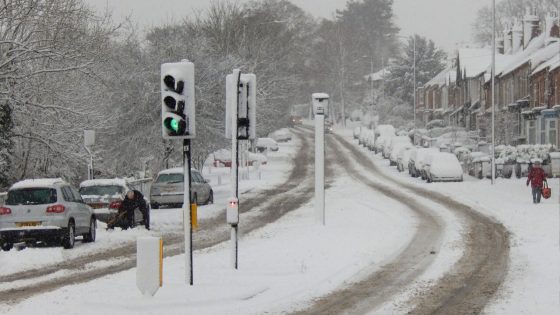
Widespread disruption across the UK rail and road network during last week’s snow and Storm Goretti has triggered renewed demands for higher design and operational resilience to low‑temperature events. Experts are pointing to points and overhead line failures, blocked rural A‑roads and motorway closures on key corridors as evidence that current winter maintenance regimes and drainage, de‑icing and snow‑clearance standards are inadequate. For civil and geotechnical engineers, the debate centres on upgrading asset design criteria, improving slope and pavement drainage, and strengthening contingency planning for more frequent intense snowstorms.
A massive slope failure at the privately operated Binaliw landfill in Cebu City has triggered continuous rescue operations, with dozens of waste-pickers and site workers reported missing beneath tens of metres of municipal solid waste. The collapse occurred during active tipping and compaction, raising immediate questions over waste slope geometry, leachate control and adherence to stability criteria for high fills in a high-rainfall, seismically active region. Local authorities are now reviewing permits and operational controls for large waste embankments across Metro Cebu.
A three-year University of Stirling study links dense Himalayan balsam stands on UK riverbanks to higher winter bank erosion rates, as the shallow-rooted annual dies back and leaves bare, unreinforced soil exposed to peak flows. Researchers tracked vegetation and bank condition along invaded and non-invaded reaches, finding greater lateral retreat and fine sediment mobilisation where balsam dominated. The work signals a need to factor invasive species management into fluvial design, scour protection detailing and river corridor maintenance to protect water quality and habitat structure.
A rainfall-induced landslide at the Barangay Binaliw open dumpsite in Cebu City on 8 January 2026 killed one landfill worker, injured several others and collapsed the on-site Material Recovery Facility, with at least seven people pulled from waste debris and further victims feared trapped. Prolonged intense rainfall caused water infiltration into waste and underlying soils, softening layers, raising pore water pressures and triggering global instability in steep, poorly drained waste slopes. The failure is prompting suspension of operations, drone-based damage mapping and renewed focus on engineered slope geometry, controlled waste placement and surface/subsurface drainage design for tropical landfills.
A sinkhole roughly 8–10 m wide and several metres deep has opened on the AJ Burkitt Reserve sporting oval in Heidelberg, directly adjacent to the North East Link tunnel alignment in Melbourne’s northeast. Victorian Infrastructure Delivery Authority has confirmed the “surface hole” is in the vicinity of active tunnelling operations, leading to a work pause while engineers and emergency crews carry out geotechnical investigations and monitoring. No injuries or structural damage have been reported, but the area remains fully cordoned off pending cause determination and stability assessment.
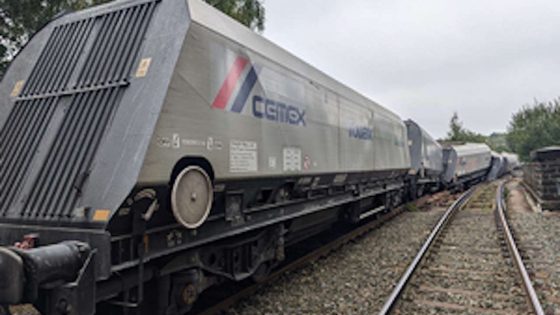
The derailment of a freight train on a bridge in Audenshaw, Greater Manchester, on 6 September 2024 was caused by failure of screws securing the rails to a timber support system, according to the Rail Accident Investigation Branch. The incident occurred on a bridge structure where the track was fastened to timber rather than conventional concrete or steel bearers, and the screw fixings did not maintain adequate restraint. The findings point to the need for closer inspection regimes and design checks for timber-supported track, particularly at bridge locations with high dynamic loading.
Mineração Morro do Ipê (MMI) has installed 19 HÖRMANN Warnsysteme electronic sirens as an automated warning system for communities in the tailings dam impact zone. The sirens are linked to dam monitoring sensors and are configured to trigger automatically in the event of a breach, removing reliance on manual activation during fast‑developing failures. For geotechnical and emergency planners, the project illustrates integration of real‑time instrumentation with public alerting infrastructure as part of Brazilian post‑Brumadinho tailings risk management practice.
Rainfall-triggered rockfall on Highway 18 in San Bernardino County has blocked lanes and damaged barriers along a steep cut slope, following weeks of intense winter storms that saturated highly fractured granitic and metamorphic rock. Caltrans geotechnical crews report multiple failures from tension cracks and oversteepened slopes above the roadway, with debris reaching the carriageway and impacting existing rockfall fences. Engineers are now assessing options including expanded rock bolting, additional draped mesh, improved surface and subsurface drainage, and revised slope scaling protocols ahead of further atmospheric river events.
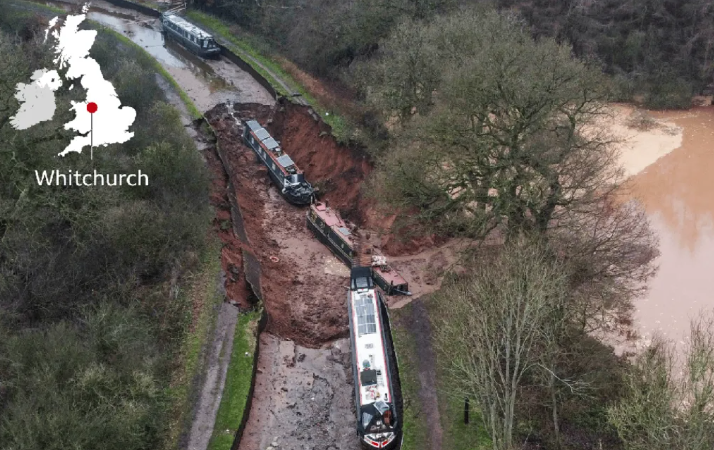
A man-made embankment on the Llangollen Canal near Whitchurch, Shropshire, failed in the early hours of Monday, creating a large breach that rapidly drained a several‑kilometre pound and triggered a major incident response. The failure occurred on a raised canal section over low-lying farmland, with water overtopping and eroding the embankment before a full breach developed, flooding adjacent fields and damaging access tracks. Canal & River Trust engineers have isolated the affected reach with stop planks and are assessing embankment stability, seepage paths and repair options under constrained access conditions.
Lineside monitoring systems on parts of Britain’s rail network may fail to detect embankment or cutting slope movements during extreme rainfall, the Rail Accident Investigation Branch has warned following the 3 November passenger train derailment near Shap, Cumbria. The warning concerns remote condition monitoring equipment installed to trigger alerts for ground instability, which did not prevent the derailment. Geotechnical and asset engineers are being urged to review sensor siting, trigger thresholds and system performance in severe weather, particularly on high-risk slopes.