Geomechanics.io

  • Free Tools
Sign UpLog In

Geomechanics.io

Geomechanics, Streamlined.

© 2026 Geomechanics.io. All rights reserved.

Geomechanics.io

CMRR-ioGEODB-ioHYDROGEO-ioQCDB-ioFree Tools & CalculatorsBlogLatest Industry News

Industries

MiningConstructionTunnelling

Company

Terms of UsePrivacy PolicyLinkedIn
    Safety
    Sustainability

    Coastal erosion planning and funding failures: risk lessons for UK asset engineers

    April 1, 2026|

    Reviewed by Tom Sullivan

    Coastal erosion planning and funding failures: risk lessons for UK asset engineers

    First reported on New Civil Engineer

    30 Second Briefing

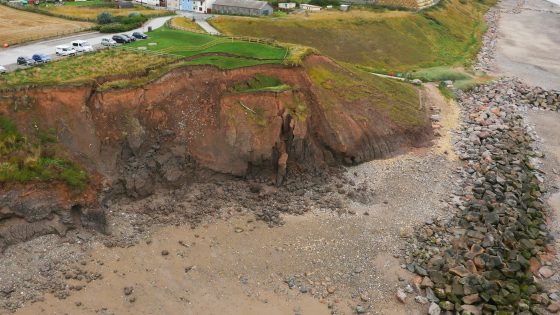
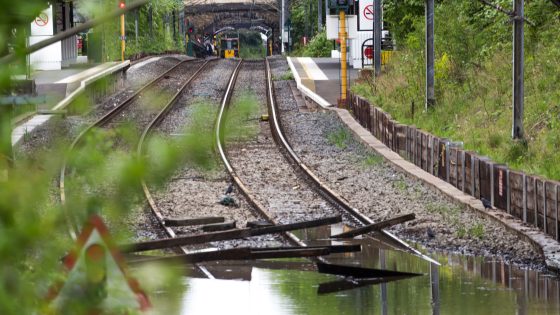
    A House of Commons committee warns that accelerating coastal erosion is putting UK transport corridors, utilities and other critical national infrastructure at growing risk, with some assets already within metres of receding cliff lines and undefended shorelines. MPs found current planning rules and fragmented funding streams delay or block schemes such as realignment of coastal roads, relocation of wastewater treatment works and reinforcement of rail embankments. The inquiry calls for a national coastal adaptation strategy, clearer responsibilities between the Environment Agency and local authorities, and long-term funding to prioritise defence, managed retreat or asset abandonment.

    Technical Brief

    • For geotechnical designers, the inquiry implies more frequent re‑baselining of erosion, overtopping and slope stability assumptions during asset life.

    Our Take

    The House of Commons has featured in several recent UK oversight pieces in our database, and the ECO insulation scandal coverage (23 Jan 2026) shows that MPs are increasingly willing to scrutinise how fragmented funding and regulatory regimes can create systemic risk in the built environment, not just in energy efficiency but now also in coastal defence.

    New Civil Engineer’s role across awards and innovation challenges in the UK (e.g. the British Construction & Infrastructure Awards 2026 and Heathrow’s Early Careers Innovation Challenge) signals that lessons from this coastal erosion inquiry are likely to filter quickly into best‑practice benchmarks for civil engineering design and procurement on vulnerable coastlines.

    Geotechnical Software for Modern Teams

    Centralise site data, logs, and lab results with GEODB-io, CMRR-io, and HYDROGEO-io.

    No credit card required.

    • Save and export unlimited calculations
    • Advanced data visualisation
    • Generate professional PDF reports
    • Cloud storage for all your projects

    Prepared by collating external sources, AI-assisted tools, and Geomechanics.io’s proprietary mining database, then reviewed for technical accuracy & edited by our geotechnical team.

    Related Articles
    Melbourne sinkhole investigations: geotechnical lessons for tunnel project teams
    Hazards
    in about 1 month

    Melbourne sinkhole investigations: geotechnical lessons for tunnel project teams

    A sinkhole roughly 8–10 m wide and several metres deep has opened on the AJ Burkitt Reserve sporting oval in Heidelberg, directly adjacent to the North East Link tunnel alignment in Melbourne’s northeast. Victorian Infrastructure Delivery Authority has confirmed the “surface hole” is in the vicinity of active tunnelling operations, leading to a work pause while engineers and emergency crews carry out geotechnical investigations and monitoring. No injuries or structural damage have been reported, but the area remains fully cordoned off pending cause determination and stability assessment.

    Nepal’s Himalayan settlements: flood and landslide risk lens for engineers
    Hazards
    3 days ago

    Nepal’s Himalayan settlements: flood and landslide risk lens for engineers

    Escalating extreme rainfall and glacial melt are driving more frequent floods and landslides in Nepal’s Himalayan districts, with Karnali Province’s steep, highly fractured slopes and narrow river valleys particularly exposed. Recent events include debris flows cutting off road access to remote settlements and riverbank erosion undermining gabion walls and informal river training works along the Karnali and Bheri rivers. Engineers are being pushed towards slope stabilisation with bioengineering, improved drainage, and relocation or elevation of critical infrastructure away from active channels and unstable colluvium.

    CCC and ICE climate adaptation warning: design priorities for UK engineers
    Hazards
    4 days ago

    CCC and ICE climate adaptation warning: design priorities for UK engineers

    The Climate Change Committee warns that the “British way of life” faces escalating risk from heat, flooding and drought, with the Institution of Civil Engineers backing calls for rapid, large‑scale adaptation of UK infrastructure. Priority actions flagged include upgrading urban drainage and flood defences for more intense cloudbursts, retrofitting buildings for sustained 40°C heat, and securing water supply resilience against multi‑year droughts. For civil and geotechnical engineers, this signals imminent pressure to redesign assets for higher hydraulic loads, thermal stresses and soil moisture variability within the next planning cycle.

    Related Industries & Products

    Construction

    Quality control software for construction companies with material testing, batch tracking, and compliance management.

    Mining

    Geotechnical software solutions for mining operations including CMRR analysis, hydrogeological testing, and data management.

    QCDB-io

    Comprehensive quality control database for manufacturing, tunnelling, and civil construction with UCS testing, PSD analysis, and grout mix design management.

    AllGeotechnicalInfrastructureHazardsEnvironmental