Geomechanics, Streamlined.
© 2026 Geomechanics.io. All rights reserved.
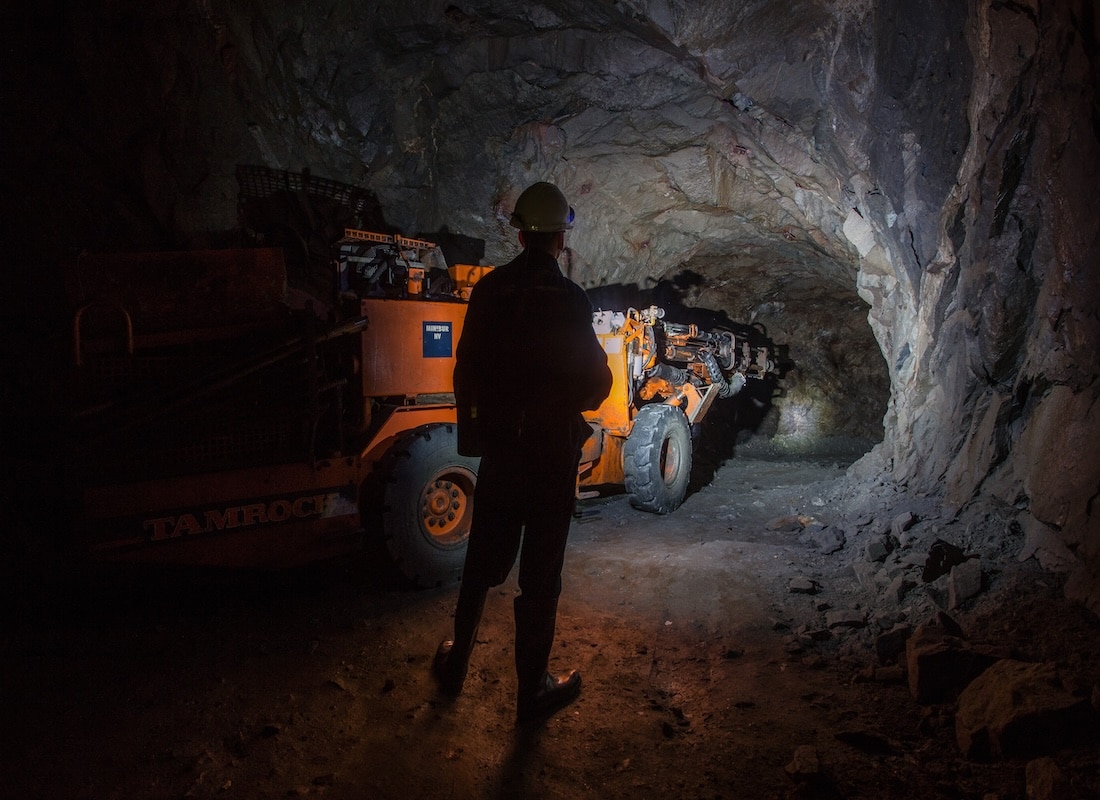
Macmahon Underground has been named preferred tenderer for a proposed $240 million underground mining contract at Medallion Metals’ Ravensthorpe gold project in Western Australia, covering portal establishment, primary development, production and associated works. The scope points to a full-service underground package likely including decline access, level development and stoping infrastructure, consolidating Macmahon’s presence in WA hard-rock gold. Final award remains subject to contract execution, so detailed schedules, equipment deployment and ground support strategies are yet to be confirmed.
Maritana Minerals has secured Department of Mines, Petroleum and Exploration approval for the Mining Development and Closure Proposal at its Black Swan Processing Hub (BSPH) in Western Australia, keeping the project on schedule for first gold in H2 2027. The MDCP sign-off allows on-ground development to proceed, including construction of processing infrastructure and associated mine services. For project engineers, the approvals de‑risk the development timeline and enable detailed design, procurement and contractor mobilisation to ramp up through 2025–26.
Australia’s mining sector is forecast to create thousands of new skilled roles in the next few years, spanning mining engineers, geologists, process operators and diesel fitters as major greenfield and brownfield projects advance in regions such as the Pilbara. Skilled migrants currently account for just 1.24 per cent of the minerals workforce, concentrated in critical roles like mine planning, maintenance and metallurgical engineering. For operators and contractors, this signals intensifying competition for technical talent, greater reliance on targeted training pipelines, and likely pressure on project schedules if key roles remain unfilled.
Updated feasibility results for NioCorp’s Elk Creek critical minerals project in Nebraska put the 40‑year integrated mine‑to‑processing operation at a pre‑tax NPV8 of $4.1 billion and after‑tax NPV8 of $3.4 billion, with a pre‑tax IRR of 24% and after‑tax IRR of 22.8%. The study forecasts life‑of‑mine revenue of $37.4 billion, averaging $608 million in annual EBITDA and $519 million in operating cash flow. Elk Creek is planned to produce eight US‑designated critical mineral products, including ferroniobium, scandium trioxide, titanium tetrachloride and multiple rare earth oxides, with major construction permits already secured.
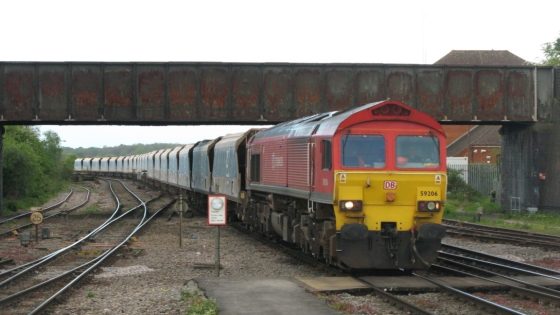
Freight moved by water has exceeded that carried by rail in the UK for more than 24 consecutive years, according to new data from the Parliamentary Advisory Council for Transport Safety (Pacts). The figures indicate that inland and coastal shipping, including bulk movements through major ports, consistently handle a larger tonne-kilometre share than the national rail freight network. For civil and rail engineers, this trend raises questions over long-term investment priorities in rail freight capacity, intermodal terminals and last‑mile connections versus continued reliance on port and waterway infrastructure.
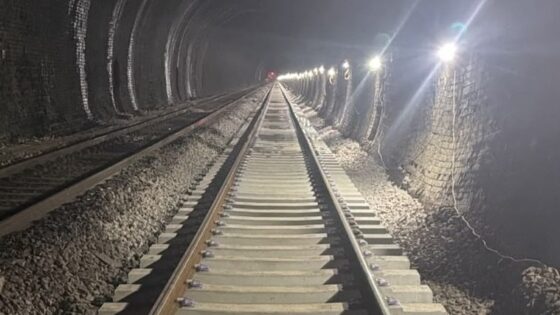
Half a kilometre of track renewals has been completed by Network Rail in Alfreton Tunnel in Derbyshire, on the key Sheffield–Nottingham route. The works involved replacing worn rail and sleepers within the confined tunnel environment, requiring tightly sequenced possessions to maintain traffic on this inter‑urban corridor. For permanent way and civil teams, the project signals continuing pressure to upgrade ageing tunnel trackforms while minimising disruption on intensively used mixed‑traffic lines.
Work on a major improvement scheme along the A52, one of Nottingham’s busiest strategic routes linking the A1 and M1, is nearing completion after a multi-year programme of junction upgrades and capacity works. The package focuses on key bottlenecks between the QMC and Gamston roundabouts, adding new signalised junction layouts, extra approach and exit lanes, and revised pedestrian and cycle crossings to improve traffic flow and safety. For designers and contractors, the scheme consolidates incremental works on an existing urban dual carriageway under live traffic, with long-term implications for maintenance access and future widening.
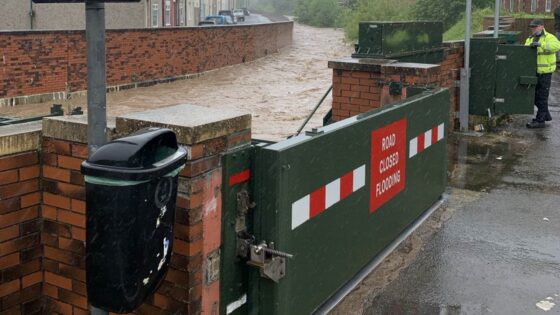
Bam has begun construction of the £13M Skinningrove Flood Alleviation Scheme in North Yorkshire for the Environment Agency, centred on replacing Stone Row Bridge and removing the village’s reliance on manually operated flood gates. The works will modernise flood defence infrastructure on this tidal beck, where existing gates currently require on-site deployment during storm events, exposing operators and creating response delays. For civil and geotechnical teams, key issues will include bridge hydraulic capacity, scour protection and maintaining access while upgrading a constrained coastal channel.
Bouygues Travaux Publics and Laing O'Rourke, working as the Bylor joint venture on EDF’s Hinkley Point C nuclear project, have received two Health and Safety Executive enforcement notices after a panel fell from height and caused “serious injuries” to a worker. Both notices have been formally extended, signalling ongoing regulatory concern over lifting operations and work-at-height controls on the major civil works. Contractors on large nuclear and energy schemes will likely face closer scrutiny of temporary works design, lifting plans and exclusion-zone management.
Nearly three-quarters of England being officially in drought in mid-August has triggered renewed pressure from civil engineers for large-scale investment in water storage, transfer and leakage reduction. With existing reservoirs and strategic transfer schemes sized around historic rainfall patterns, engineers are warning that current deployable output margins are too thin for multi-season deficits and more frequent heatwaves. Likely priorities include new regional transfers, accelerated mains renewal to cut leakage, and upgraded drought permits and abstraction regimes to protect aquifers and river baseflows.
Hunter Valley Mining Expo has sold 90 per cent of its exhibition space months ahead of opening in the region’s coal mining hub, signalling strong vendor demand for drill and blast systems, haulage fleet technology and mine rehabilitation services. Organised by the team behind QME in Mackay, WA Mining Conference and Exhibition in Perth, AIMEX in Sydney and the PNG Industrial and Mining Resources Exhibition, the event is positioned as a major east-coast platform for OEMs and contractors. For mine planners and maintenance teams, it offers concentrated access to new equipment trials, condition monitoring tools and automation upgrades in one regional venue.
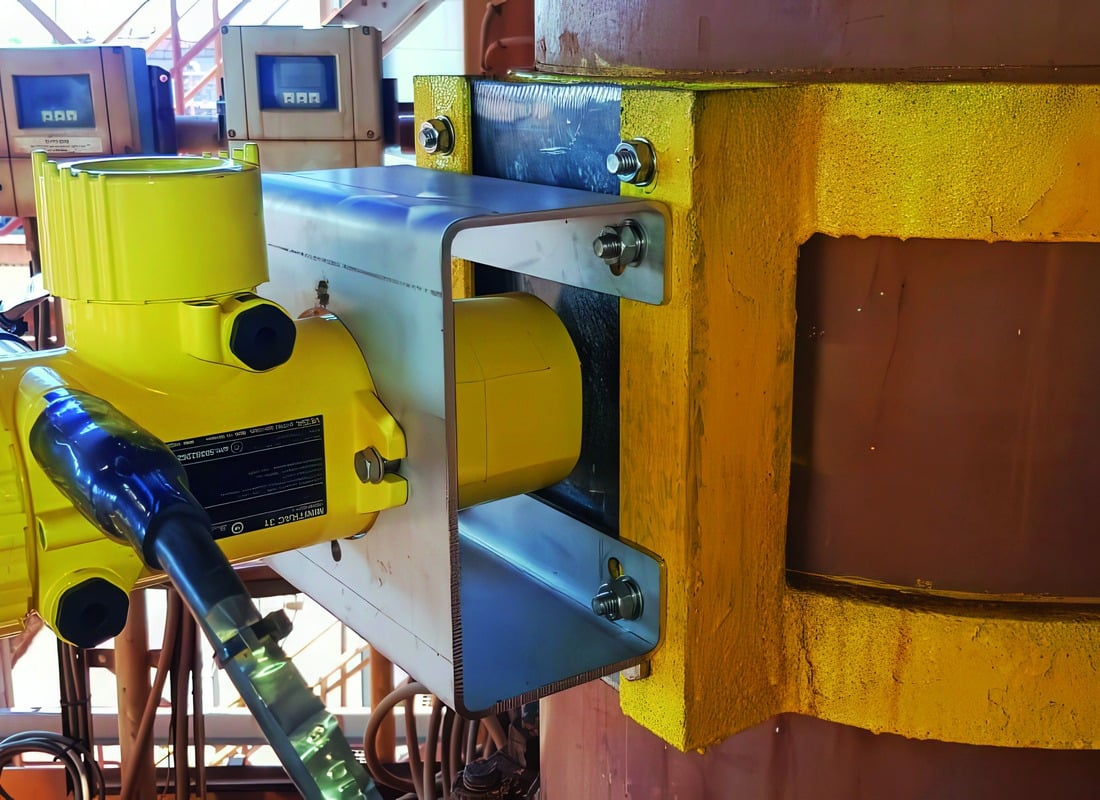
VEGA’s MINITRAC 31 radiometric sensors are being used in Madagascar to measure ore slurry density directly from the mine, providing non-contact readings through the pipeline wall under highly abrasive laterite nickel–cobalt conditions. The system operates reliably in tropical climate extremes and with variable solids content, where conventional differential pressure or nuclear gauges struggle with scaling, wear and calibration drift. For process engineers, more stable density data supports tighter control of slurry transport, thickener performance and downstream hydrometallurgical circuits.
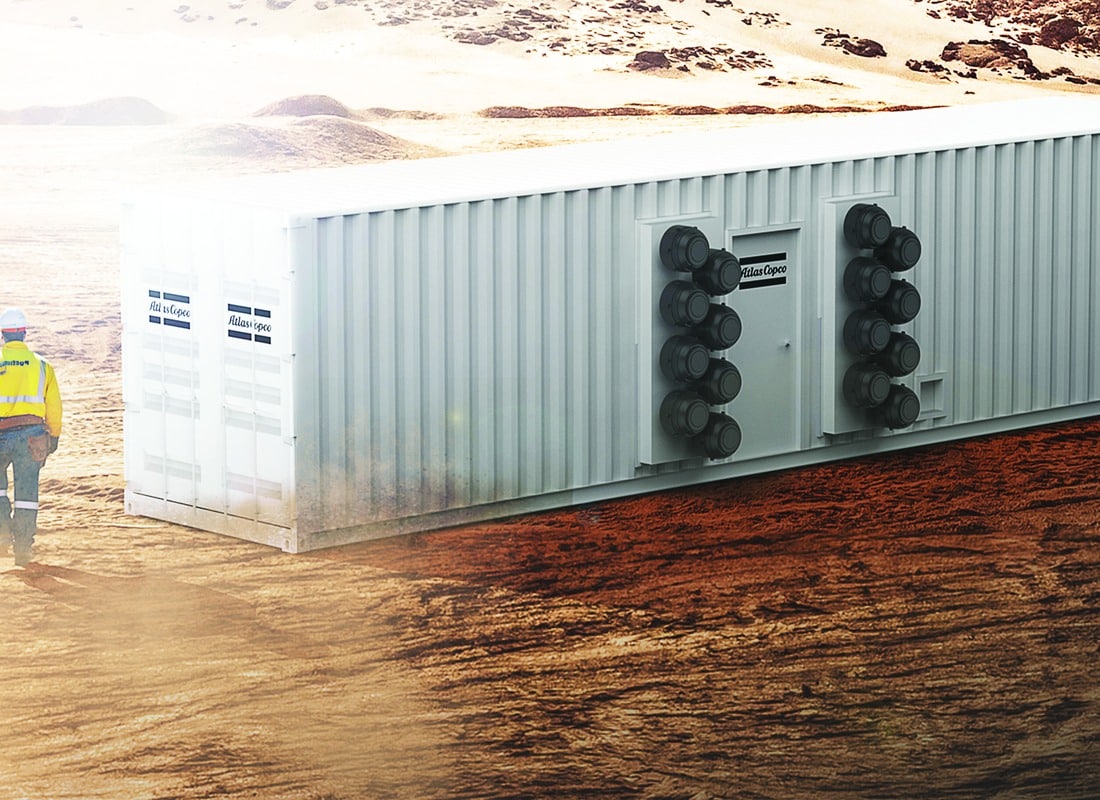
Atlas Copco’s AIRCUBE modular compressor rooms replace conventional stick-built compressor houses on mines, arriving as pre-engineered containerised units with integrated ventilation, electricals and controls for rapid plug-and-play deployment. Units can be craned into position on simple concrete pads, connected to existing ring mains and power within days rather than the weeks or months typical for full civil works and building construction. For brownfield expansions and remote greenfield sites, this compresses project schedules, reduces on-site trades and simplifies future capacity upgrades or relocations.
Emesent is opening its Brisbane headquarters on 20 August for a free National Science Week evening (5:30–9:00pm), offering students, industry and the public hands-on access to its autonomous mapping technology for “the world’s most inaccessible places”. In partnership with Surveyors Australia, the event will showcase Emesent’s drone-based LiDAR and autonomy stack used for GPS-denied underground mines and other confined environments. For mining engineers and surveyors, it is a rare chance to interrogate hardware–software workflows, data outputs and practical deployment constraints directly with the development team.
Fortuna Mining is acquiring the Bambadji gold project in Senegal from Barrick Mining and IAMGOLD for $200 million, consolidating control over roughly 60 km of contiguous, potentially gold-bearing ground adjoining its feasibility-stage Diamba Sud project. The company plans to invest $8 million in exploration at Bambadji through the end of 2026, with drilling scheduled to start in Q3 to test how the licence can be integrated with Diamba Sud. The deal deepens Fortuna’s West African focus on Senegal and Ivory Coast following the $130 million sale of its Yaramoko mine in Burkina Faso.
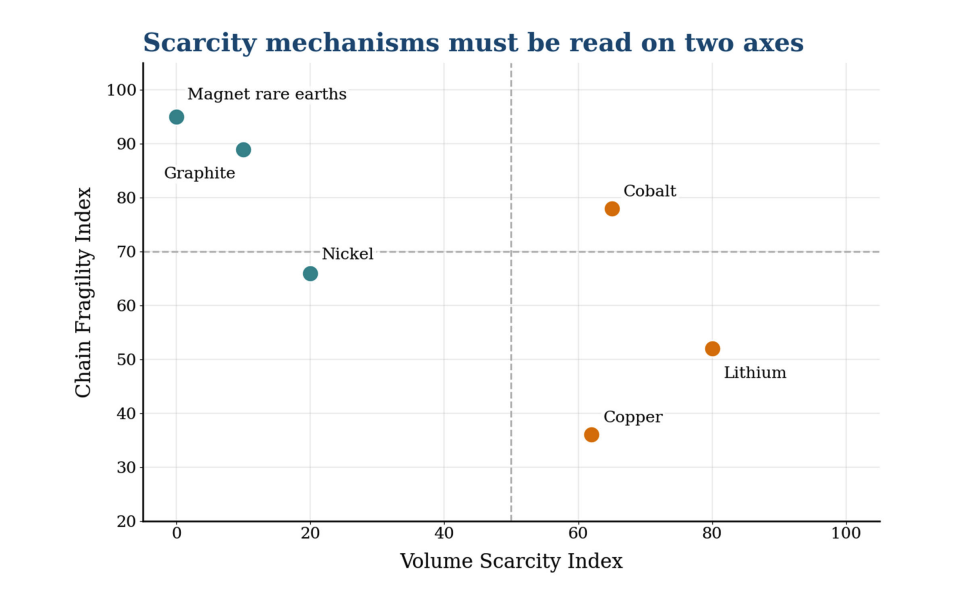
Critical-mineral supply to 2035 may fall well short of demand even where headline tonnages look adequate, with GEM Mining Consulting estimating only 68% lithium, 74% cobalt and 75% copper coverage under the IEA Global Critical Minerals Outlook 2026. Battery-grade graphite and magnet rare earths appear better supplied at 96% and 107% coverage but post the highest chain-fragility scores, 89 and 95 out of 100, driven by concentrated processing and limited diversified refining. GEM’s worked example cuts a 100,000 t/y nameplate project to 60,200 t/y of “reliable” output once commissioning, ramp-up, quality qualification and operating disruptions are applied, signalling that smaller but technically de-risked plants may carry greater strategic weight than large undeveloped resources.
Cobre Panamá’s halted copper operation is edging towards a potential restart as Panama’s commerce minister Julio Moltó meets workers and suppliers in the Donoso, Omar Torrijos Herrera and La Pintada regions, where stockpile processing is currently supporting about 3,200 direct and 3,000 indirect jobs. First Quantum has already run two of three milling trains, treating 2.1 million tonnes of stockpiled ore by end-June for 3,200 tonnes of contained copper, with 38 million tonnes of ore (c.70,000 tonnes recoverable copper) remaining for roughly 12 months’ throughput. The mine, idle since a 2023 Supreme Court ruling, could return to 80–90% capacity within six to nine months of approvals, but will need about 6,000 workers and resolution of environmental and contractual issues, including a suspended US$20 billion arbitration.
Silver slipped from a seven-week high on Tuesday, easing to about $65/oz after briefly topping $66/oz, as traders locked in gains from a roughly 12% rally ahead of the US July CPI release at 8:30 a.m. ET. The move comes with silver still more than 40% below its January peak yet around 75% above its 52-week low, while June US inflation fell 0.4% month-on-month with annual CPI at 3.5%. Industrial demand from China’s solar and power sectors and strong performances by Pan American Silver and First Majestic Silver are supporting sentiment, but a stronger CPI print could quickly reverse momentum.
Gold futures briefly hit a two-month high on Comex at $4,495/oz, up 1.7%, before retreating to $4,440 as a rebound in US crude above $83/bbl and Brent towards $89/bbl offset earlier optimism over a possible deal to reopen the Strait of Hormuz. Spot gold sits around $4,395, only about $25 above the $4,360–$4,370 technical support band flagged by Saxo Bank’s Ole Hansen, while silver futures touched $66.685/oz before slipping to $65.035. Major gold miners were broadly muted, with Agnico Eagle up 1.2% but Gold Fields down 2.2% and Harmony Gold off 2.5%.
Fourteen illegal chrome miners were found dead and at least eight injured after a cave-in near an abandoned shaft by the Nkaneng informal settlement, close to Marikana in South Africa’s North West province, with the collapse estimated around 21:00 on Monday. Police have intensified action against illegal chrome operations in the province, seizing 20 trucks and 15 excavators over the past two years and arresting survivors on suspicion of illegal mining. The incident underlines ongoing geotechnical and safety risks where informal miners re-enter abandoned gold, platinum and chrome workings without ground support or regulated access control.
Public trust built through strong regulation and early, meaningful community participation is identified by the Trust, Accountability and Inclusion Collaborative’s report “Mined The Gaps: Trust and Critical Minerals” as a primary driver of faster permitting, challenging assumptions that deregulation speeds critical minerals projects in Australia, Canada and the US. Author Sefton Darby proposes Adaptive Governance Partnerships, with joint regulator–company–community committees addressing environmental, social and cultural risks from exploration onwards, rather than at permitting. The report warns that under-capitalised juniors, focused almost solely on geology in brownfield expansions, embed unmanaged ESG risks, and calls for exploration funding to be explicitly tied to environmental and social initiatives.
Copper prices again approached record territory, with Comex September touching $6.7005/lb ($14,772/t) and LME three‑month holding around $14,195.50/t, as the Gresik smelter in Indonesia halted after an 8 August boiler leak, tightening supply from Grasberg while LME copper stocks slid to 218,300 t and cash premiums widened to $138/t. Aluminium gained up to 1.9% to $3,373/t after Norsk Hydro’s 6.3 Mt/y Alunorte alumina refinery cut output by half on Brazilian gas disruptions, against already low LME aluminium inventories of about 255,000 t amid Iran war‑related Middle East supply risks.
Lake Victoria Gold’s Tembo project in Tanzania has reported an initial resource of almost 600,000 oz. gold adjacent to Barrick’s Bulyanhulu mine, including 2.69 million indicated tonnes at 1.16 g/t and 13.33 million inferred tonnes at 1.12 g/t across the Ngula 1, Nyakagwe Village and Nyakagwe East near-surface deposits. A 5,000-metre infill drilling campaign will target Ngula 1, already drilled to about 200 m depth and hosting over half of inferred ounces, while a toll-milling deal is being advanced with Nyati Resources’ 500 t/d plant on a Tembo licence. Combined with the shovel-ready Imwelo project, expected to average 3.7 g/t in its first two years, the company is positioning for small-scale multi-asset production in Tanzania.
Blue Moon Metals is acquiring 33 tungsten and antimony projects on BLM and Forest Service lands in the western U.S. in a US$20.5 million cash-and-shares deal, adding a 1% NSR royalty and annual holding costs of about US$162,000. The portfolio includes historic high-grade tungsten assets such as the Oregon mine in Colorado (5,000 tonnes at 14.51% WO₃) and Wildhorse Canyon in Idaho (7,461 tonnes at 0.62% WO₃) as potential direct-shipping feed to the Springer processing complex in Nevada, plus five antimony projects grading 2–10% stibnite, marking Blue Moon’s first move into antimony.