Geomechanics.io

  • Free Tools
Sign UpLog In
Built byBoxcut Studio

Geomechanics.io

Geomechanics, Streamlined.

© 2026 Geomechanics.io. All rights reserved.

Geomechanics.io

CMRR-ioGEODB-ioHYDROGEO-ioQCDB-ioFree Tools & CalculatorsBlogLatest Industry News

Industries

MiningConstructionTunnelling

Company

Terms of UsePrivacy PolicyLinkedIn
    Projects
    Sustainability

    Federal funding to cut red tape: schedule and approvals lens for project teams

    April 30, 2026|

    Reviewed by Joe Ashwell

    Federal funding to cut red tape: schedule and approvals lens for project teams

    First reported on Australian Mining

    30 Second Briefing

    The Australian Federal Government has committed more than $45 million to fast‑track environmental approvals for major projects, targeting duplication between state and Commonwealth processes under the Environment Protection and Biodiversity Conservation Act. Funding will expand assessment capacity within the Department of Climate Change, Energy, the Environment and Water and support digital lodgement and tracking systems for approvals. For miners and project developers, the move signals potential reductions in front‑end schedule risk and holding costs, particularly for large greenfield operations and critical minerals projects awaiting primary environmental sign‑off.

    Technical Brief

    • Digital lodgement platform is intended to standardise input data formats and reduce manual document handling.
    • Online tracking of referrals and approvals should give proponents clearer visibility of statutory decision timeframes.
    • Commonwealth aims to align its assessment steps with state processes to enable more single‑assessment pathways.
    • Faster federal decisions may compress pre‑FID contingency allowances currently carried for environmental approval delays.
    • For complex greenfield mines, reduced duplication could lower consultant rework on parallel state–Commonwealth submissions.

    Our Take

    Recent Australian Mining coverage of battery-electric fleets with XCMG and CSIRO’s automation work suggests that faster approvals could particularly benefit projects proposing lower‑emission or highly automated designs, which often face complex environmental assessments.

    Geotechnical Software for Modern Teams

    Centralise site data, logs, and lab results with GEODB-io, CMRR-io, and HYDROGEO-io.

    No credit card required.

    • Save and export unlimited calculations
    • Advanced data visualisation
    • Generate professional PDF reports
    • Cloud storage for all your projects

    Prepared by collating external sources, AI-assisted tools, and Geomechanics.io’s proprietary mining database, then reviewed for technical accuracy & edited by our geotechnical team.

    Related Articles

    ICMM’s first woman CEO from Rio Tinto, Anglo: ESG and standards lens for engineers
    Policy
    about 23 hours ago

    ICMM’s first woman CEO from Rio Tinto, Anglo: ESG and standards lens for engineers

    Froydis Cameron-Johansson, a former senior executive at Rio Tinto and Anglo American who began her career at Shell, has been appointed the International Council on Mining and Metals’ first woman president and CEO, effective 23 November. She succeeds Rohitesh Dhawan, who will remain to support the transition until end-2026 after overseeing the creation of the Global Tailings Management Institute and the Consolidated Mining Standard Initiative. Her mandate centres on tightening industry-wide mining standards, accountability and ESG performance across critical metals and minerals value chains.

    £2.2bn unspent CIL: what it could mean for UK local road asset management
    Policy
    about 22 hours ago

    £2.2bn unspent CIL: what it could mean for UK local road asset management

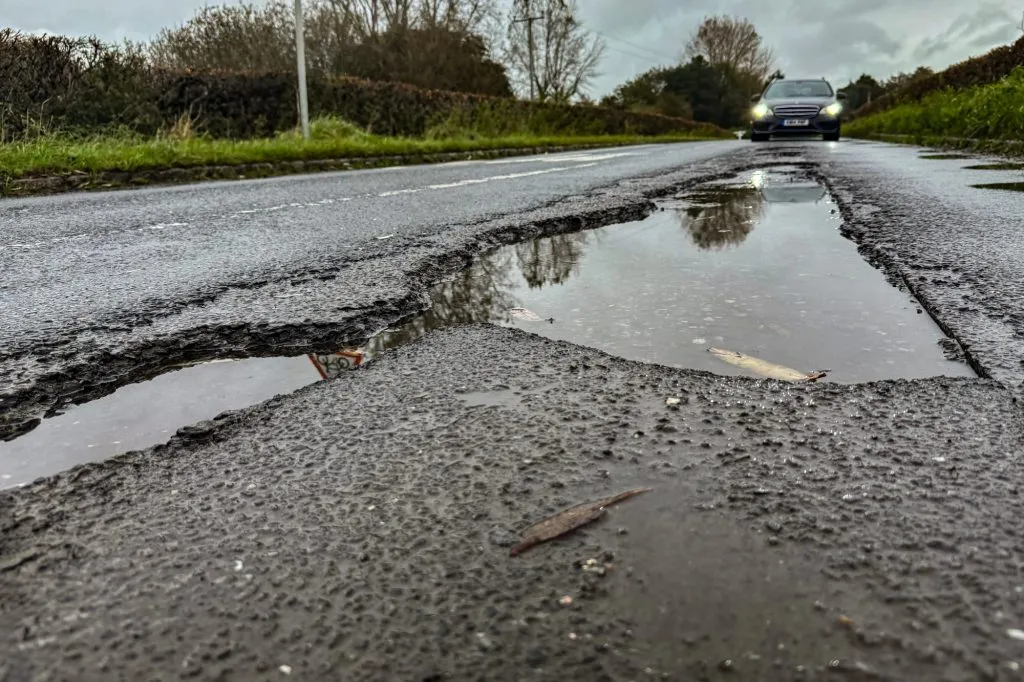
    More than £2.2bn in unspent Community Infrastructure Levy (CIL) contributions held by planning authorities in England and Wales could be redirected to tackle the growing local road maintenance backlog, the All-Party Parliamentary Group for Better Roads says. MPs want the government to simplify rules and improve transparency so councils can more readily use CIL funds for carriageway resurfacing, pothole repairs and structural renewals. For highway engineers, this signals potential medium-term funding for asset management plans and heavier interventions beyond reactive patching.

    Welsh Senedd Barnett Formula review: rail funding implications for engineers
    Policy
    about 22 hours ago

    Welsh Senedd Barnett Formula review: rail funding implications for engineers

    Welsh Senedd members have passed a motion calling for a review of the Barnett Formula and for rail to be formally devolved, arguing that UK Government classification of HS2 as an “England and Wales” project has denied Wales billions in consequential funding. The motion presses Westminster to accelerate rail infrastructure investment in Wales and give Welsh ministers greater flexibility over block grant allocations for schemes such as Core Valley Lines upgrades and mainline electrification. For civil engineers, any change could materially alter long-term funding certainty for renewals, resilience works and new capacity.

    Related Industries & Products

    Mining

    Geotechnical software solutions for mining operations including CMRR analysis, hydrogeological testing, and data management.

    CMRR-io

    Streamline coal mine roof stability assessments with our cloud-based CMRR software featuring automated calculations, multi-scenario analysis, and collaborative workflows.

    HYDROGEO-io

    Comprehensive hydrogeological testing platform for managing, analysing, and reporting on packer tests, lugeon values, and hydraulic conductivity assessments.

    GEODB-io

    Centralised geotechnical data management solution for storing, accessing, and analysing all your site investigation and material testing data.

    AllGeotechnicalInfrastructureHazardsEnvironmental