Weel Bridge lift-out: refurbishment method and risk notes for bridge engineers
Reviewed by Joe Ashwell
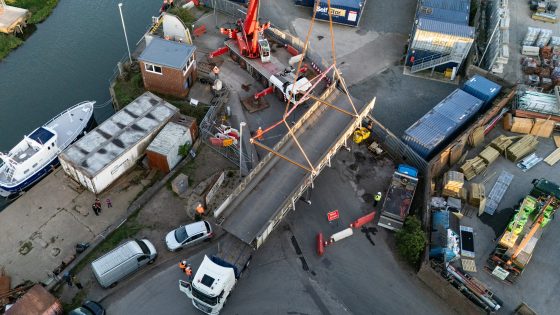
First reported on New Civil Engineer
30 Second Briefing
Weel Bridge, a 73-year-old mid-century structure over the River Hull in East Yorkshire, has been fully lifted clear of the river by Esh Construction as part of a £1M refurbishment programme. The removal marks a critical phase in extending the bridge’s service life, allowing off-line inspection, steelwork repairs and repainting under controlled conditions rather than over water. For asset managers and bridge engineers, the operation illustrates how planned lift-out refurbishments can modernise ageing rural crossings while minimising disruption to river navigation.
Technical Brief
- Lift-out required temporary works to carry traffic loads while the main span was removed.
- Off-line steelwork repair and repainting allow full enclosure, improving fume control and worker exposure management.
- Removal enables detailed inspection of hidden elements such as bearings, deck joints and internal stiffeners.
- Working on a 1950s bridge likely triggers CDM duties around asbestos, lead paint and confined spaces.
- Lift planning would have required a detailed method statement, exclusion zones and crane overturning checks to British practice.
- Similar rural bridge lift-outs offer a template for reducing over-water work at height on ageing assets.
Our Take
Esh Construction’s work on Weel Bridge follows its recent 10.5‑week closure and strengthening programme at Drypool Bridge in Hull, signalling that the firm is becoming a go‑to contractor for complex river‑crossing refurbishments in the region.
Prepared by collating external sources, AI-assisted tools, and Geomechanics.io’s proprietary mining database, then reviewed for technical accuracy & edited by our geotechnical team.


