Ofgem reform programme: key project delivery impacts for civil and grid engineers
Reviewed by Tom Sullivan
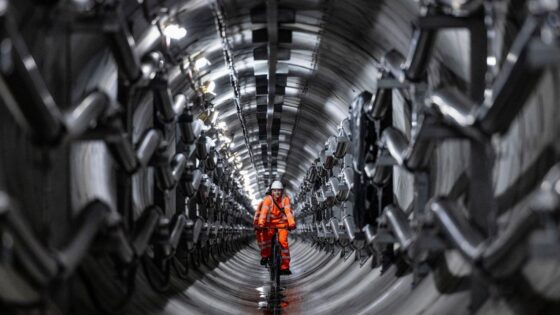
First reported on New Civil Engineer
30 Second Briefing
The UK Government has launched a sweeping reform programme for Ofgem, saying the energy regulator must be modernised to keep pace with the energy transition and the rapid build-out of grid-scale renewables and new transmission capacity. Proposals are expected to tighten oversight of network investment decisions, streamline approvals for major reinforcement schemes, and clarify how Ofgem balances bill-payer protection with funding for low-carbon infrastructure. For civil and grid engineers, this signals potential changes to cost allowances, delivery timelines and risk allocation on large transmission and distribution projects.
Technical Brief
- Government explicitly links reforms to keeping pace with rapid system change rather than incremental tweaks.
- Policy shift is expected to affect how multi‑decade asset lives and stranded‑asset risks are assessed.
- For future major works, regulatory certainty around cost recovery and timing becomes a central design constraint.
Our Take
Recent pieces in our database show Ofgem simultaneously locking in the RIIO-3 framework and approving early funding for ‘electricity superhighways’, so a structural review of the regulator is likely to influence how flexibly those long-dated determinations can be adapted to grid-connection and delivery pressures in the United Kingdom.
The House of Commons PAC’s push to escalate the ECO insulation scandal, which also centres on Ofgem’s oversight, suggests that any modernisation of the regulator will not just be about speeding up project approvals but also about tightening assurance and compliance on large-scale retrofit and network schemes.
With the UK Government already signing off a package of reforms to electricity network planning and consenting, a parallel rethink of Ofgem’s role signals to project developers that regulatory risk on major transmission and distribution works may shift from pure price-control debates towards scrutiny of delivery performance and consumer outcomes.
Prepared by collating external sources, AI-assisted tools, and Geomechanics.io’s proprietary mining database, then reviewed for technical accuracy & edited by our geotechnical team.
Related Articles


Related Industries & Products
Construction
Quality control software for construction companies with material testing, batch tracking, and compliance management.
CMRR-io
Streamline coal mine roof stability assessments with our cloud-based CMRR software featuring automated calculations, multi-scenario analysis, and collaborative workflows.
HYDROGEO-io
Comprehensive hydrogeological testing platform for managing, analysing, and reporting on packer tests, lugeon values, and hydraulic conductivity assessments.
GEODB-io
Centralised geotechnical data management solution for storing, accessing, and analysing all your site investigation and material testing data.